


NZ Runners: Urban Caps Running Beanies That Pack to Fist Size
For most cold weather runs, grab a lightweight, moisture-wicking beanie made from merino or a technical synthetic blend that fully covers your ears. It manages sweat without trapping heat against your scalp, and packs down small enough to stuff in a pocket once you warm up. Urbancaps stocks several styles built around exactly this brief.
TL;DR:
- The Ski Skull Beanie offers full ear coverage and a snug fit, ideal for high-effort winter runs and exposed, windy conditions.
- Merino wool is best for multi-day use and cold, dry weather, while synthetic blends are better for intense sweating and quick drying needs.
- Proper fit includes snugness at rest, comfort during movement, and features like flat seams and elastic hems to prevent slipping.
- In temperatures below 5°C, a thicker, zoned beanie with full ear coverage is recommended, with a lighter, breathable option enough for milder cold.
- Reflective trim and bright colors are vital safety features, especially in poor visibility conditions, and packing ability is crucial for session flexibility.
Table of Contents
- Best beanies for running: our top Urban Caps picks
- How do you choose a running beanie?
- Merino, synthetics and fleece: what actually works
- Getting the fit right so it doesn’t slip mid-run
- Washing and storing your beanie properly
- Reflective details matter more than you think
- Insulation levels for different weather conditions
- Weight and packability for easy storage during runs
- How do running beanie brands and reviews compare?
- Does a beanie work with headphones and sunglasses?
- What we’ve learned selling beanies to New Zealand runners
- Shop Urban Caps: running-ready beanies and headwear
- Sources
- FAQ
Best beanies for running: our top Urban Caps picks
A running beanie has one job a fashion beanie doesn’t: survive an hour of rising body heat without turning into a soggy heat trap, like the well-constructed Knit Beanie – Tekton LA designed specifically to balance warmth and moisture management. The picks below come from Urbancaps’ own range, chosen for how they perform once your effort level climbs, not just how they look standing still.
- Ski Skull Beanie — This snug skull-cap fit sits close to the head with full ear coverage, making it a strong option for long, slow winter runs where retention matters more than raw breathability. It’s a good match for anyone who runs in exposed, windy areas and hates constant readjusting. Check the Ski Skull Beanie if you want one hat for both running and weekend snow trips.
- Fashion Knit Beanie — A mid-weight knit that suits easy recovery runs and everyday cold mornings rather than hard efforts. It won’t wick sweat as efficiently as a technical blend, so save it for lower-intensity sessions or as a warm-up layer you ditch a kilometre in. The Fashion Knit Beanie is a sensible starting point if you’re not ready to spend on a dedicated performance piece.
- Thunderbolt Ski Hat — Built with fuller ear protection and wind resistance, this one leans toward genuinely brutal conditions: sub zero mornings, exposed ridgelines, sleet. It runs warmer than a typical running beanie, so it suits low-intensity long runs or walk-run sessions more than tempo work. See the Thunderbolt Ski Hat for the coldest days on your calendar.
- Heritage Herringbone Ivy Cap — Not a beanie at all, but worth knowing about if you run in drizzle rather than dry cold: the brim keeps rain off your face where a beanie can’t. Pair it with a lighter beanie underneath on genuinely wet, cold mornings. The Heritage Herringbone Ivy Cap is more style piece than performance gear, but it earns its place on wet-weather commutes either side of a run.
- Motorcycle UV Cap — An outdoor protection cap rather than a beanie, this suits shoulder-season mornings where you want coverage from wind and low sun without full winter insulation. It’s a reasonable pick for runners who overheat easily in knit fabric. Browse the Motorcycle UV Cap if a beanie feels like overkill for your climate.
For genuine high-intensity efforts, tempo runs, intervals, anything that gets your heart rate up fast, the Ski Skull Beanie’s close fit and ear coverage without excess bulk is the strongest match in this list. For casual, low-effort cold mornings, the Fashion Knit Beanie or a brimmed option like the Heritage Herringbone Ivy Cap does the job without overheating you fifteen minutes in.
How do you choose a running beanie?
Work through this checklist before you commit to a purchase:
- Material — Merino for multi-run odour resistance and temperature regulation, synthetic blends for faster drying and lower cost.
- Thermal weight — Match it to your coldest regular run, not your coldest possible run. Most people overbuy warmth.
- Breathability — Look for zoned construction: thicker over the ears, lighter across the crown, so heat escapes as effort rises.
- Fit and retention — It should feel snug at rest without pressure points, and stay put through a bouncing stride.
- Ear coverage — Full coverage below 5°C or in wind; partial coverage or a headband suffices above that for most runners.
- Visibility — Reflective trim or a bright colourway for dawn and dusk sessions.
- Packability — Can you stuff it in a pocket or armband once you’ve warmed up?
- Price versus use — A $20 to $40 mid-range technical beanie satisfies most recreational runners without paying for features you won’t use.
Pro Tip: If you’re torn between two sizes, size down slightly. A beanie that’s a fraction snug at rest loosens as the fabric warms and stretches through your first kilometre.
Merino, synthetics and fleece: what actually works
Merino wool wicks moisture, regulates temperature across a wider range than most synthetics, and resists odour well enough to survive several runs between washes. It costs more and dries slower than synthetic fabric, which matters if you’re layering up straight after a soaking session.
Synthetic blends (polyester, nylon microfleece) dry fast, cost less, and handle frequent machine washing without complaint, though they can hold onto smell over time. Technical fleece sits between the two: warmer than a thin synthetic knit, still breathable enough for moderate effort, but bulkier to pack away.
- Merino — best for multi-day training blocks, cold and dry conditions, runners who hate doing laundry constantly.
- Synthetic blend — best for tempo runs, interval sessions, anyone who sweats heavily.
- Technical fleece — best for very cold, low-intensity long runs where warmth outranks packability.
- Water-repellent shell fabric — best paired under a cap for driving rain rather than worn alone.
Getting the fit right so it doesn’t slip mid-run
A skull-cap fit sits close and low, ideal for tempo and interval work where you don’t want fabric shifting with every stride. A slouch style traps more air and suits easy, low-intensity runs in serious cold, but it can bounce. Cuffed beanies offer adjustable coverage. Roll the cuff down over the ears in wind, up for warmer stretches.
Look for elasticated hems, a touch of grip texture on the inner band, and flat seams that won’t rub after an hour. If you tie your hair back, check for a ponytail port before buying. It stops the beanie riding up at the back. At rest it should feel firm but not tight; after a 10 to 15 minute warm-up, it should feel exactly the same; if it’s slipped or you’ve had to adjust it twice, size down or try a different construction.
Washing and storing your beanie properly
Handwash or cold-cycle merino beanies, and skip fabric softener. It clogs the fibres that make wool breathe. Synthetic blends tolerate a gentle machine wash but still avoid the tumble dryer, which can warp elastic hems and shrink technical fleece.
After a wet run, reshape the beanie by hand and air dry away from direct heat. Carry damp gear home in a breathable bag rather than sealed plastic to stop odour building in. Urbancaps’ own guide to cleaning beanies covers material-specific washing in more detail.
Reflective details matter more than you think
Reflective trim and bright colourways are a cheap, high-impact safety upgrade, often more useful on a dark morning than extra insulation. Drivers spot moving reflective points long before they register a dark silhouette.
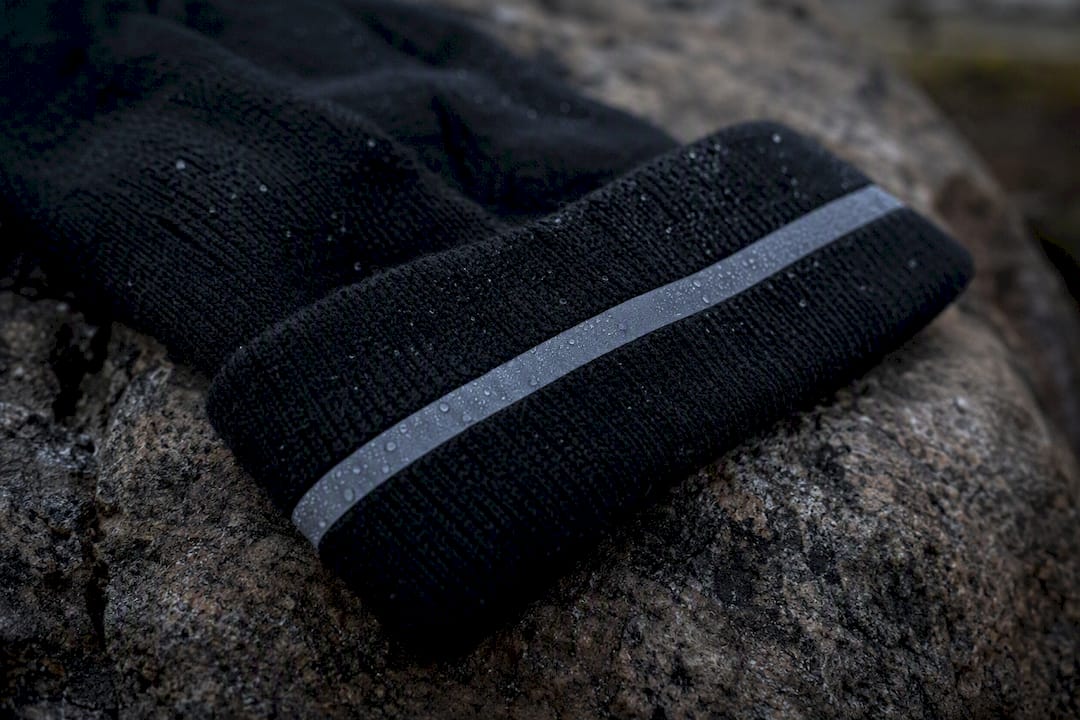
On heavy rain or genuinely black mornings, pair a beanie with a chest light or a reflective vest rather than relying on headwear alone. Matte wool absorbs light; glossy synthetic panels and printed reflective strips throw it back, so check the finish, not just the colour, before you buy.
Insulation levels for different weather conditions
Match beanie weight to your coldest regular session, not the worst day of the year. Between roughly 5°C and 10°C, a thin merino or synthetic liner beanie with light ear coverage is usually enough. Below 5°C, especially with wind, step up to a zoned construction beanie with full ear coverage and a slightly thicker crown.
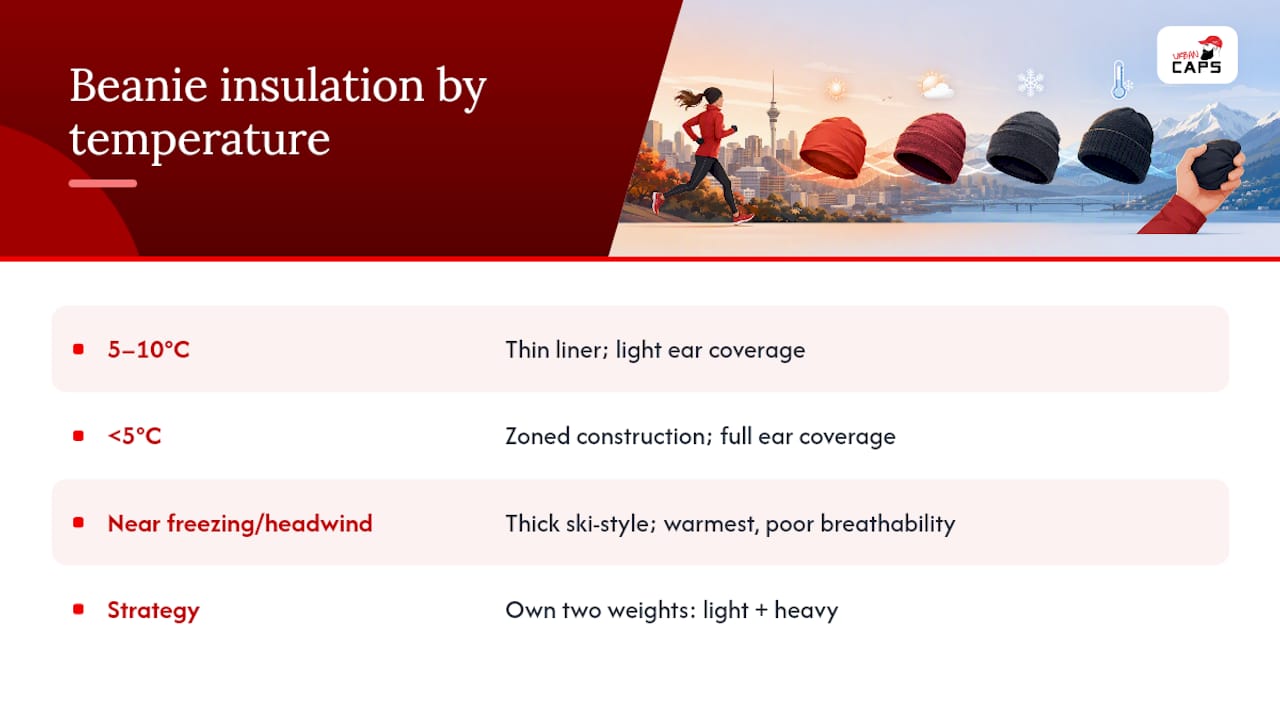
Once temperatures drop toward freezing, or you’re running into a headwind for an extended stretch, a heavier option like the Thunderbolt Ski Hat earns its place, even though it runs warmer than most dedicated running beanies. The trade off is breathability. Wearing a genuinely warm ski-style hat on a hard tempo session in mild conditions will leave you overheating and soaked through by the second kilometre.
The safest approach for variable climates is owning two weights: a lightweight zoned beanie for most sessions, and a heavier option kept for the handful of genuinely brutal mornings each winter throws at you. Trying to make one beanie do both jobs usually means it’s wrong for at least half your runs.
Weight and packability for easy storage during runs
A running beanie earns its keep partly by disappearing when you don’t need it. Once you’re fifteen minutes in and your core temperature has climbed, being able to pull it off and stuff it in a pocket without breaking stride is one of the most underrated features on the whole garment.
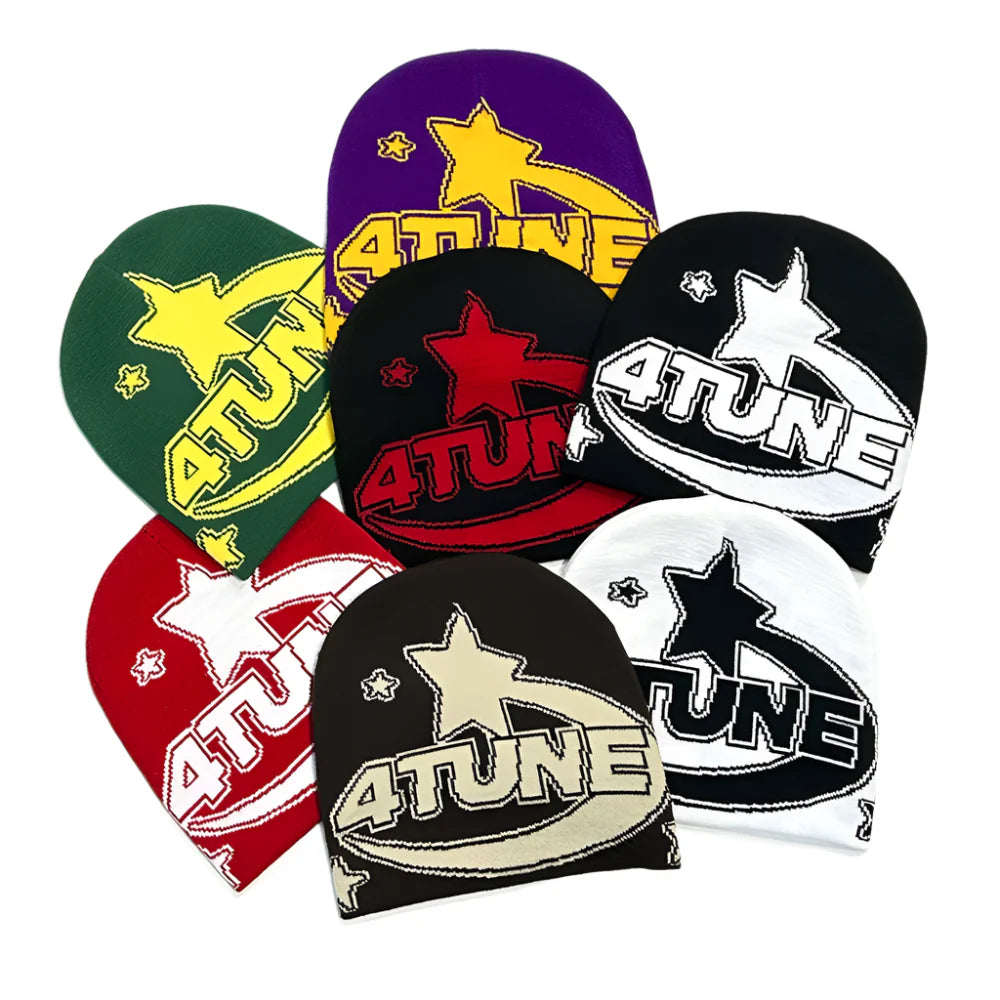
Thin synthetic and merino blends compress down to roughly fist size and add negligible weight to a running vest or armband pocket. Thicker fleece and ski-style hats take up meaningfully more room and don’t compress as flat, which matters if you’re already carrying a phone, gels, and a water flask on a longer run.
If you regularly run routes where temperature swings mid session, climbing out of a valley, hitting an exposed ridge, prioritise packability over maximum warmth. A beanie you can’t comfortably stash becomes dead weight you either keep wearing uncomfortably or awkwardly carry in your hand for the rest of the run.
How do running beanie brands and reviews compare?
Runner-tested buying guides consistently point to the same handful of features regardless of brand: merino or technical synthetic fabric, zoned construction, secure fit, and reflective detailing. What separates the well reviewed options from the disappointing ones usually isn’t the fabric itself but the construction quality: flat seams, a hem that doesn’t lose its elasticity after a few washes, and ear panels that actually sit where they’re meant to during movement, not just standing still in a mirror.
Customer feedback on running-specific beanies tends to flag two recurring complaints: seams that irritate after long runs and hems that stretch out within a few months of regular wear. Both are usually manufacturing quality issues rather than material choice, which is why checking construction details, not just fabric composition, is worth the extra minute before you buy. Reviews that mention a beanie holding its shape after repeated washing are generally a better signal of long-term value than reviews focused purely on initial warmth.
Does a beanie work with headphones and sunglasses?
Most thin to mid-weight running beanies sit comfortably under or around headphone bands and over-ear buds without pressure discomfort, though bulkier ski-style hats can create pinch points against hard headphone arms over a long run. If you run with wired or bone-conduction headphones regularly, a lower-profile skull-cap style beanie generally causes fewer issues than a slouch fit with extra fabric bunching near the ears.
Sunglasses are the trickier pairing. Temple arms pressing against a tight beanie band for an hour can create the same kind of pressure point cyclists complain about with helmet straps, and it’s a genuine issue on long runs into low winter sun. Beanies with slightly higher ear panels or a touch of stretch room at the temple reduce this. If you regularly run in prescription glasses or wraparound sunglasses, test the combination on a short run before committing to a beanie for your long weekend session.
What we’ve learned selling beanies to New Zealand runners
Customers walking into a conversation about running beanies almost always ask the same two questions: will it make my head sweat, and will it fall off. Both come from bad past experience with a beanie that was really designed for standing at a bus stop, not moving at pace for an hour.
The pattern we see locally is that runners underestimate how much ear coverage they actually want once temperatures drop below 5°C, and overestimate how much crown insulation they need. The Ski Skull Beanie satisfies more runners than any other item in our range for exactly this reason: it commits fully to ear coverage while staying thin enough across the top to breathe. Fit complaints almost always trace back to buying a size for warmth rather than for how the fabric behaves once it’s warmed up and stretched slightly, which is worth remembering next time you’re deciding between two sizes.
— Urban
Shop Urban Caps: running-ready beanies and headwear
Urbancaps is the practical alternative to guessing your way through generic gear listings. Every product page below tells you the material, ear coverage, and fit details you actually need to decide, without wading through a dozen tabs of reviews for hats that were never built for running in the first place.

The Ski Skull Beanie is our strongest pick for regular cold-weather training: snug fit, full ear coverage, and light enough across the crown to avoid overheating on faster efforts. If your mornings run milder or you want a lower-cost entry point, the Fashion Knit Beanie covers easy runs and daily wear without the technical price tag. For the genuinely brutal sessions, the Thunderbolt Ski Hat adds extra wind resistance and ear protection for exposed, sub zero routes.
All orders ship fast within New Zealand, with straightforward returns if the fit isn’t right once you’ve tried it on a real run. Check sizing on the product page for your pick, and get one on the way before the next cold snap hits.
Sources
- Winter running hats: how to choose and why they help — Runner’s World
- Beanies for cold-weather training — RunningCardio
- How to choose a running hat for winter — Public Lands blog
- Best beanie for running: top picks and buyer tips — 160grams
FAQ
Is wearing a beanie a good idea when running?
Yes, provided it’s a moisture-wicking style. A technical beanie manages sweat while retaining warmth, which prevents the post-run chill that comes from a damp, non-wicking fabric sitting against your scalp.
Why do runners wear beanies?
Beanies hold body heat around the head and ears in cold conditions, and they stay put better than brimmed caps in windy weather. They’re also easy to pull off and pack away once you’ve warmed up.
What is the best beanie for runners?
A lightweight merino or synthetic blend beanie with zoned construction, thicker over the ears, lighter across the crown, suits most runners. Urbancaps’ Ski Skull Beanie follows this exact approach for cold, regular training runs.
Is wearing a hat when running a good idea?
It depends on conditions. A beanie generally beats a brimmed cap in wind and dry cold because it stays secure, while a cap suits wet weather where you need rain off your face rather than ear coverage.
Should I choose merino or synthetic for running in winter?
Choose merino if you run multiple times a week and want odour resistance and wider temperature regulation. Choose synthetic if you sweat heavily and want faster drying and easier machine care.