

Benefits of Australian heritage hats: style, culture, and sun protection
TL;DR:
- Australian heritage hats are traditional wide-brim styles that combine sun protection with cultural identity. They use natural materials like wool felt and kangaroo leather, offering durability, UV defense, and heritage significance. Proper care and quality construction ensure these hats last, making them a sustainable fashion and health choice.
Australian heritage hats are defined as traditional wide-brimmed headwear styles, including the outback, slouch, and cabbage-tree hat, that combine functional sun protection with deep cultural identity. The benefits of Australian heritage hats extend well beyond fashion: they shield wearers from one of the world’s harshest UV environments, carry centuries of social meaning, and are built from natural materials that outlast synthetic alternatives by years. With 2 in 3 Australians diagnosed with some form of skin cancer by age 70, choosing the right hat is a genuine health decision. These hats also function as cultural fashion statements, connecting wearers to a tradition of craftsmanship and outdoor identity that no fast-fashion cap can replicate.
What are the benefits of Australian heritage hats for sun protection and health?
Wide-brimmed heritage hats reduce UV exposure to the face, neck, and eyes. That reduction matters enormously in Australia, where UV radiation levels regularly reach extreme on the standard index scale. The cabbage-tree hat, dating to the 1800s, was designed precisely for this purpose, and its descendants carry the same functional logic today.
The health benefits go beyond skin protection. Wide brims reduce glare and eye strain, which decreases headaches during prolonged outdoor activity. Cataracts are also linked to cumulative UV exposure to the eyes. A hat with a full, stiff brim addresses both risks at once.
Heat management is the third advantage. Heritage hats made from wool felt or kangaroo leather allow air to circulate around the head. Synthetic caps trap heat and moisture, raising internal temperature during physical activity. Natural fibres work the opposite way, pulling moisture away from the scalp and releasing it through the weave.
Key functional features to look for include:
- Full brim width: A brim of at least 7.5 centimetres provides meaningful shade to the face and neck.
- Ventilation eyelets: Small metal or stitched vents along the crown allow hot air to escape, keeping the head cooler.
- Internal sweatband: A leather or cotton sweatband absorbs perspiration and prevents the hat from slipping during movement.
- Chin cord or strap: Essential for windy conditions, keeping the hat secure without constant adjustment.
Pro Tip: Pair your heritage hat with UV-protective clothing for full-body sun coverage, especially during extended outdoor activities between 10AM and 3PM when UV levels peak.
What cultural significance and heritage do these hats embody?
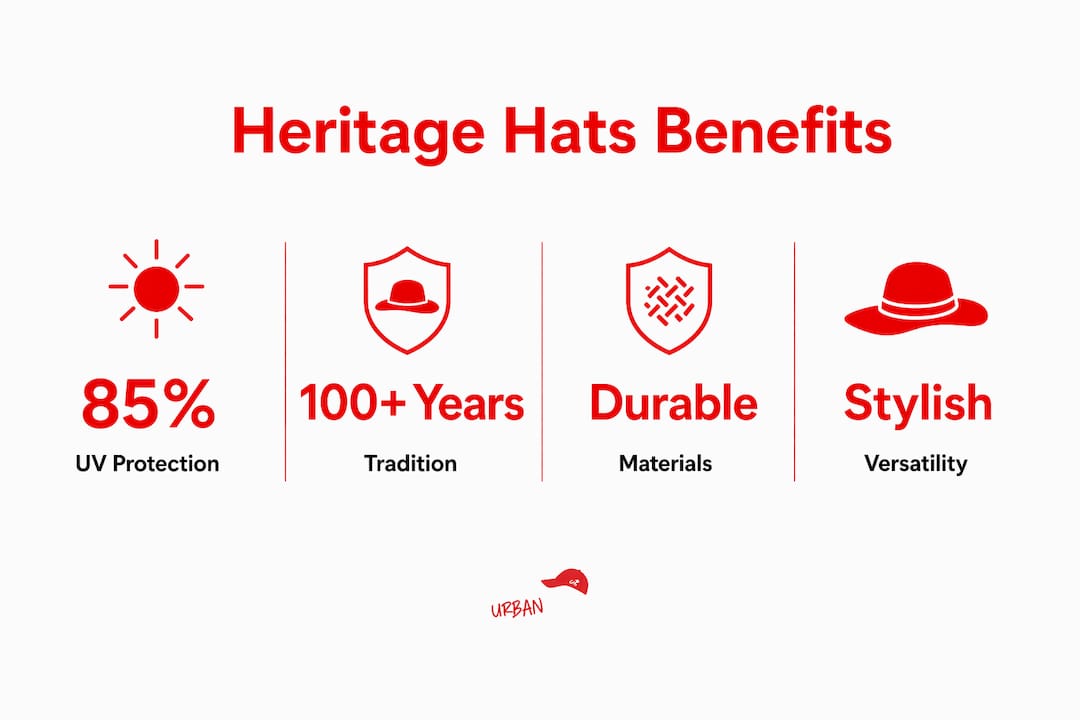
Australian heritage hats carry social meaning that stretches back to the colonial era. The cabbage-tree hat, woven from the leaves of the Livistona australis palm, was among Australia’s first distinctively recognised headwear. Working men wore it in the bush and on the goldfields. It became a marker of local identity at a time when most clothing was imported from Britain.
The slouch hat followed, becoming the signature headwear of the Australian Imperial Force during World War One. One side of the brim was pinned up to allow rifle shouldering. That practical modification became a symbol of national character: resourceful, unpretentious, and built for the conditions at hand. The hat still appears on the Australian Army’s ceremonial uniform today.
“Hats remain potent as fashion statements, symbols of culture, and practical sun protection, connecting modern wearers to historical meanings that run far deeper than the garment itself.”
The cultural significance of hats as markers of social status and identity is well documented across history. In the Australian context, heritage hats communicate specific values: a connection to the land, respect for craft, and a preference for things built to last. Wearing one is a form of non-verbal communication. It signals that you value authenticity over trend.
The shift from functional necessity to fashion symbol happened gradually through the 20th century. As urbanisation increased, the outback hat moved from the paddock to the city street. Designers began incorporating traditional silhouettes into contemporary collections. The cultural weight of the hat transferred intact, even as the context changed.
What materials and construction features make heritage hats durable and distinctive?
The durability of Australian heritage hats comes directly from their materials. Wool felt, kangaroo leather, and other natural fibres provide shape retention and weather resistance that synthetic materials cannot match. Natural fibres regulate moisture and temperature more effectively than synthetic fabrics, which is why a well-made wool felt hat remains comfortable across a full day outdoors.
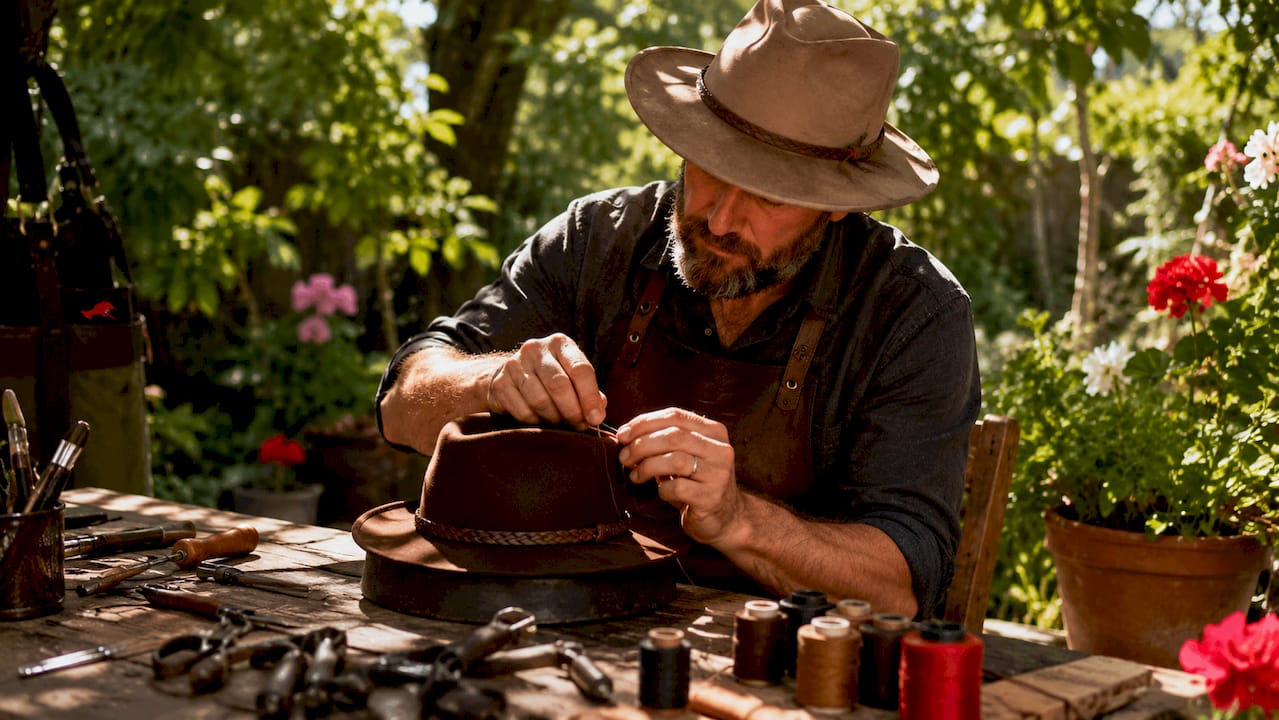
Wool felt is the most common crown material in quality heritage hats. It holds its shape under pressure, repels light rain, and breathes well in heat. Kangaroo leather is used for hat bands, chin straps, and trim. It is lighter than cowhide, extremely strong, and develops a patina with age that synthetic materials simply cannot replicate.
Construction quality shows up in the details. A hand-stitched brim holds its curve longer than a machine-pressed one. A reinforced crown resists denting. The stitching count along the brim edge indicates how much time and skill went into the piece. These are the details that separate a heritage hat from a costume prop.
Proper maintenance extends the life of any heritage hat significantly. Follow these steps to keep your hat in good condition:
- Store it upside down on the crown or in a hat box to prevent brim warping. Avoid leaving it brim-down on a flat surface.
- Keep it away from direct sunlight and intense heat when not in use. Heat causes wool felt to shrink and leather to crack.
- Brush the crown and brim with a soft-bristle hat brush after each use to remove dust and debris before it settles into the weave.
- Spot-clean stains with a damp cloth and mild soap. Never submerge a wool felt hat in water.
- Re-shape the brim while the felt is slightly damp if it loses its curve. Allow it to dry fully in the correct position before wearing.
Pro Tip: Proper storage is the single most effective way to extend a heritage hat’s lifespan. A hat box costs very little compared to replacing a quality piece.
How do heritage hats balance tradition with modern style?
Australian outback hats endure in contemporary fashion because they solve real problems while looking good doing it. The synergy of form, function, and quality materials is why these styles persist well beyond nostalgia. A wide-brimmed wool hat works equally well at a weekend market, on a hiking trail, or at an outdoor wedding.
Modern wearers are blending traditional Australian hat styles with current wardrobe staples. A classic outback hat pairs naturally with linen shirts, denim, and leather boots. The fedora, which shares construction DNA with heritage outback styles, has become a fixture in both casual and dressed-up urban looks. The silhouette is old; the styling is entirely current.
The comparison between heritage hats and fast-fashion alternatives is stark.
| Feature | Heritage hats | Fast-fashion alternatives |
|---|---|---|
| Material | Wool felt, kangaroo leather, natural fibres | Polyester, acrylic, pressed cardboard |
| Lifespan | Many years with proper care | One to two seasons |
| UV protection | Effective with wide, structured brim | Minimal with narrow or soft brim |
| Cultural value | Carries historical and identity meaning | Trend-dependent, disposable |
| Environmental impact | Lower over time due to longevity | Higher due to frequent replacement |
| Shape retention | Holds form through regular use | Loses shape quickly |
Investing in quality heritage headwear promotes sustainable fashion by favouring durable pieces over disposable alternatives. A well-maintained heritage hat becomes better with age. The leather softens, the felt settles, and the hat moulds to the wearer’s head. That is the opposite of fast fashion, where the product degrades from the first wear.
The guide to selecting hats for outdoor activities is a useful reference for matching specific heritage styles to different environments and occasions. The right choice depends on brim width, material weight, and the conditions you expect to face.
Embracing heritage hats reflects a quiet confidence and a rejection of disposable fashion trends. Wearers who choose authenticity and craftsmanship over trend cycles are making a statement that goes beyond the hat itself.
Key takeaways
Australian heritage hats deliver genuine health protection, cultural identity, and lasting durability that fast-fashion headwear cannot match.
| Point | Details |
|---|---|
| Sun protection is the primary function | Wide brims reduce UV exposure to face, neck, and eyes, lowering skin cancer and cataract risk. |
| Cultural meaning runs deep | Styles like the slouch and cabbage-tree hat carry over 200 years of Australian identity and social symbolism. |
| Natural materials outperform synthetics | Wool felt and kangaroo leather regulate temperature, wick moisture, and hold their shape far longer. |
| Proper care extends lifespan significantly | Store upside down on the crown, away from heat and direct sunlight, to prevent brim warping. |
| Heritage hats are a sustainable choice | Their longevity reduces waste and cost over time compared to fast-fashion alternatives. |
Why I think most people underestimate what a heritage hat actually does
Most people treat a hat as an afterthought. They grab whatever is on the rack near the checkout, wear it for a season, and replace it when the brim goes soft. I have worn quality heritage hats for years, and the difference in experience is not subtle.
The first thing you notice is the weight. A well-made wool felt hat has presence. It sits on your head with authority, not like a piece of packaging. After a few weeks, it starts to conform to your head shape. By the end of the first season, it fits better than the day you bought it. No synthetic hat does that.
The cultural dimension surprised me more than the practical one. Wearing a heritage hat changes how people interact with you outdoors. There is a recognition, a nod from other wearers, that does not happen with a generic cap. These hats carry a signal that you understand something about quality and history.
My honest advice: buy once and buy well. The heritage hat styles and modern appeal available today give you no reason to settle for a disposable alternative. A quality piece, properly cared for, will outlast a dozen fast-fashion hats and look better doing it.
— Urban
Quality heritage headwear worth wearing every day
Urbancaps stocks a range of heritage-inspired hats built for real wear, not just display. Each piece prioritises quality materials, structured brims, and timeless silhouettes that work across seasons and settings.

The fedoras hat collection at Urbancaps brings together classic heritage construction with styles suited to everyday use. If you prefer natural warmth and texture, the woolen fedoras hat delivers the feel of traditional craftsmanship in a modern silhouette. Free shipping on all NZ orders. Proudly NZ owned and operated.
FAQ
What makes Australian heritage hats different from regular hats?
Australian heritage hats use natural materials like wool felt and kangaroo leather, feature wide structured brims for UV protection, and carry cultural history dating back to the 1800s. Regular fashion hats typically use synthetic materials with minimal sun protection or cultural significance.
How much UV protection does a wide-brimmed heritage hat provide?
A wide brim reduces UV exposure to the face, neck, and eyes significantly. Given that 2 in 3 Australians are diagnosed with skin cancer by age 70, a structured wide brim is one of the most practical sun-safety tools available.
How do I care for a wool felt heritage hat?
Store it upside down on the crown or in a hat box, away from direct sunlight and heat. Brush it after each use and spot-clean stains with a damp cloth. Never submerge a wool felt hat in water.
Are heritage hats suitable for everyday urban wear?
Yes. Modern Australian hat styles blend traditional silhouettes with current fashion, making them practical for city streets, outdoor events, and travel. The UV protection guide at Urbancaps covers how to choose the right style for different settings.
Why are heritage hats considered a sustainable fashion choice?
Heritage hats are built to last many years with proper care, reducing the need for frequent replacement. Choosing a durable piece over a disposable fast-fashion alternative lowers long-term waste and cost.