

The best caps for hiking, and how to actually choose one
A lightweight technical cap covers you on active days, but a brimmed or cape style hat earns its keep on slow, exposed, high UV missions. For most hikers, Urbancaps’ Travel Hat handles packability on multi-day trips, the Thunderbolt Ski Hat protects ears and neck in cold, wet conditions, and the Heritage Herringbone Ivy Cap suits mild, casual trail days. Each choice comes down to three things: UPF rating, ventilation, and how small it packs.
TL;DR:
- A packable, lightweight hat like Urbancaps’ Travel Hat is ideal for multi-day trips and variable weather, as it folds flat without losing shape.
- Insulated and water-resistant options like the Thunderbolt Ski Hat suit cold, windy, and wet conditions, especially on alpine or shoulder season hikes.
- Casual styles such as the Heritage Herringbone Ivy Cap provide warmth and structure for mild weather but are less suitable for intense sweating or heavy rain.
- Proper fit, ventilation, UPF rating, and packability are crucial factors to select a hat that performs well and remains comfortable during different trail conditions.
- Urban caps’ range is shaped by local feedback, prioritizing items like chin cords, packable brims, and ear coverage to suit real trail scenarios.
Table of Contents
- Which Urbancaps hiking caps suit your trip
- Hiking hats and caps: which type suits which trail
- How to choose a hiking cap that actually fits your trip
- What UPF means and how fabric choice changes your protection
- Getting the fit and pack size right before you buy
- Keeping your hiking hat in shape after every trip
- Why Urbancaps builds its hiking range around real trail conditions
- Shop Urbancaps’ hiking-ready headwear
- Sources
- FAQ
Which Urbancaps hiking caps suit your trip
Not every trail calls for the same headwear, and buying one hat to cover every scenario usually means compromising on something. Sorting Urbancaps stock by hiking use case, rather than by style name, makes the shopping decision faster and less prone to buyer’s remorse.
The Travel Hat is the pick for anyone stacking kilometres across multiple days. It folds flat without losing shape, which matters more than most first time buyers expect. Experienced hikers often run two hats in rotation, a breathy cap for movement days and a brim or cape style for slow, high exposure days, because no single hat handles both jobs well. The Travel Hat is built for the packable half of that rotation. It suits day hikers heading into variable weather and multi day backpackers who need a hat that survives being stuffed into a side pocket for six hours straight, then pulled out and worn without a crease down the crown.
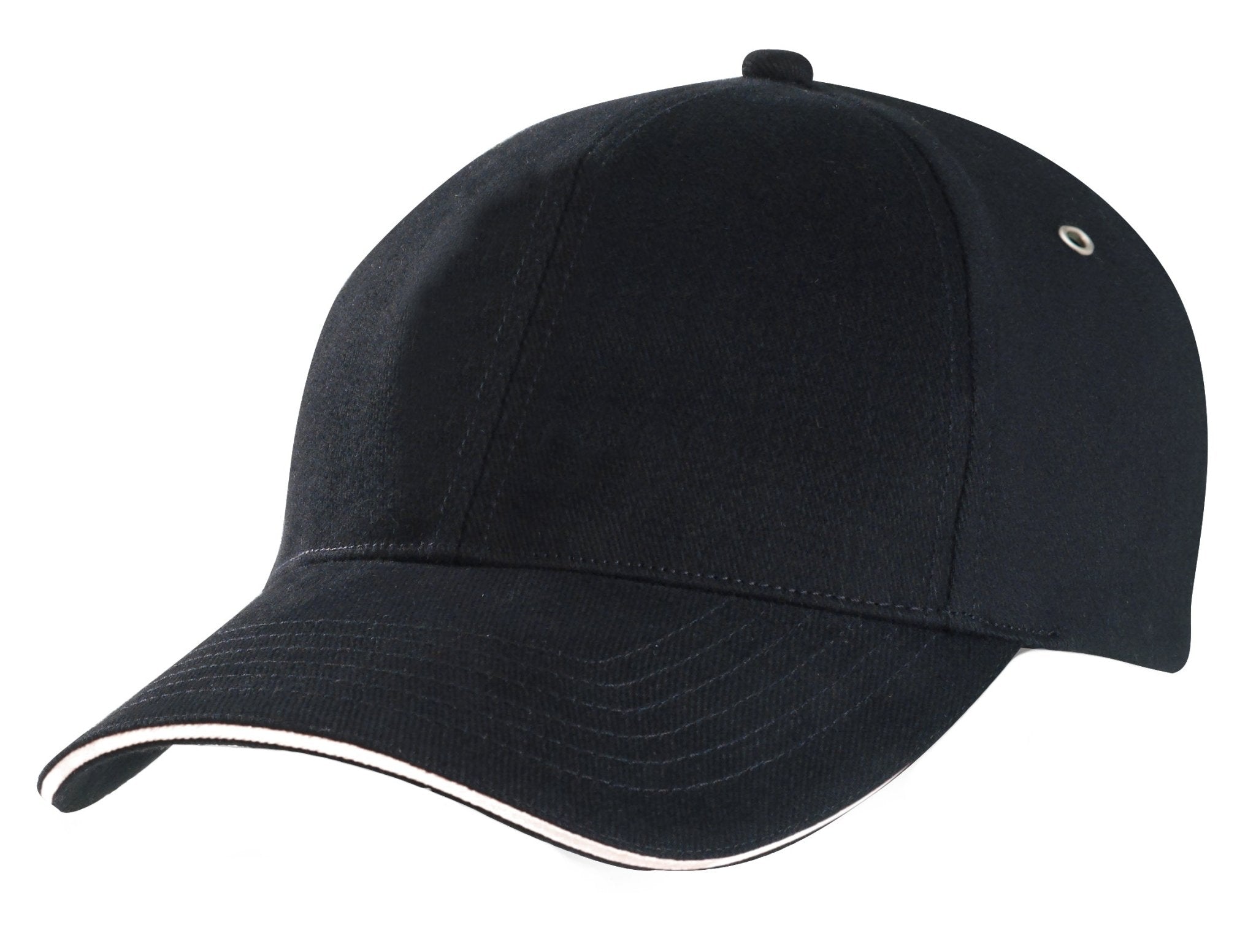
The Thunderbolt Ski Hat is the cold weather and wet conditions answer. Its ear protection makes it a genuine option for shoulder season hiking, not just snow sports, where wind chill on an exposed ridge does more damage than most hikers plan for. If your trail runs into alpine terrain, or you’re heading out in late autumn or early spring when temperatures swing hard between the car park and the summit, this is the one to have in the pack even if you don’t wear it the whole way. It suits alpine hikers and anyone doing cold weather approaches where a technical sun cap simply won’t cut it.
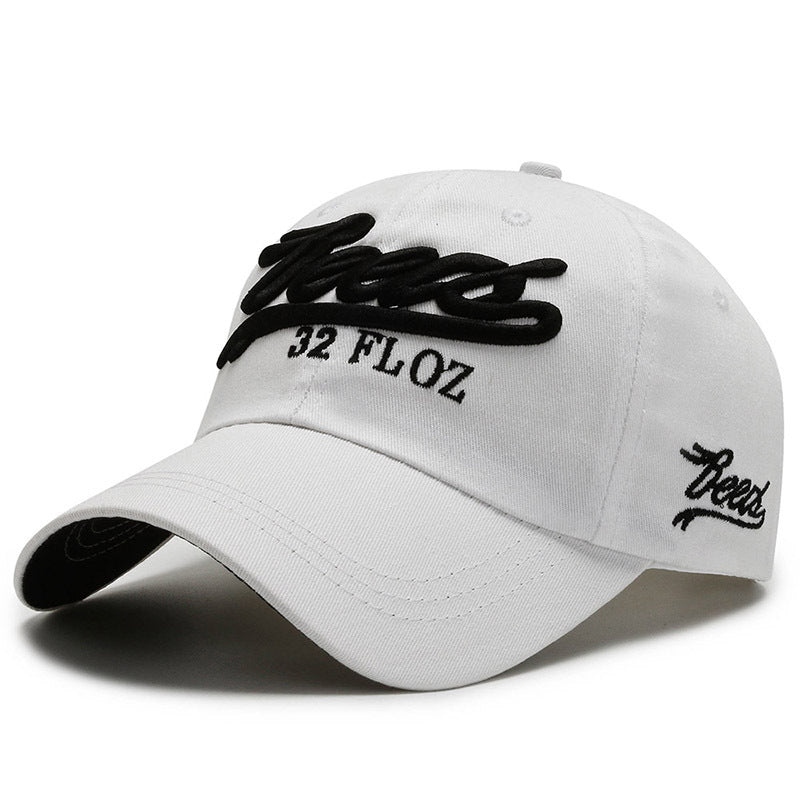
The Heritage Herringbone Ivy Cap takes a different angle entirely. It’s a flat cap built from herringbone wool, which means better structure and a warmer profile than a typical cotton trail cap, at the cost of some breathability. This one fits casual trail days, low intensity walks, and hikers who want their headwear to look as good at the trailhead café as it did on the track. It’s not the pick for a sweaty six-hour climb, but for gentle forest trails or scenic walks where sun exposure is moderate and pace is relaxed, it earns its spot.
The Fedora Hat Jazz Style Fedoras Hat brings genuine brim coverage in a shape most hikers wouldn’t default to, but that’s part of its appeal for casual bushwalking and low-key countryside routes. A wider brim, even in a shaped felt or fabric fedora, gives more consistent shade across the face and neck than a ballcap does. It won’t survive a scramble the way a technical cap will, and it’s not the choice for anything with wind, but on a still day along a well-formed track, it offers coverage a ballcap simply can’t match.
The Steampunk Hat Gear Punk Rivet Hat Gothic Glasses Magic Hat Fedoras Hat sits at the style-forward end of the range. It’s built with structure and rivet detailing, and while it’s not aimed at alpine conditions, it suits hikers who prioritise a distinct look on gentler trail walks, photography hikes, or scenic day trips where making a statement matters as much as the weather forecast.
The Dakota Heritage Wool Rancher Hat is the wide-brim wool option for hikers wanting maximum shade on flatter, open terrain, think riverside trails, farmland walking tracks, or high country stations where reflected glare off open pasture or water adds to direct sun exposure. Wool felt holds its shape in light rain better than most cotton hats, though it’s heavier and less packable than a nylon cap, so it suits day trips more than multi day carries.
Two accessory style products round out the practical side of the range. The Travel Hat, Accessories Bag - Premium Quality, isn’t headwear itself but solves a problem every hiker with more than one hat eventually hits: how to carry a spare without crushing the brim. It’s worth mentioning here because it pairs directly with the packable picks above, more detail on that in the care and maintenance section below.
Here’s how the core hiking picks stack up against each other:
| Pick | Best for | Material | Breathability | Packability |
|---|---|---|---|---|
| Travel Hat | Multi-day backpacking, variable weather | Lightweight technical fabric | High | Excellent, folds flat |
| Thunderbolt Ski Hat | Alpine, cold and wet conditions | Insulated shell with ear coverage | Low to moderate | Moderate, bulkier |
| Heritage Herringbone Ivy Cap | Casual, mild day walks | Herringbone wool | Moderate | Poor, structured crown |
| Dakota Heritage Wool Rancher Hat | Open terrain, day trips, glare | Wool felt | Moderate | Poor, wide brim |
| Fedora Hat Jazz Style Fedoras Hat | Still-air bushwalking, style-first days | Shaped fabric or felt | Moderate | Fair |
None of these is a universal answer. Matching pick to trip type, rather than buying whichever hat looks best on the shelf, is what actually prevents the common mistake of a hiker showing up to an alpine crossing with a wool rancher hat and no wind protection.
Hiking hats and caps: which type suits which trail
Every hiking hat style trades something for something else. Understanding what’s on each side of that trade makes the difference between grabbing whatever’s on the hook by the door and choosing gear that actually earns its place in the pack.
1. Sun hats (wide-brim)
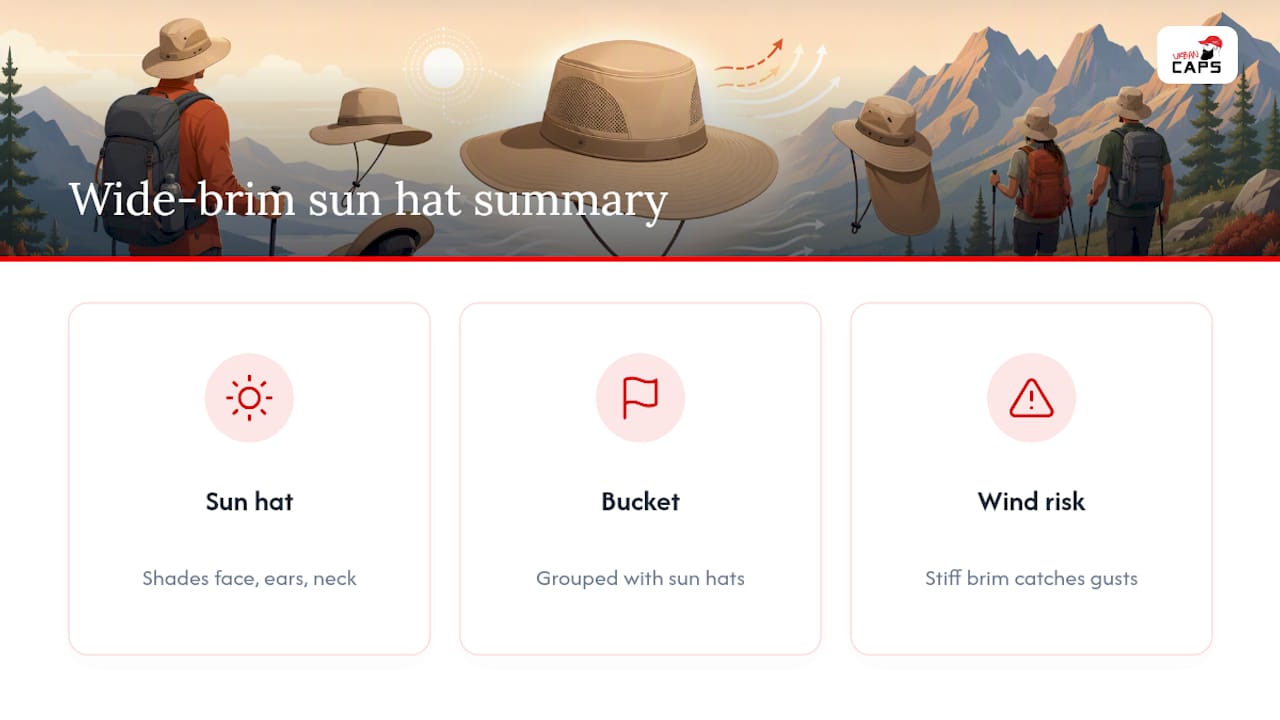
Wide-brim sun hats give the most consistent shade across the face, ears, and back of the neck in one piece. Common hiking headwear terms group these alongside boonie and fisherman’s style bucket hats, and both work best in high UV, low wind conditions: alpine plateaus, desert crossings, open coastal tracks. Where they struggle is wind. A stiff brim catches gusts on exposed ridgelines and can act like a small sail, so this style suits calmer terrain more than anything above the treeline on a blustery day.
2. Caps (ballcaps and trail caps)
Caps are light, breathable, and cheap to replace, but they leave the ears and neck exposed. Pairing a cap with a sun hoodie or neck gaiter closes that gap and gives coverage close to a full brim hat while keeping a cooler, more active profile for movement heavy days. This is the layered system most experienced hikers land on: cap for the climb, brim or cape for the exposed summit break.
3. Bucket hats (boonie style)
Bucket hats split the difference between a cap and a full brim hat. The all-round brim gives partial neck coverage without the wind catch of a stiffer wide-brim hat, which makes them a solid middle ground for forested trails with patchy sun and moderate wind.
4. Cape or Legionnaire style hats
A cape style hat, sometimes called a Legionnaire hat, attaches a fabric drape to the back of a cap to cover the neck and ears completely. It’s the best option for high UV, low wind missions like glacier approaches or long exposed ridge walks where neck coverage matters more than airflow. The trade off is heat retention. On humid forest trails, that same drape traps warmth and becomes uncomfortable fast.
5. Rain hats
Purpose built rain hats use a treated or waterproof shell rather than a woven UPF fabric, prioritising water shedding over sun protection. They’re the right call for shoulder-season wet hiking in persistent drizzle, where a cotton or wool hat would eventually soak through and lose its shape.
6. Beanies and insulated caps
For genuine cold, a beanie or ear-covering technical cap like the Thunderbolt Ski Hat outperforms every sun-focused style above. Insulation and wind resistance matter more than ventilation once temperatures drop, which is why this category sits apart from the sun protection styles rather than competing with them.
Brim stiffness also affects how a hat behaves once you’re carrying a pack. A stiff, structured brim gives more stable shade but can catch on shoulder straps or a pack’s top pocket, while a smaller brim or a cape style hat rides more comfortably under load. If you’re wearing a headlamp for early starts, brim size and shape also decide how easily the lamp sits without pushing the hat forward into your eyes, worth checking before you buy, not after you’re on the trail in the dark.
How to choose a hiking cap that actually fits your trip
Buying headwear for hiking comes down to matching a handful of conditions to a handful of features. Skip this step and you end up with a hat that looks right in the shop and fails on the trail.
Start with the trip itself, not the hat:
- Activity type. Fast-paced day hikes favour a light, ventilated cap. Slow, exposed alpine days favour a brim or cape.
- Expected UV and reflection. Snow, water, and open pasture all reflect UV back up at your face, doubling the exposure a shaded valley trail would give you.
- Wind exposure. Ridgelines and coastal tracks need a chin cord or a smaller, more secure profile. Wide brims without a cord are a liability in gusty conditions.
- Humidity and heat. Dense mesh panels cool you down but let more UV through, so a hot, high UV day is a genuine trade off, not a free win.
- Pack space. Multi-day trips reward a hat that folds flat over one that holds a rigid shape.
- Headlamp and hood compatibility. If you’re hiking before dawn or wearing a hood in wet weather, check the crown depth and brim size work with both.
Once you’ve matched the trip to a rough style, the product page itself tells you the rest. Look specifically for:
- UPF rating, ideally stated on the listing rather than implied by fabric colour alone.
- Fabric type, since nylon and polyester dry fast and pack small, while wool and felt offer warmth at the cost of weight.
- Crown ventilation, mesh panels or eyelets that let heat escape on climbs.
- Chin cord, essential for anything with wind exposure.
- Rear cinch or adjuster, so the hat fits securely without a headband gap.
- Brim stiffness, structured for stable shade, or soft and packable for stowing.
- Care instructions, hand wash only versus machine washable changes how practical a hat is for multi-day trips.
Pro Tip: If a product page doesn’t list a UPF rating, look for a tightly woven, darker fabric. Loose weaves and pale colours generally offer less protection even when they feel cooler against the skin.
A few red flags are worth walking away from outright. A heavy leather or full wool hat for a long, hot multi-day hike will wear you down through weight alone, no matter how sharp it looks. A cap with zero ventilation for a hot climate trip means trapped heat with no escape route. And a brim wide enough to catch on your pack’s shoulder straps every time you turn your head becomes an annoyance within the first hour, not the last. None of these are dealbreakers for every hiker, but they’re the details that separate a hat you forget you’re wearing from one you’re fighting with by lunchtime.
What UPF means and how fabric choice changes your protection
UPF stands for Ultraviolet Protection Factor, the fabric equivalent of sunscreen’s SPF rating. It measures how much UV radiation passes through a textile to reach your skin, and it’s the single most useful number on any hiking hat’s product page.
UPF 50 fabric blocks roughly 98% of UV radiation that would otherwise reach the skin beneath it. Most dedicated sun hats sit in the UPF 40 to 50+ range, and that rating alone is often a faster filter than reading a full fabric spec sheet.
Fabric choice decides everything else about how a hat performs once UPF is sorted. Nylon and polyester dominate lightweight, quick-drying caps because they resist moisture, dry fast after a creek crossing or sudden downpour, and pack down small. Treated shells and technical waterproof fabrics take over for dedicated rain hats, prioritising water shedding over the airflow a sun cap needs. Wool and felt, as used in the Dakota Heritage Wool Rancher Hat and Heritage Herringbone Ivy Cap, offer real warmth and structure but carry more weight and take longer to dry if they get wet, better suited to day trips than a week on trail.
Ventilation adds a genuine complication to the UPF conversation. Mesh panels improve cooling significantly on hot climbs, but open weave fabric lets more UV through than a tightly woven crown. The fix isn’t avoiding mesh altogether, it’s choosing a hat where the mesh panels sit on the sides or back while the UPF-rated fabric stays over the crown and face-facing brim, so you get airflow where sweat builds up without sacrificing protection where sun exposure is highest.
Colour plays a smaller but real role too. Light colours reflect more heat, which matters on long exposed climbs in summer, but they show dirt, sweat, and trail grime far faster than darker fabrics. Darker colours also tend to offer marginally better UV blocking for the same weave density, so the trade off between look, temperature, and how often you’ll want to wash it is worth thinking through before you commit to a colour.
Getting the fit and pack size right before you buy
A hat that photographs well on a product page can still be wrong for your head, your pack, or your sunglasses. A handful of checks before you buy, or before you set off with a new hat for the first time, catches most of the common fit mistakes.
Start with measurement. Wrap a soft tape measure around your head just above the ears, and compare that figure against the size guide on the product listing rather than guessing from a size label alone. Where possible, try a hat on before committing, particularly for structured styles like the Dakota Heritage Wool Rancher Hat or the Fedora Hat, since fit varies more across brim styles than it does across simple ballcaps.
Packability deserves its own quick test. Fold or gently crush the hat in your hand, the way it’ll sit in a side pocket for hours. A hat that springs back to shape is genuinely packable; one that creases and stays creased is a day-hike-only option, no matter how light it feels on the shelf. This is exactly where lightweight technical caps under 50 grams earn their reputation, they disappear into a pack pocket and come out ready to wear.
Stability under load matters more than most buyers expect until they’re on a windy ridge with a loaded pack. A few things to check:
- Chin cord. Non-negotiable for anything with wind exposure, and worth checking it’s adjustable rather than fixed length.
- Rear cinch. Lets you fine-tune fit without a headband gap that lets heat and sun in around the edges.
- Sunglasses compatibility. Put the hat on with your actual hiking sunglasses. A brim that pushes glasses down your nose, or arms that catch on the hat band, is a daily irritation on a multi-day trip.
- Pack strap clearance. Turn your head side to side with your pack on. If the brim catches a shoulder strap every time, that’s a problem you’ll feel a hundred times a day.
Pro Tip: Try the hat on with the exact backpack and sunglasses you use most before you commit. A hat that fits perfectly on its own can still fail once a pack strap and sunglasses arm are added to the mix.
Keeping your hiking hat in shape after every trip
Trail dust, sweat, and sun exposure all wear down a hat’s fabric and shape faster than everyday wear does. A few simple habits keep a hiking hat performing, and looking decent, for years rather than months.
- Check the care label before washing. Technical fabric caps like the Travel Hat generally tolerate a gentle machine wash, while structured wool pieces such as the Heritage Herringbone Ivy Cap and Dakota Heritage Wool Rancher Hat need hand washing or spot cleaning to avoid warping the shape.
- Reshape brims while damp. A stiff brim that’s been crushed in a pack softens slightly with moisture, giving you a short window to press it back into shape before it dries and sets.
- Air dry away from direct heat. Direct sun or a heater dries fabric unevenly and can weaken UPF-treated coatings over time; a shaded, airy spot works better.
- Store on a shelf or in a dedicated bag, not squashed at the bottom of a cupboard. A brimmed hat stored flat under other gear will hold that crushed shape permanently.
- Carry a spare hat in a protective bag on multi-day trips. The Accessories Bag - Premium Quality keeps a folded spare cap from getting crushed alongside boots, cookware, and everything else competing for space in a pack.
Small on-trail damage, a bent brim wire or a loosened cinch cord, is usually fixable at home rather than a reason to replace the hat outright. A few minutes with a damp cloth and gentle reshaping solves most of it.
Why Urbancaps builds its hiking range around real trail conditions
Urban here. Stocking headwear for New Zealand hikers means thinking past the studio photo and into what actually happens on a trail: sweat, sudden wind changes, a pack strap that won’t sit still, and weather that can shift from sun to sideways rain inside an hour. Urbancaps keeps local stock and fast NZ delivery front and centre because gear decisions for an upcoming trip often happen on a tight timeline, not weeks in advance.
Customer feedback shapes which features get prioritised in the range more than any single trend does. Requests for better chin cord adjustability, more genuinely packable brimmed options, and warmer ear coverage for shoulder season trips have all fed directly into which products stay in stock and which get refined. It’s a straightforward loop: hikers say what fails on trail, and that feedback shapes the next stock decision.
There’s no universal best hat, and any guide claiming otherwise is oversimplifying. What’s consistent is that the hikers with the fewest complaints are usually the ones running two hats in rotation rather than expecting one to do everything.
— Urban
Shop Urbancaps’ hiking-ready headwear
Every pick covered above is in stock and ready to ship, so there’s no guessing which product page matches the hat described in this guide. Urbancaps ships fast across New Zealand, which matters when a trip is booked and the weather forecast has just changed your headwear priorities.

Start with the Travel Hat if packability is your priority, or the Thunderbolt Ski Hat if your next trip runs into cold or exposed terrain. For milder trail days with more of a style focus, the Heritage Herringbone Ivy Cap and Dakota Heritage Wool Rancher Hat are both worth a look. If you’re planning to carry a second hat in rotation, the Accessories Bag - Premium Quality keeps it protected in transit.
- Travel Hat, the packable pick for multi-day trips
- Thunderbolt Ski Hat, for cold and wet conditions
- Heritage Herringbone Ivy Cap, for casual mild-weather trail days
- Accessories Bag - Premium Quality, to protect a spare hat on the trail
Head to the full hiking headwear range to compare current stock and check delivery timing for your area.
Sources
The claims in this article on UPF, hat types, and fit are drawn from a handful of consumer and outdoor gear authorities rather than marketing copy:
FAQ
Should you wear a cap when hiking?
Yes. A cap shades your eyes and face, cuts UV exposure, and helps with temperature management and insect protection, though pairing it with a sun hoodie or neck gaiter closes the neck and ear coverage gap a cap alone leaves open.
Which is better for hiking, a cap or a bucket hat?
A cap suits fast-paced, active days where breathability matters most, while a bucket hat gives broader coverage for moderate sun and wind, making it the better pick for slower, more exposed walking. Neither is universally better, the right choice depends on pace, terrain, and how much neck coverage the conditions demand.
What are the hiking hats called?
Hiking headwear covers several named styles: wide-brim sun hats, ballcaps or trail caps, bucket hats (also called boonie or fisherman’s hats), cape or Legionnaire style hats, and dedicated rain hats. Each name refers to a distinct shape built for different sun, wind, and moisture conditions.
What UPF rating should a hiking hat have?
Look for UPF 40 to 50+, since a UPF 50 fabric blocks around 98% of UV radiation. If a product page doesn’t list a UPF rating, choose a tightly woven, darker fabric as the next-best filter.
Can you wear a hiking cap with a backpack and sunglasses?
Most caps and smaller-brim hats work fine under pack straps, but wide-brim and cape style hats can catch on shoulder straps depending on brim stiffness. Always test the hat with your actual pack and sunglasses before relying on it for a multi-day trip.