

Beanies vs. Caps: Choosing Your Best Headwear
Choosing between beanies and caps is more than a quick grab before heading out—it shapes how you stay comfortable and showcase your style across shifting New Zealand seasons. For those who value both premium quality and self-expression, understanding the core design differences makes finding your signature fit simpler. Whether you crave snug warmth for winter walks or structured shade for summer adventures, this guide breaks down what truly sets these essentials apart.
Table of Contents
- Beanies And Caps Defined: Core Differences
- Popular Types And Styles Of Beanies
- Key Cap Varieties And Signature Features
- Materials, Construction, And Practical Uses
- Fashion Impact, Weather Suitability, And Mistakes To Avoid
Key Takeaways
| Point | Details |
|---|---|
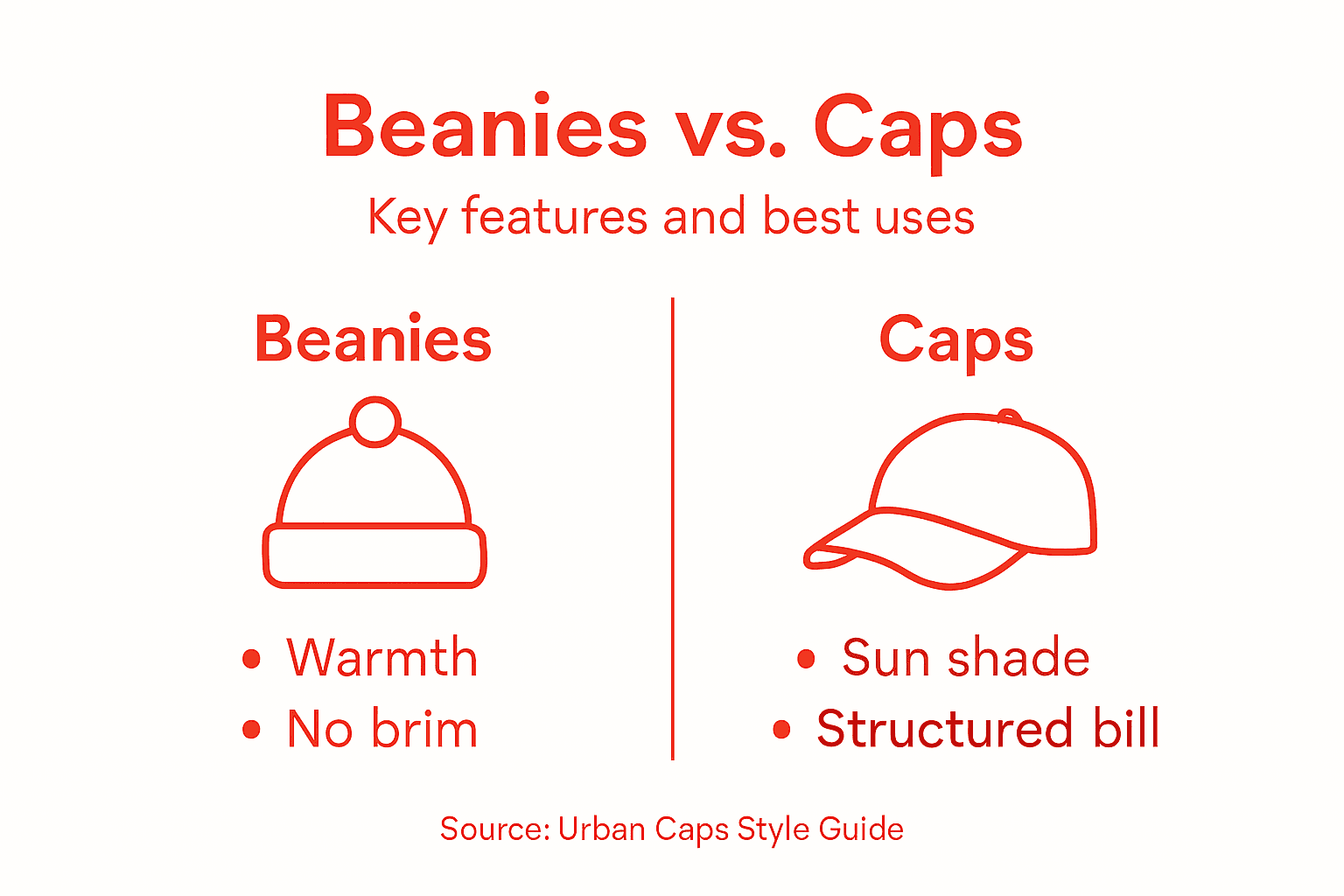
| Beanies vs. Caps | Beanies provide warmth without a brim, while caps protect against sunlight with a structured bill. |
| Material Importance | The choice of material affects performance; wool for warmth, acrylic for durability, cotton for breathability. |
| Seasonal Choices | Beanies are best for winter, and caps suit warmer months or outdoor activities. |
| Style and Functionality | Understanding the style and purpose of each type ensures the right choice for occasions and personal expression. |
Beanies and caps defined: core differences
Think of beanies and caps as two completely different animals. One wraps your head in warmth, the other shields your eyes from the sun. The confusion between them is real, but the distinctions are crystal clear once you understand their core design.
Beanies are soft, close-fitting knit hats that sit snugly on your crown and ears. They’re typically made from wool, acrylic, or cotton blends designed to trap heat. Most importantly, beanies have no brim) — they’re just pure fabric wrapping around your head.
Caps, on the other hand, feature a structured front with a visor or bill that extends outward. This bill serves a practical purpose: shading your eyes and face from sunlight. The crown is more defined and structured compared to a beanie’s flexible fit.
The Structural Breakdown
Here’s what separates them:
- Brim presence: Beanies are brimless; caps always have a bill or visor
- Fit: Beanies hug your head closely; caps sit higher with more defined structure
- Fabric: Beanies use knit materials; caps mix knit with structured panels
- Crown shape: Beanies are soft and moldable; caps maintain a firm shape
Function Versus Fashion
Beanies exist primarily for warmth. They originated as practical headwear for laborers and military personnel, evolving into casual fashion staples. The snug fit keeps your ears and head warm without any exposed areas.
Caps prioritize sun protection and style differentiation. The bill blocks UV rays and reduces glare, making them ideal for outdoor activities and sports. Caps come in endless variations — baseball caps, dad hats, flat caps, trucker styles — each with distinct aesthetics.
The core difference comes down to this: beanies warm your head completely, while caps shield your face with a structured bill.
New Zealand’s cooler months make beanies essential, but summer outdoor activities demand cap protection. Many Kiwis own both because they solve different problems.
Your climate, activity, and wardrobe determine which suits you best. A beanie works for winter commutes. A cap works for beach days or weekend hikes. Some people alternate seasonally; others wear them based on the specific occasion or outfit they’re creating.
Here’s a summary of when to choose a beanie or a cap for New Zealand’s climate:
| Scenario | Best Choice | Reason |
|---|---|---|
| Winter commuting | Beanie | Maximum warmth and ear coverage |
| Sunny beach outing | Cap | Sun protection and ventilation |
| Transitional seasons | Either | Depends on temperature swings |
| Hiking or sports | Cap | Sweat management and eye shading |
Pro tip: Grab a quality beanie for colder months and a structured cap for sun protection — having both means you’re prepared for any New Zealand weather or situation.
Popular types and styles of beanies
Beanies aren’t one-size-fits-all. Walk into any shop and you’ll spot dozens of variations, each designed for different occasions, climates, and personal styles. Understanding the options helps you pick the right one for your lifestyle.
Core Beanie Styles
The most common styles you’ll encounter include:
- Classic knit beanies: Traditional tight-fitting caps that hug your head, perfect for winter warmth
- Slouchy beanies: Relaxed, oversized designs that sit higher on your head for a laid-back vibe
- Cuffed beanies: Feature a folded brim at the base, offering a polished, finished look
- Pom-pom beanies: Topped with a fluffy ball for added personality and style flair
Seamed beanies made from fabric panels offer structured construction, while modern slouchy designs embrace a more casual aesthetic. The differences matter because each style signals something different about how you want to present yourself.
Materials Make the Difference
What your beanie is made from determines how it performs. Wool beanies trap heat efficiently and age beautifully. Acrylic blends offer affordability and durability. Cotton and bamboo provide breathability for milder temperatures.
Performance-oriented beanies use moisture-wicking fabrics designed for active outdoor use. These work brilliantly for hiking, trail running, or any activity where sweat matters. They keep your head dry while maintaining warmth.
The beanie you choose depends on where you’ll wear it and what you need it to do.
Style Meets Function
New Zealand fashion-forward Kiwis often choose beanies based on their seasonal wardrobe and social context. A slouchy beanie works for casual weekend vibes. A structured cuffed design pairs better with professional or smart-casual outfits.
Color and pattern options have exploded in recent years. Plain black, navy, or gray beanies remain classics. Multi-colored designs, stripes, and patterns let you express personality. Some people rotate multiple styles throughout their wardrobe.
Decoration details like pins, patches, or embroidered logos add customization. These touches transform a basic beanie into something uniquely yours.
Finding Your Fit
Consider these factors when selecting a beanie:
- Occasion: Casual wear, outdoor sports, or work environment?
- Climate: Winter cold, transitional seasons, or cool evening activities?
- Personal style: Minimalist, bold, vintage, or trendy?
- Head shape: Some styles flatter rounder faces; others suit longer faces better
Pro tip: Choose a neutral wool beanie for winter essentials and grab a slouchy or patterned style for casual outings — this combination covers most situations throughout the year.
Key cap varieties and signature features
Caps come in dozens of varieties, each with distinct personalities and purposes. From sports fields to city streets, different cap styles signal different vibes. Knowing what separates them helps you choose the right one for your situation.
The Classic Baseball Cap
The baseball cap remains the most recognizable cap worldwide. It features a structured crown paired with a flat or curved bill that shades your eyes from the sun. The back typically adjusts with a strap or snap closure, making it universally sized.

Baseball caps work brilliantly for casual everyday wear, outdoor activities, or sports events. The iconic bill reduces glare while the structured crown maintains its shape. Team logos and branding make them identity markers in sports culture.
Beyond the Baseball Cap
Other popular varieties each bring something unique:
- Flat caps: Rounded flat crown with short stiff brim, offering a vintage, sophisticated look perfect for smart-casual styling
- Trucker caps: Mesh backing for breathability, popular for outdoor work and casual fashion
- Newsboy caps: Round crown with a small rounded brim, delivering vintage charm and heritage appeal
- Bucket hats: Wide downward-sloping brims providing maximum sun protection for beach or festival days
Each style carries historical weight and fashion associations. Your choice signals something about your aesthetic and lifestyle.
Signature Features That Matter
Cap design comes down to specific elements working together:
- Brim length: Longer brims offer more sun protection; shorter brims feel sportier
- Crown rigidity: Structured crowns hold their shape; softer crowns adapt to your head
- Material selection: Cotton breathes well; wool adds warmth; technical fabrics wick moisture
- Closure type: Adjustable straps suit most heads; fitted caps offer a precise fit
The cap you choose depends on how you’ll wear it and what you want it to communicate.
New Zealand’s variable weather demands versatility. A lightweight baseball cap handles spring and summer. A wool flat cap suits cooler months. Many fashion-forward Kiwis own multiple styles for different occasions.
Decoration options range from minimal branding to bold graphics, embroidery, or colorway combinations. Your personal style determines whether you want understated or statement-making headwear.
Pro tip: Start with a neutral-colored baseball cap for everyday versatility, then add a flat cap or bucket hat once you understand your personal style preferences.
Materials, construction, and practical uses
What your headwear is made from and how it’s constructed directly impacts its performance, durability, and comfort. Material choice matters more than most people realize. Construction quality separates a beanie or cap that lasts years from one that deteriorates quickly.
Understanding Beanie Materials
Wool remains the gold standard for beanies. It naturally insulates by trapping warm air, regulates temperature, and ages beautifully over time. Merino wool specifically offers softness without itchiness. Pure wool beanies cost more but deliver superior longevity.
Acrylic blends provide affordable alternatives with excellent durability and easy care. They resist pilling better than pure wool and work well for active use. Acrylic doesn’t itch as much as traditional wool, appealing to sensitive skin.
Cotton and bamboo materials offer breathability for transitional seasons. These work brilliantly if you need something lighter than wool but still protective. They excel when spring weather fluctuates throughout the day.
Knit caps constructed from wool or synthetic fibers provide insulation by trapping warm air close to your skin. The knitted construction allows stretch and comfort across different head sizes. This flexibility makes them practical for varied body types.
Compare key material benefits for beanies and caps below:
| Material | Common For | Main Advantage | Best Use Case |
|---|---|---|---|
| Wool | Beanies | Superior warmth | Cold winter days |
| Acrylic | Beanies | Durability, value | Everyday wear |
| Cotton | Caps | Breathability | Warm or humid settings |
| Technical | Caps | Moisture wicking | Active outdoor sports |
How Beanies Are Built
Construction methods vary significantly:
- Tubular knitting: Seamless construction creates smooth, comfortable fit without irritating seams
- Seamed panels: Multiple fabric pieces sewn together offer structured shape and durability
- Pom-pom or tassel toppers: Decorative additions enhance style and personality
- Folded brims: Provide finished edges and allow cuff adjustment for preferred coverage
Seamless construction feels better against skin, especially during extended wear. Seamed designs offer more structure and defined silhouettes.
Cap Construction Differences
Caps require more structured construction than beanies. Multiple fabric panels, interfacing, and bill reinforcement create rigidity. Cotton twill, canvas, and technical performance fabrics provide durability for regular use.
Bill construction deserves attention. Structured bills maintain shape through repeated wear. Curved bills conform to your head shape naturally. Flat bills offer modern, bold aesthetics.
Material quality determines how long your headwear lasts and how comfortable it feels during everyday wear.
Practical Uses Across Seasons
Wool beanies dominate winter months when temperature drops. They provide serious warmth for commuting, outdoor sports, or casual outings. Lightweight acrylic options work for mild winters or layering.
Caps serve spring, summer, and early fall activities. Baseball caps handle sun exposure effectively during outdoor work or recreational activities. Bucket hats maximize protection for beach days or extended outdoor time.
Performance materials using moisture-wicking technology suit active pursuits. Trail runners, hikers, and cyclists benefit from fabrics that manage sweat while maintaining temperature regulation.
Pro tip: Invest in one quality wool beanie and one breathable cap, rotating them seasonally—this combination addresses New Zealand weather year-round without requiring constant replacements.
Fashion impact, weather suitability, and mistakes to avoid
Your headwear choice affects more than just your outfit—it influences comfort, functionality, and environmental impact. Getting this decision right means understanding seasonal demands, style alignment, and common pitfalls that derail even thoughtful choices.
Weather Suitability Matters
Beanies excel in cold, winter conditions where warmth becomes non-negotiable. Their insulating knit fabric traps body heat effectively, making them ideal for commutes, outdoor activities, and casual wear when temperatures drop. Wool beanies provide serious protection; acrylic options work for milder cold snaps.
Caps dominate mild to warm seasons. The bill provides crucial sun protection and ventilation without trapping heat. Baseball caps, flat caps, and bucket hats all serve different warm-weather scenarios.
New Zealand’s unpredictable spring and autumn weather demands flexibility. Beanies work best for cold winter weather due to insulating knit fabric, while caps suit mild to warm conditions. Owning both means you’re prepared regardless of what the forecast brings.
Fashion Impact and Personal Style
Your headwear choice communicates something about your aesthetic. A structured flat cap suggests sophistication and vintage awareness. A slouchy beanie signals casual, relaxed vibes. A trucker cap projects outdoor confidence.
Consider how styles interact with your existing wardrobe:
- Minimalist outfits: Neutral beanies or simple baseball caps create clean aesthetics
- Streetwear looks: Bold-colored or patterned beanies amplify contemporary energy
- Smart-casual dressing: Flat caps or newsboy caps elevate the overall presentation
- Outdoor activities: Performance caps blend function with modern style
The wrong style choice creates visual discord, regardless of quality. A formal flat cap clashes with gym clothes. A casual slouchy beanie doesn’t complement professional environments.
Common Mistakes to Avoid
These errors derail even quality headwear:
- Ignoring weather appropriateness: Wearing thick wool beanies in summer heat or lightweight caps during winter cold
- Neglecting material breathability: Choosing non-breathable fabrics for active pursuits or warm climates
- Wrong sizing: Caps too loose slide down; beanies too tight cause discomfort during extended wear
- Occasion mismatches: Wearing casual styles to professional settings or vice versa
- Overlooking sustainable options: Fashion production creates environmental impact through resource-intensive methods, making quality, durable choices important
Many people grab whatever’s available rather than matching conditions. This creates discomfort and wasted money on pieces that don’t serve actual needs.
The right headwear fits your climate, complements your style, and lasts through repeated use.
Sustainable Choices Matter
Quality matters more than quantity. One excellent wool beanie outlasts five cheap acrylic alternatives. Investing in durable, well-constructed headwear reduces overall waste and environmental impact. Local New Zealand manufacturing supports both sustainability and community.
Pro tip: Choose one quality beanie and cap that genuinely match your climate and personal style, then wear them confidently throughout their seasons rather than constantly replacing lower-quality alternatives.
Find Your Perfect Beanie or Cap at Urban Caps
Choosing between a beanie and a cap comes down to your specific needs for warmth, sun protection, and style as detailed in our article. Whether you want the snug comfort of a wool beanie to brave New Zealand’s cool winters or the sun-shielding practicality of a structured cap for outdoor activities, solving this headwear challenge starts with selecting quality, durable options crafted for your lifestyle.

Explore our premium collection at Urban Caps where craftsmanship meets functionality. From classic knit beanies to versatile baseball caps and heritage-inspired flat caps, every piece is designed to fit your climate and style perfectly. Don’t wait for the season to dictate your headwear choices. Visit Urban Caps now to upgrade your wardrobe with headwear made for lasting comfort and confident self-expression. Your ideal cap or beanie is just a click away.
Frequently Asked Questions
What is the main difference between beanies and caps?
Beanies are soft, close-fitting knit hats without a brim, designed primarily for warmth. Caps feature a structured front with a visor or bill that provides sun protection and a more defined shape.
When should I choose a beanie over a cap?
Choose a beanie for maximum warmth during winter, especially for activities like commuting or outdoor sports in cold weather. They provide full coverage for your head and ears.
What materials are commonly used for beanies?
Beanies are typically made from wool, acrylic blends for durability and cost-effectiveness, or cotton and bamboo for breathability in milder temperatures.
How do I determine the right style of cap for different occasions?
Select caps based on their style and structure. For casual everyday wear, a baseball cap is ideal. For more sophisticated looks, consider a flat cap or bucket hat for outdoor activities.