

How to choose outdoor hats: a practical guide
TL;DR:
- Choosing a wide-brim hat of at least 3 to 4 inches with a dense weave provides optimal UV protection outdoors. Proper fit, adjustability, and wind resistance features are crucial for comfort and reliable sun coverage. Investing in quality, well-constructed hats tailored to activity ensures durability and effective sun safety in New Zealand’s extreme UV environment.
Picking the wrong hat for a day outdoors is more than a style misstep. It can leave you sunburnt, uncomfortable, and cutting your trip short. New Zealand’s UV index regularly sits in the extreme range, which means knowing how to choose outdoor hats is genuinely useful knowledge for anyone spending time outside. Whether you’re hiking the Tongariro Alpine Crossing, casting a line at the local river, or just taking a long weekend walk, the right hat does real work. This guide covers everything from brim width and UPF ratings to fit, materials, and common buying mistakes.
Table of Contents
- Key takeaways
- How to choose outdoor hats: key features
- Hat types for different activities
- Measuring fit and testing comfort
- Maintenance, care, and mistakes to avoid
- Best practices for NZ outdoor hat selection
- My honest take on choosing outdoor hats
- Find your perfect outdoor hat at Urbancaps
- FAQ
Key takeaways
| Point | Details |
|---|---|
| Brim width matters most | Choose a brim of at least 3 to 4 inches for proper ear and neck coverage outdoors. |
| UPF depends on weave density | A UPF label alone does not guarantee protection; tightly woven fabrics provide better UV blocking. |
| Fit affects sun protection | Crown depth and adjustable features directly impact how well a hat covers UV-sensitive areas. |
| Match hat type to activity | Different pursuits require different styles; wide brims suit hiking, packable hats suit travel. |
| Avoid impulse style purchases | Construction quality and functional features outlast trendy looks for long-term outdoor use. |
How to choose outdoor hats: key features
Not all hats are created equal, and the gap between a hat that protects and one that merely looks the part is wider than most people expect. When you’re building your outdoor hat buying guide checklist, these are the features that genuinely matter.
Brim width and coverage
Brim size is the single most important factor for sun protection. Wide brims of 3 to 4 inches provide 360-degree coverage that shields your ears, face, and the back of your neck. Anything less than 3 inches falls short of full ear and neck coverage, no matter how attractive the hat looks on the shelf.
The trade-off with wider brims is mobility. A 4.5-inch brim is excellent for a slow coastal walk but can catch wind badly on an exposed ridge. Understanding your most common outdoor environment helps you pick the right width from the start.
UPF rating and fabric weave
UPF (Ultraviolet Protection Factor) ratings get a lot of attention in product marketing, but the label alone tells only part of the story. Not all UPF-labelled hats deliver equal protection; fabric weave density and coverage design determine effectiveness. A loosely woven straw hat with a UPF 30 tag may let more UV through than a tightly woven microfibre hat without any rating at all.
Tightly woven microfibre fabrics block UV rays more reliably and offer better heat dissipation compared to straw. If you’re shopping online and can’t physically check the weave, look for hats with a confirmed UPF 50+ rating and materials specified as synthetic blends or tightly woven polyester.
Crown depth
This is one of the most overlooked features of good sun hats. A deeper crown of around 4.5 to 5 inches combined with a wide brim ensures your hairline and scalp stay covered. Shallow crowns leave the hairline exposed, which is one of the more common spots people miss when applying sunscreen. Crown depth is worth checking in the product specs before you buy.
Brim stiffness and wind performance
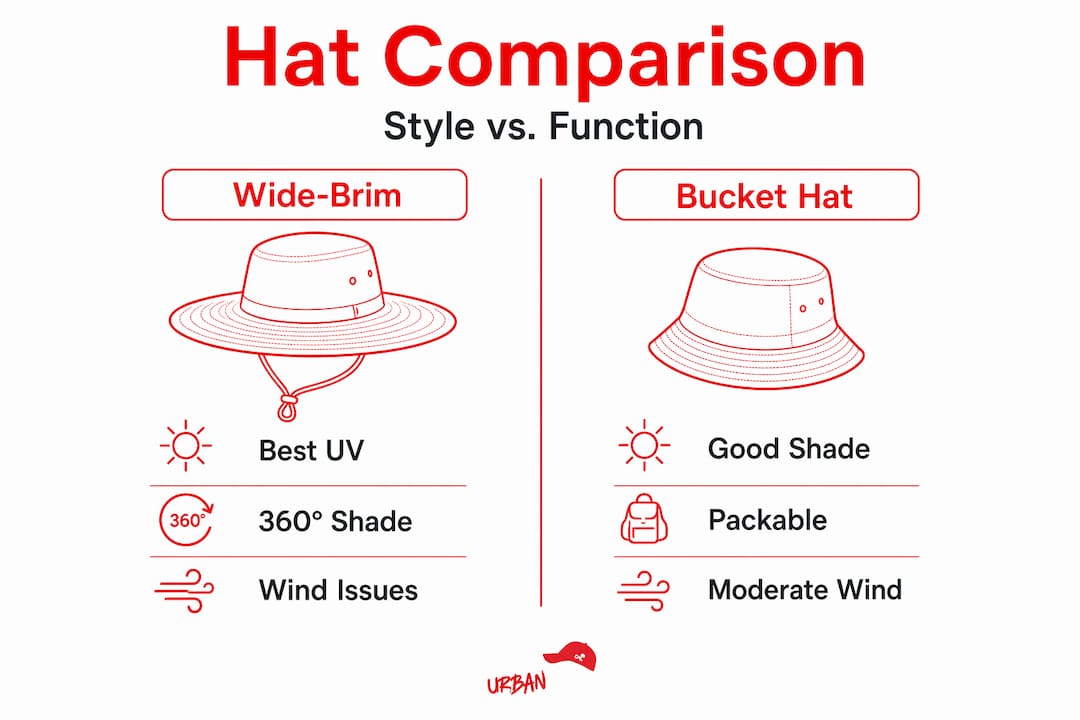
Brim stiffness directly affects wind stability. Stiff or wire-edged brims maintain their shape in a breeze but are bulkier to pack. Soft brims fold easily into a bag but tend to flip up and reduce coverage when the wind picks up. Wire-edged brims offer a practical middle ground. They hold their shape in the field but can be reshaped after travel if they crease in your pack.

Adjustability and chin cords
Adjustable internal drawcords are worth looking for, especially for hats worn on windy trails or open water. Internal drawcords running through the sweatband provide a more secure fit than basic elastic bands, and they prevent that frustrating moment when your hat sails off a ridge. Chin cords are a bonus for fast-moving activities.
Pro Tip: When checking breathability, look for mesh panels or vented eyelets in the crown. These are small design details that make a significant difference during long uphill sections in summer.
Hat types for different activities
Choosing the right style is about matching form to function. The features of good sun hats vary significantly between styles, and understanding those differences saves you from buying a hat that works on one terrain but fails on another.
Comparing common outdoor hat styles
| Hat style | Best activity | Sun protection | Packability | Wind resistance |
|---|---|---|---|---|
| Wide-brim sun hat | Hiking, beach, fishing | Excellent | Moderate | Low to moderate |
| Bucket hat | Casual walks, travel | Good | High | Moderate |
| Cap with neck flap | Trail running, cycling | Good | High | Good |
| Packable travel hat | Travel, day trips | Good | Excellent | Low |
| Wool fedora | Autumn/winter outdoors | Moderate | Low | Good |
| Insulated beanie | Cold weather hiking | Low (UV) | High | Excellent |
Wide-brim hats remain the gold standard for UV protection on longer outdoor days. Bucket hats are a solid second choice for casual wear and travel thanks to their compactness. Caps with detachable neck flaps are underrated for trail running and mountain biking, offering good coverage without the bulk of a wide brim.
Packable hats for travel and day trips
Packability usually comes at the cost of wind resistance. Foldable hats with soft brims sag or flip in wind, which reduces coverage precisely when you’re moving fast or in exposed areas. If you travel frequently and need something to toss in a bag, look for wire-edged options that pack flat but can be reshaped on arrival. These are the lightweight hats for travel worth seeking out.
Warm weather versus cold weather hats
For NZ summer hiking, tightly woven synthetic or microfibre sun hats are the priority. For autumn and winter walks, the equation shifts toward warmth and wind protection. A quality wool fedora adds real style alongside genuine warmth, while still providing some overhead shade on grey days. Stacking a wool hat with a rain jacket hood handles most wet weather without needing a dedicated rain hat. In fact, dedicated rain hats are often redundant since rain jacket hoods handle wet conditions more effectively.
- For beach and coastal walks: wide-brim sun hat with chin cord
- For multi-day hikes: packable hat with wire brim and a lightweight beanie
- For fishing: wide-brim hat with neck flap and moisture-wicking sweatband
- For autumn and winter walks: wool fedora or structured wide-brim hat with warmth lining
- For travel and day trips: packable bucket hat or soft-brim fedora
Measuring fit and testing comfort
A hat with great specs is useless if it doesn’t sit right on your head. Getting the fit right before you buy, whether in store or online, takes a little preparation.
- Measure your head circumference. Use a soft tape measure positioned about 1 centimetre above your ears and across the widest part of your forehead. This gives you your hat size in centimetres, which most reputable brands list in their sizing charts.
- Check for adjustable features. An adjustable internal drawcord or sizing band adds around one full size of flexibility. This matters when you’re buying online and want some room for seasonal variation with thicker hair or a buff underneath.
- Assess crown fit. The crown should sit comfortably on the top of your head without pressing down. A shallow crown exposes the UV-sensitive hairline area, so check the depth specification when ordering.
- Check the sweatband material. Synthetic sweatbands wick moisture better than cotton ones for active use. Avoid stiff or scratchy interior bands if you plan to wear the hat for several hours continuously.
- Test for ventilation. If buying in store, try the hat on and hold it up to a light source. Mesh panels or visible eyelets are good. A hat that feels immediately warm indoors will be oppressive on a summer trail.
- Simulate wind exposure. This sounds slightly silly, but walk briskly or stand near a fan while wearing the hat. A hat that stays in place during gentle indoor movement will give you a reasonable indication of real-world fit.
Pro Tip: If you wear your hair in a ponytail, specifically look for hats marketed as ponytail-compatible. These have a gap or elastic opening at the back of the crown, and they prevent the hat from sitting too high or creating uncomfortable pressure at the back of your head during long hikes.
For hikers who carry a pack, check that your pack’s shoulder straps or hip belt don’t interfere with a very wide brim when you look downward. A brim wider than 4 inches can clip your shoulder straps when you check your footing on steep terrain. It’s a minor thing that becomes genuinely irritating over a long day. You can read more about balancing outdoor headwear style and function before making your final call.
Maintenance, care, and mistakes to avoid
A good hat lasts years if you treat it properly. A great hat ruined by poor care is a waste of money and protection.
Cleaning and drying
Different hat materials need different care approaches. Microfibre and synthetic hats can generally be hand washed in cool water with mild soap and left to air dry in shape. Wool hats need gentle hand washing only. Hot water causes wool to shrink and distort, which ruins the brim shape permanently. Straw hats should be spot cleaned rather than submerged, as prolonged moisture warps the weave and weakens the structure.
Never put a structured hat in a washing machine or dryer. The drum action distorts the brim and breaks down the internal sizing band. If your hat has a wire brim, reshape it immediately after washing before it sets in a new position.
Storage tips
- Store hats in a cool, dry place out of direct sunlight when not in use
- Use a hat box or hang on a hook to preserve brim shape
- Avoid stacking heavy items on top of hats in storage
- Keep wool hats in a breathable bag to protect against moths
Common mistakes to avoid
Construction quality and crown shape matter more than trendy styling for real comfort and durability. The biggest mistake most people make when buying outdoor hats is choosing purely on appearance. A hat that looks excellent hanging on a rack but lacks a proper brim width, a dense weave, or any adjustability will let you down the first time conditions get challenging.
The second common mistake is ignoring signs of wear. When a hat’s fabric starts to stretch, fade heavily, or develop visible holes in the weave, its UV protection drops significantly even if the label still says UPF 50+. Replace a working hat before it fails on you.
Experienced outdoor gear advisors recommend keeping your headwear kit simple: one quality sun hat and one warm beanie cover 99% of outdoor scenarios without adding unnecessary weight or complexity.
Best practices for NZ outdoor hat selection
New Zealand’s UV environment is genuinely harsh. The combination of a thinner ozone layer, high-altitude summer conditions, and strong reflective light off water and snow means that sun protection headwear here earns its keep more than in many other countries. This summary pulls the practical advice together.
| Priority | What to look for | Why it matters |
|---|---|---|
| Sun protection | UPF 50+, tightly woven fabric, brim 3 to 4 inches | NZ UV index regularly reaches extreme levels |
| Activity match | Wide brim for hiking, packable for travel, wool for winter | Correct style prevents discomfort and gear failure |
| Fit and comfort | Adjustable band, deep crown, ventilation, ponytail gap | Poor fit reduces coverage and wearability over time |
| Wind resistance | Wire-edged or stiff brim, chin cord or drawcord | Exposed NZ terrain means wind stability is non-negotiable |
| Durability and care | Quality construction, proper washing method, correct storage | Extends hat lifespan and maintains UV protection integrity |
Buying mindfully matters here. Spending a bit more on a well-constructed hat with verified UPF protection and proper brim coverage pays back over multiple seasons. Impulse purchases based on price or looks alone tend to result in hats that spend most of their time in the bottom of a bag because they’re uncomfortable, blow off constantly, or simply don’t protect well enough to justify wearing. For more on why construction quality matters for durable outdoor headwear, it’s worth doing a bit of extra reading before you commit.
Checking the breathable hat options available for warmer outdoor activities is also a smart move if you run warm or do high-effort activities in summer.
My honest take on choosing outdoor hats
I’ve spent a lot of time around outdoor headwear, and the advice I keep coming back to is this: most people overcomplicate the decision.
In my experience, the two-hat approach works for nearly everyone. One solid sun hat with a wire-edged brim of at least 3.5 inches and a verified UPF 50+ rating covers your warm-season hiking, fishing, and casual outdoor days. One warm beanie covers most cold-weather scenarios. Everything beyond that is situational.
What I’ve found catches people out most often is fixating on UPF numbers without checking the weave. I’ve seen loosely woven hats with high UPF labels sitting next to genuinely protective microfibre hats with no rating at all. The label is not the hat. Run your fingers over the fabric. If you can see daylight through it easily, it won’t block much UV.
The other thing I’ve learned is that adjustability matters far more than most buyers realise. An ill-fitting hat, even a technically excellent one, gets taken off when things get uncomfortable. And a hat in your pack does nothing for sun protection. Look for internal drawcords rather than basic elastic. On a gusty NZ ridge, that small feature is the difference between a hat that stays on and one you’re chasing down the hillside.
My personal preference leans toward a stiff-brimmed hat that I can reshape after travel rather than a soft packable one. The coverage is simply more reliable in the field. Style is a real factor too. A hat you genuinely like wearing is one you’ll actually put on. But style should come after fit, coverage, and fabric. Always.
— Urban
Find your perfect outdoor hat at Urbancaps

Urbancaps stocks a solid range of outdoor-ready headwear built for Kiwi conditions. If you’re after something with sun protection and style for summer hikes or coastal walks, the classic fedora range is worth a look. Fedoras offer a wide brim and structured shape that ticks most of the key features covered in this guide. For cooler autumn and winter outdoor days, the autumn and winter fedora provides warmth alongside a proper overhead brim. If you prefer the warmth and texture of natural fibres, the men’s woollen fedora is a quality option for cold-weather adventures. All orders within NZ ship free, and the range is built with quality craftsmanship that stands up to regular outdoor use.
FAQ
What brim width is best for sun protection?
A brim of at least 3 to 4 inches provides the best 360-degree coverage for ears, face, and neck. Brims under 2.5 inches are generally insufficient for full outdoor sun protection.
Does a higher UPF number mean better protection?
Not automatically. Fabric weave density and actual coverage area matter as much as the UPF rating. A UPF 50+ hat with a tightly woven microfibre fabric will outperform a loosely woven hat with the same label.
How do I pick a hat for hiking in windy conditions?
Look for a wire-edged or stiff brim that holds its shape, combined with an internal drawcord or chin cord for secure fit. Soft packable brims tend to flip up in wind and reduce coverage when you need it most.
Can I wear one hat for most outdoor activities?
Yes. A quality wide-brim sun hat with UPF 50+ covers most warm-season outdoor activities, and a lightweight beanie handles most cold-weather needs. This two-hat approach suits the majority of hikers and outdoor enthusiasts without overcomplicating your gear.
How often should I replace my outdoor hat?
Replace your hat when the fabric shows visible wear, stretching, or thinning in the weave, as UV protection drops significantly even if the UPF label remains. A well-cared-for quality hat typically lasts two to four seasons of regular outdoor use.