

How to clean beanies without shrinking or damage
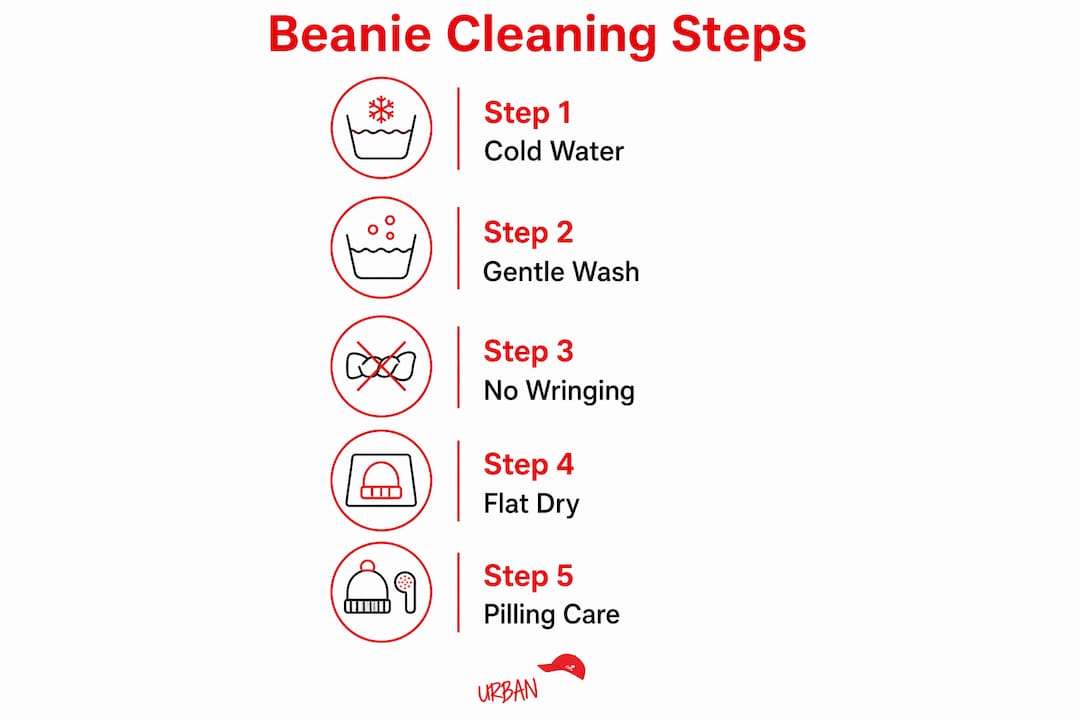
The safest way to clean a beanie is cold or lukewarm water (max 30°C), a mild detergent, and flat drying. Get those three things right and your beanie keeps its shape, softness, and colour wash after wash.
Here is the quick version before we go deeper:
- Use cold or lukewarm water, never above 30°C
- Hand wash wool, merino, and cashmere; hand washing is the safest method for delicate fibres
- Machine wash only durable synthetics like acrylic, inside a mesh laundry bag
- Skip bleach, fabric softeners, and harsh detergents
- Never wring; press water out gently with your hands or a towel
- Lay flat to dry and reshape while still damp; do not tumble dry
How to clean beanies step by step by fabric type
The material dictates everything. Wool felts under heat and agitation. Acrylic handles a gentle machine cycle. Cotton sits somewhere in between. Check the care label first; if there is no label or you cannot identify the fibre, treat it as wool.
For wool, merino, and cashmere:
- Fill a basin with cold or lukewarm water, no hotter than 30°C. Even a 10°C jump can trigger irreversible felting in fine wool.
- Add a small amount of wool-specific detergent. One teaspoon is plenty for a basin.
- Turn the beanie inside out and submerge it gently. Press it down with slow, even movements; do not rub or agitate.
- Soak for no longer than 10 minutes. Prolonged soaking weakens fibres.
- Rinse with cool water at the same temperature. A sudden temperature change is enough to cause felting on its own.
- Press water out between your palms or roll the beanie inside a dry towel. Never wring.
- Reshape the beanie while damp, stuff the inside with a rolled towel or an inflated balloon, and lay it flat on a dry towel away from any heat source. Allow sufficient time to dry fully, turning it over halfway through.
For acrylic and cotton blends:
Follow the same hand-wash steps above, or use the machine method in the next section. Cotton can stretch when hung wet, so flat drying applies here too.
Pro Tip: Treat any unknown fibre as wool. Hand washing in cold water is always the safest default, and it costs you nothing extra.
Machine washing beanies: what you need to know first
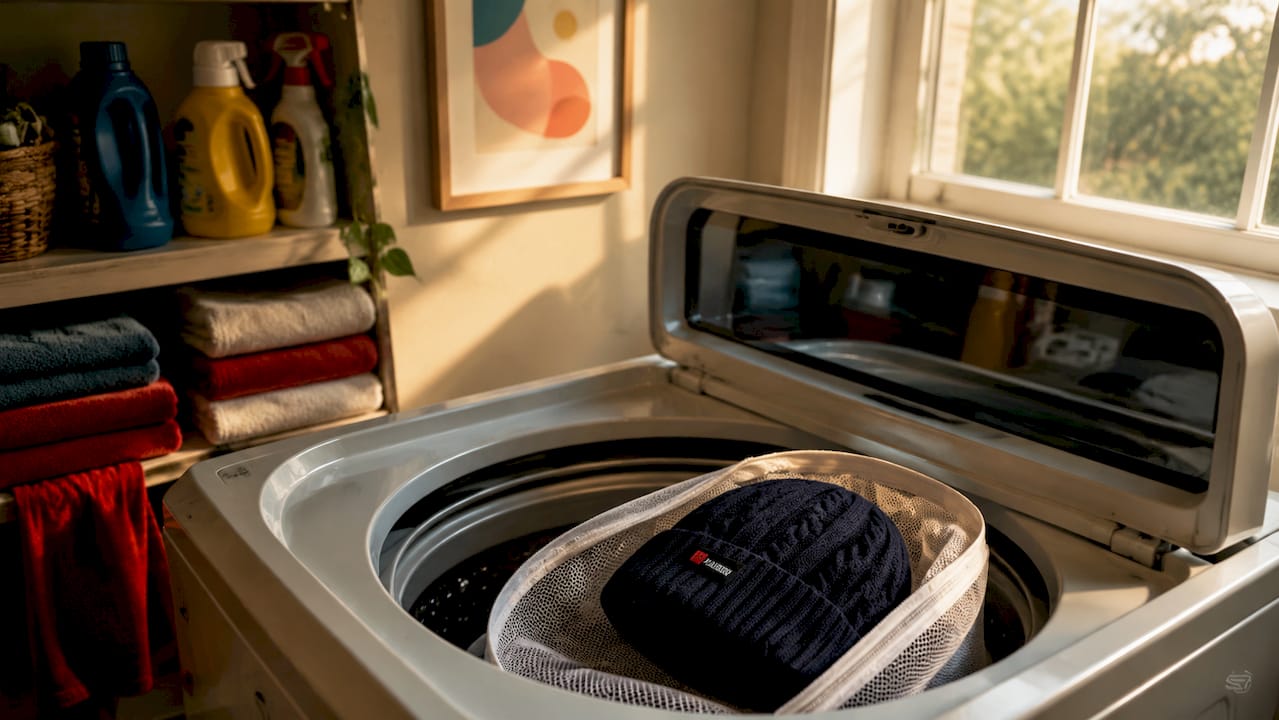
Machine washing works for acrylic and most cotton blends, but only with the right precautions; for the best protection, consider products like the White Out Tequila Winter White Beanie by Columbia. Throw a wool beanie in on a standard cycle and you will pull out something the size of a coaster.
- Confirm the care label says machine wash is safe before you start
- Place the beanie inside a mesh laundry bag to protect its shape and limit friction in the drum
- Select the delicate or synthetics cycle at 30°C maximum
- Use a mild liquid detergent; avoid powder, which can leave residue in the seams
- Keep the spin speed at around 600 rpm; higher speeds distort the shape
- Remove the beanie promptly when the cycle ends
- Reshape by hand and lay flat to dry on a towel; do not hang it
Pro Tip: Add one tablespoon of white vinegar to the final rinse when washing acrylic. It reduces static, which is a real issue with synthetic fibres in winter.
How to remove pilling and keep your beanie looking new
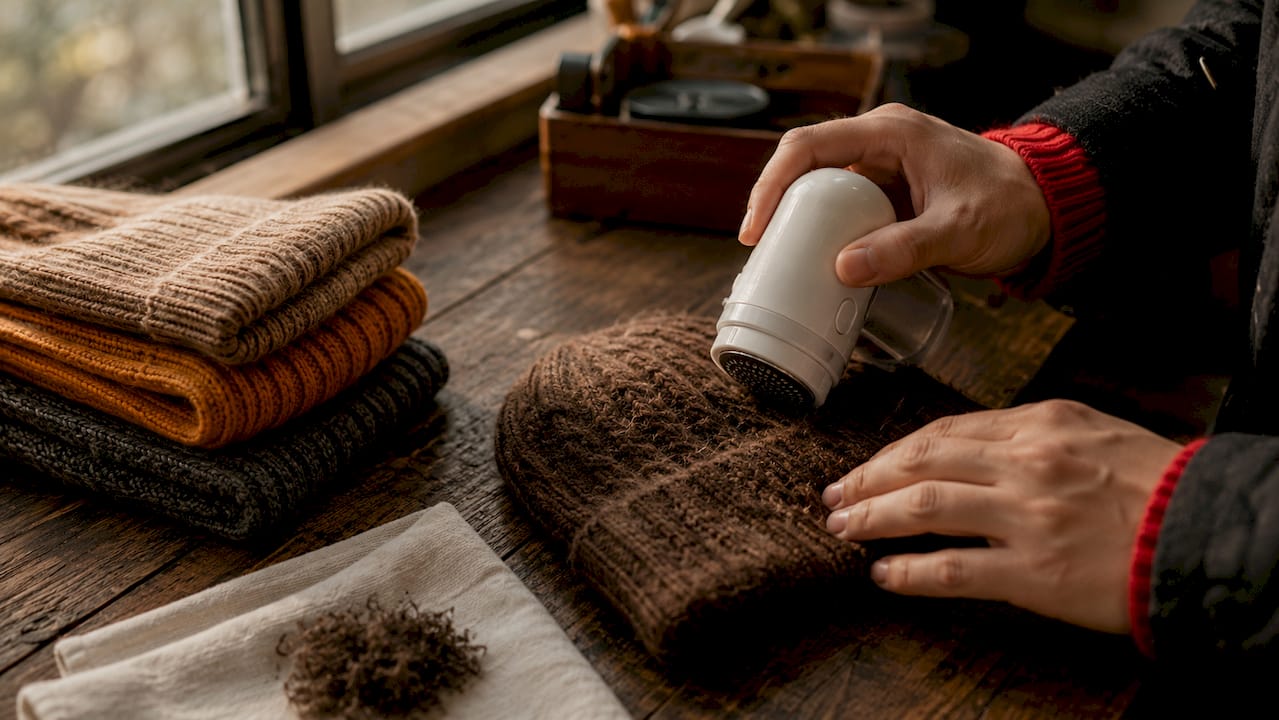
Pilling comes from abrasion and friction, not from washing itself. The good news is that most of it is preventable.
- Turn your beanie inside out before every wash to protect the outer surface from rubbing against the drum or basin
- Use a fabric shaver or a sweater comb to remove existing pills; always lay the beanie flat while you work, and avoid scissors
- Do not over-wash. Washing more often than needed accelerates fibre wear
- Choose detergents formulated for delicate fibres; harsh formulas break down the yarn faster
- Store beanies folded in a drawer, not hanging. Hanging creates mechanical stress on the knit over time
For a wool knit beanie, a fabric shaver used every few washes keeps the surface looking fresh without thinning the fabric.
What do the laundry symbols on your beanie’s label mean?
The care label is the single most reliable guide you have. Laundry symbols indicate maximum water temperature, washing method, bleaching restrictions, and drying instructions.
- Wash tub symbol: a number inside (e.g. 30) shows the maximum water temperature in Celsius
- Hand in tub: hand wash only; do not machine wash
- Crossed-out tub: do not wash with water at all
- Triangle: bleaching instructions; a crossed-out triangle means no bleach
- Square with circle: tumble drying; an X through it means air dry only
- Horizontal line inside square: dry flat, which is what most beanies need
- Wool-specific symbols: a ball of yarn or “wool” text signals fibre-specific care; use a wool-safe detergent free of protease enzymes
When the label says “hand wash only,” that instruction exists for a reason. Ignoring it is how beanies shrink.
Expert tips from New Zealand headwear specialists
New Zealand winters are cold and damp, which means beanies here work hard. Local headwear specialists and fibre scientists consistently point to the same two culprits behind ruined beanies: heat and hanging.
Heat is the greatest threat to beanie integrity across every fibre type. It causes shrinking, felting in wool, and permanent distortion in acrylic. Tumble dryers, hot water, and radiators are all off the table.
Hanging a wet beanie is the other common mistake. The weight of wet fibres pulls the knit downward, stretching the crown and distorting the ribbing. Stuff the inside with a rolled towel or a balloon to hold the shape while it dries.
For wool and cashmere, wool-safe detergents must be free of protease enzymes. Those enzymes break down keratin, the protein that gives wool its structure. Brands like Eucalan and Soak are widely available in New Zealand and designed specifically for this.
Acrylic beanies are more forgiving, but tumble drying still softens the synthetic fibres and can permanently alter the shape. Air drying flat is the right call regardless of fibre type. For more on caring for wool headwear specifically, the complete wool hat care guide from Urbancaps covers the full process.
Pro Tip: Wash beanies every two weeks if you wear them regularly. Less frequent washing reduces fibre wear, but leaving oils and sweat to build up degrades the fabric over time.
Shop quality beanies built to last
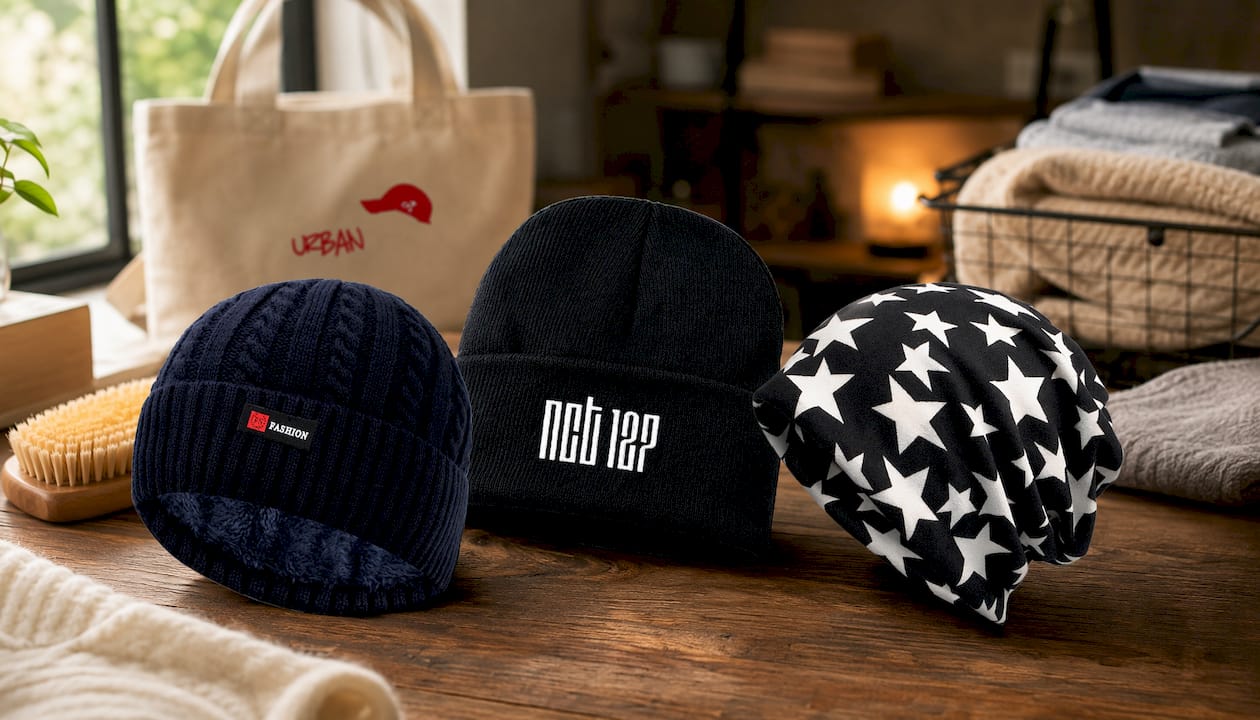
Proper care starts with a beanie worth caring for. Urbancaps stocks a range of premium knit beanies made for New Zealand conditions, including the classic black knit beanie in soft woollen construction and the 3-in-1 ring knit beanie for versatile winter layering. Free shipping on all NZ orders. ♡
Key takeaways
Proper beanie care comes down to cold water, gentle handling, and flat drying; get those three right and your beanie lasts for years.
| Point | Details |
|---|---|
| Temperature limit | Never exceed 30°C; heat causes felting in wool and distortion in acrylic. |
| Hand wash for delicates | Wool, merino, and cashmere need hand washing; machine agitation causes irreversible shrinking. |
| Machine wash safely | Acrylic and cotton blends can use a delicate cycle in a mesh bag at 30°C, 600 rpm max. |
| Dry flat with support | Stuff with a rolled towel, lay flat to dry; never hang a wet beanie. |
| Wash regularly to prevent oil and sweat build-up | Regularly worn beanies need washing every two weeks to prevent oil and sweat build-up. |
FAQ
How do you wash a beanie without ruining it?
Use cold or lukewarm water (max 30°C), a mild detergent, and gentle pressing motions. Never wring, never tumble dry, and always lay flat to reshape while damp.
How often should you wash a beanie?
Every two weeks for regularly worn beanies. If you only wear yours occasionally, less frequent washing is fine.
Should you wash a beanie inside out?
Yes. Turning it inside out before washing reduces friction on the outer surface, which is the main cause of pilling.
How do you wash a 100% acrylic beanie?
Place it in a mesh laundry bag, run a delicate cycle at 30°C with mild liquid detergent, and lay flat to air dry. Acrylic is machine washable but should never go in the tumble dryer, as heat softens the synthetic fibres permanently.