

How to remove sweat stains from a hat without ruining it
For most hats, spot-treat the sweatband with a mild detergent and cold water, then air-dry away from direct heat. That single move lifts fresh salt rings and light oil residue without warping the brim or shrinking the fabric, and it works on cotton, wool felt, and synthetic caps alike. If the mark is already old and yellowed, you’ll need to escalate to a baking soda paste or an oxygen-based stain remover, and even then some deep-set discolouration may only fade rather than disappear.
Here’s the quick decision path before you commit to a full deep clean:
- White, chalky ring around the band? Dab with a white vinegar and water mix (equal parts), let it sit five minutes, then wipe clean. Salt crystals dissolve fast.
- Yellow or brownish staining? Make a baking soda paste (three parts soda to one part water), press it into the mark, and leave it 15 to 30 minutes before rinsing.
- Stain still visible after both? Move to an oxygen-based stain remover soak, following the timing and material cautions further down this guide.
- Hat is dry-clean only, leather, or a structured wool felt? Skip water altogether and jump to the material-specific section before you touch it.
Most fresh marks respond within one treatment cycle. Anything sitting on the fabric for months, particularly on straw or pale felt, usually needs two or three rounds and won’t always come back to original colour.
Key Takeaways
The fastest way to remove sweat stains from a hat is a cold-water, mild-detergent spot clean, with oxygen-based cleaners reserved for set-in marks that survive household remedies.
| Point | Details |
|---|---|
| Act fast on fresh stains | Rinse and spot-treat within a day or two, before salts fully crystallise or oils oxidise. |
| Match the method to the stain | Use vinegar for white salt rings and baking soda paste for yellow oil marks. |
| Always spot-test first | Check colourfastness on a hidden area before applying any cleaner to the visible hat. |
| Respect material limits | Wool felt, straw, and leather need spot cleaning only, never a full soak. |
| Replace when cleaning plateaus | After three treatment cycles with little change, Urbancaps’ heritage wool felt and herringbone styles offer durable replacements. |
Table of Contents
- How to remove sweat stains from a hat: why the marks form in the first place
- What should you do about a fresh sweat stain right away?
- How do you deep-clean a set-in or old sweat stain?
- Cleaning by hat material: what’s safe and what isn’t
- How do you clean the sweatband without warping the hat?
- Which products and household items actually work?
- How do you test for colourfastness before cleaning?
- Can old sweat stains actually be removed?
- What do experienced hatmakers and cleaners recommend for prevention?
- How do you repair discolouration or damage once cleaning is done?
- How do you get rid of the sweaty smell, not just the stain?
- Looking for a replacement instead of another wash cycle?
- Sources
- FAQ
How to remove sweat stains from a hat: why the marks form in the first place
Sweat itself is mostly water, but it carries salts (sodium, chloride, potassium) and urea that stay behind once the moisture evaporates. That’s what leaves the white, gritty ring you see along a sweatband after a hot day, and it’s a straightforward chemical residue rather than dirt. Yellow staining is a different animal: it comes from oils in your skin reacting with antiperspirant compounds, and that oxidised layer sits deeper in the fibres than surface salt.
Heat makes both worse. Chucking a stained cap in a hot dryer, or leaving it on a car dashboard in summer, can set the residue deeper into the fabric, turning a five-minute fix into a stain that needs repeated soaking. That’s also why ironing a stained sweatband is a genuinely bad idea.
The practical takeaway: always clean with cool or lukewarm water, and always air-dry. Heat is the enemy of stain removal, not the shortcut it seems like.
What should you do about a fresh sweat stain right away?
Catching a stain within a day or two of wearing the hat makes the whole job easier. Salt hasn’t fully crystallised yet, and oils haven’t had time to oxidise into that stubborn yellow tinge.
- Rinse or blot immediately. Run the sweatband under cool water, or blot it with a damp cloth, to lift surface salt and oil before it sets.
- Spot-treat with mild detergent. Dab a small amount of gentle dish soap or laundry detergent onto a soft toothbrush and work it into the band in small circular motions. Cleaning experts recommend cold water and a soft brush over harsh chemicals precisely because control matters more than strength here.
- Let it sit for a few minutes. Two to five minutes is usually enough for a fresh mark. You’re not soaking, just loosening residue.
- Rinse thoroughly with a clean, damp cloth. Go over the area a few times to make sure no soap remains, since leftover detergent can attract more dirt later.
- Air-dry flat or on a hat form. Never wring the fabric. If the stain has visibly lightened but not vanished, that’s your cue to move on to a deeper treatment rather than repeating the same light spot-clean five times.
How do you deep-clean a set-in or old sweat stain?
Older stains need a staged approach. Start gentle, escalate only if needed, and always rinse fully between steps so chemicals don’t interact unpredictably.
Stage one: baking soda paste. Mix baking soda with a small amount of water until it forms a spreadable paste. Press it into the stained area, leave it for 15 to 30 minutes, then work it in gently with a soft brush before rinsing. This works well on yellow oil-based marks because the soda absorbs oil rather than just diluting it.
Stage two: white vinegar soak. For chalky white salt rings, a vinegar and water solution (roughly equal parts) breaks down the mineral crystals more effectively than detergent alone. A brief soak or repeated dabbing, followed by a full rinse, usually clears the ring completely.
Stage three: oxygen-based stain remover. For stains that survive both of the above, an oxygen-based cleaner used in cool water can lift what household remedies can’t. Follow the product’s stated soak time, and never use hot water to “boost” it, since heat degrades the active oxygen compound rather than helping it.
Stage four: hydrogen peroxide, light fabrics only. Hydrogen peroxide can help shift stubborn oxidised oils, but it also lightens dye, so it’s reserved for white or very pale fabric that’s already colourfast.
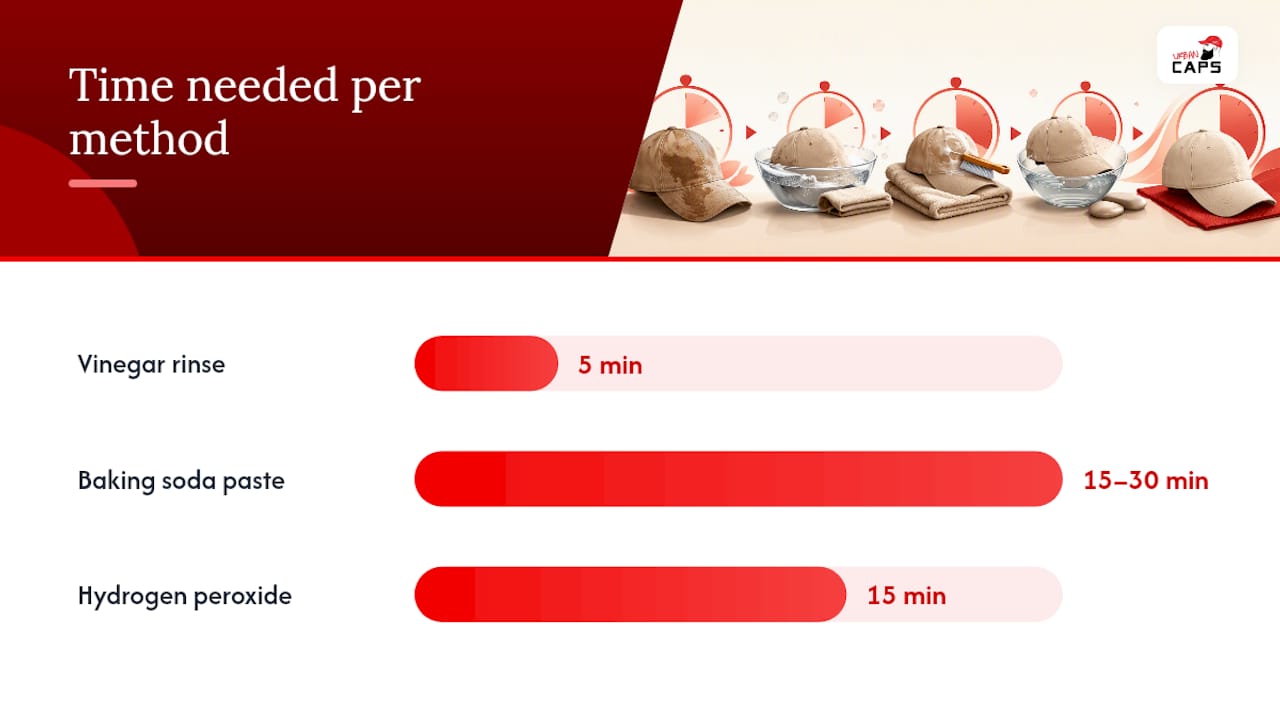
| Method | Best for | Time needed | Risk if misused |
|---|---|---|---|
| Vinegar rinse | White salt rings | 5 minutes | Minimal on most fabrics |
| Baking soda paste | Yellow oil stains | 15–30 minutes | Low, if fully rinsed |
| Oxygen-based soak | Deep-set or old stains | Per product label | Can fade structured brims if soaked whole |
| Hydrogen peroxide | Light, colourfast fabric only | 15 minutes | Lightens dye on coloured fabric |
A few warnings worth repeating: never mix vinegar and hydrogen peroxide directly, never soak a structured brim with cardboard reinforcement, and stop immediately if you see dye running or the fabric texture changing. That’s the point where a professional cleaner becomes cheaper than a ruined hat.
Cleaning by hat material: what’s safe and what isn’t
Not every hat handles the same treatment, and treating a wool felt fedora like a cotton dad hat is the fastest way to end up with a warped brim or a shrunken crown.
| Material | Water safe? | Best method | Drying tip |
|---|---|---|---|
| Cotton / twill | Yes | Hand wash or mesh bag, cold cycle | Air-dry on a hat form |
| Wool / felt | Spot only | Damp cloth, mild detergent | Reshape while slightly damp |
| Synthetics (polyester) | Yes | Gentle hand wash | Air-dry, avoid direct sun |
| Straw | Spot only | Barely damp cloth, light pressure | Lay flat, never twist |
| Leather | No | Damp wipe, leather conditioner after | Air-dry away from heat, condition once dry |
| Knit beanies | Yes | Hand wash, cold water | Lay flat to prevent stretching |
Cotton and twill caps are the most forgiving. Structured caps with cardboard brims still need spot cleaning rather than a full soak, even though the fabric itself tolerates water, because a soaked cardboard insert can warp permanently.
Wool and felt hats, including fedoras and homburgs, react badly to soaking. Water plus agitation can felt the fibres further, shrinking the hat unevenly. Stick to a barely damp cloth and mild detergent, working in small sections.
Synthetic caps handle water well and often survive a gentle machine cycle in a mesh bag, though air-drying is still safer than a dryer.
Straw hats fray easily when wet, so treat stains with a barely damp cloth and light dabbing rather than any kind of soak.
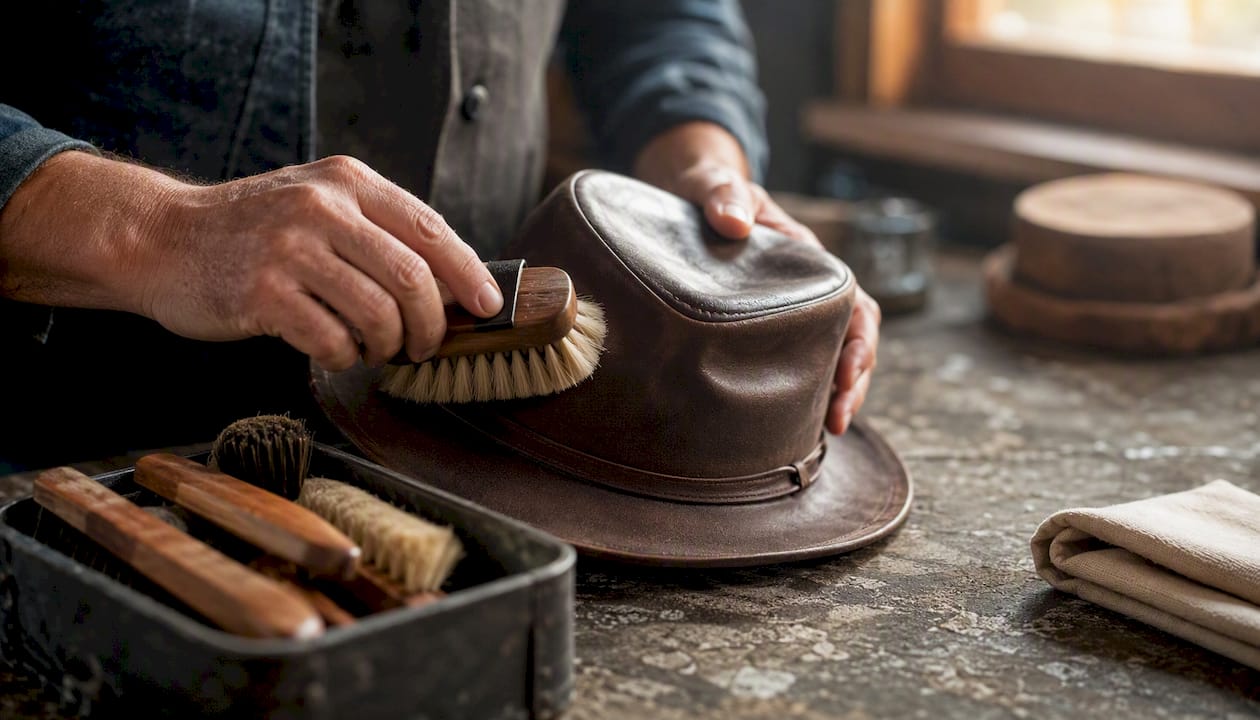
Leather hats should never get soaked. Wipe with a barely damp cloth, then apply a leather conditioner once fully dry to stop the material cracking where it was cleaned.
Knit beanies are among the easiest: a gentle hand wash in cold water, laid flat to dry, keeps the shape intact.
Pro Tip: Dry any structured hat on a hat form, or stuff it loosely with a rolled towel, so the crown holds its shape while the fabric dries. A hat left flat on a bench often dries with flat spots that don’t bounce back.
How do you clean the sweatband without warping the hat?
The sweatband takes the most direct sweat exposure, so it’s usually the first place stains appear and the easiest to over-scrub if you’re not careful.
You’ll need a soft toothbrush, a microfibre cloth, mild detergent, and a small bowl of cool water. That’s genuinely all it takes for the vast majority of sweatband stains.
- Dampen the toothbrush, not the whole hat, in the bowl of cool water.
- Add a small dab of mild detergent to the bristles.
- Work the band only, in small circular motions, keeping the brush away from the crown fabric and any structured brim wire.
- Blot with a dry section of microfibre cloth every 20 to 30 seconds to lift loosened residue rather than pushing it further into the fabric.
- Rinse the area by wiping with a clean, damp cloth until no soap residue remains.
- Press out excess moisture with a dry towel rather than wringing.
If the sweatband is genuinely worn out, deteriorating, or holding a smell that won’t lift, some hats allow the band to be replaced entirely. Removable, washable sweatband liners are also worth considering if you’re prone to heavy sweating, since they take the damage instead of the hat itself.
Which products and household items actually work?
You don’t need a cupboard full of specialty cleaners. Most sweat stains respond to items already in your kitchen.
| Product | What it does | Watch out for |
|---|---|---|
| Baking soda | Absorbs oils, lifts yellow stains | Rinse fully to avoid residue |
| White vinegar | Dissolves salt crystals | Strong smell until dry |
| Mild detergent | Breaks down general grime | Use sparingly on delicate fabric |
| Dish soap | Cuts through oily residue | Avoid on leather |
| Oxygen-based stain remover | Lifts deep, set-in stains | Follow soak time exactly |
| Hydrogen peroxide | Lightens oxidised stains | Can bleach coloured dye |
Enzymatic cleaners, the kind marketed for protein-based stains like blood or grass, can help on very old sweat marks since sweat does contain trace proteins, though results vary more than with straightforward oxygen cleaners. Whatever you reach for, avoid chlorine bleach on any coloured fabric outright. It doesn’t discriminate between stain and dye. If you want to check exactly what’s in a commercial cleaner before using it near a delicate hat, most manufacturers now publish ingredient disclosure information you can check first.
How do you test for colourfastness before cleaning?
Skipping this step is how a small stain turns into a ruined hat.
- Pick a hidden spot, the underside of the brim or inside the crown, and dab a small amount of your chosen cleaner there.
- Wait five minutes, then blot with a white cloth. Any colour transfer means that cleaner is too harsh for this hat.
- Check the fabric texture too, not just the colour. If it feels stiff, sticky, or the fibres separate, stop.
A few rules of thumb save a lot of regret. Anything labelled dry-clean only should go to a professional, full stop. Structured caps with cardboard brims should never be fully submerged. Leather and most wool felt hats do best with minimal moisture and maximum patience. If a hat has sentimental or genuine monetary value, a professional cleaner experienced with hats is worth the cost over a DIY gamble.
Can old sweat stains actually be removed?
Honestly, it depends on what’s causing the mark. White salt rings almost always come out fully, even after months, because the chemistry is simple: dissolve the crystals, rinse, done. Deep yellow staining, especially on straw or pale felt that’s had months of sun exposure layered on top of sweat, tends to only improve rather than disappear entirely.
Some hats that have sat in a hot car or a gym bag for a season carry two problems at once: sweat residue and sun-driven fabric breakdown. Cleaning fixes the first. It can’t reverse the second.
Expect one to three treatment cycles for anything genuinely old, with a full rinse and dry between each attempt so you can judge progress honestly rather than guessing while the fabric’s still wet. If you’re three cycles in and the mark has barely shifted, that’s usually the point where replacing the hat costs less time and money than continuing to chase a stain that’s become part of the fabric’s structure.
What do experienced hatmakers and cleaners recommend for prevention?
Prevention beats treatment every time, and it’s mostly about habits rather than products.
- Rotate between two or three hats if you wear one daily, giving sweat and moisture time to fully evaporate between wears.
- Wipe the sweatband with a dry cloth after any heavy sweating session, rather than letting it sit damp until the next wear.
- Use a removable, washable sweatband liner for hats you wear during exercise or hot weather.
- Store hats upright or on a form, never crushed in a bag, to avoid trapping moisture against the fabric.
- Let a damp hat air out completely before storing it, since damp storage encourages both odour and mildew.
Rotating hats and using removable liners are among the most commonly recommended prevention habits across cleaning guides, and they genuinely cut down how often you need to deep-clean at all.
Pro Tip: Check the inside of the sweatband every few weeks under good light. Early yellowing is far easier to lift than a stain that’s had six months to set in.
How do you repair discolouration or damage once cleaning is done?
Sometimes the stain lifts but the fabric colour underneath looks patchy, faded, or slightly different from the rest of the hat. This happens most on straw and lighter wool felt where the cleaning process itself, even done carefully, can lighten the treated area relative to the surrounding fabric.
For felt hats, a soft brush used in the direction of the nap can even out texture differences after cleaning, restoring some visual uniformity even if the colour tone stays slightly changed. For straw hats with fraying at the treated edge, a small amount of clear fabric glue on the underside can stop further unravelling, though it won’t restore the original weave. Leather hats that look patchy after cleaning usually need a leather conditioner worked in evenly across the whole surface, not just the treated spot, so the sheen matches. If a structured brim has softened or lost shape from moisture, reshaping over a hat form while slightly damp and letting it dry fully in that position often restores most of the original structure, though repeated wetting will eventually wear that stiffness down permanently.
None of these fixes reverse genuine dye damage. If the colour difference is stark rather than subtle, that’s a cosmetic limit worth accepting rather than fighting.
How do you get rid of the sweaty smell, not just the stain?
Odour and staining come from the same source, but they don’t always leave together. You can lift a visible stain and still have a hat that smells like a gym bag.
Baking soda works here too, but differently: sprinkle it dry inside the crown and along the sweatband, leave it overnight, then brush it out. It absorbs odour molecules rather than reacting with them chemically. A diluted vinegar wipe also helps, since vinegar’s mild acidity disrupts the bacteria that cause sweat odour to linger in fabric fibres. For genuinely stubborn smell, an enzymatic cleaner formulated for odour (rather than stains) can break down the organic compounds bacteria feed on.
Sunlight helps too, in short bursts. Ten to fifteen minutes of direct sun can neutralise odour-causing bacteria on most fabrics, though you’ll want to avoid longer exposure on coloured hats since UV fades dye over time.
A quick note on when to repair versus replace
I’ve seen plenty of hats come back from what looked like a lost cause, but there’s a practical line worth drawing for yourself. If a stain has needed three or more treatment cycles with only partial improvement, or if the fabric structure has changed (stiffness, fraying, visible thinning), you’re usually better off treating that hat as retired rather than sinking more time into it. Sentimental hats are worth the extra effort regardless of odds. Everyday hats generally aren’t, and Urbancaps carries premium wool felt and heritage-style replacements if you land on that side of the decision.
Looking for a replacement instead of another wash cycle?
If your hat’s past saving, or the stain has taken the fabric with it, a fresh start is often simpler than another round of soaking and hoping. Urbancaps stocks premium headwear built from materials that hold up better against everyday sweat and sun exposure than budget alternatives, with fast shipping so you’re not stuck bare headed while you wait.
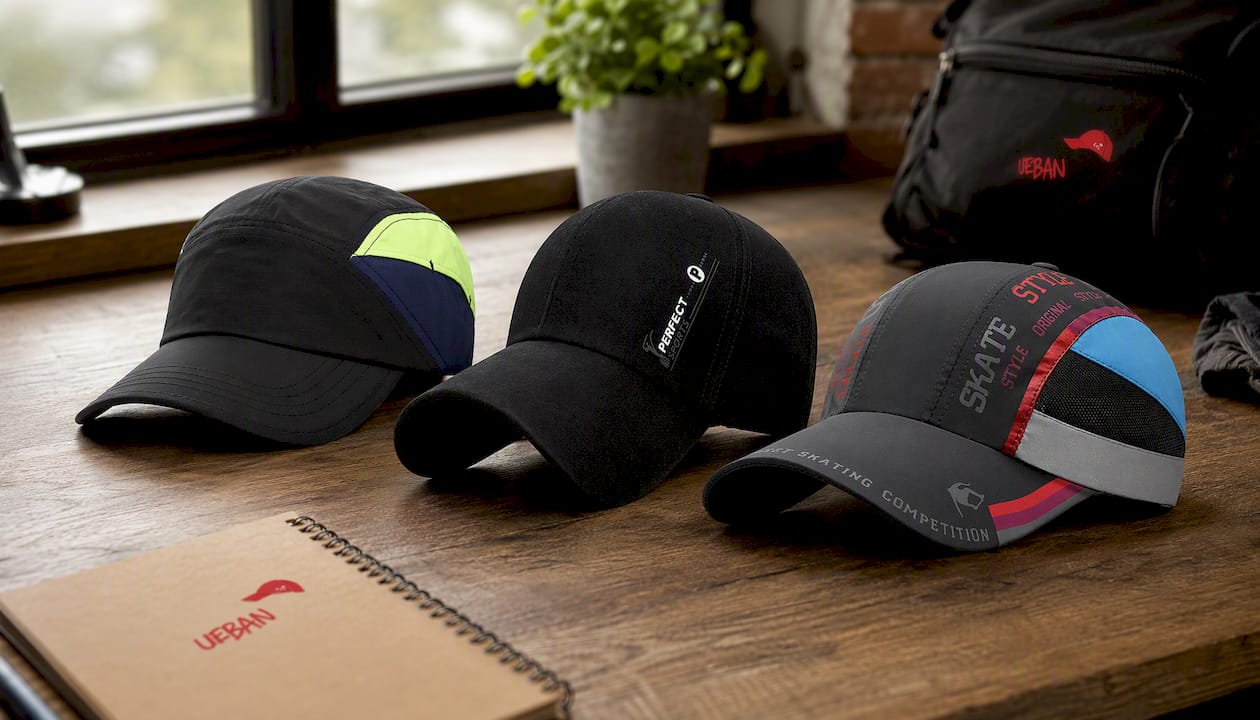
The Churchill Heritage Homburg is crafted from premium Australian wool felt, a material that resists staining better than cheaper synthetic blends while still needing the gentle spot-clean approach covered above. If you want something with more everyday structure, the Dakota Heritage Wool Rancher Hat handles outdoor wear and sun exposure without the fading issues that plague lower-grade felt. For a lighter, everyday option, the Heritage Herringbone Ivy Cap offers a washable herringbone weave that’s far more forgiving than delicate wool felt if you sweat heavily.
Browse the current range and get your replacement sorted before the next heatwave hits.
Sources
- Why Does Sweat Turn White on Skin and Clothes? - ScienceInsights
- How to Get Sweat Stains Out of Hats Without Ruining Them - Keep On Home
- How to Wash a Snapback, Trucker, Dad Hat or Beanie
- How to Get Sweat Stains Out of Hats: Step-by-Step Tips | The Output by Peloton
FAQ
Can you get old sweat stains out of a hat?
Often, yes, particularly white salt rings, which usually dissolve fully with a vinegar rinse even after months. Deep yellow staining may only fade rather than disappear completely, especially on straw or sun-exposed felt.
Are sweat stains on hats permanent?
Not usually, if treated with the right method for the stain type and fabric. Genuinely permanent discolouration tends to involve sun damage or fabric breakdown layered on top of the sweat residue, not the sweat alone.
Why do I have white sweat stains on my hat?
White marks are salt crystals, including sodium, chloride, and potassium, left behind once sweat evaporates from the fabric. They’re mineral residue rather than dirt, which is why a simple vinegar rinse usually clears them.
Can old sweat stains be removed with household products alone?
Many can, especially salt rings, using vinegar or baking soda paste. Deep-set yellow stains sometimes need an oxygen-based cleaner or hydrogen peroxide on light fabric to fully lift.
How long should I leave a baking soda paste on a hat stain?
Fifteen to thirty minutes is the standard window before working it in gently and rinsing thoroughly. Leaving it longer doesn’t generally improve results and risks drying the fabric out.