


Role of Flat Caps in Fashion: Heritage Meets Modern Style
Choosing the right flat cap can instantly set you apart in any New Zealand crowd, blending timeless style with a nod to heritage. For style-savvy Kiwis who appreciate authentic craftsmanship, the story of the flat cap runs deep, tracing back to Northern England where legislation in the 14th and 16th centuries mandated wool cap wearing. Discover how this iconic accessory bridges tradition and modern fashion, connecting you to cultural roots while upgrading every look.
Table of Contents
- Flat Caps Defined: Origins and Misconceptions
- Historical Evolution and Cultural Impact
- Distinctive Flat Cap Types and Materials
- Key Features: Fit, Function, and Versatility
- Styling Flat Caps for Contemporary Looks
- Flat Caps Versus Other Headwear Options
Key Takeaways
| Point | Details |
|---|---|
| Cultural Significance of Flat Caps | Flat caps evolved from working-class origins to become a symbol of heritage and resilience in modern fashion. |
| Historical Context and Evolution | Originally mandated by British lawmakers, flat caps reflect social identity and have undergone significant style transitions over the centuries. |
| Material and Style Variety | Flat caps come in various styles and materials, with wool and tweed being traditional choices that enhance their cultural legacy. |
| Styling Opportunities | They can be paired with diverse outfits, making them a versatile accessory that bridges heritage with contemporary fashion trends. |
Flat Caps Defined: Origins and Misconceptions
Flat caps represent more than just headwear - they’re a cultural artifact with deep historical roots spanning centuries of fashion evolution. Originally emerging in Northern England, these distinctive rounded caps with small stiff brims have transformed from working-class staple to contemporary style statement.
The history of flat caps is surprisingly legislative. In the 14th and 16th centuries, British lawmakers actually mandated wool cap wearing to support the national textile industry. This seemingly bureaucratic decree inadvertently solidified the flat cap’s cultural significance across social classes:
- Originated among working-class laborers
- Adopted by rural communities in Scotland and Ireland
- Embraced by upper-class individuals for countryside activities
- Symbolized practicality and regional identity
Cultural Distinctions matter when understanding flat caps. Many people mistakenly conflate flat caps with newsboy caps, which feature a fuller shape and distinctive button on top. True flat caps maintain a sleeker, more understated profile rooted in Celtic craftsmanship.
Today, flat caps transcend their utilitarian origins, representing a nuanced intersection of heritage and modern fashion sensibilities. They embody a connection to traditional craftsmanship while simultaneously signaling contemporary style awareness.
Pro tip: When selecting a flat cap, prioritize authentic materials like wool or tweed to honor its rich cultural legacy.
Historical Evolution and Cultural Impact
The flat cap’s journey through history is a remarkable narrative of social transformation and cultural identity. Irish emigration significantly shaped its global significance, transforming a simple piece of headwear into a powerful symbol of heritage and resilience.
Throughout the centuries, the flat cap navigated complex social landscapes, evolving from practical working-class accessory to a versatile fashion statement. Its progression can be mapped through key historical transitions:
- 16th century: Practical wool headwear for laborers
- Early 20th century: Adopted by politicians and gentry
- Mid-20th century: Symbol of urban immigrant culture
- Contemporary era: Global fashion icon representing tradition
Social Significance extended far beyond mere clothing. Medieval British and Irish communities used flat caps as intricate markers of social identity, with subtle variations in style communicating economic status, regional origin, and cultural affiliation.
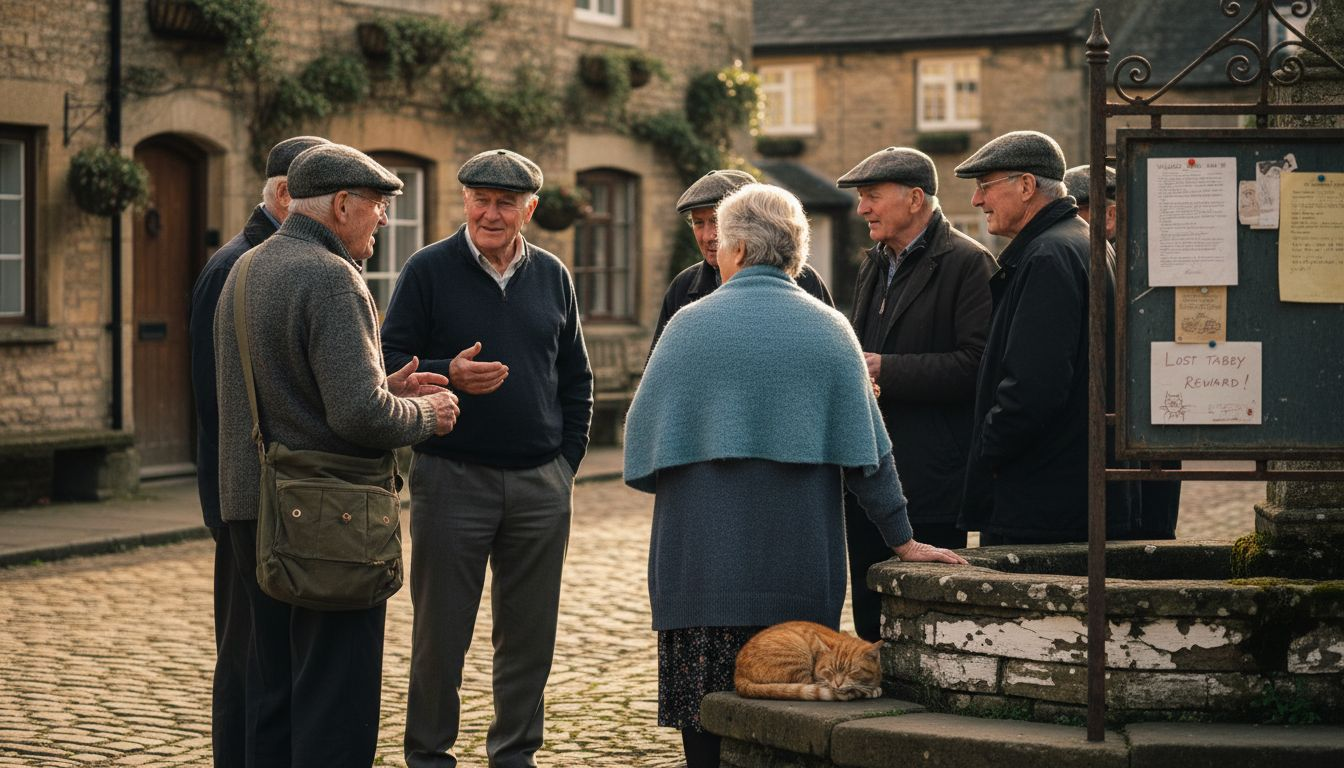
The flat cap’s resilience is particularly noteworthy. Despite massive societal changes, it maintained its relevance by continuously reinventing itself - transitioning from rural workwear to urban fashion statement while preserving its core cultural essence.
Pro tip: Select a flat cap that resonates with your personal narrative and connects you to its rich historical tapestry.
Distinctive Flat Cap Types and Materials
Flat caps represent a nuanced world of design, with multiple distinctive styles emerging from traditional craftsmanship. Each variant tells a unique story of function, fashion, and cultural heritage.
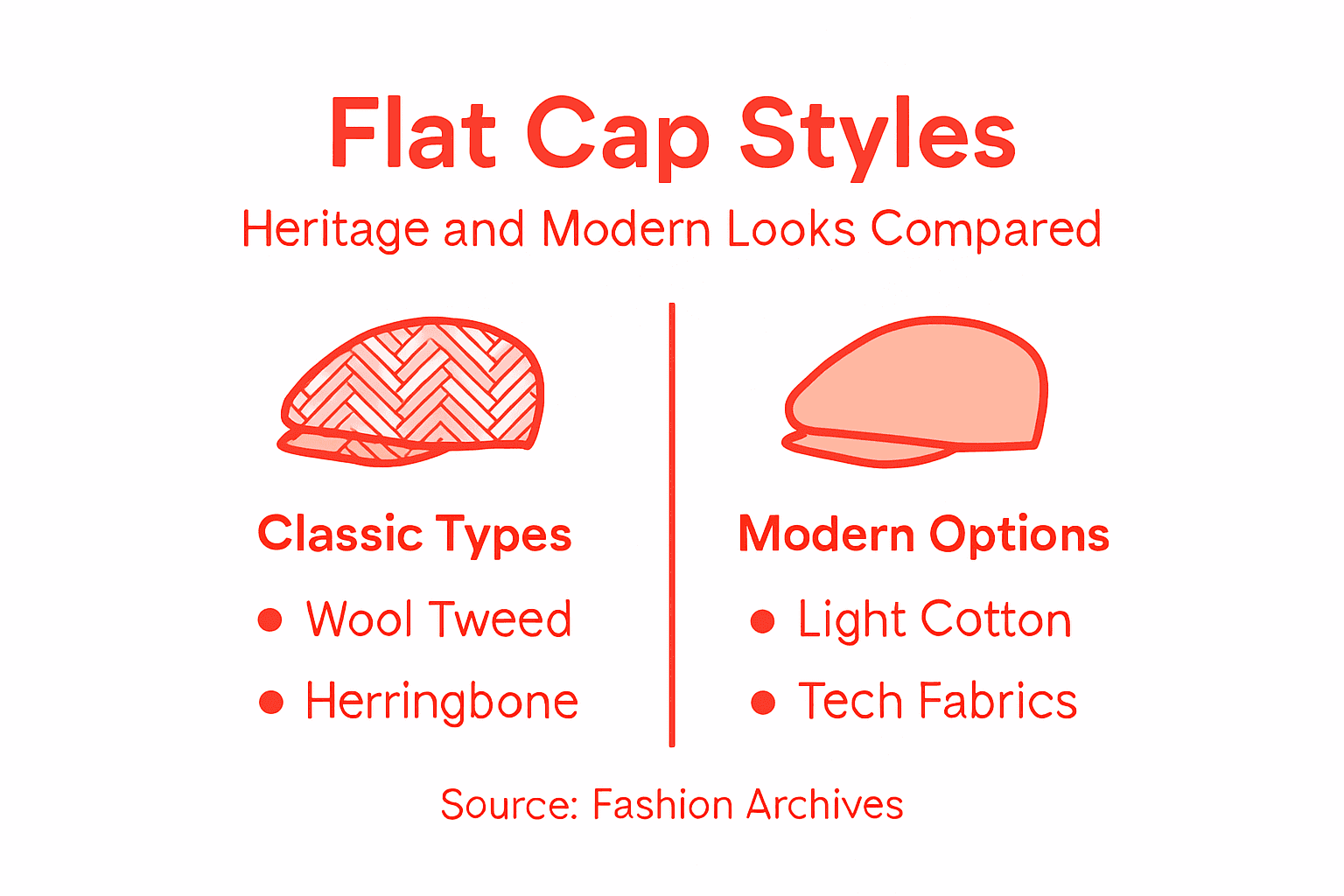
The primary flat cap styles showcase remarkable diversity:
Here’s a summary of flat cap styles and their unique characteristics:
| Style Name | Shape Profile | Traditional Use | Distinctive Feature |
|---|---|---|---|
| Duckbill Cap | Streamlined, fitted | Urban casual | Sleek, no button |
| Newsboy/Gatsby Cap | Fuller, eight-panel | Newspapers, social events | Button top, panel seams |
| Ivy/Scally Cap | Flat, minimalist | Everyday wear | No button, simple brim |
| Driver’s Cap | Sleek, minimal panels | Driving, sports | Structured, clean lines |
- Duckbill Cap: Streamlined silhouette with form-fitting shape
- Newsboy/Gatsby Cap: Eight-panel design with characteristic button top
- Ivy/Scally Cap: Simple flat top without button
- Driver’s Cap: Minimal panels with sleek profile
Material Selection plays a critical role in defining a flat cap’s character. Traditional construction emphasizes wool and wool blends, chosen for durability and thermal regulation. Seasonal variations introduce lighter fabrics:
- Wool/Tweed: Winter warmth and structured appearance
- Flannel: Soft, insulating properties
- Linen: Breathable summer option
- Cotton: Lightweight casual wear
Construction details distinguish premium flat caps. Reinforced brims maintain shape, while internal bands ensure comfortable fit. The craftsmanship transforms these accessories from simple headwear into statements of personal style.
Pro tip: Match your flat cap’s material to the season and your intended wear for maximum comfort and style.
Key Features: Fit, Function, and Versatility
Flat caps embody a remarkable fusion of design intelligence and practical wearability. Characterized by a low-profile rounded construction, these caps represent more than simple headwear - they’re a sophisticated blend of form and function.
Key structural elements define the flat cap’s exceptional versatility:
- Crown Design: Low-profile, rounded shape
- Brim Construction: Short, stiff front edge
- Fit Mechanism: Subtle pleating or paneling
- Back Adaptation: Elastic or gathering for comfort
Functional Attributes make flat caps remarkably adaptable. Internal lining enhances comfort across diverse climates, transforming the cap from mere accessory to essential wardrobe piece. The design’s genius lies in its simplicity - molding seamlessly to different head shapes while providing understated protection.
The flat cap’s true power emerges through its chameleon-like versatility. Whether paired with tailored suits or casual denim, these caps transcend traditional fashion boundaries, equally at home in urban streetscapes and rural landscapes. Their weather-resistant materials and thoughtful construction ensure both style and practical performance.
Pro tip: When selecting a flat cap, prioritize a slightly loose fit that allows natural head movement while maintaining a clean silhouette.
Styling Flat Caps for Contemporary Looks
Modern fashion embraces the flat cap as a versatile statement piece that bridges heritage and urban style. Trending hat styles for urban fashion demonstrate how these classic accessories can transform contemporary outfits with understated sophistication.
Successful flat cap styling hinges on understanding strategic pairings:
-
Casual Streetwear
- Denim jackets
- Fitted t-shirts
- Slim chino pants
-
Smart Casual
- Blazers
- Button-down shirts
- Tailored trousers
-
Layered Looks
- Wool overcoats
- Sweaters
- Lightweight jackets
Color and Texture Coordination elevates flat cap styling from basic to sophisticated. Neutral tones like charcoal, navy, and earth browns provide maximum versatility, while textured fabrics like tweed add visual depth to monochromatic outfits.
The contemporary flat cap transcends age and style boundaries. Whether you’re a young professional or a seasoned fashion enthusiast, these caps offer a nuanced way to express personal style while paying homage to a rich sartorial tradition.
Pro tip: Select a flat cap that complements your face shape and existing wardrobe color palette for seamless integration.
Flat Caps Versus Other Headwear Options
Fashion enthusiasts understand that headwear is more than just functional protection - it’s a statement of personal style. Unique characteristics distinguish flat caps from other popular hat styles, offering a nuanced alternative to conventional options.
A comparative analysis reveals distinct advantages of flat caps:
Baseball Caps Comparison
- Flat Caps: Vintage refined appeal
- Baseball Caps: Sporty, casual aesthetic
- Flat Caps: Historical cultural significance
- Baseball Caps: Modern athletic association
Fedora Versus Flat Cap Distinctions
- Flat Caps: Low profile, compact shape
- Fedoras: Structured, taller crown
- Flat Caps: Everyday versatility
- Fedoras: Formal, dressy appearance
Material and Aesthetic Differences further highlight flat caps’ unique positioning. Unlike structured headwear options, flat caps blend casual sophistication with cultural heritage, making them adaptable across fashion contexts.
Compare popular headwear styles for versatility and fashion impact:
| Headwear Type | Best Occasion | Style Level | Cultural Significance |
|---|---|---|---|
| Flat Cap | Urban & classic | Sophisticated | Deep historical roots |
| Baseball Cap | Athletic, casual | Relaxed | Sport-inspired, modern |
| Fedora | Formal events | Elegant | Vintage, formal tradition |
The flat cap transcends traditional headwear limitations by offering a perfect balance between formality and relaxed style. Its compact design and rich historical narrative make it a superior choice for those seeking an accessory with depth and character.
Pro tip: Choose a flat cap that reflects your personal style while honoring its rich cultural legacy.
Discover Timeless Style and Heritage with Urban Caps
If you appreciate the rich cultural legacy and versatile style of flat caps discussed in this article “Role of Flat Caps in Fashion Heritage Meets Modern Style” then our collection at Urban Caps offers the perfect solution. We understand the challenge of finding headwear that balances authentic craftsmanship with modern fashion sensibility. Our premium flat caps are designed using durable materials like wool and tweed that honor tradition while ensuring comfort and style for everyday Kiwi lifestyles.

Elevate your wardrobe with classic flat caps that capture centuries of heritage and adapt seamlessly to contemporary looks. Browse our curated selection at Urban Caps and experience fast NZ delivery alongside exceptional quality. Take the first step toward expressing your individuality through headwear that truly stands the test of time and fashion trends. Shop now to embrace timeless sophistication combined with practicality.
Frequently Asked Questions
What is the origin of flat caps?
Flat caps originated in Northern England as a working-class staple and have evolved into a symbol of cultural identity, representing practicality and traditional craftsmanship.
How do flat caps differ from other types of caps?
Unlike baseball caps, which have a sporty aesthetic, flat caps offer a vintage refined appeal. They have a low-profile rounded shape, while styles like fedoras are structured and taller.
What materials are flat caps typically made from?
Traditional flat caps are often constructed from wool or tweed, providing durability and warmth. Seasonal variations may include lighter fabrics like linen or cotton for summer wear.
How can I style a flat cap for a modern look?
Flat caps can be styled with casual streetwear, smart-casual outfits, or layered looks with coats and sweaters. Neutral tones and textured fabrics add sophistication and versatility to any ensemble.
Recommended
- Why Flat Caps Are Trending in New Zealand (And How to Choose the Right
- 7 Essential Types of Hats Every Fashion-Forward Kiwi Needs
- 7 Must-Know Streetwear Hat Styles for Urban Fashion
- 7 Stylish Sports Hat Examples for Kiwi Trendsetters
- Complete Guide to Vintage Hats and Their Legacy
- Understanding the Art of Mixing Vintage and Modern Styles – Be Juliet