

Selecting hats for outdoor activities: style and function
Choosing the right hat for outdoor adventures in New Zealand can feel overwhelming when you’re faced with countless options claiming to offer both style and protection. You want headwear that performs under intense UV rays, handles variable weather, and still looks great on the trail or at the beach. Many outdoor enthusiasts struggle to balance these competing priorities, often settling for hats that excel in one area but fall short in others. This guide walks you through the essential factors to consider when selecting outdoor hats, from understanding your specific activity needs to evaluating materials, fit, and sun protection features, so you can make informed choices that enhance both your comfort and your outdoor experience.
Table of Contents
- Key takeaways
- Understanding your needs: activity, environment, and style
- Choosing the right materials and craftsmanship for durability and comfort
- Ensuring proper fit, sun protection, and seasonal versatility
- Common mistakes and tips for selecting the perfect outdoor hat
- Explore premium outdoor hats at Urban Caps
- Frequently asked questions
Key Takeaways
| Point | Details |
|---|---|
| Activity dictates features | Your outdoor activity determines the hat features that matter most. |
| Materials affect performance | Fabric choice dramatically affects performance, including moisture management, breathability, and weather resistance. |
| Fit and UV protection | Proper fit and built in UV protection are essential for outdoor use. |
| Climate and environment | New Zealand climate and coastal or alpine conditions influence hat choices beyond style. |
Understanding your needs: activity, environment, and style
Your outdoor activities determine which hat features matter most. Hikers need wide brims for sun protection and ventilation to manage heat during climbs. Fishers benefit from neck flaps and water-resistant materials that handle spray and humidity. Trail runners require lightweight designs with secure fits that won’t bounce or shift during movement. Each activity places different demands on your headwear, and recognizing these requirements upfront prevents buyer’s remorse.
New Zealand’s climate adds another layer of complexity. The country’s high UV index means sun protection isn’t optional, it’s essential for preventing skin damage during extended outdoor time. Coastal areas bring wind and salt spray into the equation, while alpine environments require insulation and weather resistance. Your hat needs to handle the specific conditions where you spend most of your outdoor time, not just look good in the store.
Style preferences shouldn’t be dismissed as superficial. Your hat reflects your personality and influences how confident you feel wearing it. Some outdoor enthusiasts prefer technical sport designs that signal performance, while others want premium casual styles that transition from trail to town. Outdoor hats must suit the activity and conditions to be effective and comfortable, but they should also align with your aesthetic preferences so you’ll actually wear them consistently.
Pro Tip: Create a simple checklist of your three most frequent outdoor activities and the typical weather conditions for each, then use this as your baseline when evaluating hat options to ensure you’re choosing features you’ll genuinely use.
Choosing the right materials and craftsmanship for durability and comfort
Fabric selection dramatically impacts how your hat performs in real-world conditions. Cotton offers natural breathability and comfort but absorbs moisture and dries slowly, making it less ideal for intense activities or wet environments. Polyester and nylon provide excellent moisture-wicking properties and dry quickly, though they can feel less comfortable against skin in extreme heat. Wool delivers natural temperature regulation and odor resistance, perfect for cooler conditions but potentially too warm for summer adventures. Blended fabrics combine the strengths of multiple materials, offering balanced performance across various conditions.
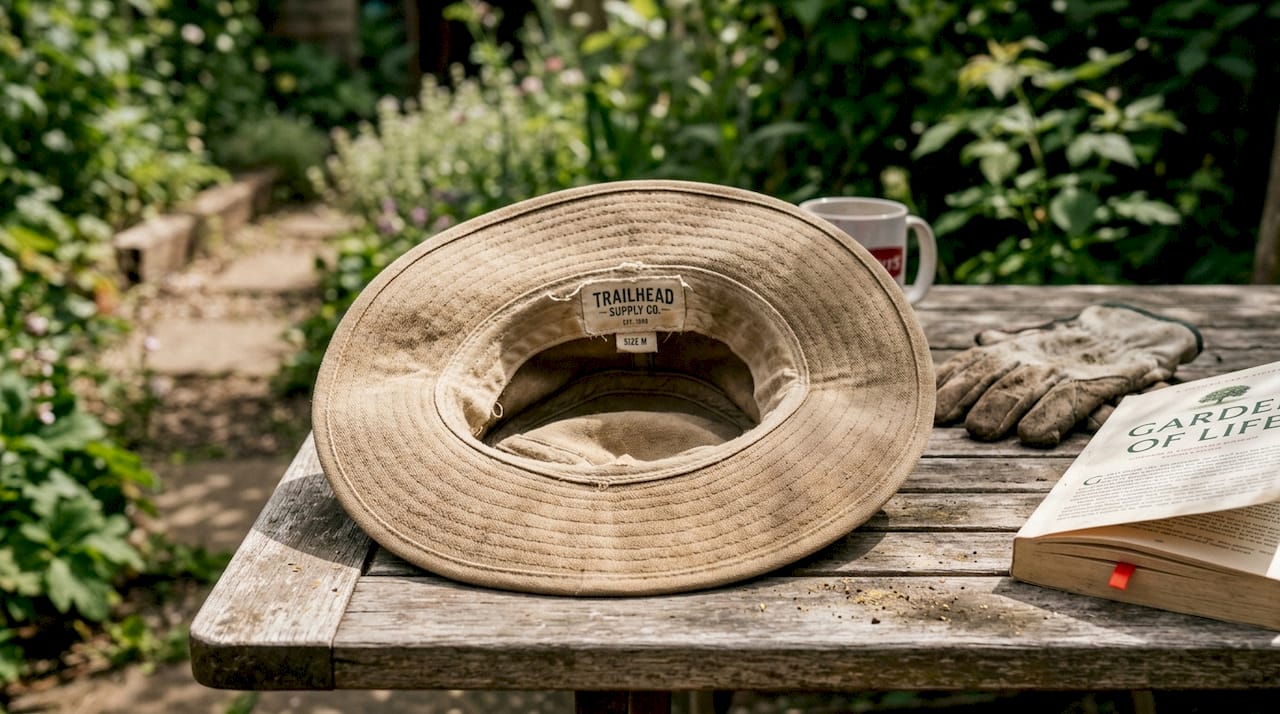
Certain fabrics like breathable cotton blends and technical synthetics provide better sun protection and moisture management than traditional materials. Look for fabrics specifically engineered for outdoor use, with built-in UV protection and enhanced breathability. Technical weaves create air channels that promote cooling, while treated fabrics resist water and stains without sacrificing comfort. The right material choice depends on your primary activities and the conditions you’ll face most often.
| Material | Best For | Key Benefits | Limitations |
|---|---|---|---|
| Cotton | Casual outdoor use | Soft, breathable, natural feel | Slow drying, absorbs moisture |
| Polyester | Active sports | Quick-drying, lightweight, durable | Can feel synthetic, less breathable |
| Nylon | Water activities | Water-resistant, fast-drying | May lack breathability in heat |
| Wool | Cool weather | Temperature regulation, odor-resistant | Too warm for summer, requires care |
| Blends | Versatile use | Balanced performance, adaptable | May compromise on specialized features |
Craftsmanship indicators reveal whether a hat will last through seasons of use or fall apart after a few outings. Examine stitching closely for even, tight rows without loose threads or gaps. Quality hats feature reinforced stress points at the crown and brim where wear concentrates. Check how the brim attaches to the crown, looking for secure construction rather than flimsy connections. Finishing details like internal sweatbands, adjustable closures, and clean seam work signal attention to durability and user comfort.
Pro Tip: When evaluating a hat in person or online, look for double or triple stitching at critical junction points and ask about construction methods, as quality manufacturers proudly detail their building techniques.
Ensuring proper fit, sun protection, and seasonal versatility
An ill-fitting hat undermines every other feature, no matter how premium the materials or construction. Measure your head circumference by wrapping a flexible tape measure around your head about one inch above your eyebrows, keeping the tape level all the way around. Most hats use this measurement in centimeters or inches to determine size. Try hats on with any eyewear or headbands you typically wear outdoors, since these items affect fit and comfort. The hat should sit comfortably without pressure points, stay secure when you move your head, and not leave red marks after extended wear.
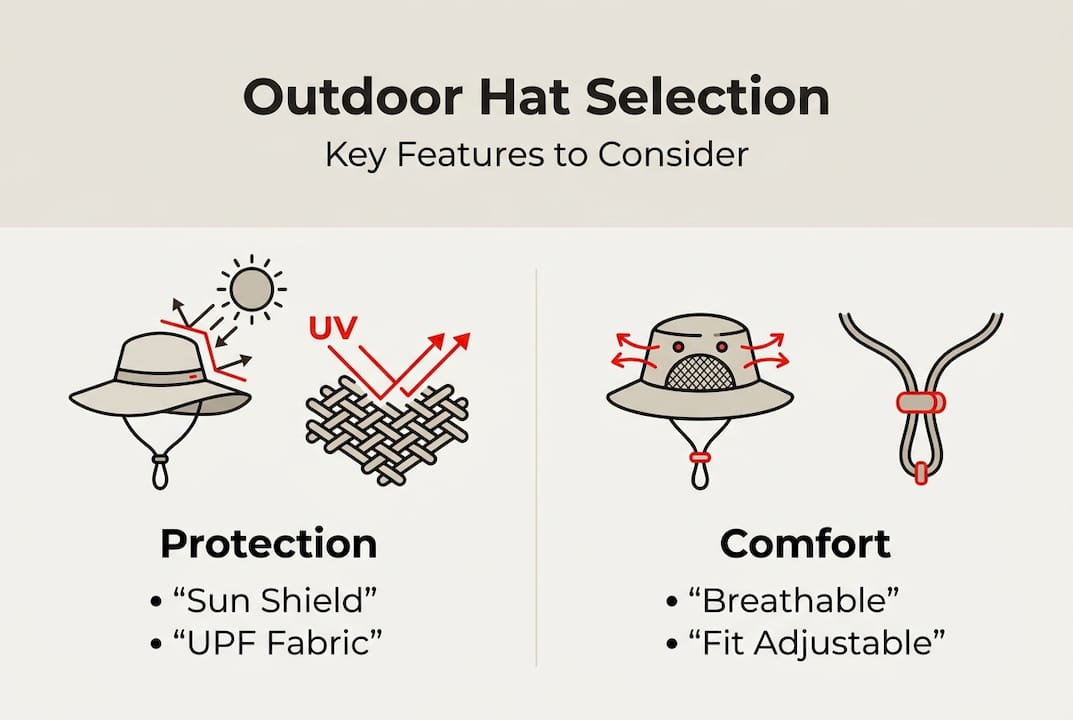
Sun protection features separate outdoor-specific hats from casual headwear. UPF ratings indicate how much UV radiation fabric blocks, with UPF 50+ blocking over 98% of harmful rays. Wide brims provide shade for your face, ears, and neck, with three-inch brims offering significantly more protection than narrow one-inch versions. Some hats include removable neck flaps or capes that shield vulnerable areas from overhead sun. Dark colors under the brim reduce glare reflection, while lighter outer colors reflect heat to keep you cooler.
Sun protection and comfortable fit significantly improve outdoor experience and safety, making these non-negotiable features for serious outdoor enthusiasts. Don’t compromise on either factor, as both directly impact your health and enjoyment during extended time outside. Quality outdoor hats integrate these elements without sacrificing style or adding excessive bulk.
| Hat Type | Sun Protection | Seasonal Use | Best Activities |
|---|---|---|---|
| Wide-brim | Excellent (face, neck, ears) | Spring through fall | Hiking, fishing, beach |
| Baseball cap | Moderate (face only) | Year-round | Running, casual outdoor |
| Bucket hat | Very good (360° coverage) | Summer, warm weather | Water sports, gardening |
| Beanie | Minimal | Winter, cool weather | Cold-weather activities |
| Legionnaire | Excellent (neck flap) | Summer, high UV | Extended sun exposure |
Seasonal versatility extends your hat investment by adapting to New Zealand’s variable conditions. Lightweight, breathable designs with ventilation panels work for warm months, allowing heat to escape while protecting from sun. Insulated styles with ear flaps or fleece linings handle winter conditions without overheating during active movement. Some hats feature removable components like chin straps or neck protection that you can add or remove based on conditions. Consider building a small rotation of seasonal options rather than expecting one hat to handle every situation perfectly.
Common mistakes and tips for selecting the perfect outdoor hat
Many buyers prioritize appearance over function, choosing hats that photograph well but perform poorly during actual outdoor use. This approach leads to discomfort, inadequate protection, and ultimately abandoning the hat in favor of something more practical. Style matters, but it should enhance functional features rather than replace them. Look for designs that integrate performance elements seamlessly into attractive aesthetics, proving you don’t have to sacrifice looks for capability.
- Overlooking ventilation in warm weather leads to overheating and excessive sweating, making outdoor activities uncomfortable and cutting trips short.
- Ignoring UV protection ratings leaves you vulnerable to sun damage even when wearing a hat, as not all fabrics and designs offer equal protection.
- Choosing style over proper fit results in hats that blow off in wind, cause headaches from pressure points, or shift during movement.
- Selecting inappropriate materials for your activities creates problems like slow-drying fabrics for water sports or non-breathable designs for intense hiking.
Many choose hats without considering activity-specific features, leading to discomfort or poor protection during their outdoor pursuits. This mistake wastes money and diminishes your outdoor experience unnecessarily. Take time to match hat features to your actual needs rather than making impulse purchases based on trends or sales.
Try hats on with the gear you’ll wear during activities. Put on your sunglasses, backpack, and any other equipment to ensure the hat works with your complete setup. Check that brims don’t interfere with pack straps or limit peripheral vision. Verify that adjustable features actually adjust to your preferred settings and stay put during movement. Walk around, bend over, and simulate activity motions to test security and comfort before committing to a purchase.
A well-chosen hat is an essential outdoor companion, not just a fashion accessory.
Read reviews from other outdoor enthusiasts who’ve tested hats in real conditions. Look for feedback about durability after extended use, how well hats maintain their shape, and whether they deliver on performance claims. Pay attention to comments about sizing accuracy, since some brands run large or small. Reviews reveal issues that aren’t apparent from product descriptions or photos, helping you avoid common pitfalls and identify standout options.
Explore premium outdoor hats at Urban Caps
Finding headwear that truly delivers on both style and outdoor performance requires access to carefully curated collections designed for New Zealand conditions. Urban Caps offers a wide selection of hats crafted from quality materials with attention to the functional details that matter during real outdoor use. From breathable sport caps to versatile wide-brim styles, the collection addresses diverse activity needs without compromising on aesthetic appeal.

Each hat in the Urban Caps range reflects expert craftsmanship and durable construction built to withstand New Zealand’s demanding outdoor environments. Whether you’re preparing for summer hiking, coastal fishing, or year-round trail running, you’ll find options that combine technical performance with timeless style. The website makes it easy to compare features, read detailed specifications, and understand which hats suit specific activities and conditions. Fast New Zealand delivery and knowledgeable customer support ensure you can confidently select headwear that enhances your outdoor adventures while expressing your personal style.
Frequently asked questions
What type of hat is best for hiking in New Zealand?
Wide-brim hats with UPF 50+ sun protection and breathable fabrics work best for New Zealand hiking, providing shade for your face and neck while managing heat during climbs. Look for adjustable chin straps to keep the hat secure in wind and ventilation panels to prevent overheating on steep trails.
How do I choose a hat that protects best against UV rays?
Select hats with UPF ratings of 50+ and brims at least three inches wide to block UV radiation effectively. Dark-colored fabric under the brim reduces glare, while tightly woven materials prevent UV penetration better than loose weaves.
Can I wear the same hat all year for outdoor activities?
While versatile hats exist, most outdoor enthusiasts benefit from having separate warm-weather and cold-weather options to handle New Zealand’s seasonal variation. Lightweight, ventilated designs for summer and insulated styles for winter provide better comfort and performance than trying to use one hat year-round.
What are the signs of a well-made outdoor hat?
Quality outdoor hats feature even, reinforced stitching at stress points, secure brim attachments, and clean finishing details throughout. Look for durable fabrics with technical properties like moisture-wicking or UV protection, plus thoughtful design elements like internal sweatbands and adjustable sizing systems.
How do I maintain and clean my outdoor hat?
Most outdoor hats benefit from hand washing in cool water with mild soap, then air drying away from direct heat or sunlight to preserve fabric treatments and shape. Check manufacturer care instructions, as some technical fabrics require specific cleaning methods to maintain their performance properties over time.