

The real role of hats in self-expression
TL;DR:
- Hats serve as powerful tools of self-expression by conveying personality, mood, and cultural identity without words. Wearing a hat influences confidence and self-perception through enclothed cognition, aligning your mindset with symbolic meanings. Choosing and wearing the right hat involves understanding face shape, occasion, mood, and personal authenticity to reflect who you truly are.
What you wear on your head says more than you think. The role of hats in self-expression goes far beyond keeping the sun off your face or finishing an outfit. Hats communicate mood, cultural belonging, personality, and even defiance, all before you say a single word. In fact, the way a hat is worn, not just the style itself, has carried coded social meaning for centuries. This article unpacks the psychology, history, and practical know-how behind choosing headwear that genuinely reflects who you are.
Key takeaways
| Point | Details |
|---|---|
| Hats carry deep history | Hat-wearing has communicated social status and identity for centuries across many cultures. |
| Wearing shapes thinking | The concept of enclothed cognition shows that putting on a hat can genuinely shift your mindset and confidence. |
| Style signals personality | Different hat styles send distinct non-verbal messages about personality, mood, and social affiliation. |
| Social pressure is real | Research shows over half of fashion-conscious adults feel judged for their style choices, including headwear. |
| Selection is personal | Choosing the right hat involves face shape, occasion, and the identity you want to project. |
The role of hats in self-expression through history
Few accessories carry as much layered meaning as the hat. Long before Instagram or streetwear culture, hats were doing the heavy work of communicating who you were, where you stood in society, and whether you deserved respect.
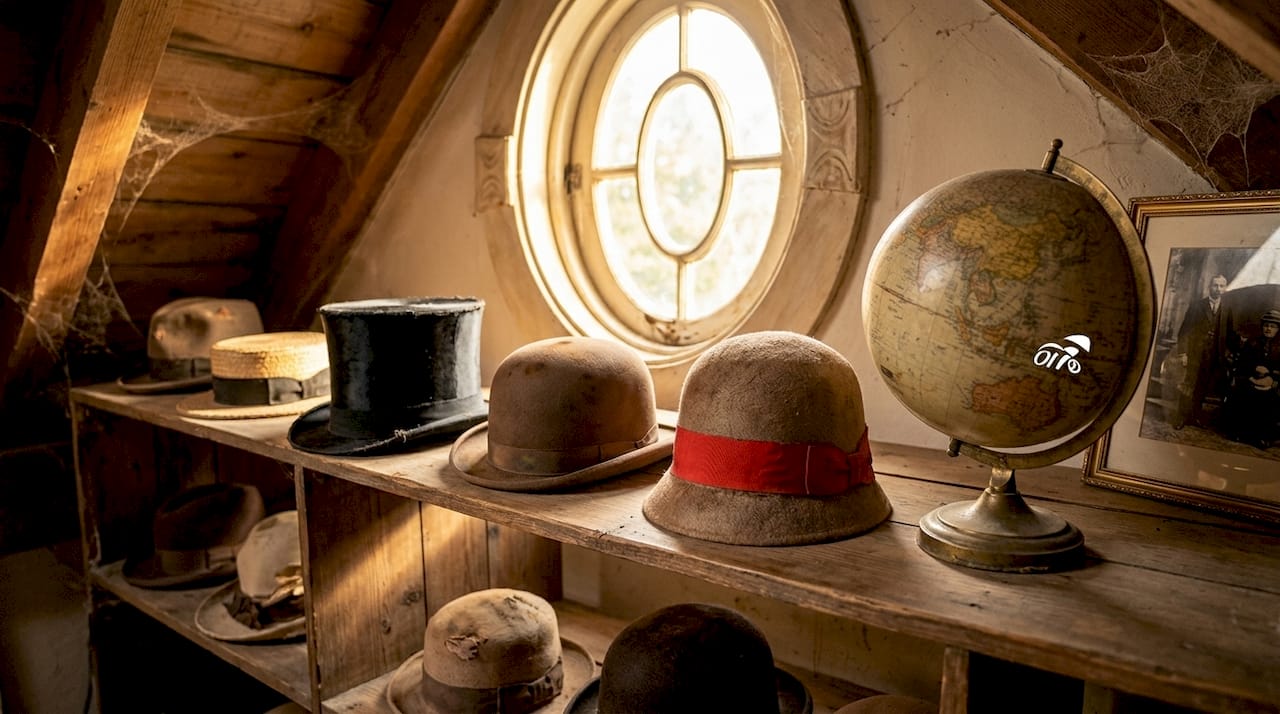
In early modern England, hat-wearing functioned as social currency. A practice known as “hat-honour” required individuals to doff, meaning remove or tip, their hats toward people of higher social rank. Refusing to do so was not just rude. It was a direct act of defiance or even political statement. The Quakers famously refused to doff their hats to anyone, including royalty, as a declaration that all people were equal before God.
Hat etiquette was socially constructed and historically contingent, shifting with changes in power, religion, and public health beliefs. Some scholars note that early hat etiquette also intersected with beliefs about cold air and illness, where keeping one’s hat on was linked to protecting health. This means hats have historically carried both social and bodily meaning simultaneously.
The cultural shift in the 1960s marked the beginning of the end for formal hat etiquette in Western culture. Youth culture rejected rigid dress codes as part of a broader embrace of informality, and the hat went from obligatory accessory to optional style choice. That shift actually gave hats more expressive power, not less. When wearing a hat is no longer expected, choosing one becomes a genuine statement.
One of the most striking examples of headwear as collective and individual identity is found in Black church communities. In these communities, women’s hats have long been central to Sunday worship, and the tradition carries deep meaning.
“In the Black church, hats are not merely fashion. They testify. They speak of dignity, creativity, and a quiet, persistent resistance.” — reflecting the cultural significance of Black church hat traditions
This tradition illustrates something that goes beyond individual preference. Hats can operate as community signals as much as personal ones. When you see someone wearing a particular style, you are reading a code that carries cultural weight built across generations.
- Hat-honour in early modern England was enforced social protocol, not just politeness.
- The Quakers used hat-wearing as active political protest.
- The 1960s cultural shift turned hats from obligation into optional identity markers.
- Black church hat traditions connect personal dignity to collective cultural expression.
Enclothed cognition and the psychology of hat-wearing
Here is where things get genuinely interesting. Psychology has a term for what happens when you put on a meaningful garment: enclothed cognition. It refers to the systematic influence that clothing has on psychological states and behaviour. The theory, developed through a series of experiments, holds that clothing affects how you think, feel, and perform, but only when two things are true. You need to be physically wearing the item, and you need to associate symbolic meaning with it.
The original research focused on lab coats. Participants who wore a coat they were told belonged to a doctor performed better on attention tasks than those who wore the same coat but were told it belonged to a painter. Physical wearing combined with symbolic meaning drives the effect. Simply seeing the coat, or wearing it without knowing its symbolic association, did not produce the same result.
What does this mean for hats? It means that hats influence wearer confidence and role alignment in measurable ways. A chef feels more competent in a toque. A construction worker in a hard hat feels more attuned to safety. A person who puts on a well-crafted fedora before a meeting may genuinely carry themselves differently because of what that hat means to them. The symbolism activates the behaviour.
Clothing, including hats, acts as psychological cues shaping self-perception in ways that are subtle but real. You are not imagining it when you feel more put-together in a good hat. The feeling is grounded in cognitive psychology.
Pro Tip: Before an important event or situation where you want to feel confident, deliberately choose a hat you associate with that quality. Whether that is a polished flat cap or a bold beret, the symbolic meaning you assign to it will do part of the psychological work for you.
This is also why hat choices signal personality traits and mood to observers and to the wearer at the same time. The hat you reach for on a confident day is probably different from the one you pull on when you want to stay low-key. That intuitive behaviour is enclothed cognition at work, even when you are unaware of it.
Hats as fashion statements and personal branding
Every hat style carries its own non-verbal vocabulary. Understanding that vocabulary is what separates people who wear hats from people who use hats. The form of a hat and how it is worn communicate distinct social codes, and those codes shift depending on context, culture, and community.
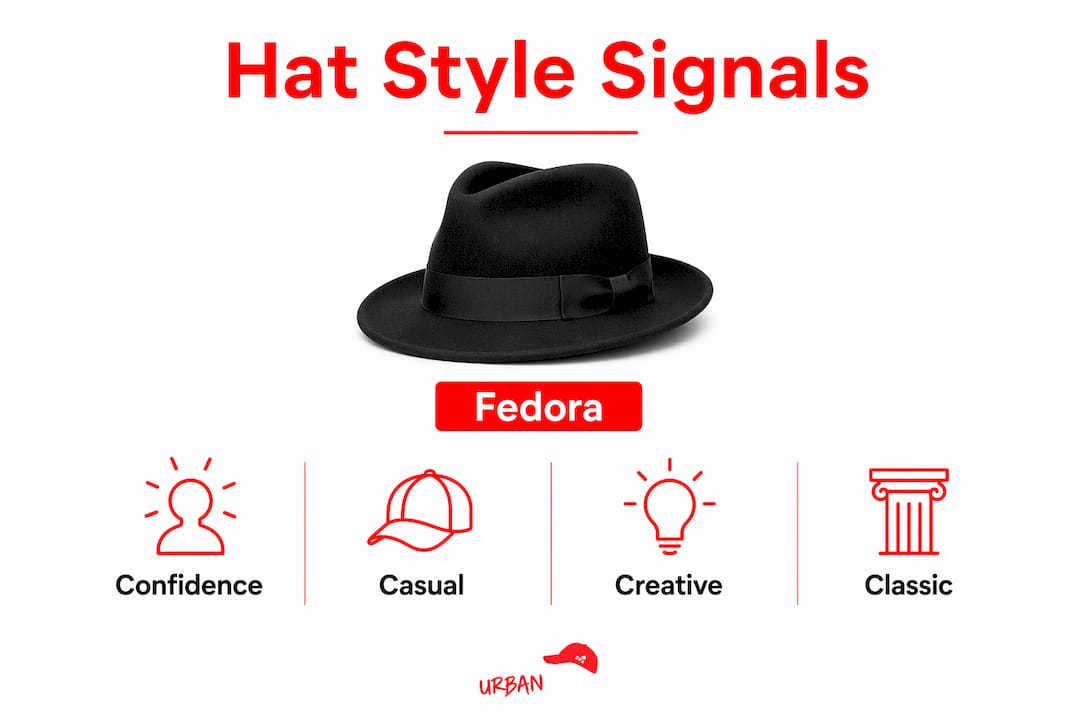
Below is a practical reference for the signals different hat styles tend to send.
| Hat style | Associated personality traits | Common non-verbal message |
|---|---|---|
| Fedora | Confident, creative, retro-aware | “I have a distinct point of view” |
| Beanie | Relaxed, authentic, community-oriented | “I’m approachable and comfortable in my skin” |
| Flat cap | Considered, heritage-minded, polished | “I value craftsmanship and tradition” |
| Beret | Artistic, intellectual, culturally engaged | “I care about aesthetics and ideas” |
| Cowboy hat | Independent, grounded, bold | “I own my identity without apology” |
| Dad hat | Casual, unpretentious, irony-aware | “I’m low-key but I’m paying attention” |
The placement and angle of a hat matter just as much as the style. A fedora worn straight communicates something different from the same hat tilted to one side. A beanie pulled down over the ears reads differently from one perched high on the head. These micro-adjustments are a genuine language, and most people read them fluently without realising it.
Social networks and fashion communities also shape how people use hats to express identity. Seeing a hat worn a particular way by someone whose style you admire gives you permission to try it yourself. That social observation is part of how personal style evolves. It is not copying. It is dialogue. You take the influence, interpret it through your own personality, and make it yours.
The concept of expressing personality with hats extends into personal branding for many people. Artists, musicians, chefs, and creatives often use a signature hat as a recognisable mark. The hat becomes part of the visual shorthand for who they are and what they stand for.
Handling social judgement in hat-based expression
Wearing hats openly and confidently is not always without friction. Research tells a revealing story here. A 2026 study found that 91% of young adults express personal style through fashion, but 54% feel judged for their choices. That tension between wanting to express yourself and worrying about how others will receive it is real, and it affects headwear as much as any other accessory.
Social media has amplified this dynamic considerably. Online platforms increase both fashion inspiration and social pressure, meaning people see more bold hat choices and feel more scrutinised for their own. The result is a feedback loop where visibility creates opportunity and anxiety in equal measure.
Navigating this well comes down to a few clear habits:
- Know your intention. Wear the hat because it means something to you, not because you expect applause for it. Hats rooted in your own symbolism will always feel more settled.
- Start in lower-stakes settings. Try a new hat style in a casual environment first. Confidence builds with familiarity.
- Separate cultural appreciation from cultural appropriation. If a hat carries strong cultural significance outside your own background, take the time to understand that context before wearing it.
- Accept that not everyone will get it. Not every style choice needs universal approval to be valid.
Pro Tip: If you feel self-conscious about wearing a hat in public, pair it with an outfit you already feel confident in. Confidence in the rest of your look carries over to how naturally you wear the hat.
The key insight from the research is that the discomfort of judgement rarely outweighs the satisfaction of authentic expression for people who persist with it. Most people who own a personal style, hats included, did not arrive there immediately. They built it through small, deliberate choices over time.
Choosing hats that genuinely reflect your style
All of this context is useful only if it helps you make better choices in practice. Here is a straightforward process for selecting headwear that aligns with who you are and how you want to show up.
-
Start with your face shape. The structure of your face determines which hat proportions flatter you. Round faces tend to suit hats with height, like a fedora or a structured cap. Longer faces work well with wider brims. Reading up on hat selection for your face shape before buying saves a lot of guesswork.
-
Match the occasion, not just the outfit. A beanie reads correctly at a weekend market. It reads oddly at a formal dinner. Think about the social context and choose a hat that fits the environment, not just the clothing.
-
Identify the mood you want to project. Before selecting a hat, ask yourself what quality you want to bring to that day or that event. Creativity? Groundedness? Confidence? The answer points you toward a style.
-
Invest in quality materials. A hat made from quality wool, cotton, or natural straw wears better over time and holds its shape. A hat that keeps its form reinforces its visual message consistently. The case for premium headwear is largely a case for longevity and consistent style payoff.
-
Experiment deliberately. Pick one new style and wear it consistently for a few weeks. Give yourself time to grow into the identity it represents, rather than dismissing it after one outing. Style, like any other form of self-expression, takes practice.
The goal is not to wear every trend. It is to build a considered collection that reflects your actual personality, the roles you occupy, and the moods you want to move through.
My take on what hats actually do for you
I have been thinking about hats as tools of personal expression for a long time, and what I keep coming back to is how underestimated they are compared to other accessories. Jewellery, shoes, and bags get most of the editorial attention, but a hat does something they simply cannot. It frames your face. It changes your posture. And it broadcasts a signal at a distance no ring or necklace ever could.
In my experience, the people who wear hats most confidently are not necessarily the most fashionable people in the room. They are the ones who have made a decision about who they are and committed to it. The hat is evidence of that decision, sitting right at the top of their silhouette where everyone can see it.
I also think there is a misconception worth naming: that hats are performative, that people who wear them are trying too hard or seeking attention. That misses the point entirely. The psychological function of a hat is often private, not public. You put on a well-made flat cap and feel more grounded. You pull on a wool beanie and feel more like yourself. That internal shift is real, even when no one around you notices the hat at all.
The underestimated power here is that hats let you practise being a version of yourself before you fully inhabit that identity. They give the self something to grow into.
— Urban
Find your expression at Urbancaps

Whether you have been drawn to hats for years or you are just starting to explore what headwear can do for your personal style, the right hat genuinely changes how you carry yourself. Urbancaps stocks a carefully chosen range of quality headwear, from flat caps and beanies to berets and cowboy hats, built for real life in New Zealand and crafted to last.
If you are looking to make a clear style statement, our fedoras hat collection is one of the best places to start. Fedoras have centuries of sartorial credibility behind them and remain one of the most expressive hat styles available. For colder months, the woollen fedoras range combines warmth with shape without compromising on style.
Urbancaps is proudly NZ owned and operated, with free shipping on all orders within New Zealand. Browse the full range and find the hat that says what you want it to say.
FAQ
What is the role of headwear in self-expression?
Hats communicate personality, mood, cultural affiliation, and social identity without words. The style, placement, and type of hat all send distinct non-verbal signals to observers and shape how the wearer feels about themselves.
What is enclothed cognition and how does it relate to hats?
Enclothed cognition is the psychological effect that occurs when you wear a garment with meaningful symbolism. Wearing a hat you associate with confidence or creativity can genuinely shift your behaviour and self-perception in that direction.
Do hat choices really signal personality?
Yes. Research shows that hat styles and how they are worn communicate consistent personality traits and mood signals. A fedora worn at an angle projects something quite different from a pulled-down beanie, even though both are simply hats.
How do I choose a hat that reflects my personal style?
Start with your face shape and the occasion, then consider the mood or identity you want to project. Investing in quality materials and experimenting with a style consistently over time will help you find what feels genuinely authentic.
Why do some people feel judged for wearing hats?
A 2026 study found that 54% of fashion-engaged adults feel judged for their style choices. Social media increases both visibility and scrutiny. The best approach is to ground your hat choices in personal meaning rather than external approval.