


Weatherproof hat maintenance guide: keep your hat performing
TL;DR:
- Proper maintenance of weatherproof hats depends on their materials, requiring specific cleaning and reproofing routines to preserve water repellency. Regular use of technical cleaners and timely reproofing restore functionality, while incorrect cleaning or storage can cause permanent damage. Consistent, material-specific care extends the lifespan and performance of weather-resistant headwear.
A weatherproof hat maintenance guide covers the cleaning, drying, and reproofing routines that preserve water repellency and breathability in weather-resistant headwear. The industry term for this category of care is “technical garment maintenance,” and the same principles that apply to waterproof jackets apply directly to your hat. Modern hats rely on Durable Water Repellent (DWR) coatings or oilskin finishes shedding rain, and both require specific upkeep to stay effective. Skip the right steps and your hat absorbs water instead of repelling it, becoming heavy, cold, and far less useful outdoors. This guide gives you the exact routines to follow for each material type, so your hat stays ready for whatever the weather throws at it.
What materials are used in weatherproof hats?
The material your hat is made from determines every maintenance decision you make. Get this wrong and you can permanently damage the finish.
The three most common weatherproof hat materials are:
- Oilskin. A woven cotton fabric treated with an oil or wax finish. Oilskin is dense, wind-resistant, and naturally water-repellent. It has no breathable membrane, so its performance depends entirely on the condition of its oil coating.
- Softshell with DWR. A stretchy, woven or knit fabric treated with a Durable Water Repellent coating on the outer surface. Softshell hats breathe well and move with you, but the DWR coating sits on the surface and wears off with use and washing.
- Technical fabrics with DWR. Woven nylon or polyester shells, sometimes bonded to a waterproof membrane. These are the most weather-resistant option and rely on DWR to keep the outer fabric from “wetting out” and blocking the membrane’s breathability.
The maintenance difference between oilskin and technical fabrics is significant. Oilskin hats should never be machine washed or cleaned with detergents, as soap strips the protective oil finish. Technical fabrics and softshell hats, by contrast, can tolerate machine washing on a gentle cycle when you use the right products.
PFC-free DWR coatings are now standard across most technical headwear. These coatings trade environmental safety for faster wear, which means your hat needs reproofing more often than older PFAS-based treatments required. Understanding your hat’s material is the first step in building a care routine that actually works.
Pro Tip: Check the care label sewn inside your hat before doing anything else. It tells you the material composition and the manufacturer’s approved cleaning method. Following it prevents irreversible damage.
Which cleaning products and methods preserve water repellency?
The wrong cleaning product is the most common cause of permanent DWR failure. Household laundry detergents and fabric softeners leave residues that neutralise DWR coatings and block breathable membranes, sometimes irreversibly. Use a technical cleaner like Nikwax Tech Wash instead. It cleans effectively without leaving residue and is specifically formulated for water-repellent fabrics.
The core principle for weatherproof headwear upkeep is “wash less, maintain more.” Spot cleaning and airing keep oilskin hats weather-ready without the damage that comes from frequent washing. For technical fabrics, the same logic applies. Spot clean with a damp cloth when possible, and only machine wash when the hat is genuinely dirty.
Cleaning oilskin hats
- Brush off dry mud with a soft brush before it sets.
- Sponge the surface with cold water only. Never use hot water.
- Do not use soap, detergent, or any cleaning product.
- Allow the hat to air dry away from direct heat.
- Reproof with a wax or oil treatment once the hat is fully dry.
Cleaning technical fabric and softshell hats
- Remove loose dirt with a soft brush or damp cloth before washing.
- Machine wash on a gentle cycle using Nikwax Tech Wash or an equivalent technical cleaner.
- Run an extra rinse cycle after washing. Extra rinse cycles are mandatory to prevent membrane clogging from detergent residue.
- Do not use fabric softener at any stage.
- Do not use bleach. It degrades DWR coatings and weakens fabric fibres.
Pro Tip: If your hat has a structured brim, place it in a mesh laundry bag before machine washing. This protects the brim shape and prevents it from catching on the drum.
How to dry and store weatherproof hats for optimal longevity
Drying your hat correctly matters as much as cleaning it correctly. The wrong drying method can warp the brim, damage the DWR coating, or ruin an oilskin finish permanently.
For technical fabric hats, air drying is the safest default. Hang the hat on a peg or rest it on a clean towel away from direct sunlight. If the care label permits, a tumble dry on a low heat setting can actually help. Low heat reactivates some DWR coatings by redistributing the coating molecules across the fabric surface. This is one of the few cases where a dryer improves hat performance rather than harming it. Always check the care label first, as some fabrics cannot tolerate any heat.
Oilskin hats must never go near a dryer, radiator, or direct heat source. Heat melts the oil finish and causes the fabric to stiffen and crack. Air dry oilskin hats at room temperature, ideally hung on a hat hook so the brim keeps its shape.
Pro Tip: For hats with a stiff brim, stuff the crown loosely with clean tissue paper while drying. This holds the shape and absorbs any moisture from the inside.
Storage conditions that protect your hat
Storage is where most people lose performance without realising it. Heat, direct sunlight, and damp conditions all degrade DWR coatings and oilskin finishes over time.
Store your weatherproof hat in a cool, dry place away from windows. Avoid leaving it in a car, where temperatures can spike well above what any coating can tolerate. If you stack hats, place the weatherproof hat on top to avoid brim distortion from weight. A breathable cotton bag works well for long-term storage. Avoid sealed plastic bags, which trap moisture and encourage mould growth on natural fibres like oilskin.
When and how to reproof weatherproof hats to restore water resistance
Reproofing is the process of reapplying a DWR treatment to restore water repellency after the original coating has worn off. It is the single most important maintenance step for any weatherproof hat.
How to tell when your hat needs reproofing
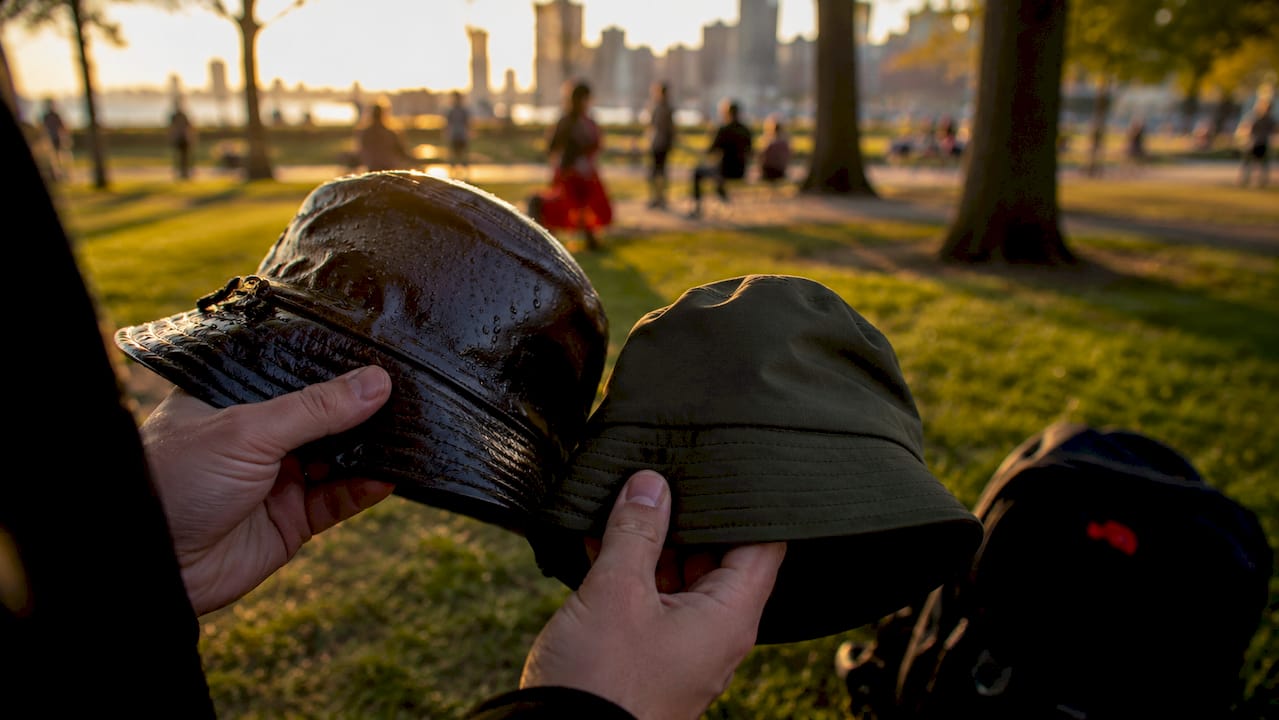
The clearest sign is loss of water beading. When your hat is performing well, water droplets bead up and roll off the surface. When water stops beading, the fabric absorbs moisture instead, becoming heavy and less breathable even if the underlying membrane is still intact. This is called “wetting out,” and it signals that the DWR coating has failed.
Modern PFC-free DWR coatings typically degrade after around 10 active uses in wet conditions, or every few months with regular wear. That is faster than older PFAS-based treatments, so building reproofing into your regular routine is now a practical necessity rather than an occasional task.
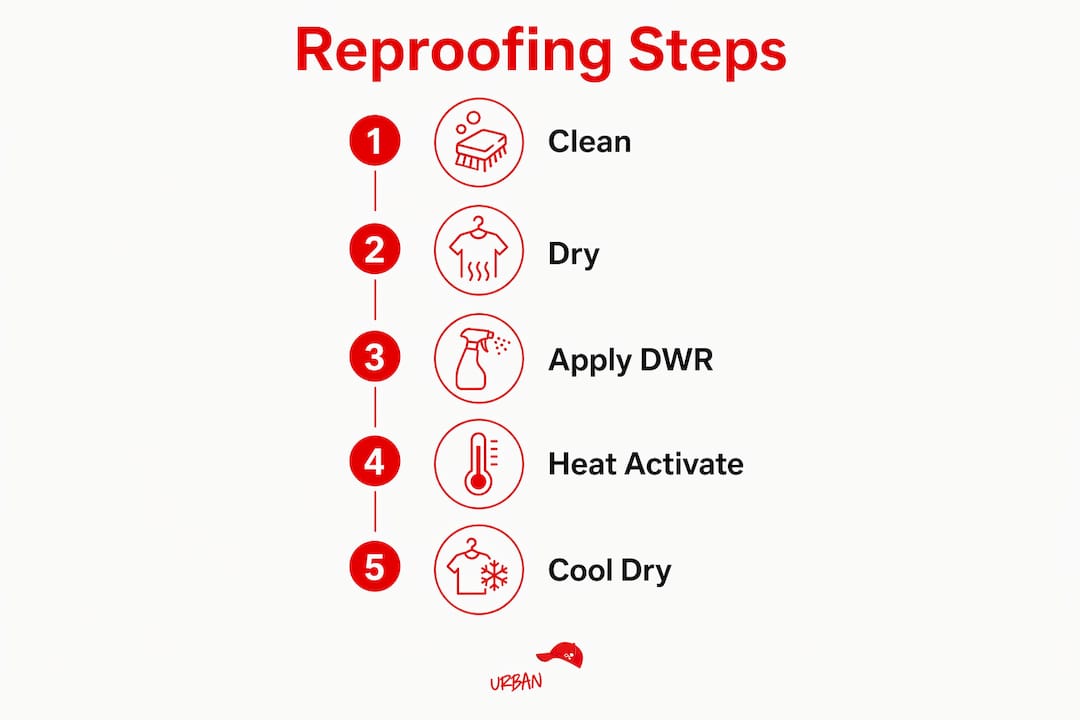
Step-by-step reproofing for technical fabric hats
- Clean the hat first using a technical cleaner. Reproofing a dirty hat seals in residues and reduces the effectiveness of the new coating.
- While the hat is still damp, apply a spray-on DWR reproofing product like Nikwax TX.Direct Spray-On. Hold the can 15–20 centimetres from the surface and apply an even coat.
- Alternatively, use a wash-in reproofing product added to the machine wash cycle after cleaning. Wash-in products coat the entire fabric, including seams.
- Allow the hat to air dry, or tumble dry on low if the care label permits. Heat helps bond the new DWR coating to the fabric.
- Test by sprinkling a few drops of water on the surface. Water should bead and roll off immediately.
| Reproofing method | Best for | Heat needed? |
|---|---|---|
| Spray-on DWR | Technical fabrics, targeted areas | Optional (low heat helps) |
| Wash-in DWR | Full coverage, seams included | Optional (low heat helps) |
| Wax or oil treatment | Oilskin hats only | No (air dry only) |
Reproofing oilskin hats
Oilskin reproofing uses a wax or oil-based product, not a spray-on DWR. Apply the wax or oil evenly across the surface with a clean cloth, working it into the fabric. Allow it to absorb fully at room temperature. Do not apply heat. Buff off any excess with a dry cloth once the treatment has set.
Pro Tip: Always reproof after cleaning, not before. Cleaning removes the residues that would otherwise block the new coating from bonding to the fabric.
Common mistakes to avoid with weatherproof headwear upkeep
Most weatherproof hat failures come from a short list of avoidable errors. Knowing what not to do is as useful as knowing the correct technique.
- Using regular laundry detergent. Standard detergents leave surfactant residues that attract water to the fabric surface and destroy DWR performance. Switch to a technical cleaner and keep it there.
- Adding fabric softener. Fabric softener coats fibres with conditioning agents that permanently block breathable membranes. One wash with softener can cause damage that reproofing cannot fix.
- Machine washing oilskin. The agitation and water volume of a washing machine strips oilskin’s oil finish completely. Spot clean only.
- Ignoring early signs of DWR failure. Waiting until your hat is soaking through before reproofing means you have been wearing a non-functional hat for weeks. Check water beading after every few uses.
- Drying near direct heat. Radiators, car dashboards, and direct sunlight all degrade coatings and warp brim shapes. Air dry at room temperature.
- Washing too frequently. Every wash cycle removes a small amount of DWR coating. Wash only when genuinely necessary, and spot clean between washes.
“Salt from sweat, body oils, and environmental grime block breathable membranes and destroy water repellency before visible dirt appears. Invisible residues attract water and kill repellency, which is why a hat that looks clean can still perform poorly in the rain.”
This is the insight most people miss. A hat does not need to look dirty to need maintenance. Sweat salts and body oils degrade repellency at the membrane level, long before any visible soiling appears. Regular spot cleaning and timely reproofing address this invisible build-up before it causes permanent damage. If your hat is wetting out after a recent wash, the cause is almost certainly residue from an incorrect cleaning product, not a failed membrane. Clean it again with a technical cleaner, then reproof.
For guidance on selecting hats for outdoor activities that suit your specific conditions, the material and construction of the hat you choose will shape your entire maintenance routine from day one.
Key takeaways
Proper weatherproof hat care requires material-specific cleaning, correct drying, and regular reproofing with appropriate products to maintain water repellency and extend hat life.
| Point | Details |
|---|---|
| Know your material | Oilskin, softshell, and technical fabrics each require a different cleaning and reproofing approach. |
| Use technical cleaners | Nikwax Tech Wash and equivalent products preserve DWR coatings; household detergents destroy them. |
| Reproof regularly | PFC-free DWR coatings degrade after around 10 wet uses, so reproof every few months with active wear. |
| Wash less, maintain more | Spot clean and air regularly rather than machine washing, especially for oilskin hats. |
| Store correctly | Keep hats in a cool, dry place away from heat and direct sunlight to protect coatings between uses. |
What I’ve learned from years of caring for weatherproof hats
The single biggest shift in how I think about weatherproof hat care came when I stopped treating it like laundry and started treating it like tool maintenance. A weatherproof hat is a piece of functional equipment. You would not throw a quality piece of outdoor gear into a hot wash with regular detergent and expect it to perform afterwards. The same logic applies here.
The move to PFC-free DWR coatings across the industry is genuinely positive for the environment. But it does mean you need to reproof more often than you might expect. I have seen people buy a quality hat, use it through a wet season, and then wonder why it is soaking through. The coating has simply done its job and worn off. A quick reproof every couple of months brings it straight back.
My personal routine is simple: spot clean after every few uses, run a full technical wash when the hat genuinely needs it, and reproof as soon as water stops beading. I never use anything other than a purpose-made technical cleaner. The cost difference between a technical cleaner and a standard detergent is trivial compared to the cost of replacing a hat that has been permanently damaged.
For anyone choosing durable outdoor headwear, the maintenance routine you commit to matters as much as the hat you buy. A well-maintained mid-range hat will outlast a neglected premium one every time.
— Urban
Weatherproof hats from Urbancaps, built to last

Urbancaps stocks a range of quality hats suited to New Zealand’s unpredictable weather, from classic fedoras to warm winter beanies. Every hat in the catalogue is selected for durability and craftsmanship, so the maintenance effort you put in actually pays off over years of wear. Whether you are after a stylish fedora hat for everyday use or a warm knit beanie for colder conditions, Urbancaps delivers fast within NZ with local support behind every order. Browse the full range and find a hat worth looking after.
FAQ
Is my hat waterproof or just water-resistant?
Most weatherproof hats are water-resistant rather than fully waterproof. They use DWR coatings to repel light rain, but sustained heavy rain will eventually penetrate the fabric, especially once the DWR coating wears off.
How often should I reproof my weatherproof hat?
Reproof every few months with regular wear, or after around 10 uses in wet conditions. PFC-free DWR coatings wear off faster than older treatments, so proactive reproofing keeps your hat performing consistently.
Can I machine wash an oilskin hat?
No. Machine washing strips the oil finish that gives oilskin its water repellency. Clean oilskin hats by sponging with cold water only, then reproof with a wax or oil treatment when needed.
What cleaner should I use on a weatherproof hat?
Use a technical cleaner like Nikwax Tech Wash. Standard laundry detergents and fabric softeners leave residues that destroy DWR coatings and can permanently block breathable membranes.
Why is my hat wetting out even after washing?
Wetting out after washing usually means a detergent residue is blocking the DWR coating. Rewash with a technical cleaner, run an extra rinse cycle, then apply a spray-on or wash-in DWR reproofing product to restore water beading.