

What is premium wool? The traits that separate it from ordinary fleece
Premium wool is fleece or yarn whose measurable fibre traits, especially fineness in microns, and verified provenance match its intended use. It’s not a marketing label. It’s a technical classification.
Three named benchmarks anchor that definition. The Micron System measures average fibre diameter and is the industry’s primary quality yardstick. Woolmark certification verifies the fibre performs as claimed. And Merino, a breed rather than a grade, produces most of the world’s premium ranges because its natural fibre diameter tends to run finer than other sheep breeds.
If you want one quick test before buying, use this:
- Check the stated micron count. Under roughly 20 microns signals apparel-grade fineness suited to next-to-skin wear.
- Look for a certification mark or a supplier-referenced test report, not just the word “premium” on a swing tag.
- Treat breed names alone as marketing. Merino wool can range from ultrafine to coarse, so the number matters more than the name.
Key Takeaways
Premium wool is defined by measurable fibre traits, especially micron count under roughly 20 for apparel, verified through independent testing and certification rather than breed name alone.
| Point | Details |
|---|---|
| Micron is the core metric | Check the stated fibre diameter before anything else; under 20 microns suits next-to-skin apparel. |
| Certifications confirm claims | Woolmark, OEKO-TEX Class I, and RWS each verify a different aspect: performance, safety, and sourcing. |
| Scarcity drives price | Ultrafine merino makes up less than 5% of global wool production, which keeps prices elevated. |
| Care protects the investment | Gentle washing, sunlight avoidance, and proper reshaping prevent pilling and shape loss over time. |
| Urbancaps stocks verified pieces | Urbancaps’ premium wool hats, including Australian wool felt styles, pair fibre quality with structured construction. |
Table of Contents
- What defines premium wool?
- How is wool measured and graded?
- Common premium wool types and their micron ranges
- Why does premium wool cost more?
- How to spot premium wool in a finished hat or jumper
- Caring for premium wool the right way
- Typical price ranges: premium versus ordinary wool
- How to verify a premium wool claim before you buy
- What premium wool means for anyone selling hats
- Find genuine premium wool hats without the guesswork
- Sources
- FAQ
What defines premium wool?
Fibre fineness, measured in microns, is the single biggest driver of what buyers experience as “premium.” Finer fibres bend more easily against skin, which reads as softness rather than itchiness. Coarser fibres above 30 microns feel stiffer and suit carpets or heavy outerwear rather than jumpers, as the NMSU Extension’s wool grading guide sets out.
Staple length and uniformity matter almost as much. Long, even locks spin into stronger, smoother yarn with less waste at the mill. Short or uneven staples break during processing and show up later as weak spots or fuzz.
Strength and elasticity, sometimes called resilience, determine how a garment ages. A fibre with poor elasticity pills faster and loses its shape after a handful of wears. Clean wool yield, the proportion of usable fibre left after removing grease, dirt, and vegetable matter, affects raw cost directly. Lower yield means more raw wool is needed to produce the same finished weight.
Crimp, the natural waviness of the fibre, also plays a functional role. It traps insulating air pockets, which is why wool regulates temperature and resists odour better than straight synthetic fibres, according to Woolmark’s breathability research.
- Fineness (microns): softness and end-use suitability
- Staple length: spinning efficiency and yarn strength
- Uniformity: consistency across the fleece
- Strength/elasticity: pilling resistance and garment lifespan
- Clean yield: usable fibre after processing
Pro Tip: Don’t judge wool by hand-feel alone in a warm shop. Fine wool can feel similar to a coarser blend at room temperature. Ask for the micron figure before you decide.
How is wool measured and graded?
Laboratories measure average fibre diameter under a microscope or laser scanner, then report it alongside standard deviation, which shows how consistent that fleece actually is. Two fleeces can share the same average micron count, yet the one with lower standard deviation will feel more uniform and perform more predictably, per the SDSU Extension’s wool evaluation guide.
Older systems like spinning count and American Blood grading are still referenced in some markets, but micron measurement has largely replaced them because it’s more precise and easier to compare across suppliers.
| Report item | What it tells you |
|---|---|
| Mean micron | Average fibre diameter, the core fineness figure |
| Standard deviation | Consistency of fibres within the sample |
| Staple length | Spinning quality and yarn strength potential |
| Clean yield | Usable fibre percentage after scouring |
- Ask for the mean micron and standard deviation together, not just one figure.
- Samples taken from multiple points on a fleece reduce measurement error and catch weaker sections like the britch or belly.
Common premium wool types and their micron ranges
Merino superfine sits at the top of most premium ranges. Ultrafine merino runs under 17.5 microns and represents less than 5% of global wool production, while superfine merino sits between 17.5 and 19.5 microns and typically costs 20 to 30% more than medium merino, according to Merino Protect’s buyer’s guide.
Fine wool more broadly ranges from under 17.7 microns (classed as 80s grade) up to around 20.6 microns, and this band covers most premium knitwear and base layers. Coarser wools above 30 microns are not inferior. They’re simply built for a different job, like carpets, structured outerwear, or heavy-duty hats where durability outweighs next-to-skin softness, as the NMSU grading guide explains.
- Ultrafine merino: under 17.5 microns, scarce, used in premium base layers
- Superfine merino: 17.5 to 19.5 microns, common in high-end knitwear
- Mid-range fine wool: 20 to 26 microns — everyday jumpers and beanies
- Broad wool: 30+ microns, carpets and structured, heavy-wear items
Breed name alone tells you very little. A garment labelled “Merino” could sit anywhere on that scale, so the printed micron figure is what actually separates a premium piece from a mid-tier one wearing the same breed name.
Why does premium wool cost more?
Scarcity drives most of the price gap. Ultrafine and superfine merino make up a small slice of total wool production worldwide, and that limited supply, paired with steady demand from performance and luxury apparel brands, keeps prices elevated.
Verification adds further cost. Woolmark testing, OEKO-TEX Class I safety checks, and Responsible Wool Standard (RWS) audits all require laboratory work and paperwork that ordinary wool skips entirely. Processing losses compound the effect: finer wools often yield less clean fibre per kilogram of greasy fleece, so mills need more raw material to produce the same finished garment.
Fine wool can represent up to 20% of a sheep producer’s annual income in some operations, which is why growers invest heavily in breeding and fleece management to protect that value, per the NMSU wool value overview.
- Ultrafine supply is limited relative to demand from performance apparel
- Certification and testing add real, unavoidable cost
- Lower clean yield increases the raw material needed per finished item
How to spot premium wool in a finished hat or jumper
Start with the label. Look for a stated micron count, the full fibre composition (100% wool versus a wool blend), and country of origin. Vague terms like “luxury wool” with no numbers attached are a warning sign, not a selling point.
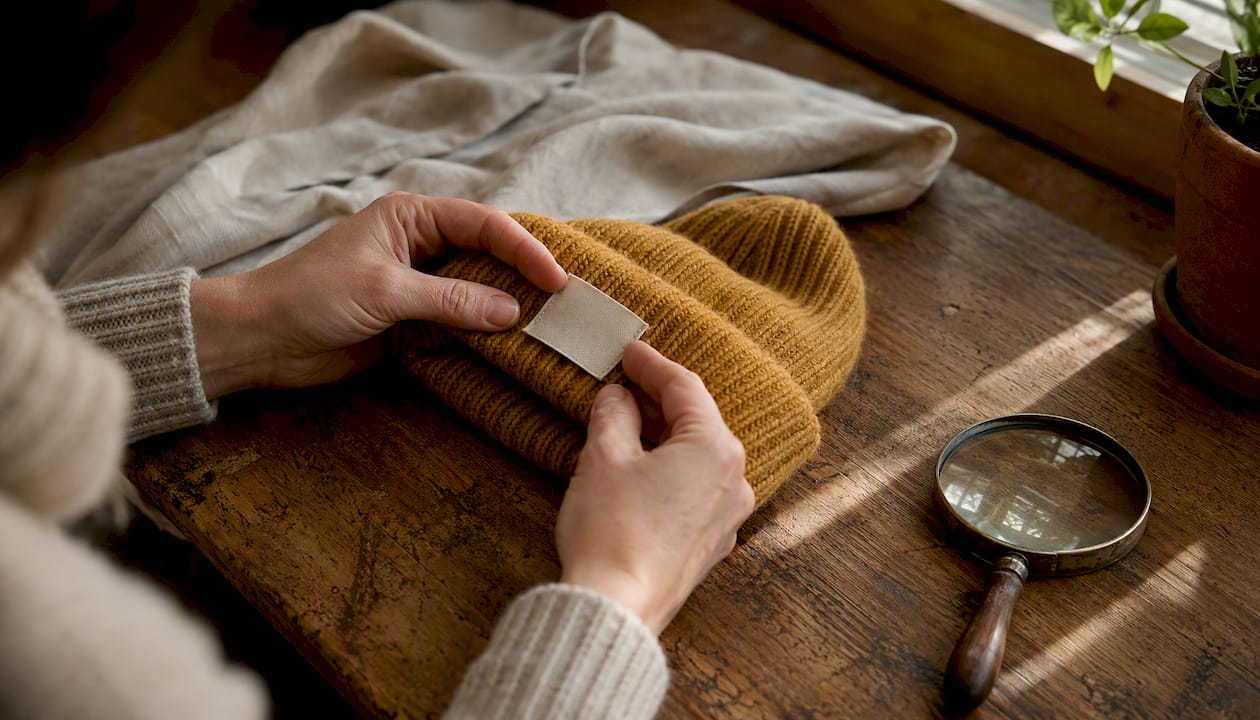
Certifications narrow the field further. A Woolmark test or mark confirms fibre performance claims. OEKO-TEX Standard 100 Class I confirms the fabric is safe against skin. RWS confirms the wool was sourced under audited animal welfare standards. Together, these three marks cover performance, safety, and traceability, which is why industry buyers often treat all three as a shorthand check rather than relying on just one.
Construction tells its own story. Dense, even knitting with minimal pilling after gentle handling, straight seams, and proper facing or lining in structured pieces like premium wool hat styles all point to careful sourcing.
- Check the tag for micron count and fibre percentage, not just “wool”
- Prefer Woolmark, OEKO-TEX Class I, or RWS certification where listed
- Run your hand across the fabric. Genuine premium wool feels smooth, not prickly
- Ask the retailer for a supplier test reference if the listing doesn’t include one
Pro Tip: If a next-to-skin garment feels itchy in-store, it’s almost certainly coarser than 20 microns regardless of what the tag claims. Trust your skin over the swing tag.
Caring for premium wool the right way
Store premium wool pieces away from direct sunlight and damp conditions, both of which break down the fibre’s natural lanolin and weaken its structure over time. Hand-wash delicate knitwear in cool water, and reserve machine washing for garments explicitly labelled for gentle cycles.
Structured pieces like felt hats need reshaping rather than washing when they lose form. A proper reshaping technique restores the brim and crown without stressing the fibres. Skipping care basics is usually what turns a genuinely premium piece into one that pills, sags, or loses its shape within a season, undoing the value you paid for.
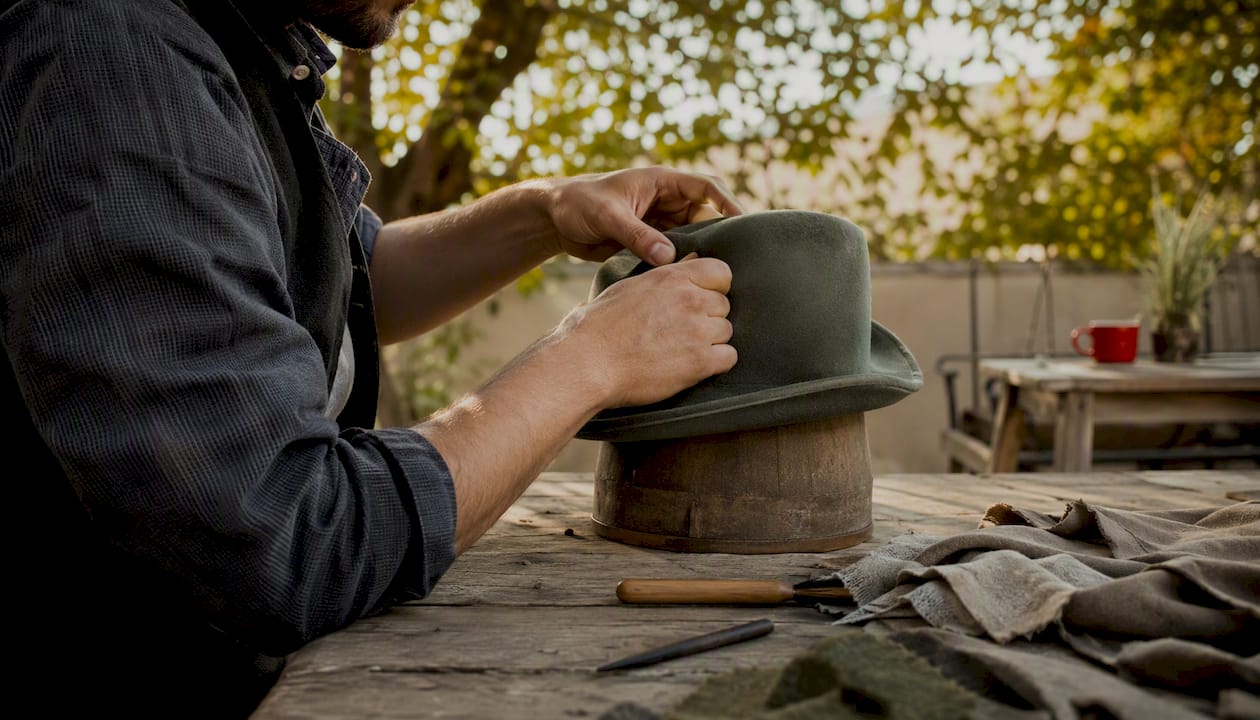
Pro Tip: Never wring wet wool. Press out water with a towel instead, then dry flat away from heaters.
Typical price ranges: premium versus ordinary wool
Price gaps between premium and ordinary wool trace directly back to the micron figures already covered. Superfine merino, sitting in that 17.5 to 19.5 micron band, typically costs 20 to 30% more than medium merino at the raw fibre level, a gap that compounds through spinning, weaving, and finishing before it reaches a finished garment or hat.
That premium isn’t evenly spread across every product category. A beanie or flat cap made from mid-range fine wool, sitting around 20 to 26 microns, sits at a genuinely accessible price point while still delivering real warmth and structure. Push into ultrafine merino territory, under 17.5 microns, and you’re paying for scarcity as much as softness, since that band makes up less than 5% of global wool production.
Structured pieces like felt hats add another cost layer on top of the raw fibre price. Wool felt, particularly from Australian merino sources, requires additional processing to achieve the density needed for a hat that holds its shape through years of wear. That’s part of why a well-made wool felt homburg or fedora sits at a different price point to a basic knit beanie, even when both start from wool of a similar micron grade.
Buyers chasing value shouldn’t assume the most expensive option is automatically the right one. A hat built for daily outdoor wear often performs better with a slightly coarser, more resilient wool than one built for pure next-to-skin softness, echoing the general principle that “premium” is use-dependent rather than a single fixed standard.
How to verify a premium wool claim before you buy
Verification starts with asking whether a micron test report exists at all. Reputable wool suppliers and garment brands can usually point to a specific test reference, even if they don’t print the raw lab document on their website. If a retailer can’t answer a direct question about fibre diameter, treat the “premium” label with scepticism.
Third-party certification is the next layer. Woolmark testing verifies performance claims against an established standard rather than a brand’s own marketing copy. OEKO-TEX Class I testing checks for harmful substances against the strictest of the standard’s product classes, relevant for anything worn close to skin. RWS certification traces wool back through an audited supply chain, confirming animal welfare standards were met at the farm level rather than taken on faith.
Independent testing labs exist specifically to settle disputes between what a tag claims and what a fibre actually measures. When brands are transparent about sourcing, they’ll usually name the region or farm group behind their wool, not just the country of origin. That level of detail, paired with an actual certification mark rather than a vague reference to “quality wool,” is what separates a verifiable premium claim from a marketing one.
What premium wool means for anyone selling hats
Before we list a wool hat as premium, we check three things: the stated micron figure, the construction quality up close, and whether the supplier can produce a test reference if asked. Those checks matter more than the fabric’s name on a swing tag.
Our practical advice to buyers is simple. Paying slightly more upfront for verified fibre usually protects the fit and shape of a hat for years, rather than months.
Find genuine premium wool hats without the guesswork
Reading a micron test report is one way to verify quality. Buying from a retailer that already checks those figures for you is the faster route. Urbancaps stocks premium wool headwear, including Australian wool felt hats and structured western styles, where construction and fibre quality are checked before a single item goes on sale.
That means you’re not left comparing swing tags or chasing down a supplier’s test reference yourself. The Churchill Heritage Homburg Hat uses premium Australian wool felt built for structure and longevity, while the Dakota Heritage Wool Rancher Hat suits anyone after a durable, shaped piece rather than a soft next-to-skin knit. If you’re after everyday warmth instead, the Fashion Knit Beanie applies the same quality checks in a simpler, everyday format. For readers layering wool into cold-weather training gear, STRYQ’s guide to layering for cold runs covers how base-layer wool performs alongside outer shells.
Browse the current range and check the construction details on each product page before you buy.
Sources
- Premium wool quality metrics and grading (NMSU Extension B409)
- Wool is naturally breathable (Woolmark factsheet)
- Wool evaluation 101 (SDSU Extension P-00227-V2)
- How to tell if Merino wool is good quality: buyer’s guide (Merino Protect)
FAQ
Which wool is the highest quality?
Ultrafine merino, under 17.5 microns, is generally regarded as the highest quality for softness and next-to-skin apparel, though “highest quality” depends on intended use. A slightly coarser, more durable wool can outperform ultrafine merino in a structured hat or heavy outerwear.
What is the most expensive type of wool?
Ultrafine and superfine merino, sitting below 19.5 microns, typically commands the highest prices because it makes up less than 5% of global wool production. Scarcity, combined with certification and processing costs, keeps that band at the top of the price scale.
Is New Zealand wool good quality?
New Zealand produces a wide range of wool grades, from fine merino suited to apparel through to stronger, coarser wool used in carpets and heavy-wear items. Quality depends on the specific micron grade and breed rather than the country of origin alone.
What are the different quality grades of wool?
Wool is graded primarily by micron count, from ultrafine merino under 17.5 microns through fine wool up to around 20.6 microns, and into medium and broad wool above 30 microns. Staple length, strength, and clean yield are assessed alongside micron count to determine overall grade.
How can I check if a hat’s premium wool claim is genuine?
Ask the retailer whether a micron test report or supplier reference exists, and look for third-party certification like Woolmark or RWS on the product listing. Urbancaps lists fibre and construction details on its premium wool hat pages so buyers can check before purchasing.