

Why choose local headwear: a Kiwi's guide
TL;DR:
- Buying local headwear offers superior quality, better materials, and artisan craftsmanship unmatched by imports. It reduces environmental impact, supports the local economy, and fosters cultural connections and community pride. Choosing local ensures long-lasting, customisable hats that reflect genuine skill and sustainable values.
Most people grab a hat off a rack without thinking twice about where it came from or who made it. But if you’re wondering why choose local headwear over a mass-produced import, the answer goes far beyond a feel-good purchase. Local headwear offers genuinely better quality, a lower environmental footprint, and a connection to real craftsmanship that a factory overseas simply cannot replicate. This guide breaks down exactly what you get when you buy local, and why it matters more than most Kiwi consumers realise.
Table of Contents
- Key takeaways
- Why choose local headwear: materials and craftsmanship
- Sustainability and the local production advantage
- Cultural and community value of local headwear
- How to choose local headwear that suits you
- Benefits of supporting local headwear businesses in NZ
- My take on what local headwear really means
- Explore local headwear at Urbancaps
- FAQ
Key takeaways
| Point | Details |
|---|---|
| Quality you can feel | Locally made hats use superior materials and artisan techniques that deliver comfort and durability. |
| Shorter supply chains | Local production cuts transport and packaging, reducing your purchase’s carbon footprint significantly. |
| Cultural connection | Buying local ties you to maker stories, community identity, and preserved traditional craftsmanship. |
| Smarter style choices | Premium local features like reinforced crowns and breathable linings outperform cheap mass-produced options. |
| Economic impact | Supporting local headwear businesses keeps skills, jobs, and money circulating within New Zealand. |
Why choose local headwear: materials and craftsmanship
The first thing that separates a locally made hat from a cheap import is what it’s actually made from. Global mass-production prioritises cost cutting, which usually means synthetic fibres, inconsistent stitching, and materials chosen for price rather than performance. Local makers take a different approach entirely.
Natural and climate-appropriate materials
New Zealand’s climate varies wildly. From the dry heat of Central Otago to the wind and rain of Wellington, your headwear needs to work with your environment. Local producers understand this, which is why you’ll find them reaching for materials like bamboo-cotton blends that are soft, hypoallergenic, and naturally temperature-regulating. Some makers use banana fibre weaves and other plant-based textiles that are breathable, moisture-resistant, and far gentler on sensitive scalps than polyester alternatives.
Premium wool is another material local makers handle well. New Zealand has no shortage of quality wool, and artisan hatmakers here know how to select, treat, and shape it properly. A well-made wool hat holds its form through seasons, resists moisture, and stays comfortable in both cooler and warmer weather. That’s not an accident. It’s the result of choosing the right material at the source.
Artisan techniques that make a difference
The construction process is where local headwear genuinely outperforms mass-produced alternatives. Region-specific steaming and conformer-based sizing create a fit that mass production lines cannot replicate. Each hat is shaped to sit correctly, hold its structure, and wear comfortably over time.
Local artisans also invest real time per piece. A single hat takes around 1.5 hours to craft when quality and construction standards are taken seriously. That time investment shows in the finished product. You can feel it in the weight, the balance, and the way the hat holds its shape after repeated wear.
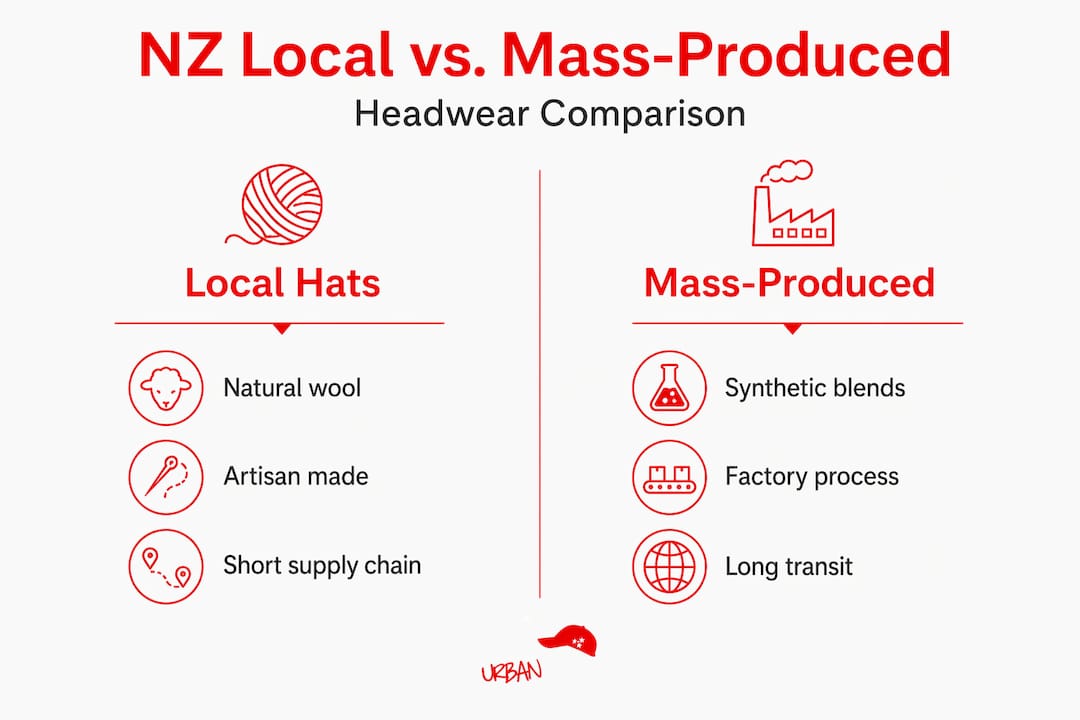
Here’s a quick comparison of what you actually get with locally made versus mass-produced headwear:
| Feature | Locally made headwear | Mass-produced headwear |
|---|---|---|
| Materials | Natural, climate-suited fibres | Synthetic, cost-driven blends |
| Construction | Hand-shaped, artisan-finished | Machine-stamped, uniform sizing |
| Fit | Conformer-sized, head-specific | Standard sizing, often inconsistent |
| Durability | Reinforced crowns, precise brims | Prone to losing shape quickly |
| Customisation | Custom logos, sizing, and finishes | Limited or no customisation |
| Environmental cost | Low-transport, low-packaging | High-transport, excess packaging |
Premium craftsmanship includes reinforced crowns and precisely proportioned brims that keep their shape season after season. When you know what to look for, the gap between a locally made hat and an import becomes obvious very quickly.
Pro Tip: When evaluating a locally made hat, turn it inside out and check the lining. Quality local makers use breathable inner linings with neat, consistent stitching. Loose threads, rough fabric, or glued seams inside the hat are a sign of mass production regardless of how good it looks on the outside.
Sustainability and the local production advantage
One of the clearest benefits of local headwear is the reduction in environmental impact. This isn’t just marketing language. It’s grounded in how supply chains actually work.
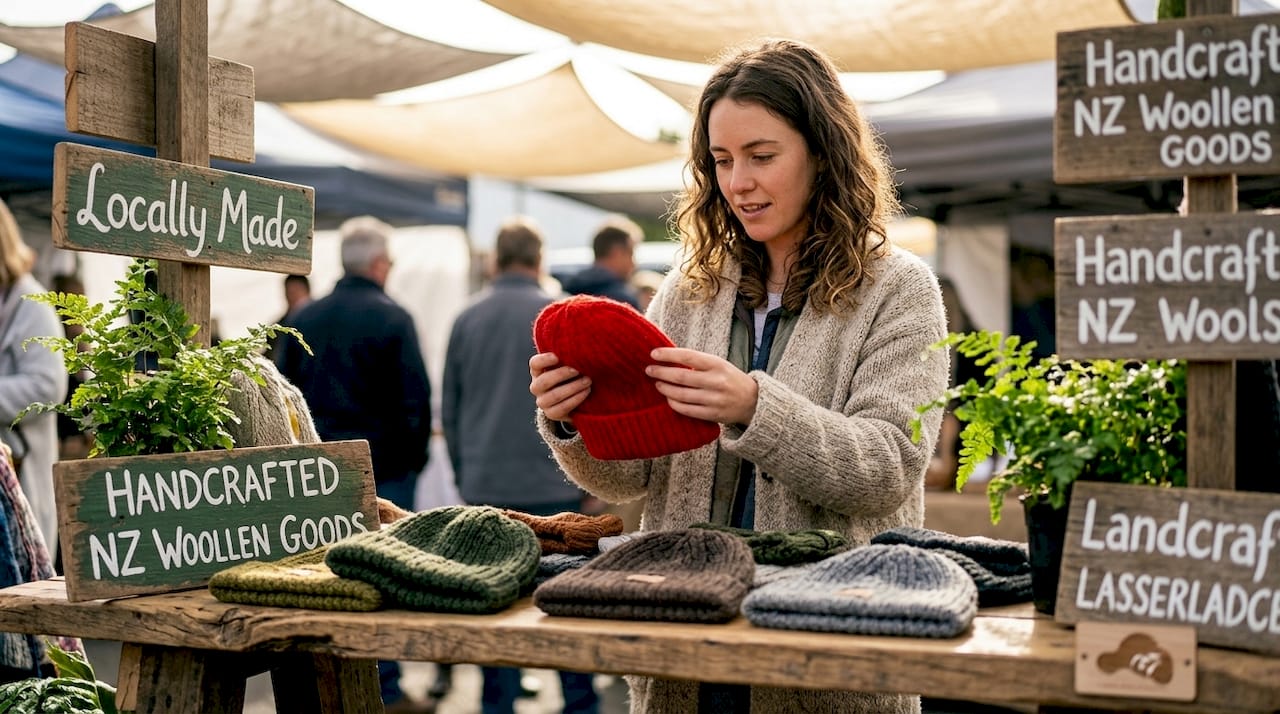
When a hat is manufactured overseas and shipped to New Zealand, it passes through multiple distribution points, warehouses, and transport legs before it reaches you. Each step adds carbon emissions, packaging waste, and energy consumption. Local production shortens supply chains directly, cutting transport requirements and reducing the packaging needed to protect goods across long international journeys.
Local headwear brands also tend to source their materials closer to home. This means fewer emissions from raw material transport, and often a clearer line of sight into where materials come from and how they’re processed. For consumers who want to make genuinely sustainable fashion choices, that transparency matters.
The key sustainability benefits of choosing local headwear include:
- Reduced carbon emissions from shorter transport routes between maker and customer
- Less packaging waste because goods don’t need to survive months of international freight handling
- Ethically sourced materials with greater traceability back to origin
- Support for local livelihoods which reduces the social and economic costs associated with exploitative overseas labour
- Longer-lasting products that don’t end up in landfill as quickly as cheap imports
- Circular economic benefits where your spending stays within the community and recirculates locally
For a deeper look at how material choices affect your footprint, the Urbancaps guide on sustainable headwear choices covers this topic thoroughly.
The contrast with global mass production is stark. Large overseas manufacturers produce headwear in enormous volumes using fast-fashion models, with little accountability for environmental impact along the way. The end product is cheaper at the point of sale, but the true cost, environmental and social, is absorbed elsewhere. Choosing locally made hats is one of the most direct ways to opt out of that system.
Cultural and community value of local headwear
There’s something that numbers and environmental data can’t fully capture about why support local headwear: the human story behind every piece.
Knowing your maker builds trust and emotional value that a mass-produced product simply cannot offer. When you buy from a local New Zealand hatmaker, you’re purchasing something with a lineage. You know the region it came from, the hands that shaped it, and the values behind its design. That context transforms a hat from an accessory into something worth keeping.
“When a purchase becomes an experience tied to a real person, a real place, and a real skill, it stops being just a transaction. It becomes part of your own story.” Local headwear carries that kind of weight in ways mass production never can.
This connection matters even more when traditional crafting techniques are involved. Across the world, experiential connections to maker stories convert purchases into long-term investments in local identity and cultural heritage. The same principle applies here. When Kiwi consumers choose local headwear, they support the continuation of craft skills that could otherwise disappear as cheaper imports flood the market.
Local headwear also carries community identity in a very practical sense. Think about the fishing clubs, sporting teams, and regional organisations that commission custom caps and hats from local makers. Small-batch local hat makers completing custom orders at scale demonstrate that demand for personalised, community-connected headwear is real and growing. These aren’t novelty purchases. They’re symbols of belonging that people actually wear with pride.
The connection between the wearer and the maker is something that global brands cannot manufacture, regardless of their marketing budgets. It’s an authenticity that you either have or you don’t. Local headwear has it by default.
How to choose local headwear that suits you
Knowing the benefits of local headwear is one thing. Knowing how to find the right piece for your lifestyle is another. Here’s how to approach it practically.
Match material to climate and use
New Zealand’s climate demands honest thinking about what your headwear needs to do. For outdoor use in summer, look for breathable natural fibres like cotton, linen blends, or bamboo-based weaves that won’t trap heat. For cooler months, premium wool and felt offer warmth and structure. A hat that maintains structure in different climates is one worth investing in, and that durability comes from material quality, not price point alone.
Identify genuine quality features
Consistency in material and construction defines hats worth buying over those chasing trends. When you’re evaluating a locally made hat, look for these markers:
- Reinforced crown structure that holds its shape when you press it gently
- Brim proportions that are even and precise, not wavy or asymmetrical
- Clean, consistent stitching throughout, inside and out
- A breathable inner lining rather than bare fabric or rough synthetic material
- Labelling that clearly states materials and country of production
The Urbancaps guide on premium hat features goes into specific details worth knowing before you buy.
Evaluate the business, not just the product
Authenticity in local headwear extends to the business selling it. Ask whether the maker or retailer can tell you about their production process. Look for transparency around materials sourcing and manufacturing location. Businesses that are genuinely local and committed to quality will have clear answers to these questions. Those operating as local-label resellers of mass-produced imports usually won’t.
Pro Tip: Ask the retailer directly: “Where is this hat made and what’s the lining material?” Legitimate local makers know their supply chain intimately. If the answer is vague or changes the subject, that tells you what you need to know.
Benefits of supporting local headwear businesses in NZ
The case for choosing to buy local headwear in New Zealand comes together when you look at what your money actually does once it leaves your wallet.
Spending with local headwear businesses keeps skills in New Zealand. Hatmaking, like most artisan crafts, requires years of practice to do well. When local businesses thrive, they employ skilled workers, train apprentices, and pass on techniques that would otherwise be lost. When consumers shift to cheap imports, those skills have nowhere to go.
The broader economic benefits are equally clear:
- Jobs stay local. Wages paid by New Zealand headwear businesses circulate in the local economy rather than flowing offshore.
- Customer service is personal. Local businesses can offer sizing advice, customisation options, and after-purchase support that global brands cannot match.
- Product customisation is possible. Local makers can adjust sizing, add logos, select specific materials, and produce small batches that overseas factories won’t touch.
- You shape the market. Every local purchase signals to the wider fashion industry what New Zealand consumers actually value.
- Quality rises over time. Local businesses that survive on reputation, not volume, are motivated to improve their products continuously.
Choosing local headwear is a deliberate values statement, not just a shopping preference. It’s a signal about what kind of fashion ecosystem you want to exist here. The locally made hats advantages go well beyond the hat itself, touching quality, community, sustainability, and culture all at once.
My take on what local headwear really means
I’ve seen a lot of hats come through, and the ones that last are never the ones that were cheapest at checkout. In my experience, the locally made pieces are the ones people still have five years later, wearing well, holding shape, and carrying some meaning beyond just covering their head.
What I’ve found consumers often overlook is the value of knowing where something came from. There’s a real difference between wearing a hat you pulled from a clearance bin and wearing one you know was shaped by hand by someone who cared about the result. That difference isn’t sentimental. It shows up in how the hat fits, how it ages, and how often you actually reach for it.
The misconception I hear most often is that local means limited. Less choice, less style, less relevance to current fashion. That’s just not true. Local hat brands succeed by balancing traditional craftsmanship with modern usability, which means you get timeless style that actually functions well in daily life.
My honest view is that buying local headwear is one of those decisions that gets more rewarding over time. The hat gets better with wear. The maker’s story becomes part of your story. And you stop treating headwear as disposable.
— Urban
Explore local headwear at Urbancaps
If you’re ready to experience the locally made hats advantages for yourself, Urbancaps has a solid range of locally supported premium headwear built for Kiwi lifestyles.

The fedoras hat collection is a strong place to start if you want a style that works across seasons and occasions. For cooler months, the autumn and winter fedora offers warmth and structure with clean, classic proportions. If you prefer something with a bit of colour, the multicolour fedoras range shows how locally sourced styles can work for bold personal expression too.
Every hat at Urbancaps is selected with quality materials and real wearability in mind. Fast NZ delivery, clear product information, and genuine local support make the experience straightforward from browse to doorstep. This is what buying local actually looks like in practice.
FAQ
What makes locally made hats better than imports?
Locally made hats use climate-appropriate materials, artisan construction techniques, and head-specific sizing that mass-produced imports cannot match. The result is better fit, greater durability, and longer usable life.
Is local headwear more sustainable than mass-produced options?
Yes. Local production shortens supply chains, reduces transport emissions, and typically uses more traceable, ethically sourced materials. You also get a longer-lasting product, which means less waste over time.
How do I recognise quality in a local hat?
Check for reinforced crown structure, even brim proportions, consistent stitching inside and out, and a breathable inner lining. Clear labelling of materials and production location is also a reliable quality indicator.
Why support local headwear businesses in New Zealand?
Supporting local headwear keeps skilled jobs and craft knowledge in New Zealand, funds small businesses that contribute to local economies, and creates a more sustainable and culturally rich fashion ecosystem.
Does local headwear offer more style variety than global brands?
Local and boutique headwear brands regularly balance traditional craftsmanship with contemporary design, offering styles that are both timeless and wearable for modern Kiwi lifestyles, often with customisation options that global brands don’t provide.