

Why choose wool hats: style, warmth, and value for Kiwis
TL;DR:
- Modern wool hats, especially merino, are soft, breathable, and suitable for New Zealand’s varied climate.
- Wool outperforms synthetics and cotton in warmth, durability, odor resistance, and environmental impact.
- Proper care extends wool hats’ lifespan to five or more years, making them a smart and stylish investment.
Wool hats have a reputation problem. Many Kiwis picture scratchy beanies from the back of a drawer or something their grandfather wore on a cold Canterbury morning. That image is outdated. Today’s wool hats, especially those made from merino, are soft, breathable, and genuinely stylish. They perform across New Zealand’s wildly varied conditions, from Wellington’s blustery waterfront to Queenstown’s alpine trails to Auckland’s humid summers. This guide breaks down exactly why wool hats are the smartest headwear choice for fashion-conscious New Zealanders, covering material benefits, style versatility, and easy care tips.
Table of Contents
- The natural advantages of wool hats
- How wool hats outperform synthetics and other materials
- Style and versatility: Wool hats for NZ fashion and adventure
- Caring for your wool hat: Durability and maintenance made easy
- Why most Kiwis undervalue wool hats—our take
- Explore premium wool hats for your New Zealand lifestyle
- Frequently asked questions
Key Takeaways
| Point | Details |
|---|---|
| Superior insulation | Wool hats keep you warm and comfortable even in wet New Zealand conditions. |
| All-season style | Premium wool hats deliver versatile looks for both city life and outdoor adventure. |
| Low maintenance | Wool hats are easy to care for, resist odor, and retain their shape and color over time. |
| Eco-friendly choice | Wool is biodegradable and renewable, making it a more sustainable option than synthetics. |
The natural advantages of wool hats
Wool is one of the most technically impressive natural fibers on the planet. It has been keeping humans warm for thousands of years, but modern processing has made it lighter, softer, and more refined than ever before. Understanding what wool actually does helps explain why so many serious outdoor enthusiasts and style-conscious city dwellers keep coming back to it.
The most important thing wool does is insulate, even when wet. Synthetic materials lose most of their warmth when soaked through. Wool, by contrast, stays insulating when damp, which is a genuine advantage in New Zealand’s unpredictable weather. A sudden shower on a Tongariro crossing or a misty morning in Fiordland won’t leave you shivering if you’re wearing wool.
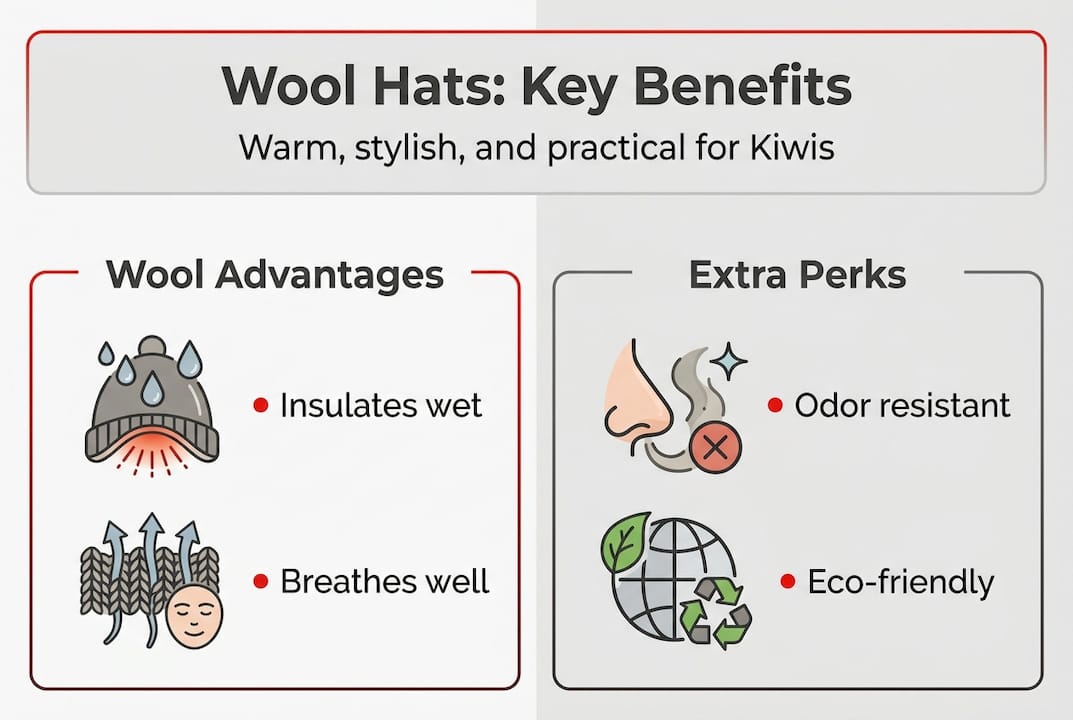
Wool also breathes exceptionally well. Its natural crimp structure creates tiny air pockets that regulate temperature. You stay warm when it’s cold and avoid overheating when you’re moving. This makes wool hats genuinely comfortable across seasons, not just in the depths of winter.
Merino wool takes these benefits further. It has a finer fiber diameter than standard wool, which means it sits softly against your skin without any scratching. People who have avoided wool their whole lives because of itchiness are often surprised by how comfortable merino feels. It’s a good reason to explore popular hat fabrics before assuming wool isn’t for you.
Here’s a quick summary of wool’s standout natural properties:
- Thermal regulation: Keeps you warm in cold, prevents overheating during activity
- Moisture management: Absorbs up to 30% of its weight in moisture without feeling wet
- Odor resistance: Natural lanolin and fiber structure resist bacteria that cause smell
- Softness: Merino grades are non-itchy and skin-friendly
- Durability: Natural elasticity means wool bounces back and holds its shape
Pro Tip: If you’re buying a wool hat for outdoor use, look for merino with a micron count under 18.5. That’s the sweet spot for softness and durability combined.
“Wool is the rare material that performs better in real conditions than it does on paper. It’s not just warm. It’s smart.”
How wool hats outperform synthetics and other materials
Once you know what wool does naturally, comparing it to other materials becomes straightforward. Synthetics like polyester and acrylic are popular because they’re cheap and dry fast. But fast-drying is about all they have going for them in a head-to-head comparison.
Synthetics win on drying speed, but wool wins on warmth, eco-friendliness, and durability. Synthetic fibers also trap odors quickly. After a few hours of activity, a synthetic hat can become unpleasant. Wool resists that problem naturally, which matters a lot if you’re wearing a hat across multiple days of tramping or travel.
Cotton is another common hat material, but it has a significant weakness: it holds moisture and takes a long time to dry. In cold or wet conditions, a wet cotton hat can actually make you colder. Blended fabrics offer a middle ground but rarely match the full performance profile of pure wool.
Here’s how the materials stack up:
| Feature | Wool | Synthetic | Cotton | Blends |
|---|---|---|---|---|
| Warmth when wet | Excellent | Poor | Poor | Fair |
| Breathability | Excellent | Fair | Good | Good |
| Odor resistance | Excellent | Poor | Fair | Fair |
| Eco-friendliness | Excellent | Poor | Fair | Fair |
| Durability | Excellent | Fair | Fair | Good |
| Drying speed | Moderate | Fast | Slow | Moderate |
For top stylish headwear that also performs, wool sits at the top of this table in almost every category that matters for real-world wear.
Wool is also biodegradable. When a synthetic hat reaches the end of its life, it contributes to microplastic pollution. Wool simply breaks down naturally. For Kiwis who care about the environment, that’s a meaningful difference.
If you’re still deciding on the right hat shape for your lifestyle, the beanie style guide is a great place to start exploring how wool beanies fit into everyday fashion.
Style and versatility: Wool hats for NZ fashion and adventure
Wool hats aren’t just practical. They look great. And that’s increasingly the reason people are choosing them, not just for the hills but for the city too.
The modern wool hat comes in an impressive range of styles. Fedoras, trilbies, beanies, flat caps, and wide-brim styles are all available in wool or merino blends. Colors range from classic charcoal and navy to earthy tones and bold seasonal shades. There’s a wool hat for every outfit and every occasion.

Merino wool is non-itchy and ideal for people with sensitive skin, which means you can wear a wool hat all day without discomfort. That’s important when you’re wearing a hat as a fashion statement, not just a functional layer.
Here’s how wool hats work across different New Zealand settings:
| Setting | Recommended style | Why wool works |
|---|---|---|
| City commute | Wool fedora or flat cap | Sharp look, temperature control |
| Coastal walk | Wide-brim wool hat | Sun protection, breathable |
| Alpine tramping | Merino beanie | Insulation, moisture management |
| Weekend market | Trilby or beret | Casual style, comfortable all day |
| Evening out | Wool fedora | Elevated look, holds its shape |
For a deeper look at putting outfits together, the premium hat style guide covers how to match hat styles to clothing and occasions with confidence.
Here’s a simple framework for choosing the right wool hat style:
- Identify your primary use. Is it mostly outdoor activity, daily commuting, or social occasions?
- Pick your shape. Beanies for warmth and sport, fedoras and flat caps for style-forward looks.
- Choose your color. Neutral tones are the most versatile. Bold colors make a statement.
- Check the wool grade. Merino for everyday wear, standard wool for heavy outdoor use.
- Consider the fit. A well-fitted hat elevates any outfit instantly.
Pro Tip: A mid-gray or camel wool fedora pairs with almost any outfit. It’s the most versatile single hat purchase you can make.
If you want to explore what’s trending in New Zealand right now, timeless hat styles NZ gives a clear picture of what’s working in 2026.
Caring for your wool hat: Durability and maintenance made easy
One reason people hesitate to invest in wool hats is the fear of ruining them. The good news is that wool is actually quite forgiving when you follow a few simple rules. And wool is more durable than synthetics when cared for properly, often lasting years longer with minimal effort.
The key rules for wool hat care are straightforward:
- Spot clean first. Most marks on wool can be gently dabbed away with cool water and a soft cloth. You don’t need to wash the whole hat for a small stain.
- Hand wash when needed. Use cool water and a gentle wool-specific detergent. Never wring or twist the hat.
- Lay flat to dry. Reshape the hat while damp and let it air dry away from direct heat or sunlight.
- Avoid the machine. Machine washing, even on a gentle cycle, can cause wool to felt and shrink permanently.
- Store it properly. Keep your wool hat in a cool, dry place. A hat box or breathable bag prevents dust and deformation.
- Use a lint roller. Wool attracts lint and pet hair. A quick roll before wearing keeps it looking sharp.
Pro Tip: If your wool hat loses its shape after wear, lightly steam it with a handheld steamer and reshape by hand while it’s warm. It works almost every time.
Wool’s natural odor resistance means you won’t need to wash it after every wear. That actually extends the hat’s life significantly, since less washing means less stress on the fibers. For more guidance on getting the most from your headwear investment, durable headwear tips covers what to look for when buying and how to maintain quality over time.
A well-cared-for wool hat can easily last five to ten years. That makes it a genuinely smart purchase compared to cheaper synthetic options that pill, stretch, and fade within a season or two.
Why most Kiwis undervalue wool hats—our take
Here’s something we’ve noticed: many New Zealanders think of wool as a tradition, not a technology. They associate it with old-school farming gear or their nan’s knitting projects. That mental image keeps them from exploring what modern wool headwear actually offers.
The irony is that New Zealand has some of the world’s finest wool on its doorstep. Yet global fashion capitals like Copenhagen and Tokyo have embraced merino wool accessories before many Kiwis have. That’s starting to shift. Younger buyers especially are discovering that wool hats work year-round, not just in winter.
Sustainability is also driving the change. Choosing wool over synthetic is a genuinely lower-impact decision. That matters to a growing number of shoppers. If you’re curious about heritage-quality options, authentic Australian-made hats show what premium craftsmanship looks like when wool is taken seriously. The mindset shift is simple: stop thinking of wool as old-fashioned and start seeing it as the smart, modern choice it actually is.
Explore premium wool hats for your New Zealand lifestyle
Ready to experience the difference that a premium wool hat can make? Urban Caps carries a carefully selected range of wool hats built for Kiwi lifestyles, whether you’re after a sharp everyday look or something that handles the outdoors with ease.

Browse the classic wool fedoras for a timeless, versatile option that works from the office to the weekend. If you want something with more personality, the fashionable woolen hats collection offers modern cuts and refined details. For those who love bold color choices, the multicolor wool hats range lets you make a real statement. Free shipping on all NZ orders, proudly Kiwi owned and operated.
Frequently asked questions
Are wool hats suitable for warm, humid days in New Zealand?
Yes, modern wool hats, especially merino, remain breathable and resist odor even in humid weather, making them comfortable for year-round use across New Zealand’s varied climate.
Can people with sensitive skin wear wool hats comfortably?
Absolutely. Merino wool is non-itchy and naturally soft, making it a great option for anyone who has found standard wool uncomfortable in the past.
How do you clean and care for a wool hat?
Spot clean with cool water for minor marks, and hand wash gently when needed. Always lay flat to dry and avoid machine washing to protect the shape and fibers. Proper care keeps wool hats lasting for years.
Are wool hats better for the environment than synthetic hats?
Yes. Wool is a renewable, biodegradable resource, and wool wins on eco-friendliness compared to synthetic materials that shed microplastics and break down poorly at end of life.