

Why wool hats are sustainable: the eco-friendly truth
TL;DR:
- Wool hats are sustainable because wool is biodegradable, renewable, and naturally low-maintenance. These qualities make wool headwear environmentally superior to synthetic options throughout their lifecycle. Supporting transparent sourcing and regenerative farming practices further enhances wool’s eco-friendly profile.
Wool hats are sustainable because wool is a natural, renewable, and biodegradable fibre that breaks down at end of life without leaving microplastic residue. Unlike synthetic fibres derived from fossil fuels, wool grows back every year on the sheep’s back, making it one of the few truly circular textile materials available today. The International Wool Textile Organisation (IWTO) and the Bioeconomy Science Institute both confirm that wool’s natural properties give it a measurable environmental edge over petroleum-based alternatives. For eco-conscious shoppers and fashion enthusiasts, understanding why wool hats are sustainable starts with the fibre itself, and ends with how you care for and eventually dispose of the hat.
Why wool hats are sustainable compared to synthetic alternatives
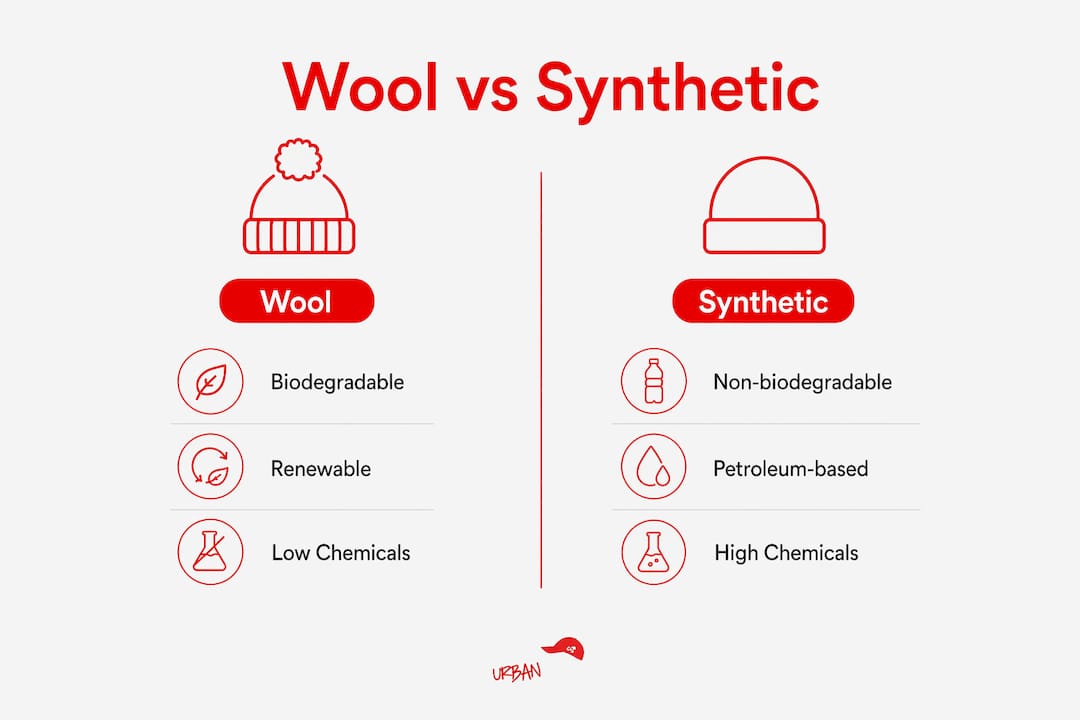
Wool’s sustainability credentials rest on three pillars: biodegradability, renewability, and low chemical dependency. Synthetic fibres like polyester and nylon come from fossil fuel refining, a process that locks in emissions from the start. Wool, by contrast, is a protein fibre that composts naturally in soil, releasing nitrogen and other nutrients rather than fragmenting into microplastics.
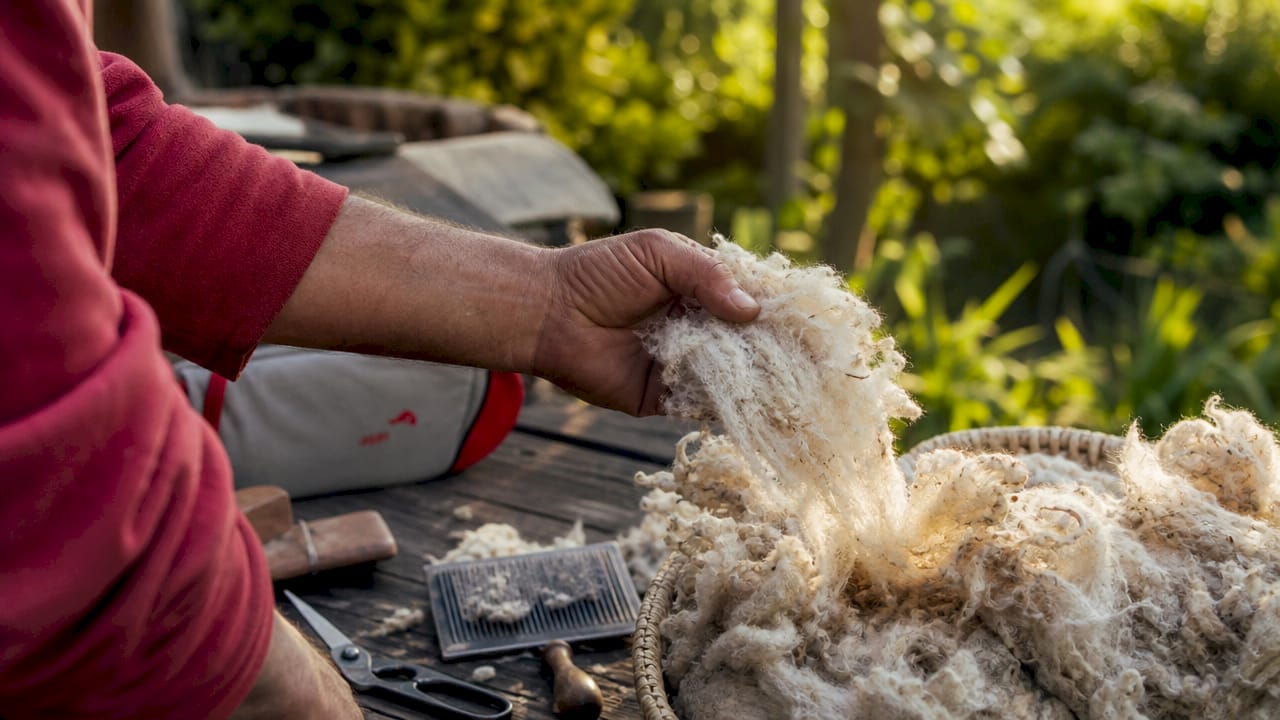
The IWTO Green Book, updated in 2026, provides peer-reviewed science showing that mainstream carbon accounting tools routinely overstate wool’s footprint. These tools often ignore wool’s biogenic nature, meaning the carbon in wool fibre was drawn from the atmosphere by grass before the sheep ever ate it. That distinction matters enormously when you are comparing lifecycle emissions honestly.
Wool also carries practical properties that reduce its environmental load during use. It is naturally fire resistant and has built-in anti-odour qualities, so you wash a wool hat far less often than a synthetic one. Less laundering means less water, less energy, and fewer detergent chemicals entering waterways.
| Environmental factor | Wool | Synthetic fibres |
|---|---|---|
| Raw material source | Renewable, annually regrown | Fossil fuel derived |
| Biodegradability | Fully biodegradable in soil | Persists for decades, sheds microplastics |
| Washing frequency | Low, due to natural anti-odour | Higher, traps odour and moisture |
| Fire resistance | Natural, no chemical treatment needed | Requires chemical flame retardants |
| End-of-life impact | Composts, returns nutrients to soil | Landfill or incineration |
Pro Tip: When buying a wool hat, check for a natural fibre content label. A hat with 100% wool content will biodegrade fully. Blended hats with synthetic content will not.
New Zealand’s strong wool is particularly well suited to durable headwear. It requires less chemical processing than finer wools and outperforms synthetics on ruggedness. Many shoppers reach for organic labels without realising that NZ strong wool already delivers high performance with a lighter processing footprint.
How do wool production practices contribute to sustainability?
Sustainable wool does not begin at the factory. It begins on the farm. Regenerative grazing practices improve soil health, increase water retention, and support carbon sequestration in pasture soils. Sheep that graze well-managed land produce healthier fleeces, and healthier fleeces require less processing to reach a usable standard.
Traceability and transparency in the wool value chain are the clearest markers of genuine sustainability. The 2026 “Strong Wool, Stronger Returns” report confirms that quality-driven sourcing, rather than volume-driven commodity models, unlocks the real sustainability gains. Farms that can trace fibre from paddock to product attract better prices and create more resilient supply chains.
Proper preparation at the farm gate also makes a significant difference. Skirting, the process of removing the low-quality edges and heavily soiled sections of a fleece, reduces the volume of waste material that enters manufacturing. Less contaminated fibre means less energy spent cleaning and processing downstream.
Sustainable wool farming practices that directly affect fibre quality include:
- Regenerative grazing management to maintain pasture diversity and soil carbon
- Skirting and classing to remove vegetable matter and low-value wool before it reaches the mill
- Breed selection matched to land type, producing fleeces suited to specific end uses
- Low-intervention animal health approaches that reduce chemical dip and drench use
- Water management on farm to protect waterways from runoff
Pro Tip: When a brand lists its wool source by region or farm, that traceability signal is worth paying attention to. It usually means the fibre has been prepared to a higher standard, which translates directly to a better-quality, longer-lasting hat.
The farm-gate preparation quality of wool is closely tied to the value of the finished hat. A well-skirted, well-classed fleece produces a cleaner yarn with fewer processing steps, and fewer steps mean a lower overall environmental cost. This is the part of the wool story that most fashion coverage misses entirely.
What innovations are enhancing wool’s sustainability and value?
Wool’s sustainability story is not static. A $20 million NZ government initiative is actively scaling the production of wool-derived bio-based materials, with the potential to redirect up to 20% of the strong wool clip into high-value sustainable products. The target markets for these materials are collectively valued at $50 billion globally. That figure signals a structural shift, not a niche experiment.
Innovations transforming wool into bio-based pigments and bioplastics create entirely new product pathways beyond traditional textiles. Wool-derived bioplastics can replace petroleum-based plastics in packaging and components. Wool pigments offer natural colouring alternatives to synthetic dyes. These developments strengthen the environmental credentials of the entire wool industry, including the headwear sector.
Rising synthetic fibre costs are accelerating this shift. Synthetic inputs tied to fossil fuels have become significantly more expensive than NZ strong wool on a quality-adjusted basis. Brands that locked themselves into synthetic supply chains are now facing cost pressure that makes natural fibre alternatives look far more attractive.
Wool applications in bio-based and conventional product categories include:
- Traditional headwear and apparel: beanies, fedoras, flat caps, and knitwear
- Bio-based pigments: natural dye alternatives for textiles and packaging
- Bioplastics: wool-protein-based materials replacing fossil fuel plastics
- Insulation and acoustic panels: building products using wool’s natural thermal properties
- Soil conditioners: composted wool waste returning nutrients to agricultural land
| Application category | Conventional use | Bio-based innovation |
|---|---|---|
| Headwear and apparel | Wool hats, scarves, knitwear | Wool-blend biodegradable garments |
| Colouring | Synthetic chemical dyes | Wool-derived natural pigments |
| Packaging and components | Petroleum-based plastics | Wool-protein bioplastics |
| Building materials | Synthetic insulation batts | Wool insulation and acoustic panels |
The lifecycle trade-offs of bio-based fibres are complex, and honest sustainability assessment requires looking at land use, water, and processing together. Wool performs well across most of these measures, particularly when sourced from farms using regenerative practices. The 2026 Life Cycle Innovation Conference abstracts confirm that bio-based fibres require careful, full-system analysis rather than single-metric comparisons.
What practical advantages do wool hats offer eco-conscious shoppers?
A wool hat’s sustainability is not just about what happens at the farm or the factory. It is also about what happens in your wardrobe. Wool hats last longer, need less care, and hold their shape better than synthetic alternatives, and that durability is itself a form of environmental impact reduction.
Wool’s natural elasticity means a well-made hat returns to its shape after being packed into a bag or worn through a long day. Synthetic hats often pill, stretch, or lose structure after repeated use. A wool hat that lasts five years instead of one year represents four fewer hats in landfill.
The anti-odour and moisture-management properties of wool reduce how often you need to wash a hat. Washing less frequently lowers water and energy use across the product’s life. Over the full lifecycle, this difference between wool and synthetic headwear is significant.
Practical benefits of wool hats for eco-conscious shoppers:
- Durability: Natural fibres resist pilling and structural breakdown better than synthetics over time
- Low-wash care: Anti-odour properties mean you wash less, saving water and energy
- Shape retention: Wool’s elasticity keeps hats looking good without frequent reshaping
- Temperature regulation: Wool insulates in cold and breathes in mild conditions, making one hat suitable for more seasons
- Biodegradable end of life: When the hat is genuinely worn out, it can be composted rather than sent to landfill
Wool hats also support the principles of slow fashion. Buying one quality wool hat instead of three cheaper synthetic ones reduces total resource consumption. The eco-friendly headwear conversation increasingly centres on this idea: fewer, better purchases beat high-volume, low-quality consumption every time.
For shoppers who want to understand the full picture before buying, the wool hat terminology guide from Urbancaps breaks down fibre grades, construction types, and what to look for in a genuinely durable piece. Knowing the difference between a carded and a worsted wool hat, for example, helps you choose a product built to last.
Wool’s natural properties also reduce the need for chemical treatments during manufacturing. Synthetic hats often require flame-retardant coatings and anti-odour chemical finishes that wool delivers without any additives. Fewer chemicals in production means a cleaner manufacturing process and a safer product against your skin.
If you are drawn to the broader world of natural fibre fashion, the Jil Sander Alpaca Wool Sweater at Urbalenti NYC is a strong example of how premium natural fibres translate into long-lasting, considered fashion pieces. Alpaca and wool share many of the same sustainability properties, and seeing how designers apply these fibres at a high level reinforces why natural materials are worth the investment.
Key takeaways
Wool hats are sustainable because wool is biodegradable, renewable, and naturally low-maintenance, making it a measurably better choice than synthetic headwear across the full product lifecycle.
| Point | Details |
|---|---|
| Wool biodegrades fully | Unlike synthetics, wool composts in soil and releases nutrients rather than microplastics. |
| Less washing, lower impact | Wool’s anti-odour properties reduce laundering frequency, cutting water and energy use over time. |
| Farm practices matter | Regenerative grazing and proper skirting reduce waste and improve fibre quality from the source. |
| Innovation is expanding wool’s reach | A $20 million NZ government fund is scaling wool into bioplastics and pigments worth $50 billion in global markets. |
| Durability supports slow fashion | A long-lasting wool hat replaces multiple synthetic ones, reducing total resource consumption. |
Urban’s take on wool hats and the sustainability conversation
The sustainability conversation around headwear tends to focus on certifications and labels. I think that misses the point. A wool hat does not need a certification to be sustainable. The fibre itself is the credential.
What I find most telling is the carbon accounting problem the IWTO Green Book addresses. For years, wool got penalised in lifecycle assessments because the tools used were built for industrial, fossil-fuel-based products. They did not account for the fact that wool’s carbon was pulled from the atmosphere by grass before it ever became a hat. That is a fundamental flaw, and it skewed a lot of consumer perception against wool unfairly.
The regenerative farming angle is where I think the real story lives. A sheep on well-managed pasture is not just producing fibre. It is contributing to soil health, water retention, and carbon storage. That is a genuinely positive environmental contribution, and it is one that no synthetic fibre can replicate, regardless of how it is marketed.
I also think the durability argument is underrated. Shoppers often focus on the purchase price and the production story, but the use phase is where most of a product’s environmental impact actually accumulates. A wool hat you wear for five years, wash a handful of times, and eventually compost is a fundamentally different environmental proposition from a synthetic hat you replace every season.
Supporting local hatmakers and traceable wool products is the most direct way to put this thinking into practice. When you know where the fibre came from and who made the hat, you are making a genuinely informed choice rather than relying on marketing language.
— Urban
Urbancaps wool hats: style and sustainability in one
Urbancaps stocks a range of wool hats crafted for Kiwi conditions and built to last. Each piece reflects a commitment to natural fibre quality and timeless design, whether you are after a classic knit or something with a bit more shape.

The fashion knit beanie is one of the most popular picks for eco-conscious shoppers who want warmth without compromise. For something with more structure, the classic knit beanie delivers a clean, minimal look that works across seasons. Urbancaps ships free across NZ, and every hat is backed by the kind of quality you can feel the moment you put it on. Proudly NZ owned and operated.
FAQ
Are wool hats biodegradable?
Wool hats made from 100% natural wool are fully biodegradable and will compost in soil, releasing nutrients rather than microplastics. Hats blended with synthetic fibres will not biodegrade completely.
How is wool sourced sustainably?
Sustainable wool sourcing relies on regenerative grazing practices, proper fleece preparation like skirting, and transparent traceability from farm to finished product. The 2026 “Strong Wool, Stronger Returns” report confirms that quality-driven sourcing produces the strongest sustainability outcomes.
Do wool hats need to be washed often?
Wool hats require far less washing than synthetic alternatives because wool naturally resists odour and manages moisture. Less frequent washing reduces water and energy use across the hat’s full lifecycle.
How do wool hats compare to synthetic hats environmentally?
Wool hats outperform synthetic hats on biodegradability, washing frequency, and end-of-life impact. Synthetic fibres shed microplastics, require chemical treatments, and persist in landfill for decades, while wool composts naturally.
What makes NZ wool particularly sustainable?
New Zealand strong wool is a high-performance renewable fibre that requires less chemical processing than finer wools or synthetics. A $20 million government-backed initiative is also scaling NZ wool into bio-based materials targeting a $50 billion global market, reinforcing its long-term sustainability credentials.