

Wool hat care basics: keep your hat looking great
TL;DR:
- Proper wool hat care involves gentle cleaning with pH-neutral detergent, flat drying in the shade, and storing them in breathable containers to prevent damage. Regular brushing, spot cleaning, and reshaping with steam help maintain the hat’s shape and longevity. Avoid heat, harsh chemicals, and over-washing to extend the life of quality wool hats.
Wool hat care basics involve gentle cleaning, correct storage, and careful reshaping to preserve your hat’s shape, texture, and lifespan. Wool is a natural fibre with a microscopic scale structure that makes it both resilient and vulnerable. Apply the wrong detergent or too much heat, and those scales lock together, causing irreversible felting and shrinkage. Get the basics right, and a quality wool hat from a brand like Urbancaps can last for many years without losing its shape or character. The techniques covered here are backed by wool care specialists and apply to beanies, fedoras, felt hats, and knit styles alike.
How do you clean and maintain wool hats safely?
Cleaning is the most misunderstood part of caring for wool headwear. Most damage happens not from washing itself, but from the wrong products and the wrong temperature.
Start with brushing
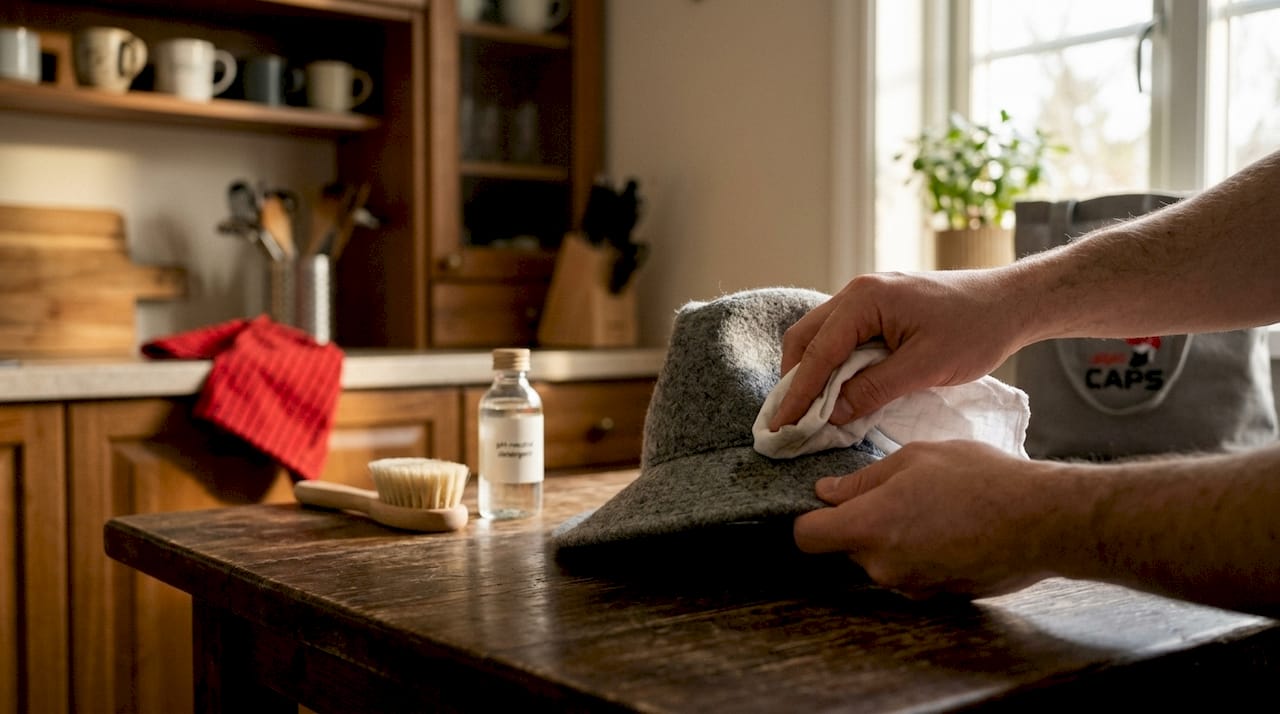
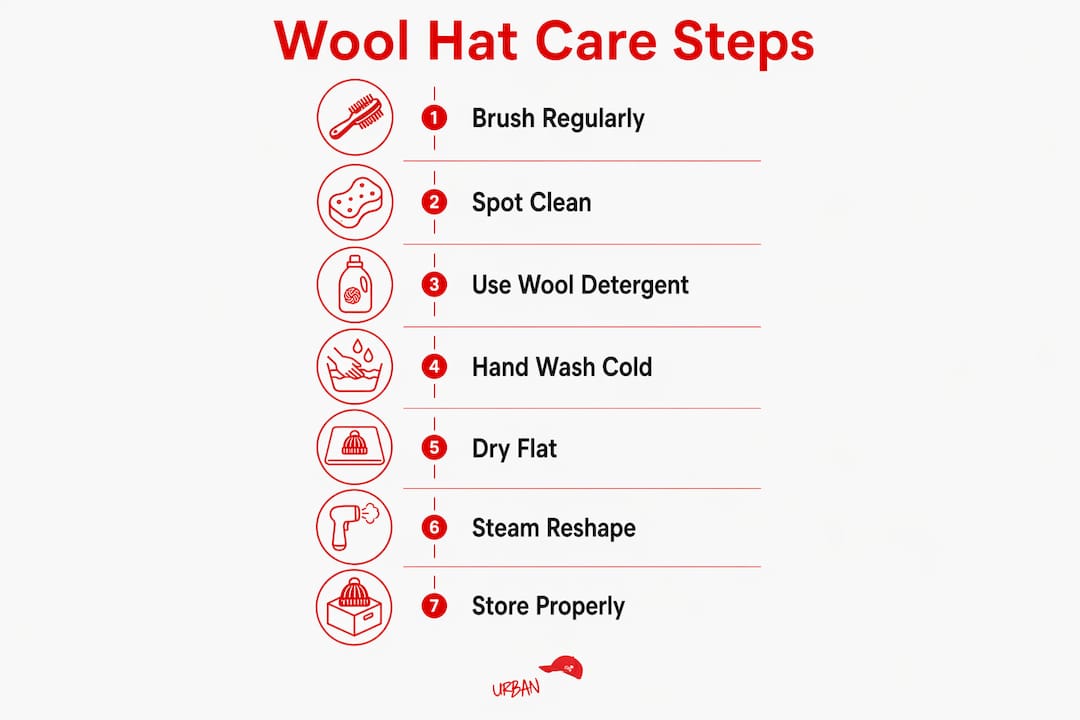
Gentle brushing with a soft-bristled brush is the first and most frequent maintenance step you should take. Brush in one direction to lift dust, lint, and surface debris without disturbing the wool fibres. Do this after every few wears, and you will reduce how often a full wash is needed. A natural-bristle hat brush works best for felt and structured styles, while a lint roller suits knit beanies.
Spot cleaning versus full washing
Spot cleaning handles most everyday marks without stressing the whole hat. Dampen a clean cloth with cold water, dab the affected area gently, and let it air dry flat. Reserve a full wash for when the hat has genuine soil or odour buildup. Wool’s natural antibacterial properties reduce odour buildup, which means frequent washing is unnecessary and can actually shorten the hat’s life. Airing your hat in a cool, shaded spot after wearing does the job most of the time.
Choosing the right detergent
The detergent you choose matters more than the washing method. Standard laundry powders contain enzymes that break down wool proteins, causing fibre degradation even on a gentle cycle. Use only a pH-neutral liquid wool detergent. Brands like Woolite or any detergent labelled specifically for wool or delicates are appropriate. Avoid fabric softener entirely; it coats wool fibres and reduces their natural breathability.
Hand washing and machine washing
Hand washing in cold water remains the safest method for structured felt hats and shaped styles. Fill a basin with cold water, add a small amount of pH-neutral liquid detergent, submerge the hat, and gently squeeze the water through. Do not wring or twist. For knit beanies and some merino items, machine washing on a wool cycle at 30°C is safe, provided you use the correct detergent. The wool cycle uses minimal agitation and cool water, which keeps the fibre scales from locking together.
Drying wool hats properly
Heat is the enemy of wool. Dry your hat flat in the shade to prevent shape distortion and fibre damage. Never use a tumble dryer, hair dryer, or clothes rack in direct sunlight. For structured hats, reshape them by hand while still damp, then place them on a hat stand or stuff the crown loosely with clean dry towels to hold the form as they dry.
Pro Tip: The biggest detergent trap is using a “gentle” powder labelled for delicates. Many still contain enzymes. Always check the ingredient list for terms like “protease” or “lipase” and avoid any product that lists them.
What are the best practices for storing and reshaping wool hats?
Proper storage prevents the slow, invisible damage that builds up between wears. Reshaping brings a hat back from the brink when storage or wear has distorted it.
How to store wool hats correctly
- Keep hats off hooks. Hanging a structured hat on a hook deforms the brim and crown over time. Store it on a flat surface or a hat stand instead.
- Avoid stacking. Placing heavy items on top of a wool hat compresses the fibres and crushes the crown. Give each hat its own space.
- Block sunlight. Direct sunlight fades colour and weakens fibres over time. Store hats in a cool, dark wardrobe or in a breathable hat box.
- Use breathable storage. Plastic bags trap moisture and create conditions for mildew. A cotton pillowcase or a purpose-made hat box with ventilation is far better.
- Protect against moths. Cedar balls or lavender sachets placed near stored wool hats repel moths without the chemical residue of mothballs. Replace them every few months to maintain effectiveness.
How to reshape a wool hat using steam
Steam reshaping is the most effective way to restore a wool hat’s original form without applying direct heat. Hold the hat over a steaming kettle or use a handheld garment steamer, keeping the steam source at least 15 centimetres from the fabric. As the fibres relax, manually shape the hat with your hands, working the brim and crown back into position. Hold the shape for 30 seconds while the fibres cool and reset. Repeat as needed, then allow the hat to dry completely on a hat stand before wearing.
Avoid placing a damp hat near a heater or in direct sun to speed up drying after reshaping. Wetness combined with heat accelerates shape change and can cause permanent distortion. Patience here pays off.
Pro Tip: If you do not own a garment steamer, a bathroom with a hot shower running creates enough ambient steam to relax wool fibres gently. Hang the hat in the steam for two to three minutes, then shape it by hand.
Understanding the types of premium wool hats you own also helps you tailor your storage approach. A structured fedora needs a hat stand, while a knit beanie stores well folded flat in a drawer.
How can visible mending and small repairs extend your wool hat’s life?
A small hole or a pulled thread does not mean a hat is finished. Visible mending is a practical skill that extends the life of wool accessories and reduces waste.
What is visible mending?
Visible mending is the practice of repairing fabric damage in a way that is intentional and sometimes decorative, rather than hidden. Visible mending extends wool accessory life and supports sustainability by reducing the need for replacement. For wool hats, it typically involves darning small holes or reinforcing thinning areas with matching or contrasting yarn.
Tools you need for basic wool hat repairs
- Darning mushroom or tennis ball. Place this inside the hat beneath the damaged area to create a firm, rounded surface to work on. It holds the fabric taut and makes stitching far easier.
- Blunt darning needle. A blunt tip moves through wool fibres without splitting them.
- Matching wool yarn. Choose a yarn weight close to the original fabric. For fine merino hats, a thin fingering weight yarn blends in well.
- Small scissors. Sharp, pointed scissors let you trim loose threads cleanly without cutting surrounding fibres.
- Good lighting. Wool fibres are fine. Work in natural light or under a bright lamp to see exactly what you are doing.
Step-by-step: repairing a small hole
Start by trimming any frayed edges around the hole. Thread your darning needle with a length of matching yarn and secure it with a small knot at the back of the fabric. Weave the yarn horizontally across the hole in parallel rows, then turn the work 90 degrees and weave vertically through the horizontal threads, creating a woven patch. Keep your tension even and avoid pulling too tight, which puckers the surrounding fabric. Finish with a small knot on the inside and trim the tail.
Minor holes or laddering in wool accessories respond well to this technique, and the repair is often stronger than the original fabric once complete. A repair-over-replace mindset also connects to broader sustainable fashion values, which are increasingly relevant for anyone who invests in quality wool headwear. For guidance on selecting hats worth repairing and keeping, the Urbancaps style guide covers what to look for in a well-made wool hat.
What are common mistakes and myths in wool hat care to avoid?
Several widely repeated beliefs about wool care lead people to damage their hats unintentionally. Knowing what not to do is as useful as knowing the correct method.
Myths and mistakes to stop making
- “Wool must only be hand washed.” This is not universally true. Machine washing on a gentle wool cycle at 30°C is safe for many merino and knit wool items. The risk is detergent choice and water temperature, not the machine itself.
- “Any gentle detergent is fine.” Enzyme-based powders cause fibre damage even in gentle cycles. The label “gentle” does not mean wool-safe. Check for protease or lipase in the ingredient list.
- “Bleach removes stains from wool.” Bleach destroys wool protein structure immediately. Never use it on any wool item.
- “Fabric softener makes wool softer.” Fabric softener coats the fibre and reduces its natural properties. Wool softens naturally with correct washing and does not need softener.
- “Soaking loosens stubborn stains.” Prolonged soaking causes wool fibres to swell and weaken. Spot treat instead, and limit full immersion time to a few minutes.
- “Washing often keeps wool fresh.” Wool’s natural antibacterial structure means it does not need frequent washing. Over-washing shortens fibre life faster than regular wear does.
Wool hat care basics come down to one principle: treat the fibre gently and let its natural properties do the work. Avoid heat, harsh chemicals, and unnecessary washing, and your hat will outlast most synthetic alternatives by years.
Always check the care label inside your hat before washing. Labels follow international textile care symbols, and the guidance there reflects the specific construction of that hat. A label showing a hand in a tub means hand wash only. A crossed-out tub means dry clean only. Following these symbols takes seconds and prevents irreversible damage.
For a deeper look at what the terminology on care labels and hat construction actually means, the wool hat terms guide from Urbancaps breaks it down clearly.
Key takeaways
Proper wool hat care relies on pH-neutral detergent, flat drying in the shade, steam reshaping, and cool dark storage to preserve fibre integrity and hat shape over years of wear.
| Point | Details |
|---|---|
| Use the right detergent | Choose a pH-neutral liquid wool detergent and avoid any product containing enzymes like protease or lipase. |
| Dry flat in the shade | Never use a tumble dryer or direct heat; dry wool hats flat to prevent shape distortion and fibre damage. |
| Store away from light and pressure | Keep hats on a stand or flat surface in a cool, dark spot to maintain structure and colour. |
| Reshape with steam, not heat | Use a garment steamer or ambient steam to relax fibres, then shape by hand and allow to cool before wearing. |
| Repair rather than replace | Darn small holes with matching yarn and a darning mushroom to extend hat life and reduce waste. |
What I have learned from years of caring for wool hats
Most people treat a wool hat like a cotton beanie. They toss it in the wash with everything else, dry it on the radiator, and wonder why it looks shapeless after one winter. Wool is not cotton. It has a biological structure that responds to heat, agitation, and chemistry in ways that are largely irreversible once triggered.
The thing that surprised me most when I started paying attention to wool care was how little washing a good hat actually needs. I used to wash mine every few weeks. Now I brush after each wear, air it out after a sweaty day, and wash it two or three times a season at most. The hat looks better for it.
Steam reshaping changed how I think about damaged hats entirely. I had a felt fedora that had been sat on in a bag and looked completely crushed. Five minutes over a steamer and some patient hand shaping brought it back to its original form. That hat is still in regular rotation.
The repair side of things is genuinely satisfying. Darning a small hole takes maybe 20 minutes, and the result is a hat that is structurally sound and has a bit of character. There is something worth holding onto in that approach, especially when the hat is a quality piece worth keeping.
If you invest in a well-made wool hat, the care it needs is minimal. The payoff is a hat that holds its shape, stays fresh, and looks good for years rather than one season.
— Urban
Wool hats worth caring for, from Urbancaps

Caring for a wool hat is straightforward when the hat is well-made to begin with. Urbancaps stocks a range of wool and knit styles built for everyday wear and easy maintenance, including the Fashion Knit Beanie and the classic knit beanie for those who prefer a clean, minimal look. For something with more structure, the woollen fedora pairs timeless style with the kind of durable construction that responds well to the care techniques covered here. Free shipping on all NZ orders. Proudly NZ owned and operated.
FAQ
How often should you wash a wool hat?
Wash a wool hat two to three times per season at most. Wool’s natural antibacterial properties reduce odour, so regular airing and spot cleaning handle most everyday freshness needs.
Can you machine wash a wool hat?
Many knit wool and merino hats are safe to machine wash on a gentle wool cycle at 30°C, provided you use a pH-neutral liquid wool detergent. Always check the care label first, as structured felt hats typically require hand washing or dry cleaning.
What is the best way to reshape a wool hat?
Hold the hat over a garment steamer or a steaming kettle, keeping at least 15 centimetres of distance, then manually reshape the crown and brim by hand while the fibres are warm and pliable. Allow the hat to cool and dry completely on a hat stand before wearing.
How do you prevent moths from damaging stored wool hats?
Place cedar balls or lavender sachets near stored wool hats and replace them every few months. Avoid plastic bags, which trap moisture and create conditions that attract pests. Store hats in a breathable cotton bag or a ventilated hat box.
What detergent is safe for wool hats?
Use only a pH-neutral liquid detergent labelled specifically for wool or delicates. Avoid any product containing enzymes such as protease or lipase, and never use bleach or fabric softener on wool.