

How to style a beret in 2026: your complete tutorial
Yes, berets are absolutely in style in 2026. Wear yours tilted slightly to one side, choose wool or leather over soft felt, and pair it with an oversized blazer and straight-leg jeans for an instant modern look. That’s the short version of this beret styling tutorial 2026 guide. Everything below gives you the full picture.
Three things to do right now:
- Pick the right material. Structured wool or leather reads current. Soft, floppy felt reads dated.
- Tilt it. Place the beret slightly off-centre, angled toward one ear, with your hairline still visible at the front.
- Start with one outfit formula. Leather beret + oversized blazer + straight jeans + white tee. Done.
Key takeaways
Berets are firmly in style for 2026, and the right placement, material, and outfit pairing makes all the difference between a polished look and a costume.
| Point | Details |
|---|---|
| Tilt is non-negotiable | Place the beret 15–30° off-centre with your hairline visible at the front. |
| Material sets the mood | Structured wool or leather reads modern; soft felt or novelty shapes read dated in 2026. |
| One outfit formula to start | Leather beret + oversized blazer + straight jeans + white tee works year-round in NZ. |
| Match beret scale to face shape | Compact berets suit rounder faces; fuller styles balance longer or angular proportions. |
| Urbancaps Tenby beret | The Tenby 6-Panel Artist Beret is a structured, versatile NZ-stocked pick for modern styling. |
Table of Contents
- What changed for berets in 2026: silhouettes, materials, and colour cues
- Which beret types look current in 2026, and when should you pick each?
- How do you choose a beret size and shape to flatter your face?
- Six modern ways to wear a beret, step by step
- Ten outfit formulas that make a beret look modern in NZ
- How do you wear a beret with different hair lengths and textures?
- What should you check before buying a beret in NZ?
- Mistakes that make a beret look costume-y, and how to fix them
- Local expertise from Urbancaps: NZ fit tips and a recommended pick
- Why I still reach for a beret in 2026
- Quality berets, delivered across New Zealand
- Sources
- FAQ
What changed for berets in 2026: silhouettes, materials, and colour cues
The beret didn’t just survive into 2026. It got a proper refresh. Harper’s Bazaar identifies a 2026 headwear trend toward “fancy little hats” with slightly more structured silhouettes in leather, wool, and silk, with the beret sitting right at the centre of that shift. The key word from stylists and buying editors is polish: avoid novelty shapes, favour architectural small forms, artisanal finishes, and considered fabric choices.
WhoWhatWear’s spring 2026 coverage documents renewed interest in berets and small structured hats across runway and street signals, with leather and structured materials emerging as the practical way to modernise the silhouette for streetwear pairings. Soft knits keep the look casual; leather and stiff wool push it toward contemporary polish.
What’s trending in 2026:
- Structured silhouettes over floppy, unshapen styles
- Leather and faux-leather berets for streetwear and smart-casual outfits
- Silk-accented or embroidered styles for occasion dressing
- Knit slouch berets for relaxed, weekend looks
- Colour direction: deep burgundy, forest green, camel, and off-white are the accent tones; classic black remains the most versatile base
Social media has amplified the “Parisian revival meets dark academia” aesthetic, which places the beret front and centre. The broader 2026 fashion accessories trend confirms that considered, intentional headwear is one of the clearest signals of a well-put-together outfit this year.
Which beret types look current in 2026, and when should you pick each?
Not all berets read the same way. The shape and material you choose sends a clear style signal before you’ve even picked your outfit.
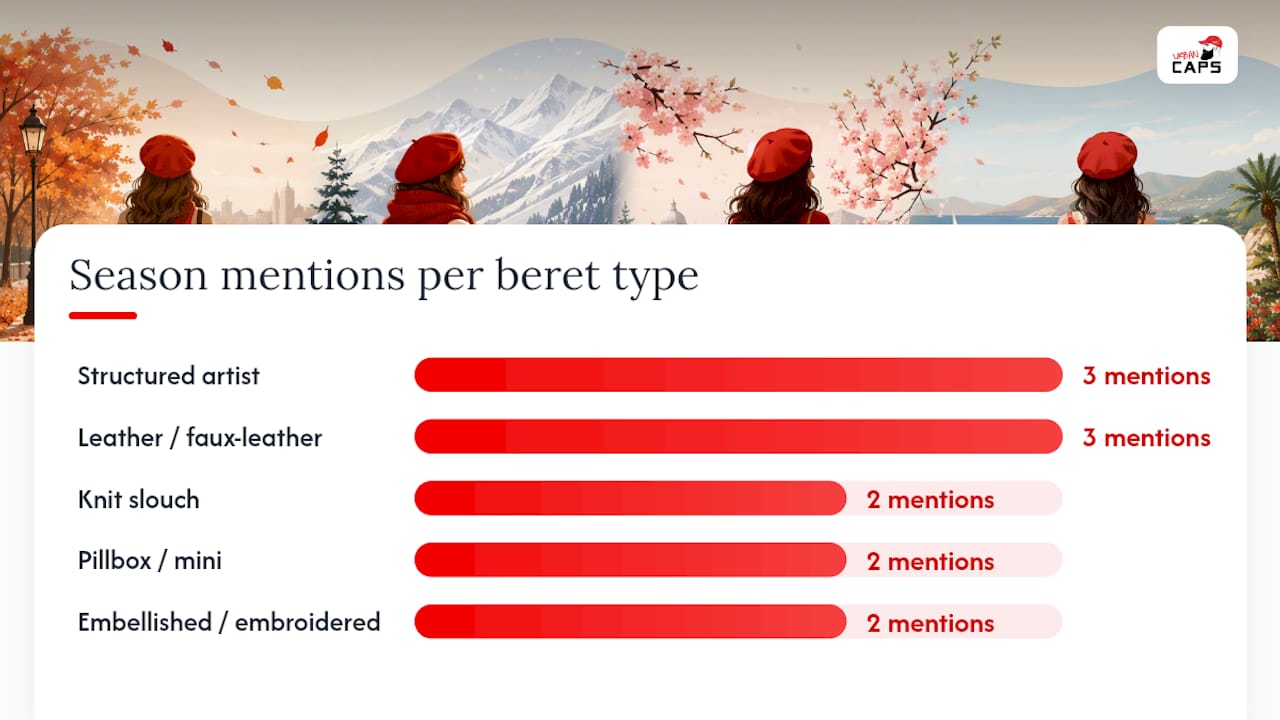
| Beret type | Best for | Season/mood |
|---|---|---|
| Structured artist beret (6-panel) | Parisian, dark academia, menswear looks | Autumn/winter, year-round |
| Leather or faux-leather | Streetwear, smart-casual, edgy pairings | Autumn/winter, cool spring |
| Knit slouch | Casual, weekend, layered looks | Winter, early spring |
| Pillbox or mini beret | Occasion dressing, maximalist outfits | Spring/summer |
| Embellished or embroidered | Statement looks, evening, fashion-forward | Spring/summer |
A few practical rules of thumb: match the structure of your beret to the structure of your outfit. A stiff leather beret pairs well with tailored pieces. A knit slouch works with relaxed knitwear and denim. Mixing a very soft beret with a very soft outfit creates a shapeless result — at least one element needs to hold its form.
Pro Tip: When choosing between sizes, go for the one that sits snugly without gripping. A beret that’s too loose loses its shape within an hour of wear, no matter how good the material.
How do you choose a beret size and shape to flatter your face?
Fit and proportion matter more than most people expect. Vogue recommends matching beret proportions to face shape and trying different sizes to find the most flattering fit. Here’s a repeatable process:
- Measure your head circumference. Use a soft tape measure around the widest part of your head, roughly 2–3 cm above your ears. Most adult berets fit 54–60 cm; check the product sizing before ordering.
- Test the rim. The inner band should sit flat against your head without digging in. If it leaves a mark after five minutes, size up.
-
Apply the face-shape guide:
- Round face: Choose a compact, structured beret and tilt it to one side to create asymmetry. Avoid very wide, flat styles.
- Oval face: Most beret shapes work. Experiment freely.
- Long or angular face: A slightly larger, fuller beret balances proportions. Wear it more centred with a gentle tilt.
- Square face: Softer, rounder beret shapes work best. Avoid very stiff, boxy styles.
- Check the stem (the small loop at the top). It should sit slightly toward the tilted side, not dead centre. That small detail is the difference between intentional and accidental.
- Leave your hairline visible. At least a centimetre of hair should show at the front. Pulling the beret down to your eyebrows is the fastest route to a costume look.
For a deeper guide on choosing the right hat shape for your face, Urbancaps has a dedicated resource worth bookmarking.
Six modern ways to wear a beret, step by step
These are the six placements that actually work in 2026. Each one is repeatable and specific.
1. The Parisian tilt Place the beret flat on your head, then slide it 3–4 cm toward your right ear. Tilt the front edge up slightly so your hairline shows. The stem points toward the tilted side. Pair with: a trench coat, slim turtleneck, straight jeans, and loafers.
Pro Tip: Mist the beret lightly with water and reshape it on your head before it dries. This sets the tilt and keeps it in place all day.
2. Back-of-head romantic Push the beret toward the back of your crown, leaving the full front of your hair exposed. Works best with loose waves or a low bun. Pair with: a floral midi dress, ankle boots, and a structured bag.
3. Streetwear pulled-back Sit the beret flat across the back of your head, almost like a cap worn backwards. The brim of the inner band rests just above the nape. Pair with: an oversized hoodie, wide-leg cargo pants, chunky sneakers.
4. Centred soft-girl Place the beret centred on top of your head with a very slight forward tilt. Works only with a structured beret — a soft one will collapse. Pair with: a pastel co-ord, Mary Janes, and a small shoulder bag.
Pro Tip: Use a few bobby pins on the inner rim to anchor the beret if your hair is fine or slippery. Clear pins disappear completely.
5. Dark academia tilt Similar to the Parisian tilt but worn lower and more dramatically angled — about 20–30° off-centre. The beret almost grazes one eyebrow. Pair with: a plaid blazer, wide-leg trousers, a white button-down, and Oxford shoes.
6. Menswear-inspired structured look Wear a 6-panel structured beret centred but with a clean, deliberate tilt of about 10°. The structure of the hat does the work. Pair with: a wool overcoat, tailored trousers, a fine-knit jumper, and Chelsea boots. This is the look the GentlemanRules beret guide describes as the most wearable entry point for anyone new to the style.
Ten outfit formulas that make a beret look modern in NZ
These are copy-and-paste combinations. Seasonal notes are included for New Zealand’s climate.
- Leather beret + oversized blazer + straight jeans + white tee + loafers — works year-round in NZ; swap the tee for a fine-knit in winter
- Black wool beret + camel trench coat + slim black trousers + ankle boots — ideal for Wellington or Auckland autumn
- Burgundy beret + cream ribbed jumper + wide-leg jeans + white sneakers — casual weekend, spring or autumn
- Forest green beret + plaid blazer + wide-leg trousers + Oxford shoes — dark academia; great for cooler South Island days
- Knit beret + puffer jacket + cargo pants + chunky boots — streetwear, winter NZ
- Camel beret + white linen shirt + linen trousers + sandals — spring/summer, light and relaxed
- Black beret + leather jacket + black jeans + white tee — classic monochrome; WhoWhatWear’s 2026 coverage confirms this pairing as a consistent street signal
- Embellished beret + slip dress + strappy heels + small clutch — evening or occasion dressing
- Knit beret + chunky cardigan + straight jeans + ankle boots — relaxed, cosy, NZ winter staple
- Structured beret + tailored coat + midi skirt + block-heeled boots — polished, office-appropriate
Colour note: You don’t need to match your beret exactly to your outfit. Use it as an accent. A burgundy beret against a neutral outfit creates far more interest than a perfectly matched set, which can tip into costume territory.
How do you wear a beret with different hair lengths and textures?
Hair and beret placement are directly connected. Getting this right means your hat stays put and your hair still looks intentional.
- Short hair: Tilt the beret more dramatically to create visual interest. Leave face-framing pieces out at the sides. Add a small amount of texturising product at the crown to build volume before placing the hat.
- Long hair: Push the beret slightly back on your head so your hair frames your face naturally. A loose low bun or half-up style underneath keeps the look clean without flattening everything.
- Bangs and fringes: Let your fringe sit naturally below the beret’s front edge. Avoid pushing the beret so far forward that it compresses your fringe — that’s the fastest way to look like you’re wearing a costume.
- Curly or thick hair: Don’t try to stuff all your volume under the inner band. Let curls fall out at the sides and back. Use a non-slip inner rim (or a strip of velvet ribbon sewn inside) to keep the beret from riding up.
Pro Tip: For curly hair, place the beret on top of your curl pattern rather than flattening it. The volume underneath actually helps the beret sit at a flattering angle without any pinning.
What should you check before buying a beret in NZ?
A quick checklist saves you from a purchase you’ll never wear. Miolook’s stylist guidance highlights inner rim quality and a pinch-test for material spring as the two most practical in-store checks.
Before you buy, check:
- Inner rim: Should be firm, flat, and comfortable. A flimsy elastic band won’t hold the beret in shape.
- Material spring: Pinch the fabric and release. It should spring back. If it stays creased, the beret won’t hold its shape after wear.
- Seam finish: Look inside. Clean, flat seams indicate better construction.
- Sizing: Measure your head first (see the fit section above). Don’t guess.
- Lining: A lining adds comfort and helps the beret keep its shape. Worth prioritising for structured styles.
Care by fabric:
| Fabric | Washing method | Drying method |
|---|---|---|
| Wool | Hand wash, cold water, wool detergent | Reshape and dry flat |
| Leather/faux-leather | Wipe with damp cloth only | Air dry away from direct heat |
| Knit | Hand wash or delicate machine cycle | Lay flat to dry |
For more on durable hat materials and care, Urbancaps covers the full breakdown by fabric type.
Mistakes that make a beret look costume-y, and how to fix them
Most beret styling errors come down to two things: placement and proportion. InStyle’s placement guidance is direct on this: a flat, centred beret with no visible hairline is the single most common mistake, and it reads as costume every time.
Other mistakes to avoid:
- Exact colour matching: Wearing a beret that matches your outfit perfectly creates a uniform effect. Use the beret as an accent in a complementary or contrasting tone instead.
- Over-stuffing hair under the band: Forcing thick or curly hair entirely under the inner rim distorts the beret’s shape and looks uncomfortable. Let some hair fall naturally.
- Choosing the wrong scale: A very tiny beret on a larger head, or a very wide beret on a petite frame, throws off proportions immediately.
- Heavy ornamentation competing with a busy outfit: An embellished beret works best with a simple, clean outfit. If your outfit already has a lot going on, choose a plain beret.
- Novelty shapes and stiff felt: Berets with exaggerated brims, novelty prints, or very stiff felt read as costume accessories rather than fashion pieces in 2026.
Local expertise from Urbancaps: NZ fit tips and a recommended pick
Urbancaps stocks berets locally in New Zealand, which means no waiting on international shipping and the ability to check sizing against NZ head measurements before you order.
Practical NZ fit tips from Urbancaps:
- NZ autumn and winter conditions suit structured wool and leather berets well. Both hold their shape in wind and light rain better than soft felt.
- If you’re between sizes, size up. A slightly larger beret can be shaped and pinned; a too-small one can’t be stretched.
- For South Island winters, a lined wool beret adds meaningful warmth without sacrificing the look.
The recommended pick: Tenby 6-Panel Artist Beret
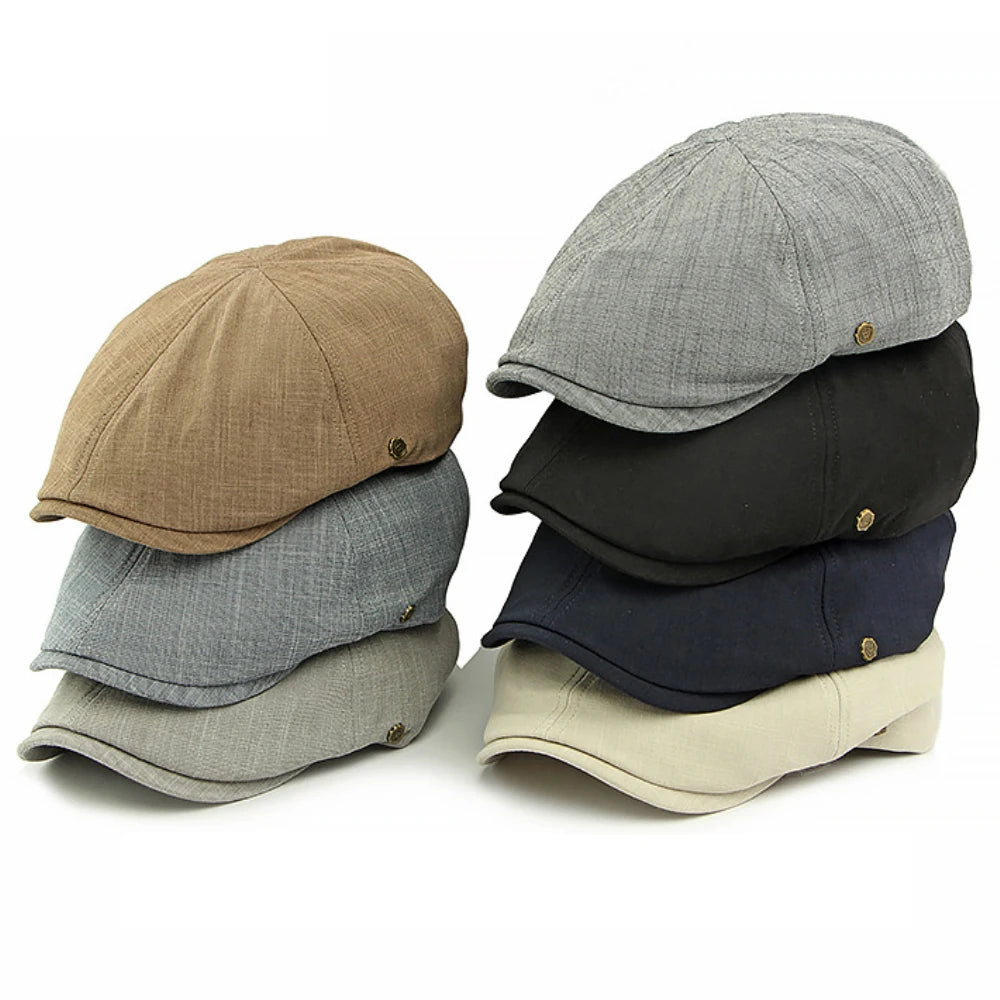
The Tenby 6-Panel Artist Beret is the most versatile option in the Urbancaps range for modern 2026 styling. Its six-panel construction gives it the structured silhouette that Harper’s Bazaar and WhoWhatWear identify as the current direction. It suits the Parisian tilt, the menswear-inspired look, and the dark academia placement equally well. The shape holds across a full day of wear, and it works for both men and women.
Pro Tip: Order the Tenby in black first. It’s the most versatile colourway and pairs with every outfit formula in this guide. Once you know the fit, add a second colour.
Why I still reach for a beret in 2026
The beret is one of the few accessories that genuinely works across aesthetics without looking like you’re trying too hard. Throw it on a structured outfit and it adds polish. Pair it with a hoodie and it adds intention. That range is rare.
The styling shortcut I come back to most: tilt, visible hairline, one strong outfit anchor (a blazer, a trench, a leather jacket). Everything else is secondary. Experimentation gets you there faster than any guide, including this one. Try three placements in front of a mirror before you settle on one. You’ll find your version quickly.
Quality berets, delivered across New Zealand
Urbancaps carries a curated range of berets in wool, structured fabric, and leather-look finishes — all stocked locally for fast NZ delivery. No waiting on international orders, no sizing guesswork when you can check the fit guide before checkout.
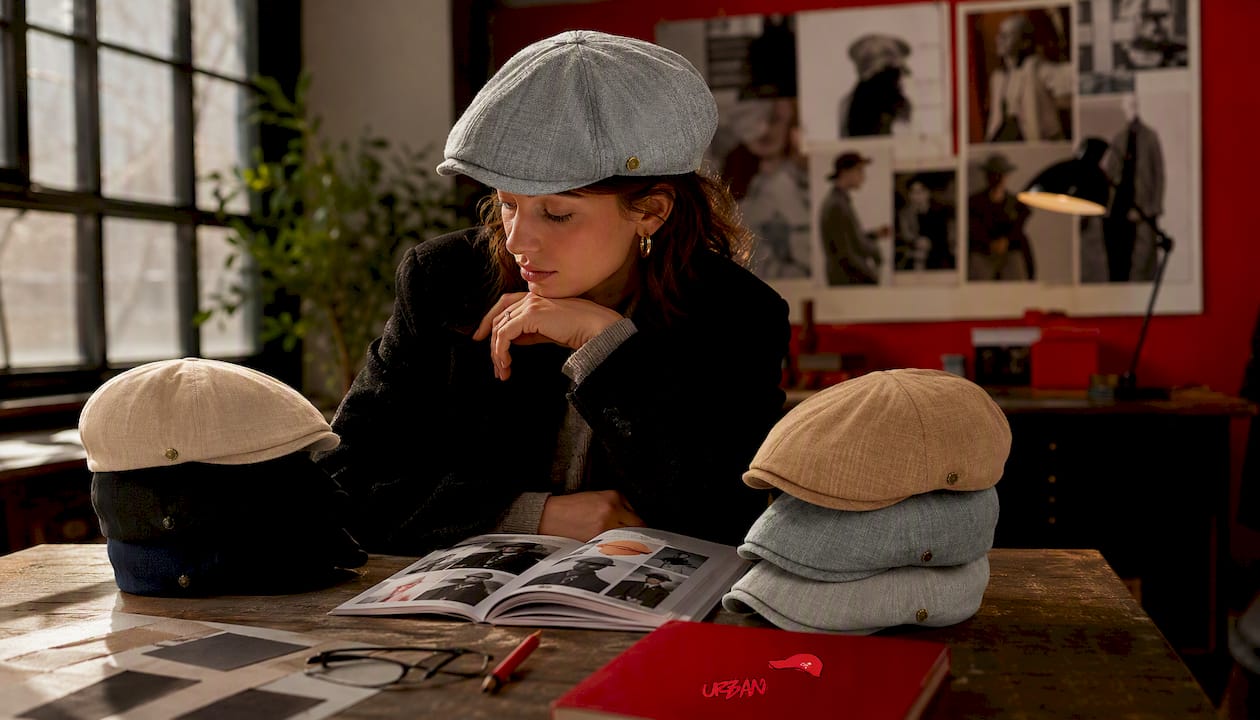
The Tenby 6-Panel Artist Beret is the standout pick for anyone working through this guide. It’s structured enough for the Parisian tilt and the menswear-inspired look, and relaxed enough for a weekend outfit. Check the Tenby beret product page for sizing, colourways, and current availability. If you’re unsure between two sizes, the product page notes guide you through the measurement process. Free shipping on all NZ orders. ♡
Sources
- 2026 will be the year of the fancy little hat, plus four other headwear trends to know — Harper’s Bazaar
- 5 Unexpected Hat Trends That Will Be Everywhere in Spring 2026 | Who What Wear
- How to wear a beret — Vogue slideshow
- How to Wear a Beret — InStyle
- How to Wear a Beret: Stylish Ideas — MioLook
FAQ
Are berets in style in 2026?
Yes. Harper’s Bazaar and WhoWhatWear both identify berets as part of the 2026 “fancy little hat” revival, with structured silhouettes in leather, wool, and silk leading the trend.
How do you wear a beret stylishly?
Tilt it 15–30° to one side, keep your hairline visible at the front, and position the stem toward the tilted side. Pair with a structured piece like a blazer or trench coat for a polished result.
How should I style my hair when wearing a beret?
Leave some hair visible at the front and sides rather than tucking everything under the band. For long hair, a loose low bun or half-up style works well; for curly hair, let volume sit naturally rather than compressing it under the rim.
Are berets still fashionable, or is it a passing trend?
Berets have cycled in and out of fashion for decades, but the 2026 version is grounded in a broader shift toward considered, architectural headwear — making it more durable as a trend than a novelty moment.