

Convert 57 cm to US/UK Sizes in Minutes: NZ Cap Size Conversion
Measure the circumference where you wear the cap, in centimetres, and use that number as your primary size reference before checking any US, UK or EU chart. Centimetres line up directly with EU sizing, which makes them the easiest starting point for a conversion. A 57 cm measurement, for example, converts to a US 7 1/8, a UK 7 and a generic medium. Get that one number right and the rest of the chart falls into place.
TL;DR:
- Accurate cap sizing depends on measuring head circumference in centimetres at the point where the cap sits, using a snug, level tape measure.
- A 58 to 59 cm measurement generally corresponds to a size 7 to 7 1/8 in US sizes and a medium in general sizing, but fit varies by hat material and construction.
- Structured or non-stretch hats typically require sizing up if your measurement falls between two sizes, while stretch or adjustable caps can often suit the smaller nearby size.
- When between sizes, consider your hair volume, crown depth, and intended fit, and opt to size up for structured styles or if in doubt.
- Using style-specific sizing guides and verifying measurements with support can reduce returns and improve fit accuracy.
Table of Contents
- How to measure your cap size accurately
- Cap size conversion chart: cm, inches, EU, US and UK
- What to do when your measurement falls between two sizes
- Do different cap styles need different sizing rules?
- Urban Caps’ approach to sizing (and where to check style notes)
- A quick checklist before you order
- Where to buy your next cap, sorted by size and style
- Sources
- FAQ
How to measure your cap size accurately
Getting an accurate cap size conversion starts with a proper measurement, not a guess based on a hat you already own. Grab a flexible tape measure (a fabric sewing tape works better than a rigid one) and follow this sequence:
- Wrap the tape around your head at the point where a cap actually sits, roughly mid-forehead and about 1 centimetre above your eyebrows and the tops of your ears.
- Keep the tape level all the way around, not angled up at the back.
- Pull it snug against your skull, firm enough to sit still, but not so tight it presses into your hair or skin.
- Note the reading in centimetres, since that figure feeds directly into the conversion methods most charts use.
- Repeat the measurement once more to check it matches within a few millimetres.
If your hair is thick or braided, measure again with it flattened as much as possible, since bulky hair can add a false centimetre or two to the reading. This detail trips up more buyers than any other step in the process.
Pro Tip: Measure at the end of the day rather than first thing in the morning. Head circumference can read slightly larger later in the day due to natural fluid shifts, and that small difference is enough to push you into the next size band.
Cap size conversion chart: cm, inches, EU, US and UK
Once you have your centimetre figure, the table below maps it across every major sizing system in use.
| Head circumference (cm) | Inches | EU size | US size | UK size | General size |
|---|---|---|---|---|---|
| 52 | 20.5 | 52 | 6 1/2 | 6 1/2 | XS |
| 54 | 21.3 | 54 | 6 3/4–6 7/8 | 6 3/4–6 7/8 | S |
| 56–57 | 22.0 | 56–57 | 7–7 1/8 | 7–7 1/8 | M |
| 58–59 | 22.8 | 58–59 | 7 1/4–7 3/8 | 7 1/4–7 3/8 | L |
| 60 | 23.6 | 60 | 7 1/2–7 5/8 | 7 1/2–7 5/8 | XL |
| 62 | 24.4 | 62 | 7 3/4–8 | 7 3/4–8 | XXL |
EU sizing and centimetres are effectively the same figure, which is why hat-size converters treat cm as the stable baseline rather than starting from US or UK numbers. US fitted sizes work differently: they increment in eighths of an inch, because a US size is roughly the head’s diameter in inches, not its circumference. That’s why a US size 7 lines up with about 56 cm, and each step up (7 1/8, 7 1/4, and so on) adds a small, consistent jump in circumference.
Say your measurement comes out at 58.5 cm. That sits between the L row and the boundary of the next EU size up.
- Round down to 58 cm if you prefer a snugger, structured fit.
- Round up to 59 cm if the cap is unlined or you plan to wear it over thicker hair.
- Check the brand’s own chart before ordering, since padding and lining thickness shift the real fit by a size in either direction.
What to do when your measurement falls between two sizes
Sitting between two rows is common, and the right call depends on what the cap is made of. Structured caps and non-stretch dress hats, like a wool fedora or a pressed felt hat, rarely stretch to accommodate a snug fit, so sizing up is usually the safer bet. Soft or adjustable caps are far more forgiving, so a closer fit on the chart tends to work fine.
- Structured, felt or fully fitted: round up to the next size.
- Stretch-fit, snapback or adjustable strap: the smaller size on the chart is usually fine.
- Between whole centimetres (say 57.5 cm): treat it as the higher size for anything structured.
Crown depth and sweatband thickness matter just as much as the raw number. A deep crown or a thick internal sweatband can make a technically correct size feel tight after an hour of wear, even though the tape measurement was accurate. If a cap still feels off after purchase, a hat reducer or a professional blocking service can adjust the fit by roughly half a size in either direction without needing to return the item.
Pro Tip: If you’re stuck between two sizes on a structured hat and can’t try it on first, size up. It’s far easier to add a thin sweatband liner to tighten a slightly loose fit than to stretch a felt hat that’s genuinely too small.
Do different cap styles need different sizing rules?
Not every cap style uses the same sizing logic, and knowing which system to trust for which hat saves a lot of guesswork.
- Fitted caps rely on exact numeric sizing (US fractional or EU cm) with no adjustment mechanism, so an accurate measurement matters most here.
- Snapback and strapback caps use an adjustable band at the back, so a general S/M/L or one-size label usually covers a wider range comfortably.
- Flexfit-style stretch caps, like those detailed on A+Majice’s Flexfit range, use stretch panels rather than a strap, which lets one or two sizes cover most adult heads.
- Beanies are almost always stretch-knit, so exact cm sizing rarely applies unless the brand notes a fitted style.
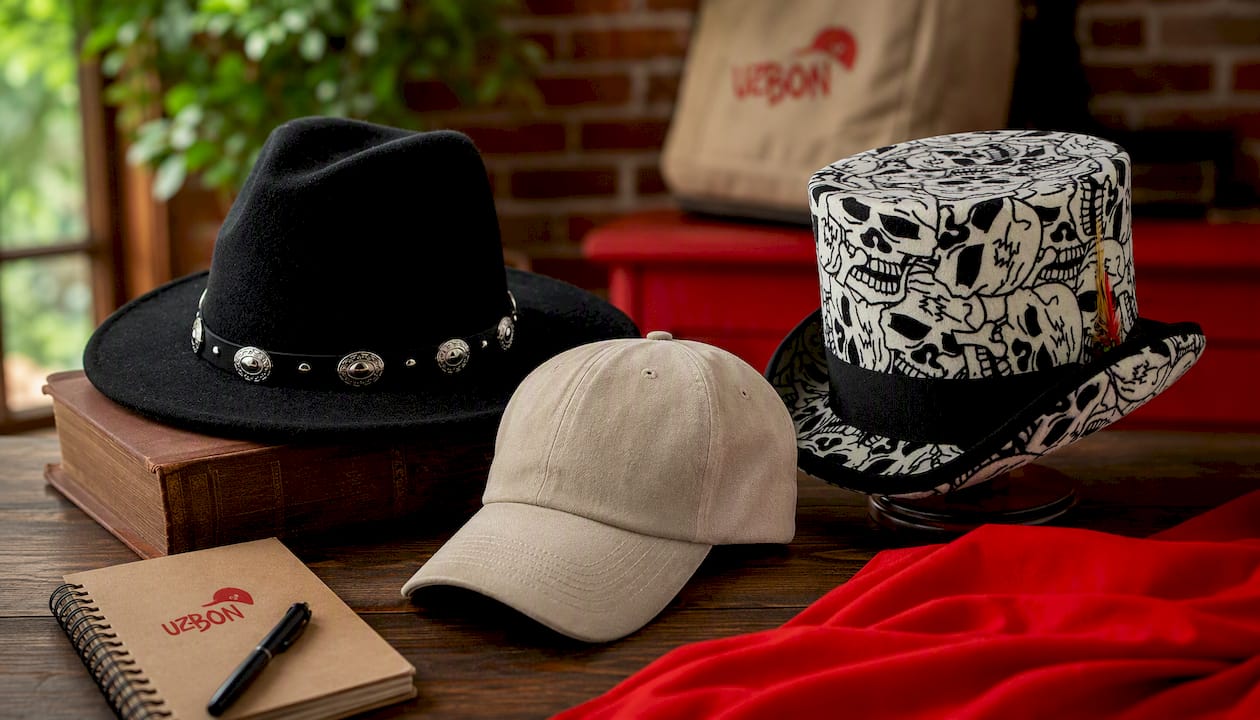
- Fedoras and cowboy hats, including a piece like the flat-top presidential-style hat, are structured and non-stretch, so they need the precise cm-to-numeric conversion rather than a general label.
Most one-size-fits-most caps are built around a typical adult range of roughly 54.5 to 60 cm, but actual comfort inside that range still depends on crown construction, so don’t assume OSFM automatically fits you. A soft, adjustable style, like a wide-brim sun hat built for larger heads, is a good example of where a general size label is genuinely enough, since the adjustable fit absorbs small measurement differences.
Urban Caps’ approach to sizing (and where to check style notes)
Urban Caps builds its sizing guidance around the same principle covered above: measure at the widest point of the head, keep the tape level and snug, and treat the centimetre figure as the number that travels across every chart. That method underpins the step-by-step hat sizing guide Urban Caps publishes for shoppers and knitters alike, because the same measurement works whether you’re buying off the shelf or having a piece made to order.
Conversion charts are a starting point, not the final word, so pairing your centimetre measurement with a style-specific guide gets you closer to a fit that actually holds up on the day:
- Flat cap sizing notes for structured, non-stretch flat caps.
- Cowboy hat sizing guide for wide-brim structured styles.
- Cap style fit differences for a breakdown of how construction changes the numbers on the chart.
A quick checklist before you order
Three things save most people from a return: re-measure before ordering rather than trusting an old hat, check the brand’s specific size notes rather than assuming a generic chart applies exactly, and factor in the hat’s construction (structured versus stretch) before picking a size. If the fit still isn’t quite right on arrival, most issues come down to a sweatband adjustment rather than the wrong size entirely.
— Urban
Where to buy your next cap, sorted by size and style
A typical distributor stocks headwear across a full sizing range, from precise numeric fits to adjustable, stretch-fit styles, sometimes with fit notes on product pages to guide customers. If you’ve measured 56 to 58 cm and want a structured piece, the retro top hat with a metal belt detail is a solid example of a fedora where getting the numeric size right actually matters. For larger heads needing a softer, adjustable fit, the thin-brim sun hat built for larger head sizes skips the fractional sizing headache altogether. And if you’re after a formal structured piece, the high tube flat top presidential-style hat shows why precise measurement pays off before you order.
If you’ve measured up and you’re still not sure which row on the chart applies to a specific style, consider reaching out to customer support of the retailer for a fit check before you order rather than after. Browse the Urbancaps and start with your centimetre measurement in hand.
Sources
FAQ
How do I figure out my cap size?
Wrap a flexible tape around your head at the point where a cap sits, about 1 centimetre above your eyebrows and ears, keeping it level and snug. That centimetre figure maps directly to the EU size and converts easily to US and UK sizing on the chart above.
What is 52 cm in hat size?
A 52 cm head circumference sits at the small end of adult sizing, corresponding to roughly a US 6 1/2 and a UK 6 1/2, often labelled XS on a general size chart.
What is a size 7 cap in cm?
A US fitted size 7 corresponds to approximately 56 cm (22 inches) of head circumference, which sits at the lower end of the medium band.
How do I calculate cap size?
Measure your head circumference in centimetres using a level, snug tape measurement, then match that figure to the EU/cm row on a conversion chart to read off the corresponding US and UK sizes. If your number sits between two rows, size up for structured styles and stay closer for stretch or adjustable caps.
Does Urban Caps offer sizing help for specific styles?
Yes. Urban Caps publishes style-specific guides for flat caps, cowboy hats and knitted styles, alongside its general step-by-step measuring method, so you can check construction-specific fit notes before ordering.