

Caring for wool hats: the complete care guide
TL;DR:
- Proper care of wool hats involves gentle washing with pH-neutral detergent and air drying flat to prevent damage. Over-washing, high heat, and rough handling cause irreversible fiber damage and distortion. Consistent maintenance, proper storage, and using the right tools extend the life of quality wool headwear.
Caring for wool hats is defined as the practice of cleaning, drying, reshaping, and maintaining wool headwear to preserve fibre integrity, shape, and appearance over time. Wool is a protein-based fibre, and it responds poorly to heat, harsh chemicals, and rough handling. Get these basics right and a quality wool hat will last years. Get them wrong and you will end up with a shrunken, felted mess that no amount of reshaping will fix. The good news is that wool is naturally odour-resistant and self-refreshing, which means you wash it far less often than you think. The core principle from New Zealand wool care authorities like Smart Merino and Swanndri is simple: wash less, wear longer.
What cleaning methods are best for wool hats?
The best method for cleaning wool hats uses cold or 30°C water with a pH-neutral, wool-specific detergent. Temperature and detergent choice are the two variables that cause the most damage, and both are easy to control.
Why standard detergents damage wool
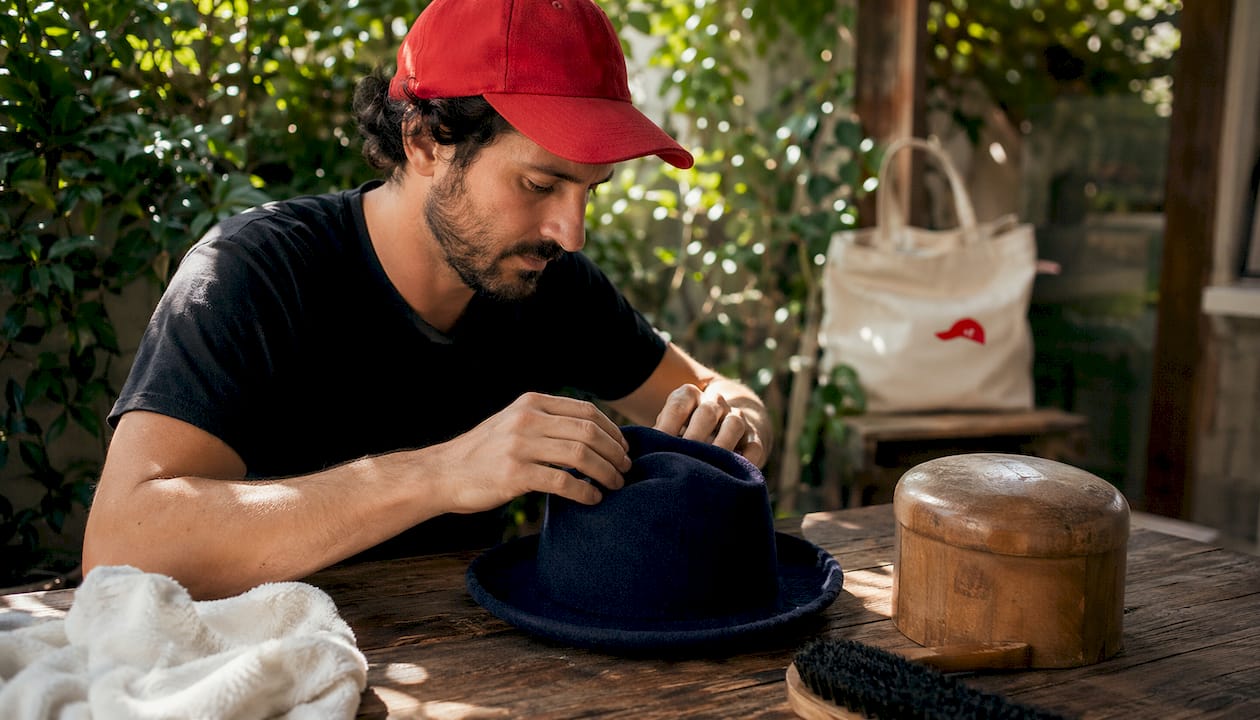
Standard household detergents contain enzymes designed to break down protein-based stains. Wool is itself a protein fibre. Those same enzymes attack the wool, weakening the fibre structure and causing pilling, dullness, and eventual breakdown. Always use a detergent labelled specifically for wool or delicates, such as a pH-neutral liquid wool wash. Bleach and fabric softeners fall into the same category of products to avoid entirely.
Merino wool fibres have microscopic scales on their surface. Under high heat or agitation, those scales open and interlock with neighbouring fibres, a process called felting. Felting is permanent. You cannot un-felt a hat. This is why water temperature and wash cycle intensity matter as much as detergent choice.
Hand washing vs machine washing
Hand washing is the safest option for structured wool hats, particularly those with a stiff brim or shaped crown. Follow these steps:
- Fill a clean basin with cold or lukewarm water (no warmer than 30°C).
- Add a small amount of pH-neutral wool wash and stir gently to dissolve.
- Turn the hat inside out before submerging it.
- Gently squeeze the water through the fabric. Do not rub, wring, or scrub.
- Soak for no longer than 10 minutes.
- Rinse thoroughly under cool running water until all detergent is gone.
- Press out excess water gently. Never twist.
Modern Merino wool items can also be machine-washed on the wool or delicate cycle at 30°C, which contradicts the old belief that all wool must be hand-washed. Place the hat inside a mesh laundry bag to protect it from friction. Use a pH-neutral liquid wool detergent, not powder. Set the spin speed to the lowest available setting.
Pro Tip: Turn your wool hat inside out before washing. This protects the outer surface from friction and keeps the colour looking fresher for longer.
Never soak a wool hat for extended periods, and never use a tumble dryer. Both cause irreversible shrinkage. Spot cleaning with a damp cloth and a tiny amount of wool wash handles most light marks without a full wash.
How to dry and reshape wool hats after washing
Drying wool hats flat in the shade is the safest method to preserve shape and prevent shrinkage. Heat is the enemy at every stage of wool care, including drying.
Step-by-step drying process
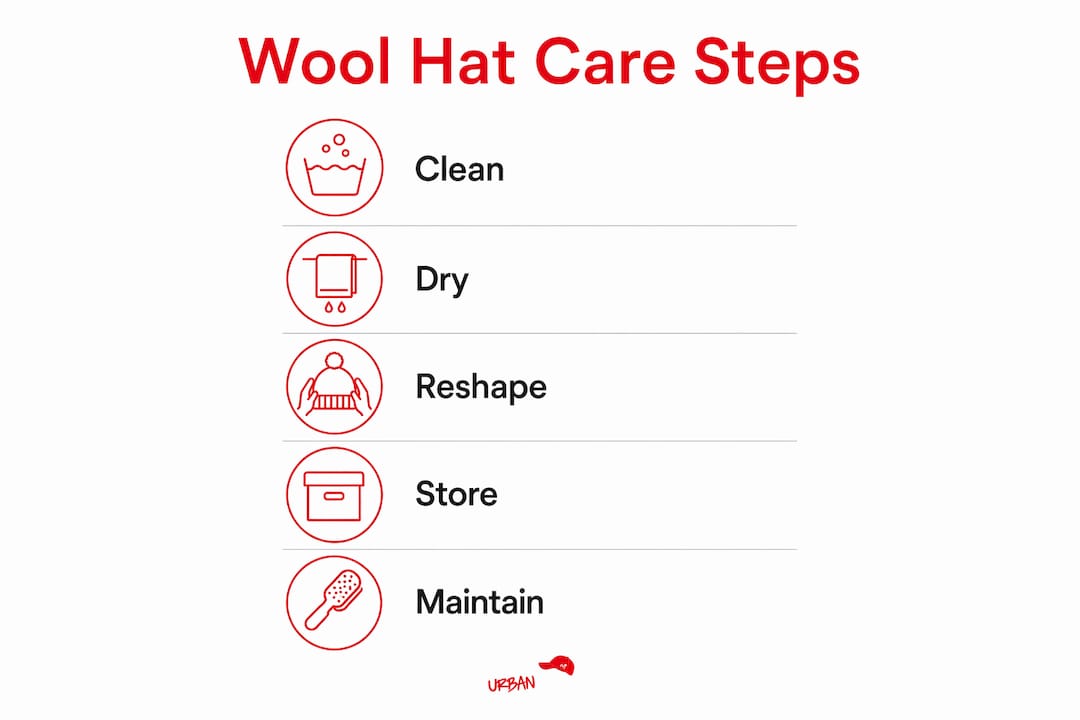
Follow this process immediately after washing:
- Gently press the hat between two clean, dry towels to absorb excess water. Do not wring or twist.
- Place the hat on a clean, flat surface away from direct sunlight and heat sources.
- While the hat is still damp, use your hands to reshape the crown and brim back to their original form.
- If the hat has a structured brim, place a rolled towel inside the crown to support its shape as it dries.
- Allow the hat to air dry completely before wearing or storing it. This typically takes several hours.
Reshaping while damp is the key step most people skip. Wool fibres are pliable when wet and set into position as they dry. If you leave a misshapen hat to dry without correcting it, the distortion becomes permanent.
Pro Tip: If your hat has lost its shape and needs more correction, check out the reshaping guide for detailed home techniques that work without specialist tools.
If light pressing is needed after drying, use a warm iron on the lowest wool setting with the hat turned inside out. Place a damp cloth between the iron and the fabric. Never apply the iron directly to wool. The steam and gentle heat relax the fibres without scorching them.
Storing your hat correctly
Standing a hat on its crown rather than resting it on its brim is the correct storage position. Resting a hat on its brim flattens the brim over time and causes permanent distortion. A hat stand or a clean shelf where the crown sits down and the brim faces up keeps the structure intact. Avoid stacking hats on top of each other, as the weight deforms the lower hat.
Routine maintenance tips to keep wool hats looking fresh
Routine upkeep between washes extends the life of a wool hat more than any single wash. Most of what a hat collects between wears, such as dust, loose fibres, and light odours, does not require washing to remove.
Removing lint and surface debris
- Use a lint roller or sticky tape to lift surface lint, pet hair, and dust. Roll in one direction rather than back and forth.
- For knitted hats, a soft-bristled clothes brush works well to lift debris from the texture without snagging fibres.
- Avoid using adhesive rollers aggressively on loosely knitted wool, as the adhesive can pull at fibres.
Dealing with pilling
Pilling is a natural behaviour of wool fibres, not a sign of poor quality. Pilling typically stabilises after 3–4 washes as loose surface fibres shed. Never pull bobbles off by hand. Pulling damages the base fibre and creates thin patches. Use a fabric comb or a fabric shaver to remove bobbles cleanly. Run the shaver lightly over the surface in short strokes, keeping tension even.
The denim trick is a practical method for reducing pilling during early washes. Wash your wool hat alongside a denim garment with closed zippers. The slight roughness of the denim gently exfoliates loose surface fibres, which reduces the amount of pilling that develops over subsequent wears. This works best in the first few washes when fibre shedding is at its highest.
Airing as a substitute for washing
Airing wool on a sunny day removes light odours and moisture without any water or detergent. Hang the hat in a well-ventilated spot out of direct sunlight for a few hours after wearing. UV light and fresh air neutralise bacteria and odour naturally. This approach aligns with the “wash less, wear longer” philosophy that New Zealand wool care specialists consistently recommend. Frequent washing shortens fibre life. Airing preserves it.
Pro Tip: After wearing your hat in the rain or during physical activity, always air it out completely before storing it. Storing a damp wool hat causes mildew and accelerates fibre breakdown.
For sustainable wool hat care, airing is also the most environmentally responsible option. Less washing means less water use, less detergent, and less energy.
What tools and products are recommended for caring for wool hats?
The right tools make wool hat care straightforward and reduce the risk of accidental damage. You do not need a large collection of products. A small, focused kit covers every situation.
Essential care tools
- pH-neutral wool wash: The single most important product. Look for formulas labelled specifically for wool or Merino. Avoid anything containing enzymes, bleach, or optical brighteners.
- Mesh laundry bag: Protects the hat during machine washing by reducing friction and preventing stretching.
- Fabric comb or fabric shaver: Removes pilling cleanly without damaging the base fibre.
- Lint roller: Handles surface debris between washes quickly and without moisture.
- Soft-bristled clothes brush: Useful for knitted textures and for brushing away dust from structured wool hats.
- Cedar balls or cedar blocks: Placed in storage areas, cedar repels moths naturally without chemicals. Moths target wool fibres, particularly in dark, undisturbed storage. Cedar is a proven, low-maintenance deterrent.
Tool reference table
| Tool | Purpose | How often to use |
|---|---|---|
| pH-neutral wool wash | Cleans without damaging protein fibres | Each wash |
| Mesh laundry bag | Reduces friction during machine washing | Each machine wash |
| Fabric shaver | Removes pilling cleanly | As needed, typically monthly |
| Lint roller | Lifts surface lint and pet hair | After each wear |
| Cedar balls | Repels moths during storage | Replace every 6 months |
| Soft-bristled brush | Removes dust from structured hats | Weekly or as needed |
Knowing what type of wool hat you own helps you tailor your tool selection. A loosely knitted beanie needs a fabric shaver more than a structured felt fedora does. A stiff-brimmed hat benefits more from a clothes brush and a hat stand than from a lint roller.
Key takeaways
Proper wool hat care comes down to three non-negotiable practices: wash with cold water and a pH-neutral detergent, air dry flat while reshaping, and air the hat regularly instead of washing it.
| Point | Details |
|---|---|
| Use the right detergent | pH-neutral wool wash protects protein fibres; standard detergents cause permanent damage. |
| Wash at 30°C or cooler | Heat opens wool scales and causes felting, which cannot be reversed. |
| Air dry flat and reshape | Reshape the crown and brim while damp so fibres set correctly as they dry. |
| Air instead of washing | Airing on a sunny day removes odours and moisture without shortening fibre life. |
| Store on the crown | Standing a hat on its crown prevents brim distortion during storage. |
What I have learned from years of watching people ruin good wool hats
The most common mistake I see is over-washing. People treat wool hats the same way they treat cotton t-shirts, throwing them in a hot wash after every second wear. Wool is nothing like cotton. It has a natural antibacterial structure that resists odour far better than most synthetic or plant-based fibres. Washing it too often strips that natural resilience.
The second mistake is impatience during drying. Someone washes their hat correctly, then leaves it bunched up on a towel rack to dry overnight. By morning, the crown has collapsed and the brim has curled. Five minutes of reshaping while the hat is still damp would have prevented all of it. The basics of wool hat care are genuinely simple, but they require you to be present at the right moment.
The third thing I have noticed is that people wait too long to address pilling. They see a few bobbles forming and ignore them, then pull at them later when the pilling is dense. By then, they have already thinned the fabric in patches. A fabric shaver used early, after the third or fourth wash, keeps the surface clean and prevents that cycle entirely.
My honest advice is to treat your wool hat like a quality leather belt. You do not wash a leather belt every week. You clean it when it needs it, condition it occasionally, and store it properly. That mindset, applied to wool, will keep a good hat looking sharp for a decade.
— Urban
Quality wool hats worth caring for, from Urbancaps
Good care only matters if you start with a hat worth caring for. Urbancaps stocks a range of quality headwear built for everyday wear and New Zealand conditions, including knit styles that respond well to the care methods covered here.

The fashion knit beanie is a strong starting point if you want a wool-blend style that pairs well with the gentle care routine outlined above. Urbancaps ships free across New Zealand, and the range covers everything from casual beanies to structured fedoras. Browse the full collection at urbancaps.co.nz and find a hat that earns a place in your long-term wardrobe.
FAQ
How often should you wash a wool hat?
Wash a wool hat only when spot cleaning and airing are not enough. Wool naturally resists odour and bacteria, so most hats need a full wash only a few times per season.
Can you machine wash a wool hat?
Yes. Modern Merino wool hats can be machine-washed on the wool or delicate cycle at 30°C using a pH-neutral liquid wool detergent inside a mesh laundry bag.
What happens if you tumble dry a wool hat?
Tumble drying causes shrinkage and permanent distortion. Heat forces the microscopic scales on wool fibres to interlock, a process called felting, which cannot be undone.
How do you get rid of pilling on a wool hat?
Use a fabric comb or fabric shaver to remove bobbles cleanly. Never pull pilling off by hand. Pilling typically reduces after 3–4 washes as loose surface fibres shed naturally.
How do you store a wool hat to keep its shape?
Stand the hat on its crown rather than resting it on its brim. Use cedar balls nearby to deter moths, and store in a cool, dry place away from direct sunlight.