

Recognize Cowboy Hat Styles Fast: 3 Urban Caps Hats NZ Buyers Can Order
Cowboy hat styles describe a specific combination of crown crease, crown height, brim shape and material, not just a general Western look. The main families to know are cattleman, pinch (or teardrop), gus, brick, open crown, and arena creases like bullrider and cutter. Once you can name these, picking a hat that suits your face, climate and use case gets a lot easier.
TL;DR:
- The most versatile cowboy hat style is the cattleman, suitable for work, social events, and special occasions, and it maintains its shape well over time.
- Materials like felt, straw, and leather significantly influence crease durability, breathability, and weather resistance, impacting suitable seasons and occasions.
- Crown height and brim width must be balanced, with taller crowns paired with narrower brims and lower crowns with wider brims to complement face and body proportions.
- Proper fit depends on head circumference and shape, with open crowns offering customization options and pre-creased styles providing immediate style readiness.
- Basic etiquette includes removing the hat indoors, tipping it as a respectful gesture, and handling it by the brim to preserve its shape.
Table of Contents
- Cowboy hat shapes and styles: a visual catalogue
- Cowboy hat anatomy: the parts you need to know
- Felt, straw or leather: matching material to season
- Crown height, crease and brim: the proportions that actually matter
- How to choose a cowboy hat: fit, face shape and use case
- Cowboy hat etiquette and simple styling rules
- Urban Caps cowboy hats: three styles worth knowing by name
- One stylist’s pick, and why
- Order your cowboy hat online with Urban Caps
- Sources
- FAQ
Cowboy hat shapes and styles: a visual catalogue
Style names overlap more than most buyers expect. A hat sold as a “Gus” in one shop might look nearly identical to a “cutter” somewhere else, because the difference often comes down to a half-inch of pinch depth or how sharply the crown creases pull inward. There’s no single governing body policing these names, so treat them as useful shorthand rather than strict categories.
Cattleman. The default Western silhouette and the most common cowboy hat style worn today. Three creases run the length of the crown, meeting at a centre point, with the sides pinched in. Crown height typically sits around the mid-range suitable for versatile wear. It works for almost everything, from ranch work to a night out, which is exactly why it dominates the market.
Pinch front, or teardrop. A single deep crease runs front to back, pinched at the front to form a shape that narrows toward the back, like a teardrop viewed from above. It reads slightly more rugged and old-school than a cattleman and suits narrower faces well.
Gus. Named after the Robert Duvall character in Lonesome Dove, the Gus crease pulls the sides up dramatically while the crown dips low at the centre. It’s one of the more expressive, “movie Western” shapes and tends to suit rounder faces because of how it lengthens the crown line visually.
Brick, or box. Squared-off panels on all four sides of the crown, giving a flat-topped, architectural look. Less common in everyday wear but popular in some regional rodeo circuits and among wearers who want a distinctly different silhouette from the cattleman crowd.
Open crown. No crease at all. This is the blank shape a hat leaves the factory in, before a hatter shapes it to order. Open crowns exist specifically because many wearers prefer a custom crease over a factory pre-crease, so buying one open gives you room to have it shaped later.
Bullrider, cutter, and quarter horse. These arena creases keep the crown lower and more compact than a cattleman, generally in the 3.5 to 4 inch range. The lower profile isn’t just aesthetic; it reduces wind resistance and improves stability during fast movement, which matters when you’re actually working stock rather than posing for a photo.
Telescope and gambler. The telescope has a flat top with a rounded crown edge, no centre crease, giving it a smoother, less angular profile. The gambler pairs a flat crown top with a flat, wide brim, echoing old riverboat and saloon styling more than ranch practicality.
Vegas or show crown. A taller, more theatrical crown height, often 5 inches or more, favoured in Western performance and show circuits where visibility from a distance matters more than wind resistance.
Derby or western bowler. A rounded, low-crown shape with a narrower brim, borrowing more from classic English millinery than traditional ranch wear. It’s a niche pick, but a distinctive one for anyone after a hat that reads Western without looking like everyone else’s.
For each of these, a labelled photo does more work than a paragraph of description. If you’re comparing styles before buying, look for product photography shot from the front, side and three-quarter angle, since crease depth is genuinely hard to judge from a single flat-on shot.
Cowboy hat anatomy: the parts you need to know
A hat is only as easy to describe as your vocabulary allows, and cowboy hats have a fairly small, specific set of terms worth learning before you shop.
The crown is the entire upper portion above the brim, the part that carries the crease. The brim is the flat or curled edge extending outward. Brim curl, sometimes called brim roll, refers to how much the outer edge curves upward, which ranges from a flat gambler-style brim to a tightly rolled cattleman edge. The sweatband is the interior lining that sits against your forehead, usually leather or grosgrain. The hatband is the decorative exterior band, often the easiest place to spot material quality and personal styling. The front dent or pinch is the crease detail at the crown’s front, and it’s usually your fastest visual cue for orientation.
Telling front from back matters more than it sounds, especially with open crowns or symmetrical shapes. Anatomy cues like a subtle front dent, a slightly snapped-down front brim, and interior manufacturer marks or hatband stitching typically indicate the front. If you’re ever unsure with a new hat, check the sweatband seam and any brand tag inside the crown; most sit at the back.
| Anatomy term | What it refers to | Front-identification value |
|---|---|---|
| Crown | Upper portion above the brim | Carries the crease, the main style signal |
| Brim | Outer flat/curved edge | Front often snapped slightly lower |
| Brim curl (roll) | Curve of the outer brim edge | Consistent curl suggests factory shaping |
| Sweatband | Interior lining against the forehead | Seam typically sits at the back |
| Hatband | Exterior decorative band | Buckle or knot conventionally sits at the side or back |
| Front dent/pinch | Crease detail at crown front | Strongest single visual cue for front |
An open crown blank has none of these creases yet, so fit-checking one relies entirely on circumference and head shape rather than how a crease sits.
Felt, straw or leather: matching material to season
Material changes far more than looks. It governs how sharp a crease stays, how the hat breathes, and how well it survives a wet Saturday at the yards.
- Felt (fur felt): Holds a sharp crease longest and reads as the more formal, dressier option, which is why felt suits cooler months and dress occasions far better than a hot summer day.
- Straw: Lighter, more breathable, and the natural choice for warm weather, though it holds a crease less firmly over time.
- Leather: The heaviest and most weather-resistant of the three, built for durability rather than a sharp silhouette, and it shrugs off rain that would ruin felt or straw.
Pro Tip: Keep a soft brush handy for felt hats. A few strokes with the nap after each wear keeps dust from settling into the crease lines, which is where felt shows wear first.
The same crease name can appear across all three materials, but material choice directly affects how long that crease holds its shape and how formal the finished hat looks. A cattleman crease in wool felt reads dressier at a wedding than the identical crease in straw would at a barbecue, and neither is wrong, they’re just built for different rooms. If you’re deciding between the two most common everyday materials, felt generally wins for cooler climates and dress-adjacent occasions, while straw wins for sun protection and breathability through a hot summer.
Crown height, crease and brim: the proportions that actually matter
Three variables decide whether a hat flatters you or overwhelms you: crease shape, crown height, and brim width. Get the balance wrong and even a well-made hat looks like it’s wearing you, not the other way around.
The core rule practitioners return to again and again: avoid pairing an overly tall crown with an overly wide brim, because the combination visually swamps most face and body proportions. A taller crown wants a narrower brim to balance it, and a wide brim wants a lower crown.
Rough crown-height ranges worth knowing as a starting point:
- Cattleman: approximately 4 to 4.5 inches, the most versatile middle ground.
- Gus: approximately 4.25 to 4.75 inches, slightly taller to accommodate the dramatic side pull.
- Brick: approximately 4 to 4.5 inches, similar to cattleman but visually squarer.
- Pinch/teardrop: approximately 4 to 4.5 inches, though the narrower crease can read taller than it measures.
- Arena creases (bullrider, cutter, quarter horse): approximately 3.5 to 4 inches, deliberately kept low.
For photography and portraits, a cattleman or gus at standard height tends to photograph cleanly because the crease lines are strong enough to read at a distance. For arena work, the lower, more compact arena creases reduce wind resistance and improve stability during fast movement, which is a genuine functional reason to skip the taller show crowns if you’re actually riding. For formal wear, a cattleman or a well-shaped pinch in wool felt holds its line through a long day better than straw will. For everyday ranch or outdoor use, durability usually matters more than crease sharpness, which is where leather and heavier felt earn their keep.
How to choose a cowboy hat: fit, face shape and use case
Get the order of operations right and the rest of the decision gets much simpler.
- Start with fit, not looks. Measure your head circumference and note whether your head shape reads more oval or round, since brands cut crowns differently for each. Check Urban Caps’ cowboy hat size guide before choosing a size, because a hat that’s technically your style but wrong in circumference will never sit right.
- Decide your use case before your crease. Work, arena riding, sun protection and fashion each pull you toward different brim widths and materials. Sun protection favours a wider brim in straw or wool felt; arena work favours a lower crown and narrower brim; fashion wear gives you the most flexibility.
- Match crown height to your face and hair. A taller crown elongates a rounder face; a lower crown suits a longer face better. If you regularly wear the hat over thick hair or a helmet liner, size up slightly rather than fighting a tight fit.
- Weigh pre-creased against open crown. A pre-creased hat gets you a finished look immediately, while buying a quality open crown and having it shaped later by a hatter gives the best chance of a genuinely tailored, flattering result. If there’s a local hatter or shaper near you, this is worth the extra step for a hat you plan to wear for years.
Cowboy hat etiquette and simple styling rules
Wearing a cowboy hat well is partly about the hat and partly about knowing a handful of small, long-standing conventions.
- Remove it indoors in formal settings such as churches, courtrooms, someone’s dinner table, or during the national anthem.
- Tip it as a greeting. A slight tip of the hat remains a recognised gesture of respect in many Western and rural social contexts, even today.
- Pick it up by the brim, never the crown, and set it down crown side down to protect the shape.
- Match band to occasion. A plain leather band suits everyday and outdoor wear; a beaded or woven band leans dressier or more decorative.
- Choose felt over straw for anything formal, regardless of season, since straw reads casual no matter how it’s dressed up.
Western headwear carries real cultural weight in ranching and rodeo communities, so wearing it with a basic understanding of context, rather than purely as costume, goes a long way.
Urban Caps cowboy hats: three styles worth knowing by name
Seeing a style described is one thing; seeing it on an actual hat you can order is another. These three from the Urban Caps range map directly onto the families covered above.
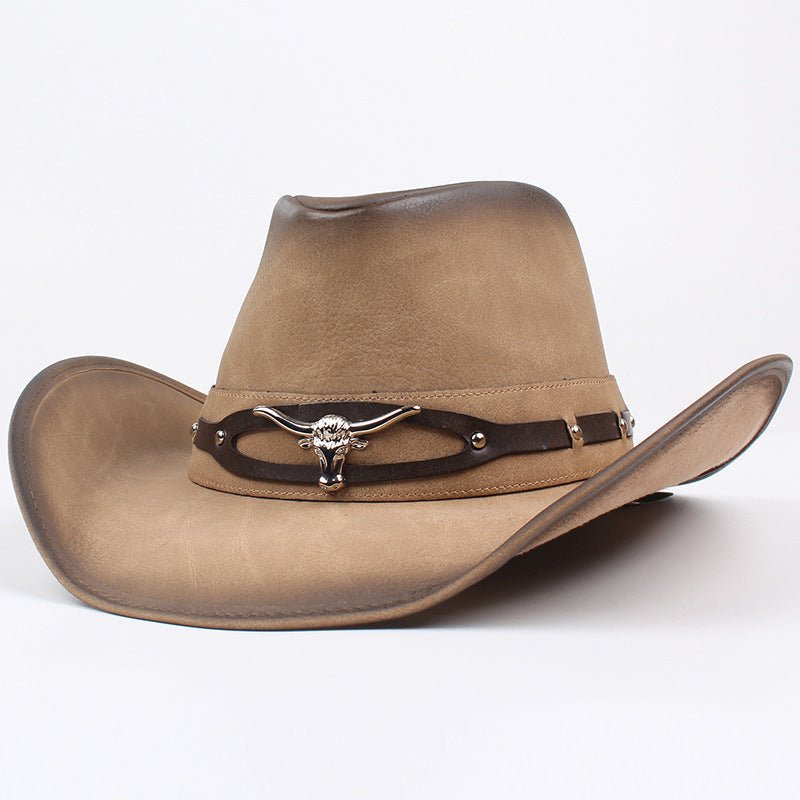
- Men’s Leather Cowboy Hat, Classic Western Style: a leather build that suits wet climates, daily outdoor wear and anyone prioritising durability over a razor-sharp crease.
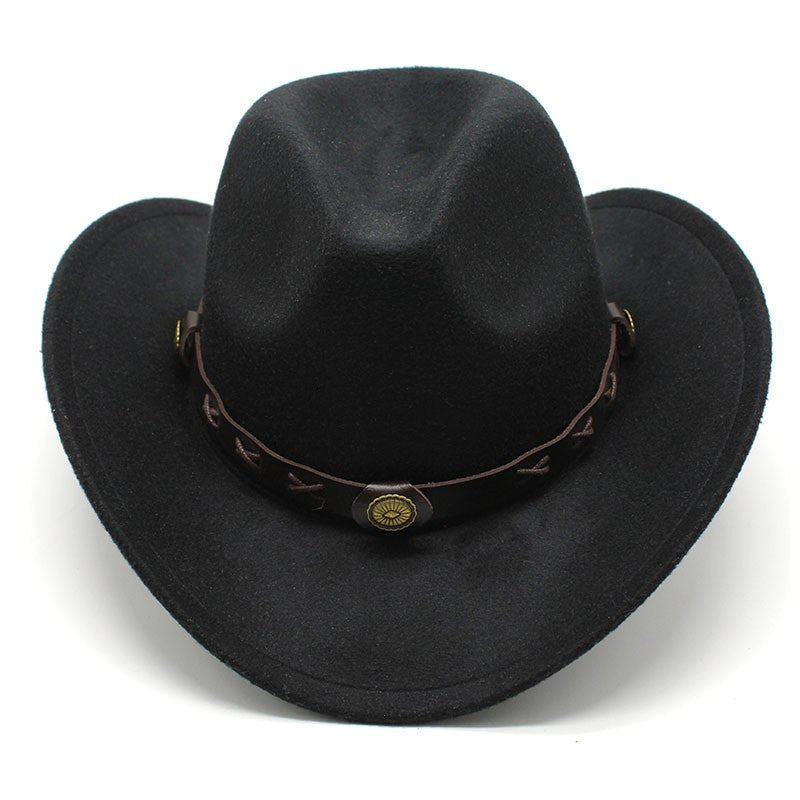
- Premium Western Cowboy Hat, Wool Felt Classic Style: a cattleman-adjacent wool felt shape built for the dressier end of Western wear, where crease sharpness and formality matter.
Before ordering any of the three, run your measurements against the sizing guide rather than guessing from a previous cap size, since crown fit on a cowboy hat behaves differently to a baseball cap.
| Product | Style family | Best for |
|---|---|---|
| Men’s Leather Cowboy Hat, Classic Western Style | Leather cattleman-style | Wet weather, daily outdoor durability |
| Premium Western Cowboy Hat, Wool Felt Classic Style | Wool felt cattleman | Dress occasions, sharper crease retention |
One stylist’s pick, and why
If you asked me to recommend a single hat to someone buying their first, I’d point to a pre-creased cattleman in wool felt every time. It’s the most recognisable Western silhouette, it holds its crease through years of wear, and it works from the paddock to a wedding without looking out of place in either. Urban Caps builds its own range around that same logic: fit and material first, styling second. Get those two right and almost any crease will suit you.
— Urban
Order your cowboy hat online with Urban Caps
Urban Caps is the straightforward alternative to hunting through multiple stores trying to compare felt weights and crease shapes in person. Every product page lists material, brim width and sizing detail up front, so you can match a hat to your face shape and climate without leaving home, backed by fast NZ and AU delivery.
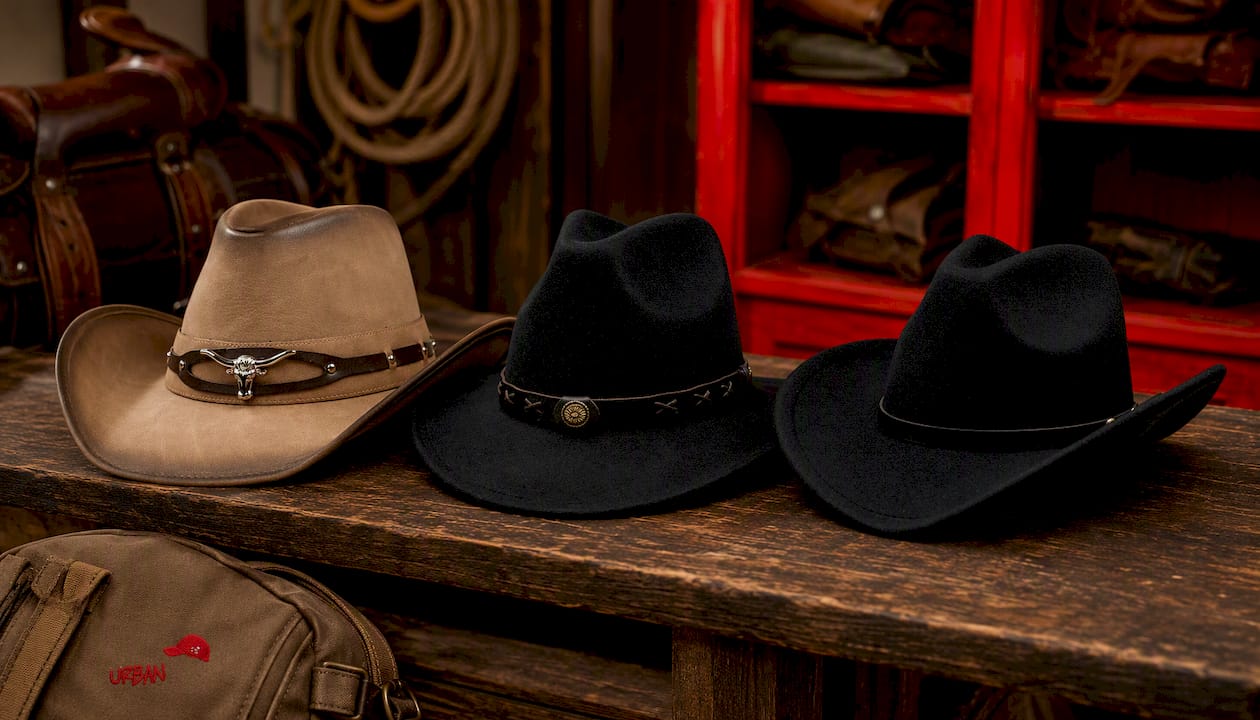
Ready to choose yours? Start with the Men’s Leather Cowboy Hat, Classic Western Style for durability, the Premium Western Cowboy Hat, Wool Felt Classic Style for a dressier cattleman shape, or the Mulholland Wool Cowboy Hat, Classic Western Wide Brim Hat for wide-brim sun coverage. Check the sizing guide before you buy, and if none of the three feels right, browse the full range at Urbancaps.
Sources
- Cowboy Hat Styles: Creases, Crowns, and When to Skip Each | CowboyHatGuide
- Anatomy of a cowboy hat: parts, features & which side is the front?
- Cowboy hat etiquette | Justin Boots
FAQ
What are all the styles of cowboy hats?
The main families are cattleman, pinch or teardrop, gus, brick, open crown, and arena creases like bullrider, cutter and quarter horse, with telescope, gambler, Vegas and derby shapes as less common variants.
What is the cowboy hat rule?
The core rule is to remove your hat in formal indoor settings, tip it as a greeting gesture, and always pick it up by the brim rather than the crown to protect its shape.
What cowboy hat do most cowboys wear?
Cattleman is the most widely worn style, valued for its versatility across work, arena and everyday social settings.
What is the most popular cowboy hat for men?
A pre-creased cattleman in wool felt remains the most popular overall choice, since it balances formality, durability and instant recognisability better than most other shapes.
How do I tell the front of a cowboy hat?
Look for a subtle front dent or centre pinch, a slightly snapped-down front brim, or interior manufacturer marks and hatband stitching, which typically sit toward the back.