

Durable hat materials explained: your 2026 guide
TL;DR:
- Choosing durable hat materials depends on fibre type, construction, and how much care the hat receives. Natural fibers like merino wool offer softness and odour resistance, while synthetics like nylon provide strength and water resistance, especially in outdoor conditions. Internal reinforcements such as buckram backing help maintain shape and extend the hat’s lifespan across frequent use.
A durable hat material is defined by its ability to hold shape, resist wear, and stay comfortable across repeated use and varied conditions. Whether you’re after a wool fedora for weekend markets or a nylon cap for trail running, the fabric choice determines how long your hat lasts and how good it feels on your head. Durable hat materials explained properly means looking beyond just the outer shell. Fibre type, weave density, and internal structural elements like buckram backing all contribute to longevity. This guide covers the most common hat fabrics, how they perform under real conditions, and how to pick the right one for your needs.
What are the most common materials used for durable hats?
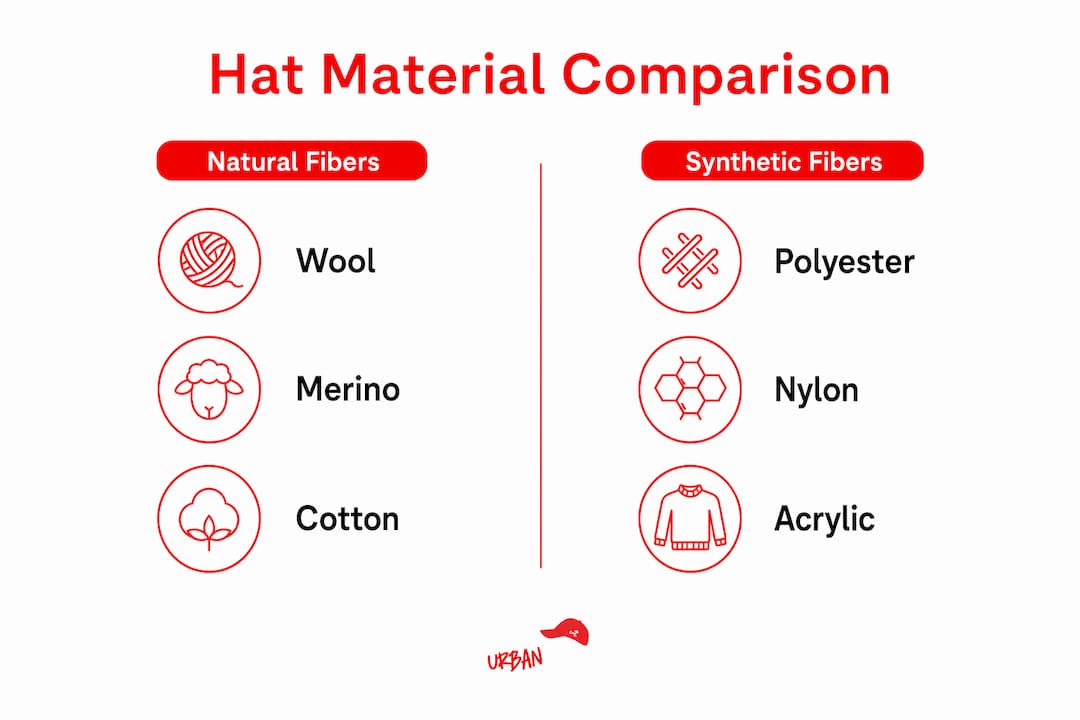
The best materials for hats fall into two broad categories: natural fibres and synthetic fabrics. Each has distinct durability properties, and the right choice depends on your climate, activity level, and how much care you want to put into maintenance.
Natural fibres have been used in hat construction for centuries because they breathe well and age gracefully:
- Cotton is soft, breathable, and widely available. It holds colour well and suits everyday casual wear. The downside is that cotton absorbs moisture slowly and can lose shape when wet repeatedly.
- Wool is dense, warm, and naturally resilient. Standard wool fibres measure 30–40 microns in diameter, making them thicker and stiffer than merino. Felt wool hats sit at 5–7mm thickness, which gives them structure but also adds bulk and weight.
- Merino wool is finer, softer, and more technically capable than standard wool. Merino fibres measure 15–25 microns and produce a denser, more insulating fabric at just 3mm thickness.
- Felt is a processed wool fabric compressed into a firm, non-woven sheet. It holds shape well but can develop odour faster than merino due to fibre density differences.
Synthetic fabrics are engineered for performance and consistency:
- Polyester offers high abrasion resistance, wrinkle resistance, and colour fastness. It dries quickly and holds its shape after many washes, making it a go-to for performance caps in dry conditions.
- Nylon ranks at the top for tear resistance and structural stability after folding and compression. It is lightweight, moisture-wicking, and naturally windproof and water-resistant.
- Blended fabrics combine the best of both worlds. A cotton-polyester blend, for example, gives you the breathability of cotton with the shape retention of polyester.
- Oilskin is a waxed cotton fabric used in heritage-style hats. The wax treatment makes it water-resistant and very tough, though it requires specific maintenance to keep the coating intact.
Understanding these categories is the first step in any hat material comparison. No single fabric wins across every condition.
How do wool and merino wool compare as durable hat fabrics?
Wool is the most widely used natural fibre in durable hat construction, but not all wool performs the same way. The key difference between standard wool and merino wool comes down to fibre diameter, and that single measurement affects comfort, warmth, odour resistance, and lifespan.
Fibre diameter and comfort
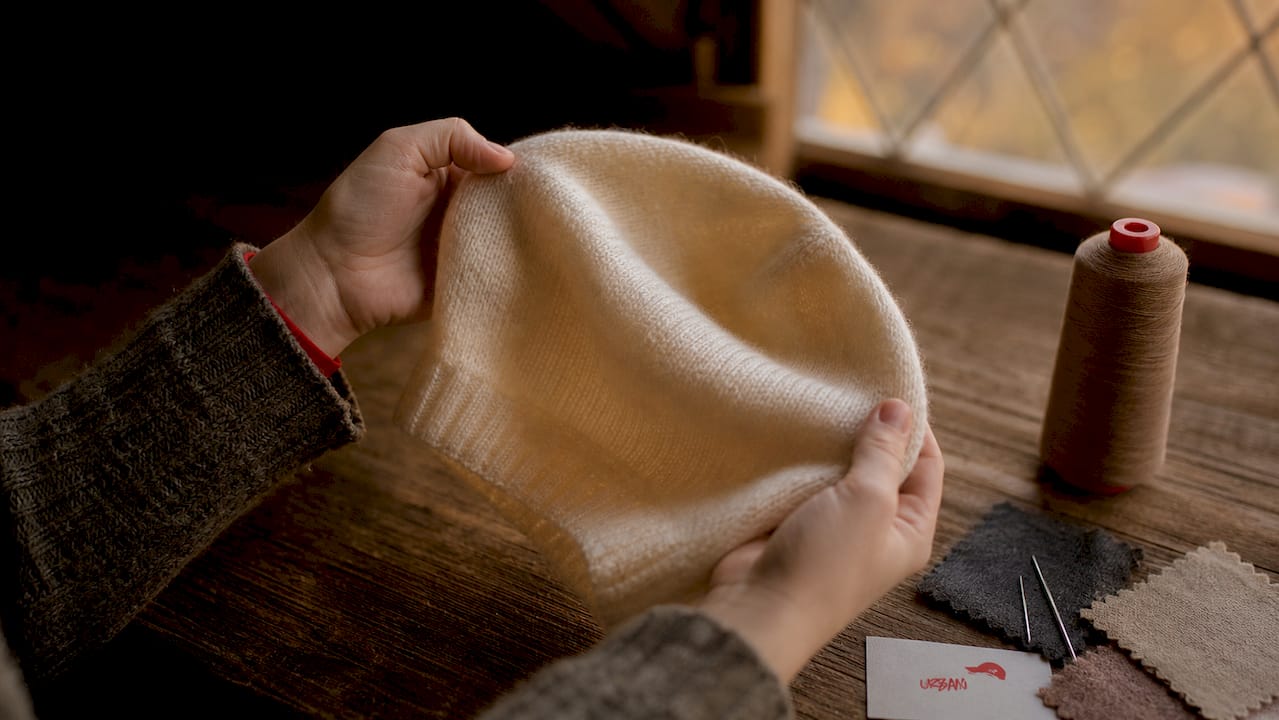
Standard wool fibres measure 30–40 microns in diameter. At that width, fibres are stiff enough to prick the skin, which is why many people find coarse wool hats itchy. Itchiness in wool hats derives mostly from fibre diameter and fabric structure, not from wool itself as a category. Merino wool’s finer fibres, at 15–25 microns, bend against the skin rather than prick it. This makes merino significantly more comfortable for extended wear, especially in hats that sit close to the forehead and ears.
Warmth and moisture management
Merino’s natural crimped fibre structure traps air effectively, balancing warmth and breathability in a way that flat synthetic fibres cannot replicate. A merino hat at 3mm thickness can protect as well as thicker felt at 5–7mm, with less bulk. That matters for outdoor enthusiasts who want warmth without a heavy hat pressing down on their head all day.
Odour resistance and longevity
Merino wool’s natural antibacterial properties resist odour for 10 or more uses between washes. Standard felt wool develops odour faster because its denser fibre structure traps sweat and bacteria more readily. For travellers or anyone who wears their hat daily, merino’s odour resistance is a genuine practical advantage.
| Feature | Standard wool (felt) | Merino wool |
|---|---|---|
| Fibre diameter | 30–40 microns | 15–25 microns |
| Thickness | 5–7mm | ~3mm |
| Comfort | Can feel itchy | Soft against skin |
| Odour resistance | Lower | High (10+ uses) |
| Weight | Heavier | Lighter |
| Cost | Lower | Higher |
Pro Tip: If you find wool hats itchy, try merino before writing off wool entirely. The fibre diameter difference is significant enough that many people who cannot tolerate standard wool wear merino without any irritation.
Proper care extends the lifespan of both wool types considerably. Wool requires gentle hand washing and flat drying to maintain shape and longevity. Machine washing can shrink or felt the fibres irreversibly, which is the most common way a good wool hat gets ruined.
What role do synthetic fabrics play in durable hats?
Synthetic fabrics like polyester and nylon are the backbone of performance hat construction. They were engineered specifically for durability, and they deliver it consistently across conditions that would degrade natural fibres quickly.
Polyester: the workhorse of performance caps
Polyester’s strength comes from its tightly bonded polymer chains, which resist abrasion, wrinkling, and colour fading better than most natural fibres. It dries quickly after rain or sweat, which prevents the damp-fabric degradation that shortens hat lifespan. The trade-off is breathability. Polyester does not absorb moisture the way cotton or wool does, so it can feel warm and clammy in high humidity without ventilation features built into the hat’s construction.
Nylon: the outdoor specialist
Nylon ranks highest in tear resistance and holds its structural shape after repeated folding and compression. That makes it the preferred fabric for packable outdoor hats that get stuffed into a daypack and pulled out again at the trailhead. Nylon is also naturally windproof and water-resistant, which suits New Zealand’s unpredictable weather across spring through autumn. For outdoor enthusiasts, nylon delivers durability without adding meaningful weight.
Key advantages of synthetic fabrics for hat durability:
- Polyester resists abrasion and colour fading across many wash cycles.
- Nylon withstands tearing and compression without losing shape.
- Both fabrics dry faster than cotton or wool after exposure to rain or sweat.
- Synthetic mesh panels improve ventilation without sacrificing structural integrity.
- Advanced nylon with soft mesh and sweatbands enhances ventilation and prevents sweat stains in high humidity climates.
Pro Tip: Check whether a synthetic hat includes a structured sweatband. A quality sweatband absorbs moisture before it reaches the outer fabric, which significantly extends the hat’s lifespan and keeps it looking clean.
One consideration worth noting is environmental impact. Synthetic fabrics shed microplastics during washing, which is an ongoing concern in outdoor communities. Some manufacturers now use GRS-certified recycled polyester (RPET) mesh, which addresses the sustainability concern without reducing breathability or durability. When you’re comparing weather-resistant hat fabrics, looking for recycled synthetics is a reasonable way to balance performance with environmental responsibility.
For a broader look at how durable outdoor materials perform across different gear categories, the durable outdoor materials list from Sitpack offers useful context on fabric performance under stress.
How does internal hat construction affect overall durability?
Most buyers focus entirely on the outer fabric when assessing hat durability. The internal construction is just as important, and it is the part that most often determines whether a hat holds its shape after a year of regular use.
True durability comes from combining fabric choice with structural reinforcements, not from fabric alone. A premium outer shell paired with a weak internal structure will still collapse, warp, or lose its crown shape over time.
The key structural elements that affect hat durability are:
-
Hard buckram backing. Buckram is a stiff, open-weave fabric used to line the front panels of structured caps. Hard buckram backing preserves cap shape even after heavy use and many washes. Without it, the front panels of a cap soften and sag, which is the most visible sign of a hat wearing out.
-
Sweatband quality. A thick, absorbent sweatband protects the outer fabric from sweat saturation. Cheap sweatbands deteriorate quickly and allow moisture to penetrate the hat’s structure, accelerating fabric breakdown.
-
Crown support stitching. The stitching pattern inside the crown determines how well the hat holds its three-dimensional shape under pressure. Tighter, denser stitching resists deformation when the hat is packed, sat on, or worn in rain.
-
Mesh integration. Mesh panels sewn into the back or sides of a hat improve airflow without weakening the overall structure. The key is how the mesh is attached. Reinforced seams at the mesh-to-fabric join prevent tearing at the stress points.
-
Brim construction. A brim with a firm internal wire or stiffener holds its curve under wind and rain. Brims without internal support flatten or curl unevenly after repeated wetting and drying.
Maintenance habits also affect how long internal structures last. Storing a hat on a flat surface or hat stand rather than crushing it in a bag preserves the buckram and crown stitching. For detailed guidance on keeping your hat in top condition, the weatherproof hat maintenance guide from Urbancaps covers the practical steps for different fabric types.
How to choose the best durable hat material for your needs
Choosing hat fabric is a practical decision based on three factors: your climate, your activity level, and how much maintenance you are willing to do. Getting this right means your hat lasts years rather than months.
Assess your climate first. New Zealand and Australian conditions vary dramatically from region to region. Coastal and alpine environments demand weather-resistant hat fabrics like nylon or waxed cotton. Dry inland climates suit polyester or cotton blends. Mild urban environments give you the most flexibility, making merino wool or cotton-polyester blends a strong choice for everyday wear.
Match the material to your activity:
- Trail running and hiking: nylon or polyester with mesh panels for breathability and quick drying.
- Cold weather and winter sports: merino wool for warmth, moisture management, and odour resistance.
- Everyday casual wear: cotton or cotton-polyester blends for comfort and easy care.
- Fashion and formal occasions: felt or merino wool for structure and a refined appearance.
- Travel and packable use: nylon for compression resistance and lightweight performance.
Consider skin sensitivity. If you have sensitive skin or find hats uncomfortable around the forehead, fibre diameter matters more than any other factor. Merino wool at 15–25 microns is the softest natural option. Cotton is the gentlest synthetic-free alternative. Coarse wool and stiff polyester can cause irritation with extended wear.
Factor in care requirements. Wool hats, particularly merino, require hand washing and careful drying. Polyester and nylon hats tolerate machine washing on a gentle cycle. If you wear your hat daily and want low-maintenance care, synthetics or cotton blends are more practical. For wool hat owners, following proper wool care basics is the single most effective way to extend lifespan.
Think about durability versus weight tradeoffs. Heavier fabrics like thick felt offer excellent shape retention but add noticeable weight. Lightweight nylon and thin merino deliver comparable durability at a fraction of the weight. For long days outdoors, that weight difference becomes meaningful by the afternoon.
Key takeaways
Hat durability depends equally on fabric choice and internal construction, with merino wool, nylon, and hard buckram backing delivering the strongest combination of longevity, comfort, and shape retention.
| Point | Details |
|---|---|
| Fibre diameter determines comfort | Merino wool at 15–25 microns is softer and less itchy than standard wool at 30–40 microns. |
| Synthetics lead on weather resistance | Nylon and polyester resist tearing, fading, and moisture better than natural fibres in outdoor conditions. |
| Internal structure is equally important | Hard buckram backing and quality sweatbands preserve hat shape after heavy use and repeated washing. |
| Care habits extend lifespan | Wool requires hand washing and flat drying; machine washing causes irreversible shrinkage and felting. |
| Match material to your activity | Nylon suits outdoor sports; merino suits cold weather; cotton blends suit everyday casual wear. |
What I have learnt from years of watching hats wear out
The most common mistake I see is buyers judging a hat entirely by its outer fabric. They feel the wool, check the weave, and assume that is the whole story. The internal structure is where hats actually fail. A beautiful merino crown sitting on a cheap buckram backing will sag within six months of regular wear. That is not a fabric problem. It is a construction problem.
The second thing I have noticed is that people underestimate how much care habits matter. A merino hat washed correctly will outlast a polyester cap that gets machine washed carelessly every week. The fabric is only as durable as the maintenance routine behind it. I have seen merino hats that are five years old and still look sharp, and I have seen polyester caps that look worn out after a single season.
The merino versus standard wool debate is also more nuanced than most guides suggest. Merino is not automatically better for every situation. If you need a stiff, structured brim that holds its shape in wind, a well-made felt hat with a firm internal wire will outperform a soft merino every time. The right material depends on what you are asking the hat to do.
My honest recommendation is to think about your three most common wearing scenarios before you buy. If two of those three involve outdoor activity, go synthetic or merino. If two of three are social or fashion contexts, felt or structured wool will serve you better. And whatever you buy, learn the correct care method before the first wash. That single habit makes more difference to longevity than any fabric upgrade.
For more on making the right call between premium options, the premium caps and hats guide from Urbancaps is worth a read.
— Urban
Quality hats built to last, from Urbancaps
Understanding hat materials is one thing. Finding a hat that actually applies them well is another.

Urbancaps stocks a range of headwear built with durability and style in mind, from the Outdoor Travel Hat designed for active Kiwi conditions, to the Embroidered Fashion Fedoras Hat for those who want structure and style in equal measure. Each hat is selected for quality construction, not just appearance. Browse the full range at Urbancaps and find headwear that holds up to your lifestyle. Free shipping on all NZ orders. ♡
FAQ
What makes a hat material durable?
Durability in a hat comes from fibre strength, weave density, and internal structural elements like hard buckram backing. Fabric alone is not enough. Construction quality determines how long the hat holds its shape.
Is merino wool or polyester better for outdoor hats?
Merino wool suits cold and mixed conditions with its natural warmth and odour resistance. Polyester and nylon outperform merino in wet, high-activity conditions because they dry faster and resist abrasion more effectively.
How do I care for a wool hat to make it last longer?
Wool hats require gentle hand washing in cool water and flat drying away from direct heat. Machine washing causes irreversible shrinkage and felting, which permanently damages the fibre structure.
What is buckram and why does it matter for hat durability?
Buckram is a stiff internal lining used in structured hat panels. Hard buckram backing preserves the front panel shape after heavy use and repeated washing, making it one of the most important durability factors in a cap.
Which hat fabric is best for New Zealand’s weather?
Nylon is the strongest choice for New Zealand’s variable conditions, offering windproof and water-resistant performance with lightweight packability. Merino wool is the best natural alternative for cooler months and alpine environments.