


12 examples of heritage headwear: styles, origins, NZ guide
The most recognised examples of heritage headwear are the flat cap, newsboy cap, fedora, trilby, homburg, bowler (derby), boater, beret, Akubra/cowboy hat, beanie/tuque, and bucket hat. Heritage headwear means any style with a traceable historic origin, made from traditional materials, and carrying enduring cultural or regional significance.
Here’s the quick-scan list:
- Flat cap
- Newsboy (baker boy) cap
- Fedora
- Trilby
- Homburg
- Bowler (derby)
- Boater
- Beret
- Akubra / cowboy hat
- Beanie / tuque
- Bucket hat
- Deerstalker
Each style below gets its own origin story, defining features, and a note on how it fits into New Zealand life today.
Table of Contents
- What counts as heritage headwear? Origins and defining features
- Why heritage hats are built to last: materials and construction
- Heritage headwear in Aotearoa New Zealand: cultural context
- How to get the fit right and keep your hat in good shape
- Where to find heritage headwear in New Zealand
- Key takeaways
- The case for wearing heritage headwear with intention
- Heritage headwear from Urbancaps, delivered across NZ
- Useful sources for further reading and NZ museum collections
- FAQ
What counts as heritage headwear? Origins and defining features
Heritage headwear is not just old. A style earns the label when it has a traceable geographic origin, traditional construction materials, and a living cultural or functional role. The flat cap still appears on racecourses and city streets. The Akubra still shades farmers from Otago to Queensland. The beret still signals artistic identity from Paris to Wellington. That continuity is what separates heritage from costume.

The table below maps each style to its origin region, approximate era, and signature materials for quick comparison.
| Style | Origin region | Era | Signature materials |
|---|---|---|---|
| Flat cap | Northern England / Ireland | 16th century | Tweed, wool |
| Newsboy cap | Britain / North America | Late 19th century | Tweed, wool, cotton |
| Fedora | Central Europe / USA | Late 19th century | Wool felt, rabbit felt |
| Trilby | Britain | Late 19th century | Wool felt, straw |
| Homburg | Germany / Britain | Mid 19th century | Wool felt |
| Bowler (derby) | Britain | 1849 | Wool felt |
| Boater | Britain / France | Mid 19th century | Straw (sennit) |
| Beret | Basque Country | Medieval era | Wool felt |
| Akubra / cowboy hat | Australia / USA | Late 19th century | Rabbit-fur felt |
| Beanie / tuque | North America / Europe | 19th century | Wool, acrylic |
| Bucket hat | Ireland / USA | Early 20th century | Cotton, wool, denim |
| Deerstalker | Scotland | Mid 19th century | Tweed |
Flat cap
The flat cap originated in 16th-century Northern England and Ireland, where it became a working-class staple through the 19th and early 20th centuries. Its defining features are a low, rounded crown, a short stiff peak, and a seamed construction that keeps the profile close to the head. Tweed and wool are the classic materials. An Elizabethan act of 1571 actually required woollen caps on certain days, which tells you how embedded this style was in everyday life. Today the flat cap reads as smart-casual and suits everything from country walks to city pubs.
Newsboy (baker boy) cap
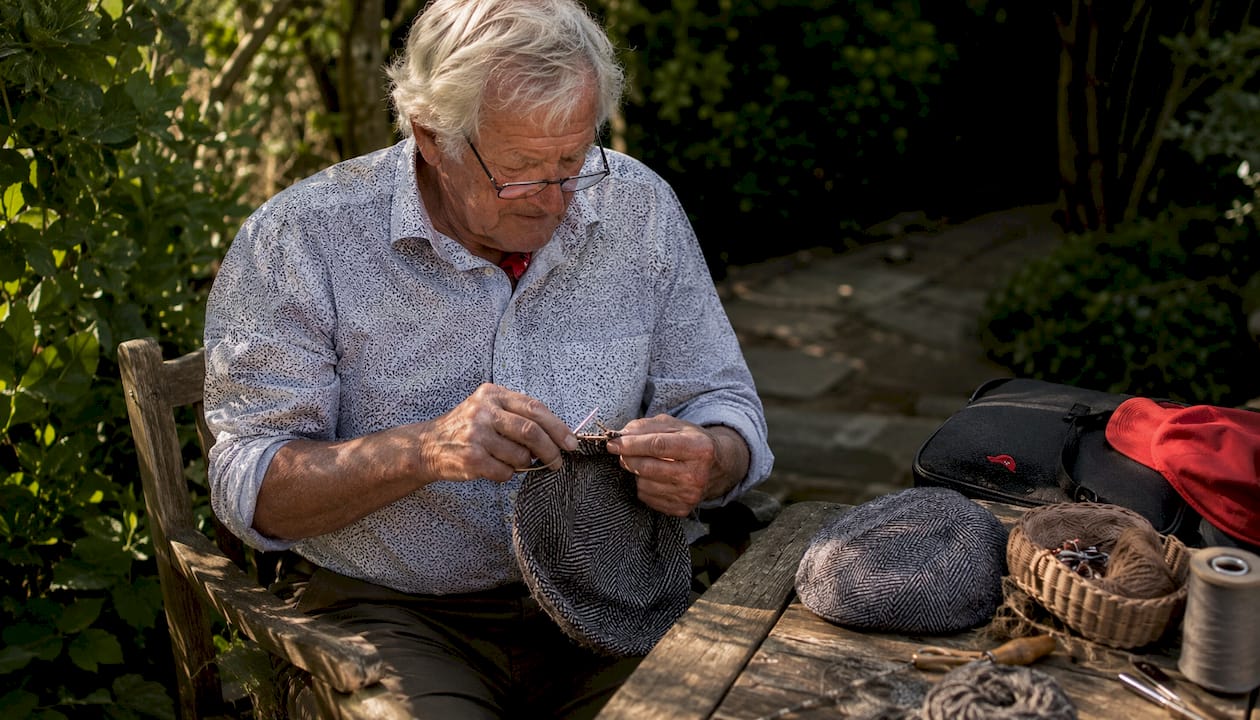
The newsboy cap shares the flat cap’s peak but has a fuller, rounder, eight-panel body with a button at the top. It was common among working boys and tradespeople in the late 19th and early 20th centuries. The panelled crown is the key visual difference: where a flat cap sits low and sleek, a newsboy cap puffs out and gives a fuller, more vintage silhouette. That distinction matters when you’re pairing it with an outfit. Tweed and wool remain the go-to materials.
Fedora
The fedora emerged in the late 19th century, popularised in Central Europe and then the United States. Its signature is a wide, soft brim and a lengthwise crease down the crown, with pinched sides. Fedoras have wider, softer brims than trilbies, and the brim is typically worn level or snapped down at the front. Wool felt and rabbit felt are the traditional materials. The fedora suits both formal and smart-casual occasions.
Trilby
The trilby diverged from the fedora in the late 19th century and is distinguished by a narrower, stiffer brim that turns up sharply at the back and down at the front. It sits further back on the head than a fedora, which gives it a more relaxed, slightly rakish look. Wool felt is standard; straw versions appear in summer. The narrower brim means less sun protection, so in New Zealand’s UV conditions, the fedora is the more practical choice of the two.
Homburg
The homburg originated in Bad Homburg, Germany, in the mid-19th century and was popularised in Britain by King Edward VII. Its crown has a single lengthwise crease and a stiff, curled brim, making it more formal than a fedora. Wool felt is the traditional material. The Detroit Historical Society notes the homburg as part of the 20th-century shift from rigid top hats toward slightly more casual formal wear. It remains the hat of choice for formal occasions and dress events.
Bowler (derby)
The bowler was designed in 1849 by London hatters Thomas and William Bowler for a British landowner who needed a low-profile hat that wouldn’t be knocked off by branches on horseback. Its rounded, hard felt crown and narrow curled brim made it practical and distinctive. By the late 19th century it had crossed class lines, worn by both working men and city professionals. Wool felt is the standard construction. Today it appears mostly at formal events and in period costume, though it retains strong cultural recognition.
Boater
The boater is a flat-brimmed, flat-topped straw hat with a grosgrain ribbon band. It emerged in mid-19th-century Britain and France, worn by seamen and later adopted by schools as part of summer uniform. Sennit straw is the traditional material, prized for ventilation. Now mostly seen at summer regattas, garden parties, and formal outdoor events, the boater is one of the few heritage styles where the material is inseparable from the identity.
Beret
The beret traces back to the Basque Country in the medieval era, where it was a practical woollen cap for shepherds and farmers. Wool felt is the defining material. It spread through France, became a symbol of artistic and military identity, and remains one of the most globally recognised heritage styles. The beret sits flat on the head and can be pulled to one side for a more stylised look. In New Zealand it appears in both fashion and school uniform contexts.
Akubra / cowboy hat
The Akubra is an Australian hat manufacturer whose wide-brimmed, rabbit-fur felt hats became a defining part of rural Australasian culture. Akubra supplied slouch hats to the Australian army in WWI, and the name is now used generically for similar wide-brim bush hats across the region. In New Zealand, the wide-brim bush hat is a genuine working tool: broad brims provide shade in high-UV conditions, and rabbit-fur felt sheds light rain. The cowboy hat (Stetson) shares the same wide-brim silhouette but has a higher, more sculpted crown.
Beanie / tuque
The beanie is a brimless knitted cap worn for warmth. In New Zealand, Australia, and the UK, “beanie” refers specifically to the knitted winter cap (known as a tuque in Canada). Wool and acrylic are the standard materials. The style has 19th-century roots in working-class and military wear and remains one of the most practical and widely worn heritage styles in New Zealand’s cooler southern regions and alpine areas.
Bucket hat
The bucket hat originated in early 20th-century Ireland as a practical rain hat for farmers and fishermen, made from wool or tweed. Cotton versions became standard in the mid-20th century, adopted by the US military and later by surfers and outdoor workers. In New Zealand, the bucket hat is a sun-smart staple, particularly for outdoor activities, and has seen strong fashion revivals since the 1990s.
Deerstalker
The deerstalker is a close-fitting tweed cap with brims front and back and ear flaps that tie over the crown or under the chin. It was designed for hunting in the Scottish Highlands in the mid-19th century. Most people associate it with Sherlock Holmes, though the character rarely wore one in the original stories. Tweed is the defining material. The deerstalker suits cold, wet conditions and remains a practical choice for NZ tramping and hunting in alpine terrain.
Why heritage hats are built to last: materials and construction
The longevity of traditional headwear styles comes down to materials chosen for real conditions, not fashion trends. Each fabric has a specific job.
| Material | Typical styles | Practical benefit |
|---|---|---|
| Tweed | Flat cap, newsboy, deerstalker | Warmth, durability, wind resistance |
| Wool felt | Fedora, homburg, bowler, beret | Shape retention, light water resistance |
| Rabbit-fur felt | Akubra, cowboy hat | Durability, water resistance, warmth |
| Straw (sennit) | Boater, Panama | Ventilation, lightweight, packable |
| Cotton | Bucket hat, newsboy | Breathability, easy care, lightweight |
| Leather | Cowboy hat brims, cap peaks | Stiffness, water resistance, longevity |
Construction details matter as much as material. The number of panels in a cap affects how the crown sits and how much it puffs. A stiffened brim holds its angle in wind; a soft brim can be shaped by the wearer. Brim shaping and brim treatment are functional as well as aesthetic: how a brim is snapped or turned affects shade, wind protection, and the hat’s overall silhouette. Internal sweatbands and lining materials also change long-term comfort, particularly in warmer months.
Styles that adapted to casual dress codes survived the 20th century; those that didn’t largely disappeared. The Detroit Historical Society documents how the top hat’s dominance in the 1800s gave way to homburgs, fedoras, and flat caps as dress codes relaxed. The flat cap outlived the bowler precisely because it worked in both formal and casual settings.
Key construction points to check when buying:
- Panel count: more panels mean a rounder, fuller crown (newsboy); fewer panels give a flatter, sleeker profile (flat cap)
- Brim stiffness: stiffened brims hold shape; soft brims can be customised
- Sweatband material: leather sweatbands are durable; cotton is more comfortable in warm weather
- Lining: a lined crown adds warmth and structure; unlined caps are lighter and more breathable
Pro Tip: For New Zealand’s climate, broader brims and wool felt work best for alpine and high-UV conditions, while tweed and tightly woven wool are better suited to damp, cool coastal weather. If you’re buying for outdoor use, check the sun protection benefits of wider-brim styles before you commit to a narrower trilby or flat cap.
Heritage headwear in Aotearoa New Zealand: cultural context
Certain heritage styles took root in New Zealand through practical necessity and settler culture. The wide-brim bush hat, including the Akubra and its local equivalents, became embedded in rural NZ life through farming, musterin, and outdoor work. Broad brims provided shade in New Zealand’s high-UV environment, and rabbit-fur felt shed the light rain common in hill country. The Akubra’s association with the Australian and New Zealand military, particularly through WWI slouch hats, also gave it a place in national imagery that goes beyond fashion.
Urban New Zealand adopted the flat cap and fedora through European settler influence, and both styles appear in early 20th-century New Zealand photography. Today, heritage-style hats are part of the NZ fashion conversation, with local designers and retailers drawing on British and Australian traditions while adapting them for Kiwi conditions. The heritage hats and modern NZ appeal of these styles reflects both their practical roots and their ongoing cultural currency.
Māori tāngata (people) have their own distinct traditions of head adornment that are entirely separate from European heritage hat styles. Tāhuhu (feather adornments), kākahu (cloaks), and other forms of Māori head covering carry deep whakapapa (genealogical), spiritual, and ceremonial significance. These are not “heritage hats” in the European sense and should never be treated as fashion items or worn without cultural permission. If you are interested in Māori head adornment, Te Papa Tongarewa (Museum of New Zealand) in Wellington holds significant taonga (treasures) and provides authoritative cultural context. Approach with respect and seek guidance from tangata whenua (people of the land) directly.
New Zealand museums are also useful resources for visual reference on settler-era headwear. Te Papa Tongarewa holds collections of 19th and early 20th-century clothing and accessories, including hats from the colonial period. Regional museums in Canterbury, Otago, and Hawke’s Bay often hold locally significant examples of rural and formal headwear from the same era.
How to get the fit right and keep your hat in good shape
A heritage hat that fits well looks intentional. One that doesn’t fit looks borrowed.
Fit checklist:
- The hat should sit level on your head, roughly one to two finger-widths above your eyebrows
- The crown should not touch the top of your head; a small gap means the hat is sitting on the sweatband correctly
- The hat should feel snug but not tight; you should be able to shake your head without it moving
- For flat caps and newsboys, the peak should point straight forward, not angled up or down
- For fedoras and homburgs, the brim should sit level or with a slight downward tilt at the front
Styling notes by occasion:
- Formal: homburg, bowler, or fedora with a suit or dress coat
- Smart-casual: flat cap or newsboy with chinos, a wool coat, or a casual blazer
- Outdoor / rural: wide-brim bush hat or Akubra for sun and light rain; deerstalker for cold, wet alpine conditions
- Fashion / street: beret, bucket hat, or flat cap with contemporary casual wear
Care checklist:
- Brush felt hats with a soft-bristle hat brush after each wear to remove dust and lint
- Store felt and wool hats upside down on their crown or on a hat stand to preserve the brim shape
- For straw hats, keep away from moisture and store flat or on a stand; never crush or fold
- Spot-clean with a damp cloth; avoid submerging felt or wool hats in water
- For blocked reshaping, use steam from a kettle held at a distance; never apply direct dry heat
Pro Tip: Caught in unexpected rain? Shake off excess water and let a wool or felt hat dry naturally at room temperature, away from direct heat sources. Stuffing the crown lightly with tissue paper while it dries helps it hold its shape. For valuable hats that need reshaping, blocking and reshaping require a humid environment and a hat block or steamer; seek a professional rather than risk shrinking the felt with home dry heat.
Where to find heritage headwear in New Zealand
New Zealand has a small but genuine market for heritage-style hats. Knowing where to look saves time and gets you a better result.
Types of sellers worth checking:
- Specialist online retailers stocked in NZ: the most consistent source for new heritage-style hats with guaranteed sizing, return policies, and local shipping. Urbancaps stocks a range of heritage-inspired flat caps, ivy caps, fedoras, and homburgs with fast NZ delivery.
- Local hatters: a small number of specialist hatters operate in Auckland, Wellington, and Christchurch. They can custom-block, resize, and repair heritage hats, which is particularly useful for vintage finds.
- Vintage and op shops: a reliable source for genuine period pieces, particularly bowlers, fedoras, and flat caps from the mid-20th century. Condition varies; check the sweatband, lining, and brim for damage before buying.
- Vintage fairs and markets: regular events in Auckland and Wellington attract dealers with curated vintage headwear. These are good for visual comparison and finding unusual styles.
- Museum shops: Te Papa and regional museum shops occasionally stock reproduction or heritage-inspired pieces. More useful as research and visual reference than as primary purchase channels.
Sourcing checklist for buyers:
- Ask about the material (tweed, wool felt, rabbit felt, straw) and confirm it matches the style’s traditional construction
- Check the lining and sweatband composition, particularly for vintage pieces where these may have deteriorated
- Confirm sizing: heritage hat sizing often uses centimetre head circumference rather than S/M/L
- Ask about the return or exchange policy, especially when buying online without trying the hat first
Vintage vs new: genuine vintage hats carry authentic patina and period construction, but sizing can be inconsistent and condition unpredictable. New heritage-style hats offer guaranteed fit, consistent materials, and care instructions. For everyday wear, new is usually the more practical choice. For collecting or special occasions, a well-preserved vintage piece has character that a new hat can’t replicate. When styling heritage caps for everyday looks, the fit and pairing advice from Urbancaps is a practical starting point.
Key takeaways
Heritage headwear styles earn their staying power through traditional materials, traceable origins, and genuine cultural roles — and in New Zealand, the wide-brim bush hat and flat cap remain the most practically relevant examples.
| Point | Details |
|---|---|
| Core heritage styles | Flat cap, newsboy, fedora, trilby, homburg, bowler, boater, beret, Akubra, beanie, bucket hat, deerstalker. |
| Material signals authenticity | Tweed, wool felt, rabbit-fur felt, and straw are the traditional markers; check these when buying. |
| NZ climate guidance | Broader brims and wool felt suit alpine and high-UV conditions; tweed works best in cool, damp coastal weather. |
| Māori adornment is distinct | Māori head adornment carries separate cultural and spiritual significance; never conflate it with European heritage hat styles. |
| Urbancaps for NZ shoppers | Urbancaps stocks heritage-style flat caps, ivy caps, fedoras, and homburgs with fast NZ delivery and a clear return policy. |
The case for wearing heritage headwear with intention
There’s a tendency to treat heritage hats as costume. Put on a flat cap and suddenly you’re doing an impression of something, rather than wearing a hat that has genuinely earned its place in the wardrobe. That framing undersells what these styles actually offer.
The flat cap’s continuing role in contemporary fashion isn’t nostalgia. It’s the result of a design that works: low profile, adaptable to both formal and casual contexts, and made from materials that improve with wear. The same logic applies to the fedora, the homburg, and the wide-brim bush hat. These styles survived because they solved real problems, not because they looked good in a period drama.
What gets lost in the heritage conversation is the NZ-specific angle. The wide-brim bush hat isn’t a fashion import here; it’s a working tool with a genuine local history. The flat cap arrived with British settlers and stayed because it suited the climate and the culture. Wearing these styles with awareness of that history, rather than as a trend, is what makes the difference between a hat that looks right and one that looks like a prop.
The minimal-branding approach that works for contemporary caps applies equally to heritage styles: the material and the silhouette carry the statement. You don’t need a logo when the hat itself has a 200-year story.
Heritage headwear from Urbancaps, delivered across NZ
Urbancaps stocks a focused range of heritage-inspired headwear built for Kiwi conditions. The Heritage Herringbone Ivy Cap is a winter-weight flat cap in classic herringbone tweed, adjustable for fit and suited to both city and country wear. The Churchill Heritage Homburg Hat is made from 100% Australian wool felt, with the structured crown and curled brim that define the homburg silhouette. For a British country flat cap with adjustable sizing, the Heritage Herringbone Ivy Cap in British style is a practical everyday option.
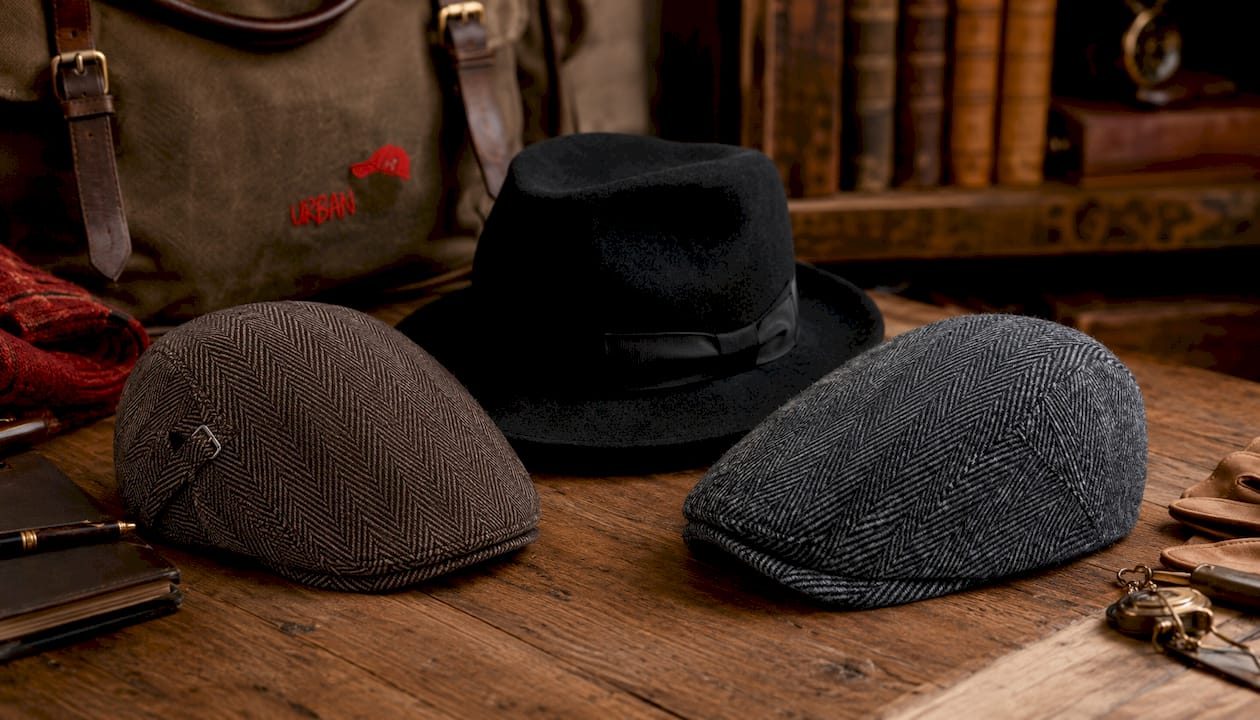
All orders ship free within New Zealand. Browse the full heritage collection at urbancaps.co.nz and find the style that suits your wardrobe and your conditions.
Useful sources for further reading and NZ museum collections
For deeper research on heritage headwear styles, origins, and New Zealand cultural context, these are worth bookmarking:
- List of hat styles — Wikipedia: a comprehensive reference catalogue covering styles from every era and region, with brief descriptions and cultural notes.
- Know Your Hats: A Quick History of Men’s Hats 1790 to Present — Detroit Historical Society: a well-sourced timeline of men’s hat evolution, useful for understanding how formal styles gave way to casual ones.
- Flat cap — Wikipedia: detailed origin history including the 1571 Elizabethan act and construction notes.
- Akubra — Wikipedia: covers the brand’s history, WWI connection, and the wide-brim tradition in Australasia.
- Te Papa Tongarewa — Museum of New Zealand: holds significant taonga related to Māori head adornment and colonial-era clothing collections; the primary NZ museum resource for visual reference and cultural context.
- Benefits of Australian heritage hats — Urbancaps blog: NZ-focused notes on materials, sun protection, and heritage hat styles suited to local conditions.
- How to style heritage caps — Urbancaps blog: practical outfit pairings and fit advice for everyday NZ wear.
FAQ
What are the most common examples of heritage headwear?
The most recognised heritage headwear styles are the flat cap, newsboy cap, fedora, trilby, homburg, bowler (derby), boater, beret, Akubra/cowboy hat, beanie, and bucket hat. Each has a traceable geographic origin and traditional construction materials.
What is the traditional hat in Australia and New Zealand?
The Akubra is the most recognised traditional bush hat in Australia and rural New Zealand. It features a wide brim and rabbit-fur felt construction, and Akubra supplied slouch hats to the Australian army in WWI, cementing its place in Australasian cultural identity.
What are the different types of heritage headwear materials?
The main traditional materials are tweed and wool (flat cap, newsboy, deerstalker), wool felt and rabbit-fur felt (fedora, homburg, bowler, Akubra), straw (boater, Panama), and cotton (bucket hat). Material choice determines warmth, water resistance, and packability.
How do you tell a flat cap apart from a newsboy cap?
A flat cap has a low, sleek profile with a single-piece or lightly panelled crown; a newsboy cap has a fuller, rounder eight-panel body with a button at the top. The newsboy sits higher and puffier on the head, giving a more vintage silhouette.
Where can you buy heritage headwear in New Zealand?
Specialist online retailers like Urbancaps stock heritage-style flat caps, ivy caps, fedoras, and homburgs with free NZ shipping. Local hatters in Auckland, Wellington, and Christchurch can also resize and repair heritage hats, and vintage fairs are worth checking for genuine period pieces.