

Fashion hat checklist: 10 essentials for stylish outfit planning
TL;DR:
- A comprehensive hat checklist emphasizes measuring head size, choosing versatile shapes, and matching materials to seasons. Trend predictions for 2026 favor structured, smaller silhouettes like pillbox hats and baker boy caps, with craftsmanship valued highly. UrbanCaps offers local NZ stock for easy fitting and hassle-free returns, supporting stylish, well-fitting headwear choices.
A compact fashion hat checklist gives you the pieces and decisions you need to build a stylish, wearable hat wardrobe. Here is the 10-point version you can use right now.
Your 10-point fashion hat checklist:
- Own 3–4 versatile shapes (fedora, beret, bucket, baker boy as a solid starting four)
- Measure your head before buying: wrap a tape measure 1 cm above your ears at mid-forehead; most adult heads fall between 54–62 cm
- Match material to season: straw or raffia for summer, wool or felt for cooler months, cotton blends for travel
- Check the fit with the one-finger rule: one finger should fit between the band and your head
- Choose a hat shape that balances your face proportions, not just one you like on the shelf
- Follow basic care rules for each material to protect shape and finish
- Pack hats crown-down or in a hat box; stuff the crown to hold shape in transit
- Ask about returns, NZ shipping, and sizing variance before you buy online
- Add one on-trend piece each season without overhauling your whole collection
- Buy from a local NZ retailer so you can return or exchange easily if the fit is off
“Hats serve as anchors of the silhouette. The value is in craftsmanship and pieces that last a lifetime.” — Coco Schiffer, as cited in the 2026 headwear report
The 2026 direction is clear: structured, smaller silhouettes are leading the trend cycle, and a well-chosen hat can anchor an entire outfit. The sections below expand every checklist point with practical steps, a sizing table, face-shape guidance, care tips, and buying questions.
Table of Contents
- Hat styles at a glance: what they look like and when to wear them
- How to measure and check hat fit before you buy
- Which hat shapes flatter your face and body proportions?
- Which materials suit which seasons, and how do you care for them?
- How to wear a hat stylishly: placement, pairing, and etiquette
- What is trending in hats for 2026?
- How to pack and store hats without losing their shape
- Before you buy: questions to ask online or in-store
- How Urbancaps helps NZ shoppers find the right hat
- Hat maintenance beyond basic care: cleaning specific fabrics and removing stains
- How to adjust or customise hats for a perfect fit
- Key takeaways
- A stylist’s note on choosing hats
- Urbancaps: a local starting point for NZ hat shoppers
- FAQ
Hat styles at a glance: what they look like and when to wear them
A quick visual catalogue helps you match styles to occasions before you shop. Here are the core shapes worth knowing.
Fedora. A pinched crown with a medium-to-wide brim, usually in felt or wool. Pairs with tailoring, trench coats, and smart-casual outfits. One of the most versatile shapes in a hat wardrobe.

Trilby. Shorter brim than a fedora, turned up at the back. Sits closer to the head and reads more casual. Works well with jeans, a blazer, or a relaxed summer dress.
Baker boy / newsboy cap. A panelled, rounded cap with a small stiff brim. Structured enough for smart-casual, relaxed enough for weekend wear. Pairs naturally with wide-leg trousers or a midi skirt.
Checked beret. A flat, round cap that sits to one side of the head. The Checked Beret – Breathable & UV-Resistant Fashion Hat from Urbancaps is a good example: breathable fabric, UV resistance, and a pattern that works across casual and smart-casual outfits. Berets suit oval, square, and oblong face shapes particularly well.
Bucket hat. A soft, downward-sloping brim all the way around. Canvas or cotton versions are casual and packable; structured raffia or woven versions read more polished. A summer staple that also works for travel.
Beanie. A close-fitting knit cap. Worn slouched or fitted, it suits almost every face shape. Pairs with everything from puffer jackets to oversized coats.
Baseball cap / dad hat. A curved brim with a structured or unstructured crown. The most casual shape in the catalogue. Works for sport, errands, and streetwear.
Wide-brim sun hat. A broad brim (typically 10 cm or wider) in straw, raffia, or felt. Primarily a summer and beach hat, though felt versions cross into autumn. UV protection is a key functional benefit here, and a fedora-style sunhat with band detail is a good example of a style that combines sun protection with a polished silhouette.
Top hat / bowler hat. Heritage shapes with a strong formal or theatrical association. The Top Hat Bowler Hat in the Urbancaps catalogue is a clear example: a structured crown and narrow brim that reads as costume-adjacent for everyday wear but is ideal for formal events, costume, or editorial styling.
Fisherman hat / structured cap. A flat-crowned, short-brimmed cap with a structured silhouette. The Fashion Personality Black And White Checkerboard Plaid Fisherman Hat Fedoras Hat is a wearable example: a bold check pattern with enough structure to anchor a casual or street-style outfit.
How to measure and check hat fit before you buy
Measuring your head correctly takes about 30 seconds and saves you a return. Wrap a flexible tape measure around your head, approximately 1 cm above your ears at mid-forehead. That number, in centimetres, is your hat size. Most adult heads fall between 54–62 cm.
Hat size reference table:
| Size label | Centimetres | US size |
|---|---|---|
| XS | 54 cm | 6¾ |
| S | — | 7 |
| M | — | 7¼ |
| L | — | 7½ |
| XL | 62 cm+ | 7¾ |
Beyond the tape measure, three fit checks matter:
- The one-finger rule. Slide one finger between the sweatband and your head. Snug but not tight is correct. If you can fit two fingers, the hat is too large; if you cannot fit one, it is too small.
- The shake test. Put the hat on and shake your head side to side. A well-fitted hat stays in place without gripping your forehead.
- Crown depth check. The crown should sit above your ears, not rest on them. If the hat sinks past your ears, the crown is too shallow for your head shape.
Crown height and brim width also change how a hat reads on your face. A taller crown adds vertical length; a wider brim adds horizontal width. Both affect perceived face proportions, which is why fit is about more than just circumference. For more detailed sizing guidance, Urbancaps has a hat fit and selection guide worth bookmarking before you shop.
Which hat shapes flatter your face and body proportions?
The direct rule: pick a hat that adds what your face lacks. A round face benefits from height; a long face benefits from width. Here is how that plays out by face shape.
Oval face. The most flexible shape. Almost any hat style works. Fedoras, baker boy caps, and wide-brim hats all suit an oval face without adjustment.
Round face. Go for height and a narrower brim. Fedoras with a pinched crown, trilbies, and structured baker boy caps all elongate the face. Avoid wide, flat brims that emphasise width.
Square face. Soften the jawline with curved crowns and medium brims. Bucket hats, floppy wide-brim hats, and berets work well. Hard, angular crowns can over-emphasise a strong jaw.
Oblong / long face. Add width with a wider brim and a lower crown. Floppy sun hats, wide-brim fedoras, and bucket hats balance a longer face. Tall crowns make a long face look longer.
Heart / triangle face. Balance a wider forehead with a hat that has a medium-to-wide brim and a low crown. Cloche hats, bucket hats, and wide-brim styles all work. Avoid very narrow brims that draw attention upward.
Body proportion matters too. If you are petite, a very wide brim can overwhelm your frame; a medium brim (6–8 cm) tends to sit better. Taller wearers can carry a wider brim and a taller crown without the hat looking oversized. The general principle is that the hat’s scale should feel proportional to your shoulders, not just your face.
Which materials suit which seasons, and how do you care for them?
Choose material for the season and the hat’s intended function. Raffia and straw dominate summer for breathability; wool and felt suit cooler months; cotton blends travel well; leather adds structure and handles light rain.
Summer: straw, raffia, cotton. Straw and raffia are breathable and lightweight. Spot-clean with a damp cloth; never submerge in water. Store flat or on a hat stand to keep the brim from warping. For UV-heavy days, look for hats with a UPF rating or a tightly woven crown.
Autumn/winter: wool, felt, leather. Wool and felt hold their shape well in cool weather. Brush felt with a soft-bristle brush in a counter-clockwise direction to remove dust. Keep away from direct heat, which causes shrinkage. Leather hats handle light rain but need occasional conditioning to prevent cracking.
Travel and year-round: cotton blends, technical fabrics. Cotton blends pack flat and wash easily. Technical fabrics (nylon, polyester) are increasingly common in structured caps and offer moisture-wicking properties for active wear.
Weather protection. For rain, a water-resistant spray on felt or wool adds a layer of protection without damaging the fibres. For sun, a wide brim (10 cm or more) provides meaningful shade, and a hat with a UPF-rated lining offers measurable protection. Urbancaps stocks the Checked Beret – Breathable & UV-Resistant Fashion Hat as a year-round option that covers both breathability and UV resistance.
Pro Tip: Avoid leaving any hat on a car dashboard or in direct sunlight for extended periods. Heat warps brims and fades colour faster than almost anything else.
Craftsmanship in the construction, including reinforced sweatbands and quality stitching, directly affects how long a hat holds its shape. The role of craftsmanship in headwear is worth understanding before you invest in a piece you plan to wear for years.
How to wear a hat stylishly: placement, pairing, and etiquette
A hat should anchor an outfit, not compete with it. Choose one focal point. If the hat is bold, keep the rest of the outfit subdued. If the hat is neutral, you have more room to play with colour and texture elsewhere.
Placement and tilt:
- Fedoras and trilbies sit best slightly forward and tilted a few degrees to one side. Dead centre reads flat.
- Beanies can be worn close-fitted or with a slight slouch at the back; avoid pulling them too far down over the ears in a fashion context.
- Baker boy caps sit flat on top of the head, not pushed back. Pushing them back loses the structured silhouette.
- Wide-brim hats sit level. Tilting a wide brim too far forward blocks your face; too far back and you lose the sun protection.
Coordinating with hair and sunglasses:
- Long hair worn down softens a structured hat. A low bun or tucked-under style keeps the hat’s silhouette clean.
- Sunglasses and hats work together when the shapes contrast: a round sunglass frame with an angular hat, or a cat-eye frame with a round bucket hat.
Hat rules for ladies at formal events:
Traditionally, women wear hats throughout a formal event (weddings, races) rather than removing them indoors. Mini hats and fascinators sit forward on the head, secured with a comb or clip, and are positioned above the right eye as a general rule. That said, most of these conventions are now treated as guidelines rather than rules. The practical version: wear what suits the occasion and your outfit, and position the hat so it does not obstruct the view of people seated behind you.
Pro Tip: At a formal event, match the hat’s formality to the outfit. A structured pillbox or tailored fedora reads as intentional; a casual bucket hat at a wedding reads as underdressed regardless of how good it looks.
For more on mixing vintage and contemporary styles, the Urbancaps guide on wearing vintage hats covers the balance well.
What is trending in hats for 2026?
The 2026 trend is clear and specific: structured, smaller silhouettes are leading. Pillbox hats, tailored fedoras, baker boy caps, and Art Deco skull caps are the key shapes. The direction is quiet elegance rather than oversized novelty.
“The hat is back, and it is back with intention. Smaller, structured, and crafted with care — the 2026 moment is about wearing a hat that means something, not just covering your head.” — Glamour UK
Part of what is driving this is cultural. Industry commentary links the resurgence of intentional hat-wearing to a broader desire for considered dressing and self-expression. Hats are being treated as silhouette anchors, not afterthoughts. One well-made piece can define multiple outfits across a season.
Which trend pieces are worth investing in?
A tailored fedora or a quality baker boy cap in a neutral colour (camel, charcoal, black) is worth spending on. These shapes have staying power beyond a single season. A pillbox hat or an Art Deco skull cap, on the other hand, is more directional. Try a mid-range version first before committing to a premium piece.
What to avoid: buying every trend shape at once. Pick one structured piece that fits your existing wardrobe and wear it consistently. That is how a hat becomes part of your style rather than a costume. The Urbancaps 2026 hat trends guide breaks down which styles are translating from runway to everyday wear.
How to pack and store hats without losing their shape
Packing hats badly is the fastest way to ruin them. Here is the checklist for travel and off-season storage.
- Hard-sided hat box for delicate shapes. Felt fedoras, structured pillbox hats, and top hats need a rigid container. A hat box is not optional for these.
- Stuff the crown before packing. Use a rolled microfibre cloth, socks, or a small packing cube to fill the crown. This prevents the crown from collapsing under pressure.
- Pack crown-down for soft hats. Bucket hats and beanies can be packed crown-down in a bag without damage. Lay them flat rather than folding them in half.
- Avoid overhead bins for structured hats. Overhead luggage compartments crush hats. Carry a structured hat in your hands or wear it on the plane.
- Use a packing cube as a base layer. Place a firm packing cube at the bottom of your bag and rest the hat on top. This creates a stable platform that absorbs impact.
- Short-term home storage. Store hats on a hat stand or hook, away from direct sunlight and humidity. A cool, dry shelf works for most styles. Never stack hats directly on top of each other for long periods.
- Reviving a flattened brim. Hold the brim over steam (a kettle or clothes steamer) for 10–15 seconds, then reshape by hand and leave to cool on a flat surface. For a softened crown, stuff it firmly and leave overnight.
Before you buy: questions to ask online or in-store
Confirm these before you commit to a purchase. A clear returns policy and accurate sizing information save time and money.
Size and fit:
- Does the brand size in centimetres or S/M/L, and is there a conversion chart?
- Is there sizing variance between styles (a fedora and a bucket hat from the same brand often fit differently)?
- What is the crown depth and brim measurement for this specific style?
Materials and care:
- What is the sweatband made from? (Leather sweatbands last longer than synthetic ones.)
- Is the hat water-resistant or does it need a spray treatment?
- Can it be reshaped if it loses its form?
Buying online in NZ:
- Does the retailer ship to your address in New Zealand, and how long does delivery take?
- What is the returns policy if the fit is off? Free returns matter more for hats than for most accessories because fit is hard to judge from a photo.
- Is there local stock, or is the hat shipping from overseas with a longer lead time?
Price vs craftsmanship:
A reinforced sweatband, hand-stitched brim, and quality lining are the details that justify a higher price. A hat that costs more but holds its shape for five years is better value than a cheap one you replace every season. The Urbancaps guide on choosing premium hats covers the construction signals worth checking before you buy.
How Urbancaps helps NZ shoppers find the right hat
Urbancaps is a New Zealand-owned e-commerce retailer specialising in premium headwear, with local stock and fast NZ delivery. For shoppers who want to try a size and return easily if it does not fit, buying locally makes a real difference.
The store carries a broad range: caps, flat caps, dad hats, beanies, fedoras, trilby hats, berets, cowboy hats, leather hats, and heritage-inspired styles in polyester, nylon, cotton, wool, and leather. Product pages include care guides, fit advice, and customer reviews. Shipping covers New Zealand and Australia, with local support for returns and exchanges.
For NZ shoppers building a hat wardrobe, Urbancaps offers a practical starting point: browse by style, check the size guide, and use the returns policy as a safety net if the fit is not right. Visit urbancaps.co.nz for the full range.
Hat maintenance beyond basic care: cleaning specific fabrics and removing stains
Basic care keeps a hat presentable. Deeper maintenance keeps it in good condition for years.
Felt and wool. For surface dust, a soft-bristle brush or a lint roller works well. For a stain, blot (never rub) with a barely damp cloth and allow to air-dry away from heat. A stubborn grease stain on felt responds to a small amount of cornstarch left on the stain for several hours, then brushed away. Never use water liberally on felt; it can cause the fibres to shrink or distort.
Straw and raffia. Wipe with a slightly damp cloth and allow to dry completely before storing. Mould is the main risk with straw hats stored in humid conditions. If mould appears, brush it off outdoors with a dry brush, then wipe with a cloth lightly dampened with white vinegar and allow to dry fully in the sun.
Cotton and canvas. Most cotton caps can be hand-washed in cool water with a small amount of mild detergent. Reshape the crown while damp and allow to air-dry on a rounded surface (a bowl or a balloon works). Avoid machine washing structured caps; the agitation distorts the brim.
Sweatband stains. The sweatband is the most common site for staining. Mix a small amount of bicarbonate of soda with water to form a paste, apply to the stained area, leave for 15–20 minutes, then wipe clean with a damp cloth. For leather sweatbands, use a leather cleaner rather than water.
How to adjust or customise hats for a perfect fit
A hat that is slightly too large or too small is fixable without professional help in most cases.
Hat sizing tape. Self-adhesive foam or fabric sizing tape is the simplest fix for a hat that is one size too large. Apply strips to the inside of the sweatband until the fit is snug. Most haberdashery shops and online retailers in NZ stock sizing tape for a few dollars.
Hat size reducer inserts. A foam insert that sits inside the crown, similar to sizing tape but thicker. Useful when a hat is significantly too large (more than one size). These are available in half-size increments and can be trimmed to fit.
Stretching a tight hat. A hat that is slightly too small can be stretched using a hat stretcher (a wooden or plastic device that expands inside the crown). Dampen the inside of the hat lightly, insert the stretcher, expand it to the desired size, and leave overnight. Repeat if needed. This works well for felt and wool; use caution with straw, which can crack under pressure.
Hat blocks for reshaping. A hat block is a rounded wooden form used to reshape a hat that has lost its crown structure. Dampen the hat, place it over the block, and allow it to dry completely. Milliners use blocks professionally, but a rounded bowl or a similarly shaped object works for basic reshaping at home.
Chin straps and hat pins. For hats that fit well but move in wind (wide-brim sun hats, in particular), a chin strap or hat pin adds security without altering the fit. Both are practical additions for outdoor and travel use.
Key takeaways
A well-built hat wardrobe starts with fit, not trend: measure first, choose shapes that balance your face proportions, and invest in materials that suit your climate and lifestyle.
| Point | Details |
|---|---|
| Measure before you buy | Wrap a tape measure 1 cm above your ears; most adults fall between 54–62 cm. |
| Own 3–4 versatile shapes | A fedora, beret, bucket hat, and baker boy cover most occasions and outfit types. |
| Match material to season | Straw and raffia for summer; wool and felt for cooler months; cotton blends for travel. |
| Pack and store with care | Stuff the crown, use a hat box for structured styles, and store away from sunlight and heat. |
| Shop locally for easy returns | Urbancaps offers local NZ stock, fast delivery, and support for returns if the fit is off. |
A stylist’s note on choosing hats
The single most useful rule: buy the hat that fits your head before you buy the hat that fits the trend. A well-fitted hat in a classic shape will always look more considered than a trend piece that sits awkwardly on your head.
When I think about how hats work in a wardrobe, the balance question comes up every time. A hat is a strong element. It draws the eye upward and frames the face. That means the rest of the outfit needs to work with it, not against it. A structured baker boy cap with a simple trench coat and straight-leg trousers is a complete look. Add a printed shirt and a statement bag and the hat gets lost in the noise.
Craftsmanship matters more than most people realise until they have owned one well-made hat. The way a quality sweatband holds its shape, the way a hand-finished brim sits flat without curling, the way a good felt hat brushes clean after years of wear — these are the details that make a hat worth keeping. The 2026 trend toward intentional, structured silhouettes is really just a public acknowledgement of what good hat wearers have always known.
Urbancaps: a local starting point for NZ hat shoppers
If you want to try styles and sizes without the risk of an overseas return, Urbancaps is a practical first stop. Proudly NZ owned and operated, the store carries a full range of premium headwear with fast shipping across New Zealand and Australia.
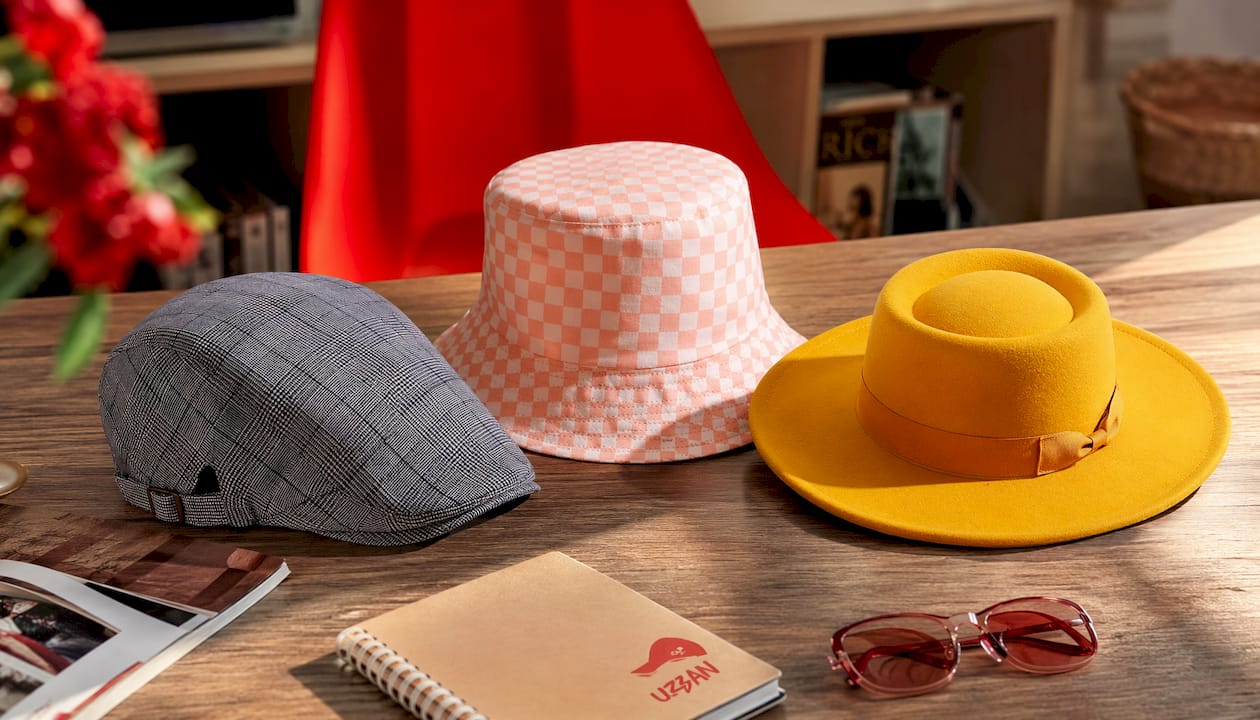
Two strong starting points from the current catalogue: the Checked Beret – Breathable & UV-Resistant Fashion Hat is a compact, on-trend piece that works across seasons and suits the 2026 direction toward structured smaller silhouettes. The checkerboard fisherman hat is a bolder option for street-style and casual outfits, with enough structure to anchor a look without trying too hard.
Both ship fast within NZ, and the store’s returns support means you can order your size, try the fit at home, and exchange if needed. Browse the full range and check the size guide at urbancaps.co.nz.
Sources and further reading
The following sources informed this guide. Each covers a specific aspect of hat selection, fit, and trends.
- Harper’s Bazaar UK: 2026 hat trends — trend evidence for structured small silhouettes and the ‘fancy little hat’ direction
- Glamour UK: the hat is back — cultural context for the 2026 hat resurgence and wearability focus
- DC Fashion Week: 2026 headwear report — stylist commentary on hats as silhouette anchors and craftsmanship
- FaceShapeDetector: best hats for your face shape — face-shape mapping and head measurement guidance
- FashionsVida: summer 2026 hats — seasonal material guidance and summer hat trends
- WikiHow: how to choose hats for your face shape — practical fit checks including the one-finger rule
FAQ
What hat styles are trending in 2026?
Structured, smaller silhouettes are leading in 2026: pillbox hats, tailored fedoras, baker boy caps, and Art Deco skull caps are the key shapes, with the focus on craftsmanship and intentional styling rather than oversized novelty.
What are the hat rules for ladies at formal events?
Women traditionally wear hats throughout a formal event rather than removing them indoors; mini hats and fascinators are positioned forward on the head, above the right eye, secured with a comb or clip. These are now treated as guidelines rather than strict rules.
How do you wear a hat fashionably without it looking costumey?
Choose one structured, neutral-coloured hat that suits your face shape and fits correctly, then keep the rest of the outfit simple. A hat that fits well and matches the outfit’s formality level always reads as intentional rather than theatrical.
How do you measure your head for a hat?
Wrap a flexible tape measure around your head approximately 1 cm above your ears at mid-forehead. Most adult heads fall between 54–62 cm; use that measurement against a size chart to find your label size before buying.
Where can NZ shoppers buy and return hats easily?
Urbancaps is a New Zealand-owned online retailer with local stock, fast NZ delivery, and returns support, making it a practical option for shoppers who want to try sizes and exchange if the fit is not right.