

5 Checks to Tell Flat Cap vs Newsboy for NZ Shoppers
A flat cap sits low and close to the head, with a single low crown and a small stiff brim. A newsboy cap sits higher and fuller, built from six or eight panels that gather into a top button. Once you know to check crown height and panel count, the two are easy to separate. Pick a flat cap for a streamlined, tailored look, or a newsboy for visible volume and vintage character.
TL;DR:
- Checking crown height and panel count confirms whether a cap is flat or newsboy, with flat caps having a low crown and one or two panels.
- A flat cap pairs best with tailored, understated outfits, while a newsboy cap adds vintage volume and works with textured or streetwear styles.
- Material choice affects warmth and weather resistance more than the silhouette, with wool offering better insulation and cotton providing breathability.
- Proper fit depends on measuring head circumference and inspecting crown details, ensuring the cap sits level and avoids looking costume-like.
- Quality construction involves even stitching, firm brim shaping, and secure top buttons, regardless of brand or regional naming variations.
Table of Contents
- Flat cap vs newsboy cap: the construction differences that actually matter
- How a flat cap or newsboy cap changes the way an outfit reads
- Materials, warmth and weather performance
- Where flat caps and newsboy caps actually come from
- Flat cap size guide: five inspection points before you buy
- What Urbancaps stocks, and how it helps you choose
- How to keep a flat cap or newsboy cap looking sharp
- Who makes flat caps and newsboy caps well
- Why silhouette should always beat the label
- Try both silhouettes: three Urbancaps picks worth comparing
- Sources
- FAQ
Flat cap vs newsboy cap: the construction differences that actually matter
Forget the product name on the listing. The name is the least reliable part of the description, because “ivy cap”, “scally cap” and “baker boy” get used interchangeably across different retailers for what are structurally the same two silhouettes.
What doesn’t lie is the construction. A flat cap has a low, close-fitting crown, usually cut from one or two panels, with a stiff brim sewn or snapped near the front. A newsboy cap has a rounder, fuller crown built from six or eight panels that get gathered toward a top button, and its brim tends to be softer and less structured.
Check these four things before you trust any title:
- Crown height: low and flat against the head signals a flat cap; noticeably domed or puffed signals a newsboy.
- Panel count: one or two panels means flat cap; six to eight means newsboy.
- Top button: newsboy caps almost always have one where the panels meet; flat caps rarely do.
- Brim attachment: a stiff, structured brim usually belongs to a flat cap; a softer, less rigid brim often belongs to a newsboy.
Zoom into product photos and look at the crown from the side. A flat, low outline is a flat cap regardless of what the retailer calls it. A dome shape with visible seams running to a centre point is a newsboy, even if the tag says “golf cap” or “Gatsby cap”.
How a flat cap or newsboy cap changes the way an outfit reads
The cap you choose changes the read of an outfit more than most people expect. A flat cap sits close to the skull, so it slots easily under a wool coat, smart-casual tailoring, or a simple knit without competing for attention. It reads understated. A newsboy cap, with its extra volume up top, reads more deliberate and vintage, and pairs well with textured jackets, denim, and layered streetwear where you want the cap to be noticed rather than blend in.
Proportion does the heavy lifting here. A stiffer brim and a lower crown push the look towards tailored; a softer brim and fuller crown push it towards relaxed or retro. Wearing position matters too. Pushed back slightly, both styles look more casual; pulled forward and level, they look sharper.
- If your face is narrower, a newsboy’s extra crown volume can balance the proportions.
- If your face is broader, a flat cap’s low profile tends to sit cleaner.
- Sizing up on a newsboy exaggerates the fuller silhouette; sizing down on a flat cap keeps it neat rather than costume-like.
Pro Tip: Try the cap slightly back on the head first, then nudge it forward or to one side. Over-adjusting a newsboy forward can hide the crown volume you’re paying for, and pushing a flat cap too high looks costume-like rather than tailored.
Materials, warmth and weather performance
Neither style is inherently warmer or more weatherproof than the other. Warmth and weather resistance come down to material, lining and weave, not whether the cap is flat or full-crowned. A wool or wool-blend cap, in either silhouette, holds heat better and handles light rain more gracefully than cotton. Cotton and linen versions suit milder or warmer conditions and breathe better through the day.
Lining changes the equation further. A quilted or satin lining adds warmth and comfort without changing the outside shape, while an unlined cap stays lighter but offers less insulation on a cold morning.
One caveat worth repeating: neither a flat cap nor a newsboy cap is a substitute for a broad-brimmed sun hat when UV exposure is the concern. Their short visors shade the eyes, not the ears, neck or cheeks.
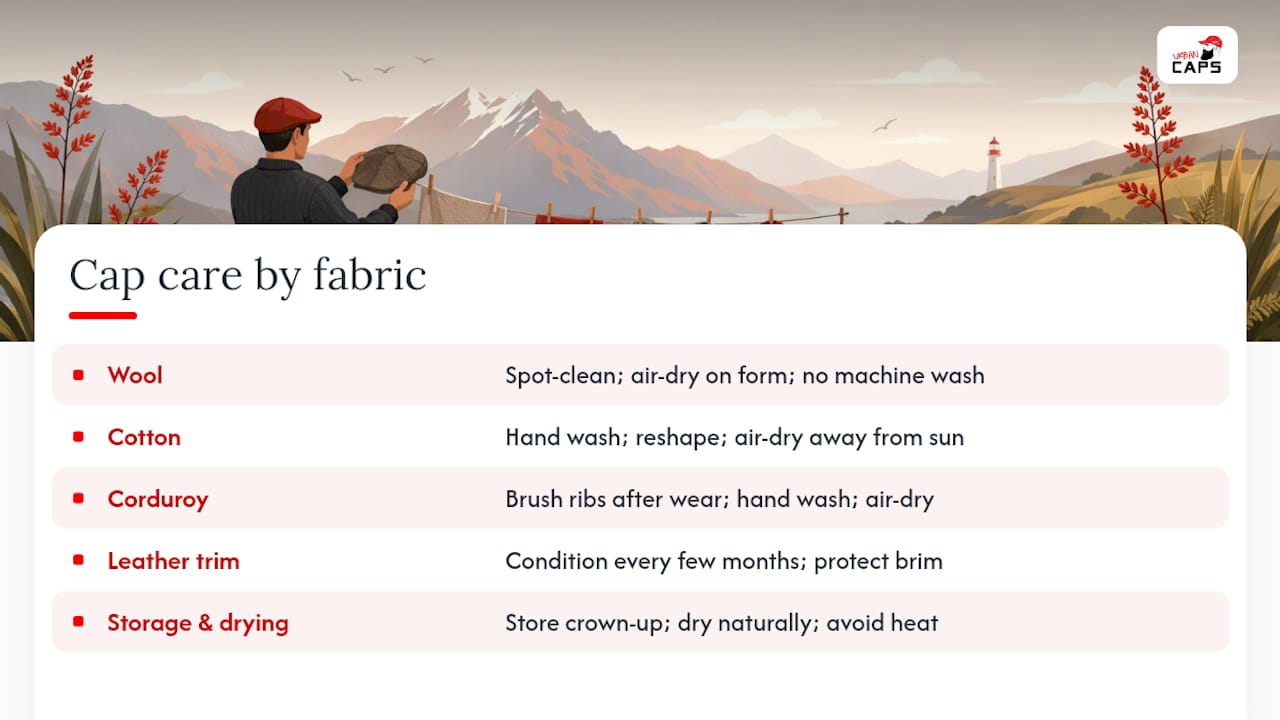
For care, treat wool caps like a wool jumper: spot clean, air dry, avoid the washing machine. Cotton caps handle a gentle hand wash. Corduroy needs a soft brush to lift the pile after cleaning and should never be wrung out, since twisting distorts the ribbing.
Where flat caps and newsboy caps actually come from
Both styles grew out of the same working-class and sporting wardrobes of the early 20th century, which is exactly why the naming overlaps so much today. Historical photographs of labourers show cloth caps worn as everyday, practical headwear well before either style became a fashion statement.
The newsboy name comes from its association with young newspaper sellers of the period, but that link was never exclusive. The eight-panel construction and top button turned up across social classes and leisure activities, not just among working boys on street corners.
Regional names multiplied from there. Ivy cap, scally cap, baker-boy, and Gatsby cap all describe variations on the same two core shapes, which is why relying on a listing’s title alone is such an unreliable way to shop.
Flat cap size guide: five inspection points before you buy
A cap that looks right in a photo can still fit wrong on your head, so run through this checklist before adding one to cart:
- Measure your head circumference with a tape measure and check it against the seller’s own flat cap size chart rather than guessing from generic S/M/L labels.
- Look at how the model wears it in product photos. Is it sitting level, or pushed back? That tells you how it will actually sit on you.
- Check crown height and panel count closely. Single or low panels mean flat cap; six to eight panels with visible seams mean newsboy.
- Confirm the top button and brim attachment. A stitched-on button confirms newsboy construction; a snap-brim with no button usually confirms flat cap.
- Read the fabric, lining and return policy, and scan customer photos rather than the studio shots, since real-world fit often differs from the marketing image.
Getting the fit right the first time saves a return, and it’s the single biggest factor in whether a cap looks tailored or looks like it’s wearing you.
What Urbancaps stocks, and how it helps you choose
Urbancaps carries both silhouettes side by side, with the low-profile flat cap and the fuller newsboy cap sitting in the same catalogue rather than buried under inconsistent naming. Every listing includes photos, a size chart and fabric details, so you can check crown height and panel count the same way this guide recommends, instead of trusting the title alone.
New Zealand hat-making has a long local history, documented through collections like Hills Hats, and that heritage informs the styles Urbancaps carries alongside contemporary options. Local NZ stock and fast delivery mean you can compare a flat cap and a newsboy at home before committing to one for good.
How to keep a flat cap or newsboy cap looking sharp
Cap care depends far more on fabric than on silhouette, so the maintenance routine is largely the same whether you’re wearing a low-profile flat cap or a fuller newsboy.
Wool and wool-blend caps should be spot cleaned with a damp cloth and mild soap, then left to air dry on a rounded surface (a bowl or a cap form works well) so the crown holds its shape. Never machine wash wool. Heat and agitation shrink and felt the fibres, which ruins the fit permanently.
Cotton caps are more forgiving. A gentle hand wash in cool water, followed by reshaping while damp and air drying away from direct sun, keeps the colour and structure intact. Corduroy needs a soft-bristle brush run along the ribs after each wear to lift dust and restore the pile, plus the same gentle hand-wash approach cotton gets.
Leather-trimmed or leather-brimmed caps need a specific leather conditioner every few months to stop the brim from cracking, especially after exposure to rain.
Whatever the fabric, store the cap crown-up on a shelf or hook rather than flat in a drawer. Stuffing it flat crushes the panel structure on a newsboy and can permanently dent a flat cap’s brim. If the cap gets properly wet, let it dry naturally away from direct heat. A radiator or hairdryer dries wool and cotton too fast and warps the shape.
Who makes flat caps and newsboy caps well
Quality in this category comes down to consistent stitching, a properly finished brim, and fabric that holds its shape after repeated wear, rather than any single defining brand across the whole market. Traditional British and Irish hat-makers built much of the reputation the flat cap still carries today, with tightly woven tweed and wool becoming the benchmark fabric for cooler-weather versions.
In New Zealand, Hills Hats represents a genuine local manufacturing history, one that’s shaped how heritage caps are understood and worn in this part of the world well beyond imported styles. That local context matters when you’re comparing a mass-produced cap against one built with attention to traditional panel construction and brim finishing.
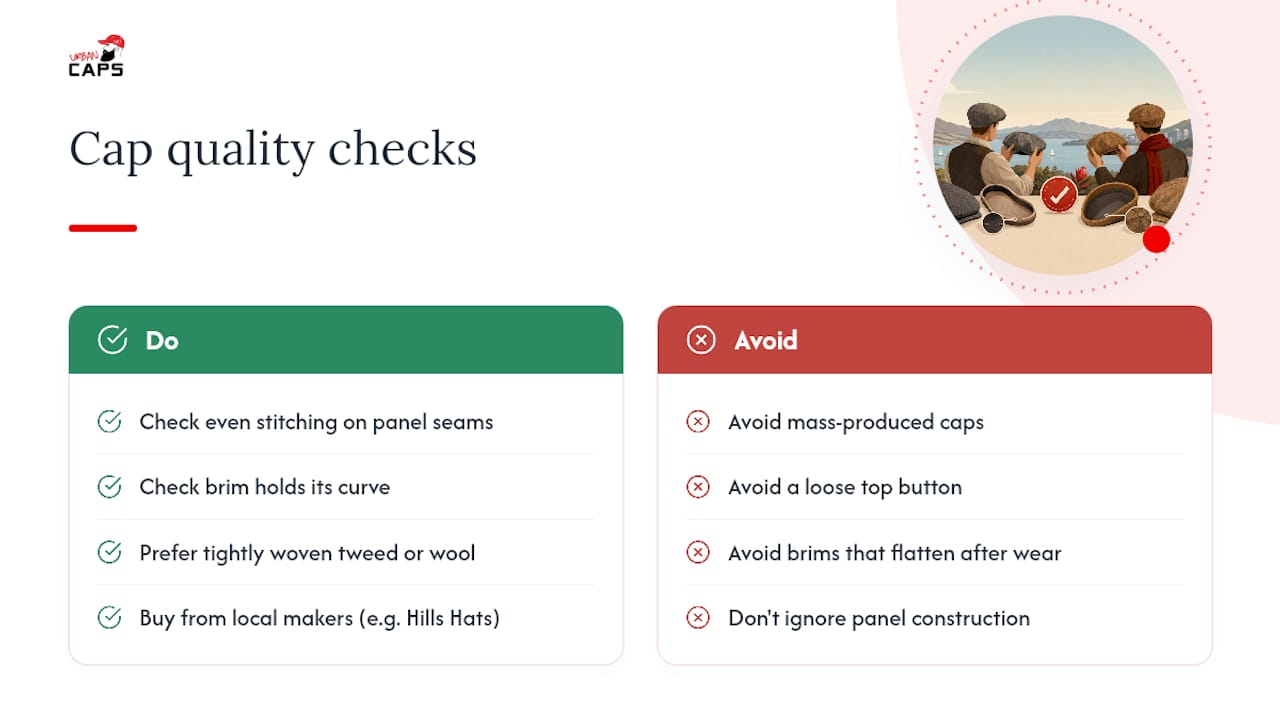
For everyday shoppers, the more useful marker than any single label is construction quality itself: even stitching along every panel seam, a firmly anchored top button that won’t work loose, and a brim that holds its curve rather than flattening after a few wears. Urbancaps stocks both flat and newsboy styles built to that standard, alongside heritage-inspired collections for shoppers who want the traditional construction without hunting through overseas retailers.
Why silhouette should always beat the label
The conventional advice on this topic treats “flat cap” and “newsboy cap” as fixed categories with fixed names, and that’s where most buyers get tripped up. Names like ivy, scally, baker-boy and Gatsby describe the same two underlying shapes, dressed up differently by different retailers chasing search traffic rather than accuracy.
What the historical record actually shows is that these caps were never rigidly categorised in the first place. Working dress and sporting wear used both shapes interchangeably, long before marketing departments needed distinct product names to sell variations of the same idea.
If you take one thing from this guide, prioritise the crown over the copywriting. Check the panel count, the top button, and how the brim attaches, in that order, every time. Fit second, fabric third. Get the silhouette right and the rest of the outfit follows naturally, whether you’re chasing understated tailoring or vintage volume.
— Urban
Try both silhouettes: three Urbancaps picks worth comparing
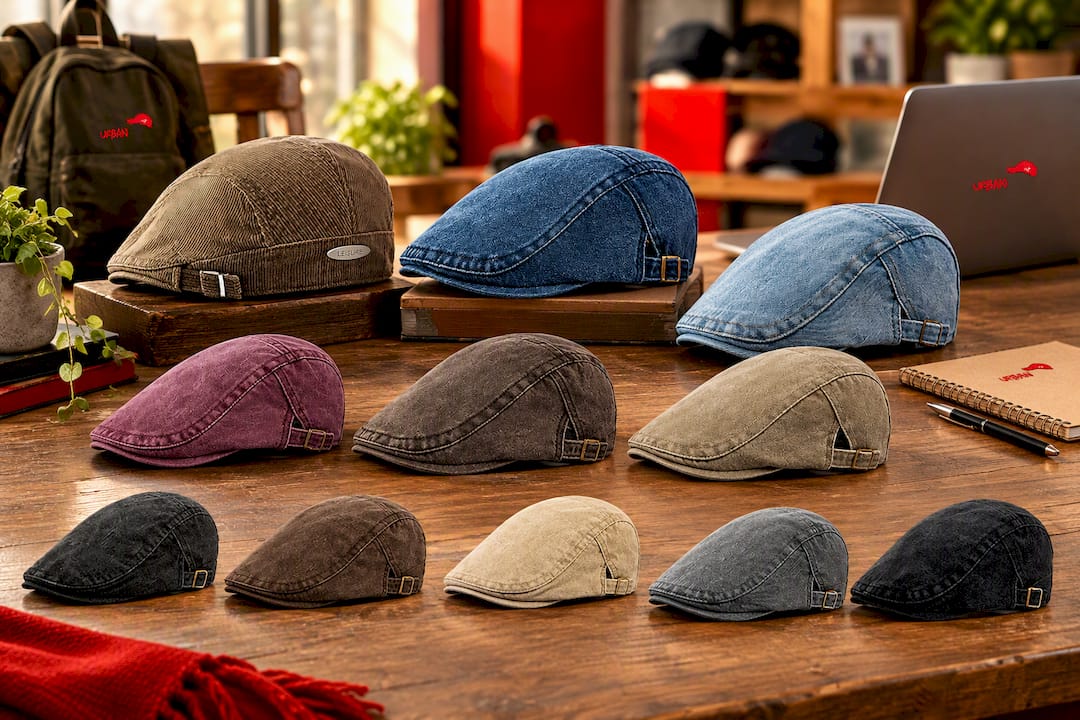
Rather than guessing from a photo, try the shapes side by side. The Corduroy Ivy Cap gives you the classic low, close-fitting flat cap profile in a heavier, cool-weather fabric. The Solid Cotton Ivy Cap offers the same streamlined shape in a lighter cotton build, better suited to milder days. And the Vintage Cotton Ivy Cap leans into the fuller, newsboy-inspired silhouette if you want the visible crown volume this guide describes.
Urbancaps is the alternative to guessing from a single studio photo: every listing carries real sizing details, fabric notes and a size chart, so you can check crown height and panel count before you buy, not after. As a New Zealand owned and operated business, orders ship fast within NZ, and returns are straightforward if a fit doesn’t land the way you expected. Browse the full newsboy cap range, or start with one of the three picks above and see which silhouette actually suits how you dress.
Sources
- Labourers’ clothes, 1903 | Te Ara Encyclopedia of New Zealand
- Hills Hats - New Zealand Fashion Museum
FAQ
Is a newsboy cap the same as a flat cap?
No. A newsboy cap has a rounder, fuller crown built from six to eight panels gathered toward a top button, while a flat cap has a low, close-fitting crown with far fewer panels. They share a similar brim and working-class origin, but the crown construction sets them apart.
Are newsboy caps in style in 2026?
Yes, newsboy caps remain a steady fixture in vintage-inspired and streetwear looks, prized for the visible crown volume and texture they add to an outfit. They pair particularly well with denim, textured jackets and layered casual wear.
What are the key differences between a newsboy cap and a scally cap?
In most listings, “scally cap” is simply a regional name for the flat cap, not a separate style. The real differences to check are crown height and panel count, since names like scally, ivy and baker-boy get applied inconsistently across retailers.
Who usually wears flat caps?
Flat caps suit anyone after a low-profile, tailored look that works with coats, knitwear and smart-casual outfits. Historically worn across working and sporting contexts, they’ve become a versatile everyday choice regardless of age or occasion. Urbancaps stocks both flat and newsboy styles if you want to compare the silhouettes before deciding which suits your wardrobe.