
The crown is the part of a hat that sits over your head, and its shape is set by the dents, creases and height of the top. Round, teardrop, centre dent, diamond, square and cattleman are the shapes you will meet most often. Pick by matching the crown to the hat style, the proportions of your head and where you will wear it. Below we name each shape, show how to spot it in two seconds and explain crown height, so you can shop NZ stock with confidence.
TL;DR
- The crown is everything above the brim. The brim is the flat or curved edge around it. Fit and style depend on both, but the crown does most of the work on how a hat looks from the front.
- The common crown shapes are round, telescope, teardrop, centre dent, diamond, square, bell, cattleman, Gus and brick. Most felt fedoras use a teardrop, centre dent or diamond.
- Crown height changes the profile, the fit and how much air moves around your head.
- A taller crown suits a longer face. A lower, tapered crown suits a narrower one.
- Check the crown shape and height on the product page before you order, then match them to the hat style you want.
Table of Contents
- What a hat crown is, and how it differs from the brim
- The main hat crown shapes
- Crown shapes on caps, beanies and bucket hats
- Crown height: why it changes everything
- How to choose a crown shape that suits you
- Common mistakes with crown shapes
- Where to find the right crown in New Zealand
- Our view on crowns
- FAQ
- Sources
What a hat crown is, and how it differs from the brim
Every hat has the same basic parts. The crown is the dome or box that covers the top of your head. The brim is the part that extends outwards from the base of the crown. The band is the ribbon or strip that wraps where the two meet. The tip is the very top of the crown.
People often say “hat shape” and mean the brim. A wide, snapped brim and a short, flat one are different things from the crown. Two fedoras can have identical brims and look completely different because one has a teardrop crown and the other a centre dent.
Three things define a crown:
- Outline from above. Round, oval, square or something in between.
- Dents and creases. The pinches at the front and the sides, and any crease running down the middle.
- Height. How far the crown rises above the band, measured at the front and the back.
A soft crown, as on a beanie or a bucket hat, takes its shape from the wearer’s head. A structured crown, as on a felt fedora or a top hat, holds its shape on its own. That is why creases matter on felt and wool hats and hardly at all on a beanie.
The main hat crown shapes
Here is each shape, what it looks like and where you tend to find it.
Round crown
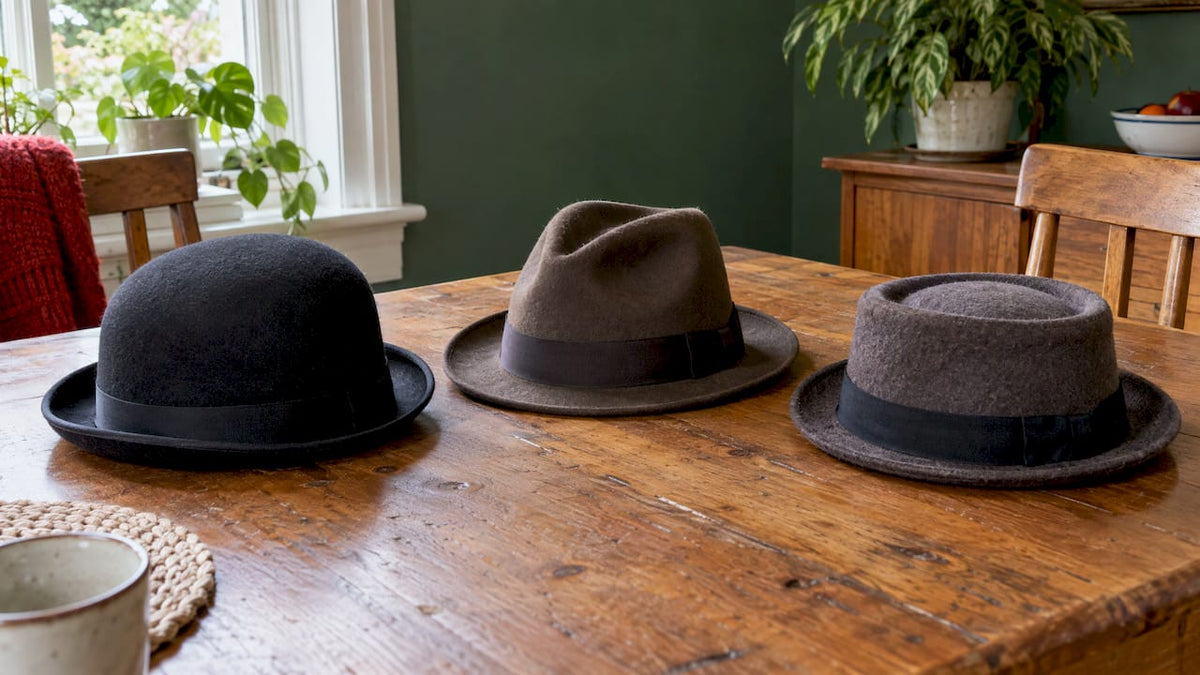
A round crown is a smooth dome with no dents. It is the simplest shape and the classic profile of the bowler hat, which has a rounded crown and a short brim. Round crowns sit low and close to the head, which gives a neat, compact look. Many bucket hats and some cotton hats follow a similar rounded profile.
Telescope crown
A telescope crown has a circular indentation running around the top, so the crown looks like a stepped cylinder. The pork pie is the best-known example, with a flat top and a groove around it. It gives a short, sharp silhouette that suits casual and retro outfits.
Teardrop crown
The teardrop is rounder at the back and pinched to a point at the front, so from above the dent forms a teardrop. It is one of the most common crowns on fedoras. The pinch at the front gives you something to grip when you put the hat on or take it off, and it flatters most faces because the shape is soft but defined.
Centre dent crown
A single crease runs down the middle of the crown from front to back. The homburg uses it, and many fedoras do too. The fedora is generally described as having a lengthwise crease down the crown and pinches at the front. A centre dent looks simple and traditional, and it makes the crown read as narrower from the front.
Teardrop and centre dent are easy to mix up. If you want a quick way to tell them apart, our hatter’s tips on spotting a teardrop or centre dent walk through it.
Diamond crown
The diamond crown has indentations that form a diamond when you look from above, with more distinct edges than a teardrop. It is common on fedoras and gives a crisp, structured outline. It reads as dressier than a centre dent.
Square crown
A square crown has a flat top and straight sides. The top hat is the standard example: a tall, flat-topped cylinder with a narrow brim. The boater has a lower version of the same idea. Square crowns make a strong, formal statement and add height.
Bell crown
A bell crown is rounded on top and tapers towards the brim, like a bell. The cloche hat is the classic example, with the crown hugging the head down to a small brim. It is a close-fitting shape, mostly seen in vintage and fashion pieces.
Cattleman, Gus, brick and open crowns
These are the western crowns, and they matter if you wear or want a cowboy hat.
- Cattleman: a centre crease with two smaller creases at the sides. It is the traditional cowboy look and the one most people picture.
- Gus: taller at the back than the front, with a centre crease and pinches at the front. It has a slightly rakish slope.
- Brick: a crown with a flat, boxy top and a squarer outline, as the name suggests.
- Open crown: a crown with no creases at all, left round so the wearer or a hatter can shape it.
A pinch-front crown is a cattleman-style crown pinched at the front corners, and teardrop is its close cousin in the fedora family. Names vary between makers, so go by the description and the photos as much as the label.
Quick comparison
| Crown | Outline and dents | Typical hat | Look |
|---|---|---|---|
| Round | Smooth dome, no dents | Bowler | Compact, neat |
| Telescope | Circular groove round the top | Pork pie | Short, retro |
| Teardrop | Rounded back, pinched front | Fedora | Soft but defined |
| Centre dent | One crease down the middle | Homburg, fedora | Classic, simple |
| Diamond | Four-sided dented shape | Fedora | Crisp, dressy |
| Square | Flat top, straight sides | Top hat, boater | Formal, tall |
| Bell | Rounded, tapering to the brim | Cloche | Close-fitting |
| Cattleman | Centre crease and two side creases | Cowboy hat | Traditional western |
| Gus | Taller at back, centre crease | Cowboy hat | Slanted, bold |
Crown shapes on caps, beanies and bucket hats
Most people shopping for a cap are not thinking about pinches. Soft-crowned headwear has its own crown vocabulary, and it still comes down to shape and height.
- Baseball caps have a rounded crown made of panels meeting at a button on top. The crown can be structured, with a stiff front panel that stands upright, or unstructured, which sits softer and lower. Our baseball caps cover both everyday and sportier looks.
- Dad hats are a low, unstructured crown with a curved brim. They sit close and relaxed.
- Newsboy caps have a fuller, rounded crown that is gathered and stitched to a short peak at the front. The newsboy caps range suits heritage styling.
- Cheesecutter caps have a flatter crown with a stiff peak, a style with a long history in work and outdoor wear. See the cheesecutter caps.
- Bucket hats have a soft, sloped crown that flows straight into a downward brim. Browse bucket hats if you want something relaxed for sun and outdoor days.
- Beanies are knitted, with a crown that stretches over your head. The depth is what changes the look, from a short cuff beanie to a slouchy one. Our beanies cover the range.
For kids, a soft crown with some stretch is easier to fit as they grow. The kids caps collection is the place to start.
Crown height: why it changes everything
Crown height is how tall the crown stands above the band. It is a separate decision from the shape, and it is the one most buyers overlook.
Height affects three things:
- Profile. A tall crown adds height to your overall outline and draws the eye upward. A low crown sits flatter and keeps the focus on your face.
- Fit and feel. A deeper crown can sit differently on the head, and the way a cap sits depends on how the crown height meets your head shape. We cover this in more detail in our guide on how crown height changes fit and feel.
- Airflow and climate. More space in the crown lets more air move around the head, which matters on a warm day. See crown height, airflow and climate.
What counts as crown height is worth getting right: it is measured on the crown itself and does not include the brim or the peak. Our guide explains what counts as crown height and what it doesn’t. It also lists typical crown height categories such as low, mid and high, with what each looks like.
How to measure crown height at home
- Lay a hat you already own and like on a flat surface.
- Measure from the inside of the sweatband up to the inside top of the crown, with a soft tape or a ruler.
- Note the number, then compare it with the crown height on the product page of the hat you want.
If you want the full walkthrough, our steps to measure crown height at home cover it, and the checklist for choosing crown height when you buy is a good last look before checkout.
Crown height is only half of the fit. Your head circumference matters just as much, so measure it and use a hat size chart for fit to line the number up with the size on offer.
How to choose a crown shape that suits you
Start with the crown, not the brim. Milliner Stephen Temkin, speaking to the menswear site Permanent Style, advises that the crown should echo the shape of your head: a longer face calls for a taller crown, and a narrower one for a crown that tapers. He also notes that few shops carry many crown heights, so it can take a few tries to find one that suits.
Turn that into a simple checklist.
Match the crown to your face
- Long or narrow face: a taller crown balances the length, and a tapering crown keeps the proportions in check. A round or low crown avoids adding more height.
- Round face: a crown with defined creases, such as a diamond or centre dent, adds angles. A teardrop adds a soft point at the front.
- Square or strong jaw: soft round crowns and teardrops take the edge off.
- Oval face: most crown shapes work, so choose by style.
We go further in our guide to choosing a hat for your face shape, including how brim width interacts with the crown.
Match the crown to the hat style
- Fedora: teardrop for an easy everyday look, centre dent for a classic one, diamond for something dressier. Browse our fedoras.
- Top hat: a square crown is the point of the style. Our range includes a felt top hat and a cotton top hat.
- Cowboy hat: cattleman for tradition, Gus for a bolder slope, brick for a boxy outline.
- Casual cap or beanie: choose between structured and unstructured, then a low or mid crown height.
Match the crown to how you will wear it
- Outdoor days in the sun: a crown with a bit more room and a brim that shades the neck and ears.
- Cooler weather: a close-fitting crown that holds heat, in wool or a knit.
- Daily commuting or travel: a crown that handles being packed and put on repeatedly, so a soft or crushable crown is easier than a tall structured one.
- Dressing up: structured felt with a defined crease.
Material changes how a crown behaves
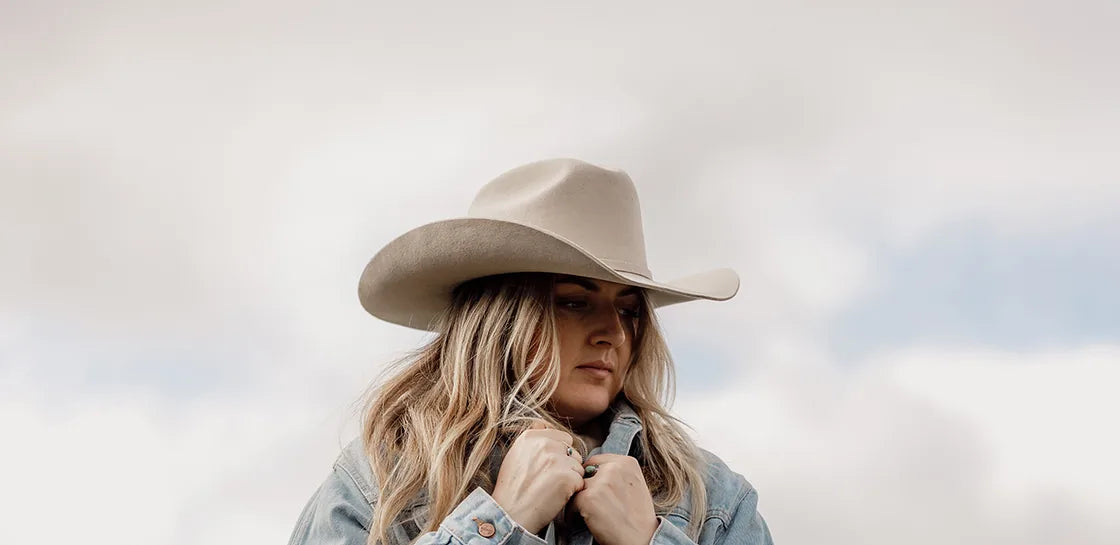
Felt and wool hold creases, so the dents you see in the photo are the dents you will get. Cotton and polyester crowns are lighter and softer. Leather gives a firm crown that shapes to you over time. We stock hats in polyester, nylon, cotton, wool and leather, so you can pair the crown you like with the material that suits your climate. The leather caps and hats are a good option when you want something that lasts.
Common mistakes with crown shapes
- Buying on brim alone. The brim gets the attention in photos, but the crown decides how the hat looks from the front.
- Ignoring crown height. Two hats in the same size can sit very differently if the crown depth is different.
- Pressing out the creases. On a felt hat, handle the crown by the front pinch, not by the top, so the dents keep their shape.
- Mixing up names. A teardrop and a centre dent are close. Read the description and compare the photos.
Where to find the right crown in New Zealand
We are New Zealand owned and operated, and we ship free within New Zealand and to Australia. Our collections run from caps and beanies to fedoras, bucket hats, newsboy caps, cheesecutter caps and leather hats. If you are comparing crowns, open a few product pages side by side and look at the crown shape and height in the photos and the details. Our site also has care and cleaning guides and advice on fit and style selection, so you can keep a good crown looking sharp.
If you already know the style you want, go straight to the fedoras for teardrop, centre dent and diamond-style looks, or to the baseball caps for an everyday crown.

Browse the full range at Urban Caps and pick the crown that matches your head and your style.
Our view on crowns
We think the crown is the most underrated part of a hat. Shoppers spend a long time on colour and brim, then end up with a hat that looks off because the crown does not suit their head.
Our collection is built around a mix of modern and heritage styles, from newsboy and cheesecutter caps to fedoras and top hats, because each of those styles is defined by its crown. When you can see the crown clearly and compare shape and height, you choose better.
Our advice is simple: decide the style first, pick the crown shape that goes with it, then check the crown height against a hat you already wear well. That is how you end up with a hat you reach for every day. We are a Kiwi-owned shop, and we want our customers to get a hat that fits the way they live here, whether that is a sunny weekend outdoors or a cold morning commute.
Urban
FAQ
What are the most common hat crown shapes?
The most common are round, telescope, teardrop, centre dent, diamond and square, with cattleman and Gus the main western crowns. On fedoras you will mostly see teardrop, centre dent and diamond. On caps and beanies the crown is soft and defined by its height instead.
What is the difference between a teardrop and a centre dent crown?
A teardrop crown is pinched at the front and rounded at the back, so the dent forms a teardrop from above. A centre dent has one crease running down the middle. Our teardrop vs centre dent tips show how to tell them apart quickly.
What is crown height on a hat?
Crown height is how far the crown rises above the band, not counting the brim or peak. It changes the profile, the fit and how much air reaches your head. You can measure it from the inside sweatband to the inside top of the crown.
Which crown suits a long face?
A taller crown that echoes the shape of the head tends to balance a long face, and a thinner face suits a crown that tapers. Try a few heights, because many shops carry only a limited range.
Does the crown shape matter on a beanie or baseball cap?
Yes, but in a different way. The shape is soft, so what you notice is depth and structure: a low or high crown, and a stiff or unstructured front. Check those details before you order.
Sources
- Bowler hat, Wikipedia
- Fedora, Wikipedia
- Top hat, Wikipedia
- How a hat should fit, with Stephen Temkin, Permanent Style


Leave a comment
This site is protected by hCaptcha and the hCaptcha Privacy Policy and Terms of Service apply.