


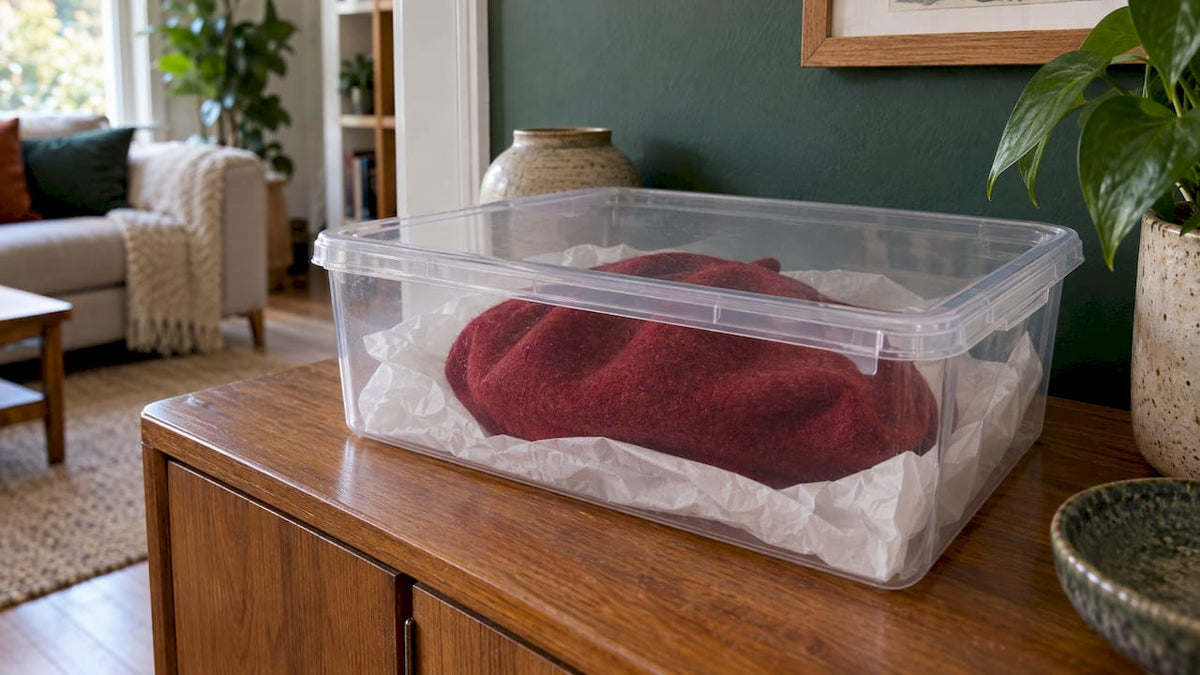
To keep moths out of your hats, wash or brush them before storage, seal them in a bag or box, keep the storage spot clean and dry, and check them every few weeks. Cleaning and sealing do most of the work. Scents are a minor extra. Wool, felt and leather hats are the ones at risk, so a good wool hat deserves a proper storage routine from the day you buy it.
This guide covers how moths damage hats, how to store a hat so they can’t reach it, and what to do if you find holes. If you are choosing a new wool hat, you can browse our beanies and fedoras once your storage is sorted.
TL;DR
- Adult moths don’t eat fabric. Their larvae do, feeding on keratin, the protein in wool, fur and similar fibres.
- Dirt, sweat and oils attract them. Clean the hat before it goes away for the season.
- Store hats sealed, loosely stuffed with tissue to hold their shape, in a cool, dry place.
- Treat cedar and lavender as a bonus. Sealed storage and cleaning are the real defences.
- If you find holes or larvae, isolate the hat, then freeze it or have it cleaned, and clean the storage spot too.
Table of Contents
- Why moths go for wool hats
- When to take extra care in New Zealand
- The five-step routine to protect your hats
- Do cedar, lavender and moth traps work?
- What to do if you find damage
- Hat-by-hat storage cheat sheet
- Choosing hats you will keep
- Ready for a new hat?
- FAQ
- Sources
Why moths go for wool hats
The small golden moths you see fluttering around a wardrobe are not the problem. The immature larvae do the damage, and adults neither feed nor harm fabric. Larvae are adapted to digest keratin. In New Zealand, clothes moths feed on wool, fur, silk, feathers and leather for that protein and chew irregular holes that grow over time.
That puts a lot of hat styles in the firing line: wool beanies, felt and wool fedoras, woollen newsboy caps, tweed flat caps and leather caps. Cotton and linen are generally safe because they are plant fibres, but wool blends and soiled synthetics can still be attacked. Te Papa’s textile care guide adds that moths can attack other fibres, even synthetics, so a cotton baseball cap with a sweaty band isn’t automatically safe.
The two species you are likely to meet
The webbing clothes moth and the casemaking clothes moth are the most common species in Australia and New Zealand. Adults have golden wings just over half a centimetre long. Larvae are white with brown to black heads and a little over a centimetre long. Casemaking moths prefer warmer parts of the country, while webbing moths occur nationwide.
Why a worn hat is a bigger target than a new one
Clothes moths are especially drawn to fabric stained with food, perspiration and oils. Think of a hat band or the inside of a beanie after a season of wear: that is exactly the sort of spot they like. A female can lay 100 to 300 eggs in a suitable area, and larvae can take anywhere from three months to several years to reach the next stage. One forgotten hat at the back of a shelf can therefore feed a colony for a long time.
They also avoid light and are weak flyers, so an infestation can go unnoticed until the damage shows. Damage looks like thin patches or small holes where larvae have grazed.
When to take extra care in New Zealand
There is no clothes-moth season as such. They live indoors, so there is no particular pest season, but temperature changes how fast they develop. The life cycle can take as little as three months in warm North Island areas and up to six months in colder ones. Coastal homes see more of them because humidity helps their development.
The practical moment is the end of each season. When the wool beanie goes away in spring, or the felt fedora goes away in autumn, that is when to clean and seal it. Professional Pest Manager advises washing clothes and storing them in a sealed bag or suitcase at the end of each season. Hats are no different.
The five-step routine to protect your hats
1. Clean the hat before it goes away
A hat put away dirty is an invitation. Brush off dust, spot-clean marks and let the hat dry fully. Hats vary in how much water they take, so follow the care label. For method by hat type, our guides on how to clean hats and caring for wool hats walk through it. If your hat has got wet, dry it properly without shrinking it before it is stored. A damp hat in a sealed bag invites mould.
Where it goes wrong: washing a wool hat hot to be “safe”. Heat shrinks wool and felt, so keep hot-water treatment for items whose label allows it.
2. Inspect it first
Before sealing anything, look. Oregon State’s guidance suggests checking under collars, along seams and in crevices with a torch, looking for white caterpillars with dark heads up to about 1.3 cm long. On a hat, check inside the sweatband, along the brim edge, in the crown seams and under any lining or trim. A second-hand hat should be inspected the same way before it goes near the rest of your collection.
3. Seal it
Sealing is the step that matters most, because moths can’t lay eggs on what they can’t reach. Use a zip-lock bag, a lidded box or a sealed garment bag. The advice from NZ pest specialists is the same: wash, then store sealed rather than loose on a shelf.
A bag alone can squash a brim or crown. Te Papa recommends that three-dimensional items like hats be packed loosely with tissue or covered polyester wadding to hold their shape. Stuff the crown with acid-free tissue, and don’t stack heavy items on top. Our museum-method hat storage guide shows how to do it at home with ordinary materials.
4. Choose the right spot
Te Papa suggests textile storage at 12 to 18°C and 50 to 55% relative humidity. Too much moisture allows mould and mildew, and too little dries fibres and makes them brittle. Few homes hit those numbers exactly, so aim for the cool, dry, well-ventilated end of what you have: an inner wardrobe rather than a damp garage, and not a hot roof space.
Keep the area clean too. Te Papa’s advice is to keep storage scrupulously clean, with regular inspection, vacuuming and dusting. Professional Pest Manager also lists regular carpet vacuuming as part of preventing a return. Moths love dust and lint, so vacuum shelf corners and the floor beneath a wardrobe.
5. Check on a schedule
Put a reminder in your phone for every few weeks in the first season, then when you swap your winter and summer hats. Wear the hats in rotation so none sits untouched all year. A hat that gets worn gets brushed, aired and looked at.
A short checklist helps. Our hat care checklist covers cleaning, drying and storing in one place.
Do cedar, lavender and moth traps work?
They are popular. Cedar blocks, lavender sachets and homemade herb mixes are all over the results for this topic. The honest answer is that they are a support act. Houzz NZ cautions that cedar oil may kill only young larvae and that little is known about how well herbal-oil repellents work, so cleaning and sealed storage remain the core defences.
If you like the smell and want to use them, put cedar blocks or lavender sachets in the wardrobe or box alongside the sealed hat, not as a substitute for the bag. Refresh them as the scent fades. Professional Pest Manager notes that wardrobe-hung repellents can be effective as part of a wider routine.
Pheromone traps are worth knowing about. Oregon State recommends pheromone traps in storage areas, which tell you whether moths are present so you can act early. Think of a trap as an alarm, not a cure.

What to do if you find damage
Small holes, thin patches, silky webbing or tiny white caterpillars mean act now, calmly. Moths spread between items, so the whole stored collection is in question, not just the one hat.
- Isolate it. Seal the hat in a plastic bag straight away and keep it apart from other hats and knitwear.
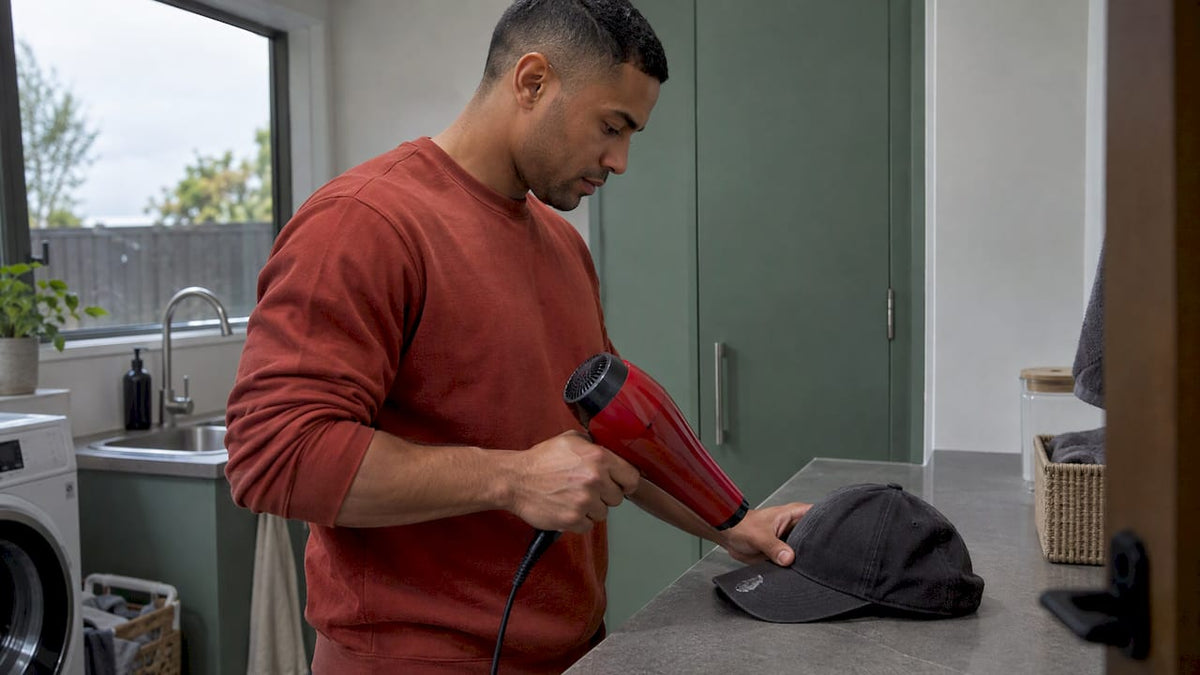
- Kill the larvae. The gentlest option for most wool hats is freezing. Houzz NZ suggests freezing items abruptly at −18°C or lower for 72 hours. Seal the hat in a bag first and give it room in the freezer so it doesn’t get crushed. For washable items, the same source suggests washing for 20 to 30 minutes in water of at least 50°C, but only if the care label allows it. Wool and felt hats rarely do.
- Consider the sun for sturdy items. PestXpert NZ suggests a sealed black plastic bag in the sun for 1 to 2 hours to kill larvae and eggs before washing. Use that for robust items only, and keep delicate or dyed hats out of long sun.
- Clean the hat. Brush or wash it as the label allows once treated. Houzz notes that more damage can become visible after dry cleaning of woollen and delicate items, so don’t be surprised if a hat looks worse after the clean-up. That is damage already done, now visible.
- Clean the storage. Vacuum shelves, drawers and carpet edges, and wash or replace whatever the hat was stored in. PestXpert NZ also advises treating cupboards that hosted moth activity with insecticide spray on shelves and drawers, and Professional Pest Manager says a professional can treat storage areas. Follow the product label and keep sprays off the hats.
- Reset. Once everything is clean, put the hats back sealed.
One caution: don’t spray perfume or fragrance on hats to freshen them for storage. Fragrance on fibre can also attract moths, according to New Zealand garment-care advice, so keep stored items unscented.
A hat with a few small holes
Small moth holes in a wool beanie are often just the start. Treat the hat, then check everything stored near it. A tiny hole in a knit can unravel, so a repair or a replacement may be the practical end of the story.
Hat-by-hat storage cheat sheet
| Hat type | Moth risk | Storage tip |
|---|---|---|
| Wool beanie | High: natural fibre | Clean, dry fully, fold into a sealed bag |
| Wool or felt fedora | High | Stuff crown with tissue, store in a lidded box |
| Woollen newsboy or flat cap | High | Brush, stuff lightly with tissue, seal |
| Leather cap | Moderate: animal fibre | Keep clean and dry, store in a breathable cover inside a sealed box |
| Cotton baseball or bucket hat | Lower, but soiled fabric can be attacked | Wash sweat marks before storing |
The risk ratings follow the general pattern that clothes moths feed on animal fibres and prefer soiled fabric. They are guidance, not a guarantee.
Our view: buy for the long haul, store for the long haul
We sell wool beanies, fedoras and woollen newsboy caps because a good natural-fibre hat can last for years. That is exactly why storage matters. The same fibre that keeps your head warm is the one moths find appealing.
Our approach is simple. Choose a hat you will wear often, keep it clean, and give it a sealed, tidy place to rest between seasons. A hat in rotation is a hat that is looked at regularly, and that is the best moth defence there is.
We publish care guides alongside our collections for this reason: cleaning, drying, reshaping and storing are part of owning a quality hat, not an afterthought. As a New Zealand owned and operated shop, we know how our climate treats hats, from humid coastal winters to dry summer cupboards.
Urban
Choosing hats you will keep
If you are replacing a hat that moths got to, or building a small rotation, start with the styles you will actually wear. Our wool knit beanie is designed for everyday warmth, the wool fedora suits dressier winter days, and the woollen cloth newsboy cap brings a British heritage look. If you want something that suits hot days instead, the cotton bucket hat is a lighter option for summer.
Once a hat is in your wardrobe, look after it with our guides on wool hat care basics and reshaping wool hats.
Ready for a new hat?
Urban Caps is a New Zealand owned and operated online store with a wide range of caps, beanies, fedoras, newsboy caps and bucket hats, free shipping within New Zealand and Australia, and care guides to help you keep what you buy in good shape. Start with the full range at Urban Caps or go straight to the wool and knit beanies.

FAQ
What smell keeps moths away from hats?
Cedar and lavender are the usual choices, and some people find they help in a wardrobe. Their effect is limited: cedar oil may kill only young larvae. Use them next to a sealed, clean hat rather than instead of sealing it.
What time of year do clothes moths lay eggs?
There is no set season. Clothes moths live indoors, so they can breed year-round, and warmth speeds up the life cycle. The best time to act is whenever you pack a hat away, which for most people is the end of each season.
How do I keep moths out of my wool beanie?
Wash or clean it, dry it completely, and fold it into a sealed bag or box. Store it somewhere cool, dry and clean, and check it every few weeks. Wearing it regularly through the cold months also keeps it from sitting undisturbed.
Can I freeze a hat to kill moth larvae?
Yes, freezing is a common treatment for wool items. Seal the hat in a bag and freeze it at −18°C or lower for 72 hours. Then clean it and the place it was stored.
Sources
- Clothes moths identification guide, Natural History Museum
- Clothes Moths and Carpet Beetles, NC State Extension
- Clothes Moths, Oregon State University
- Clothes moths in New Zealand, Professional Pest Manager
- How to control clothes moths, PestXpert NZ
- How to Get Rid of Clothes Moths and Prevent Them in Future, Houzz NZ
- Caring for textiles and clothing, Te Papa

Leave a comment
This site is protected by hCaptcha and the hCaptcha Privacy Policy and Terms of Service apply.