

How hats enhance outdoor safety and comfort in New Zealand
TL;DR:
- New Zealand’s high UV levels make hats essential for sun protection outdoors.
- Wide-brim, UPF 50+ hats effectively reduce risks of skin damage, eye strain, and hypothermia.
- Comfort and style influence hat-wearing consistency, crucial for outdoor safety and enjoyment.
New Zealand’s UV levels run 40% above the global average, and that single fact changes everything about how you should think about headwear outdoors. A hat isn’t just a style choice here. It’s a first line of defense against serious, lasting harm. Whether you’re tramping the Routeburn Track, cycling Canterbury’s back roads, or fishing off a Northland beach, the hat on your head determines how safe and comfortable your day turns out. This guide covers exactly what to look for, why it matters, and how to match the right hat to your adventure.
Table of Contents
- Why outdoor hats matter for safety in New Zealand
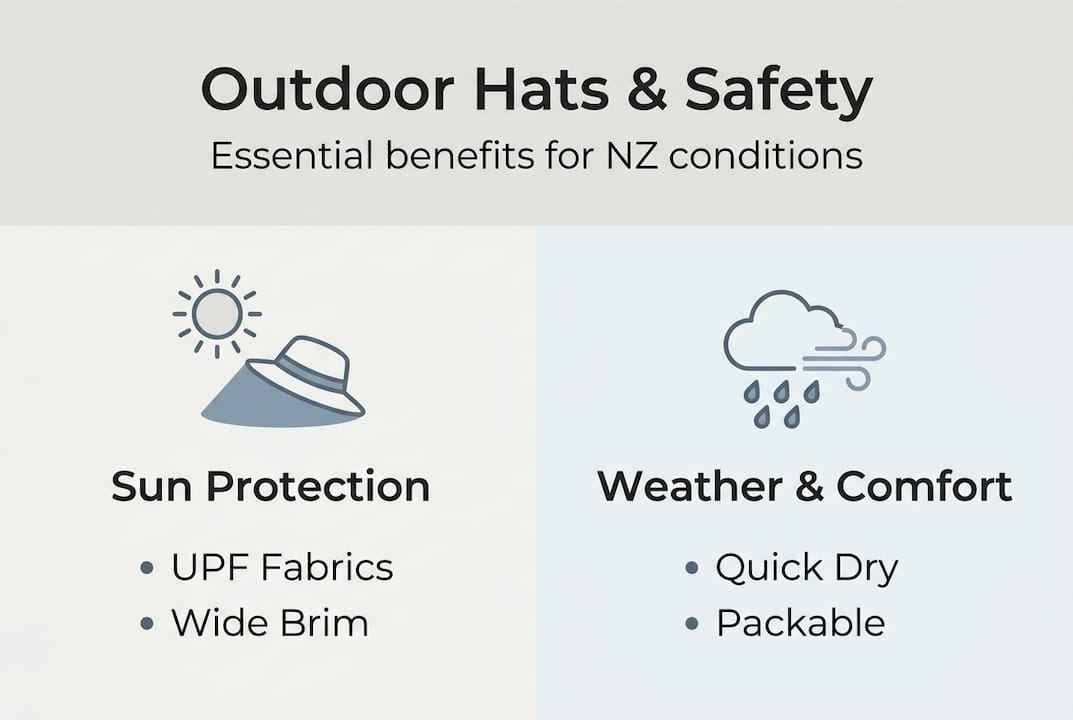
- Key safety functions: Sun, weather, and visibility
- Choosing the right hat: Materials, design, and fit
- Real-life scenarios: How the right hat prevents risk and boosts enjoyment
- What most outdoor guides miss about hats and safety in NZ
- Find your perfect outdoor hat for safety and adventure
- Frequently asked questions
Key Takeaways
| Point | Details |
|---|---|
| Sun safety first | UPF 50+ hats with wide brims provide essential protection from New Zealand’s extreme UV levels. |
| Weather ready | A well-chosen hat prevents both sunburn and hypothermia for safe, comfortable adventures year-round. |
| Design matters | The right materials, fit, and features ensure your hat is not just safe but also wearable and stylish. |
| Practical style | Selecting a hat you enjoy wearing keeps you safer because you’re actually likely to keep it on. |
Why outdoor hats matter for safety in New Zealand
New Zealand sits under one of the thinnest sections of the ozone layer in the Southern Hemisphere. That means UV radiation hits harder here than almost anywhere else on Earth. The higher UV exposure in NZ is not a seasonal issue. It’s a year-round reality that catches visitors and locals off guard alike.
Hats are a defensive tool in this environment. They block direct sun on the face, scalp, neck, and ears. They trap warmth during cold ridge crossings. They improve your visibility on trails and roadsides. No single piece of gear does more with less effort.
“A hat rated UPF 50+ blocks over 98% of UVA/UVB rays, offering a level of protection no sunscreen can match on its own.”
The Cancer Society NZ recommends UPF 50+ sun hats as a core part of the SunSmart routine, placing them alongside sunscreen and protective clothing. This isn’t a soft suggestion. Melanoma is the most common cancer in New Zealand, and facial and scalp melanoma rates are directly linked to sun exposure without coverage.
Key risks you’re managing with the right hat:
- Sunburn and skin cancer on the face, scalp, ears, and neck
- Eye strain and UV-related eye damage from reflected sun on water and snow
- Heat exhaustion when direct sun hits the head for hours
- Hypothermia on exposed ridges where temperature drops fast
- Poor visibility on shared trails and roads
The Mountain Safety Council and Cancer Society NZ both make hats non-negotiable for anyone heading into New Zealand’s outdoors. Check this UV protection guide for a full breakdown of why layering sun defense matters so much here.
Key safety functions: Sun, weather, and visibility
Understanding the risks, let’s see how specific hat features address real-world outdoor challenges.
A wide brim is the single most effective design feature for sun safety. According to research, a wide brim (at least 7.5cm) combined with neck coverage can reduce facial melanoma risk by up to 70% when used consistently with other sun protection practices. That’s a significant return for a simple design choice.
But sun isn’t the only threat. New Zealand’s weather shifts fast. A calm morning on the Tongariro Alpine Crossing can turn into a freezing, wet slog by early afternoon. Warm hats are essential for hypothermia prevention, retaining body heat in NZ’s variable weather, even in summer on exposed ridges. A packable beanie in your day pack costs nothing in weight and can be the difference between a manageable situation and a dangerous one.
Protective features and their best scenarios:
- UPF 50+ fabric: Full-day hiking, fishing, beach trips, cycling
- 7.5cm+ brim: Tramping, angling, gardening, beach walks
- Neck cape or flap: Alpine hiking, coastal kayaking, summer road trips
- Wool or insulated lining: Winter hiking, ski touring, cold-morning runs
- Hi-vis or bright color: Roadside cycling, trail running near traffic, group navigation
- Chin strap: Ridge walking, coastal conditions, windy summit days
Hat type vs. safety function:
| Hat type | Sun protection | Cold weather | Visibility | Packability |
|---|---|---|---|---|
| Wide-brim sun hat | Excellent | Poor | Moderate | Good |
| Bucket hat | Good | Poor | Moderate | Excellent |
| Beanie | None | Excellent | Low | Excellent |
| Legionnaire hat | Excellent | Poor | Good | Good |
| Cap with neck cape | Excellent | Poor | Moderate | Good |
| Wool fedora | Moderate | Good | Moderate | Poor |
Pro Tip: If you do one outdoor activity in multiple seasons, choose a hat with a detachable neck cape. You get maximum sun defense in summer and a cleaner look in cooler months without buying two separate hats.
Browse types of outdoor hats to see how each style matches real New Zealand conditions, or read more on choosing hats for style and function to narrow down your options.
Choosing the right hat: Materials, design, and fit
With the safety functions in mind, how do you choose a hat that performs?
Material is where most people go wrong. Not all fabrics labeled “outdoor” are equal. UPF-rated synthetic fabrics offer the best measurable sun protection and typically dry faster than cotton. Wool is excellent for cold and damp conditions but heavier and slower to dry. Cotton is comfortable but loses most of its protective value when wet and offers almost no UPF unless specifically treated.
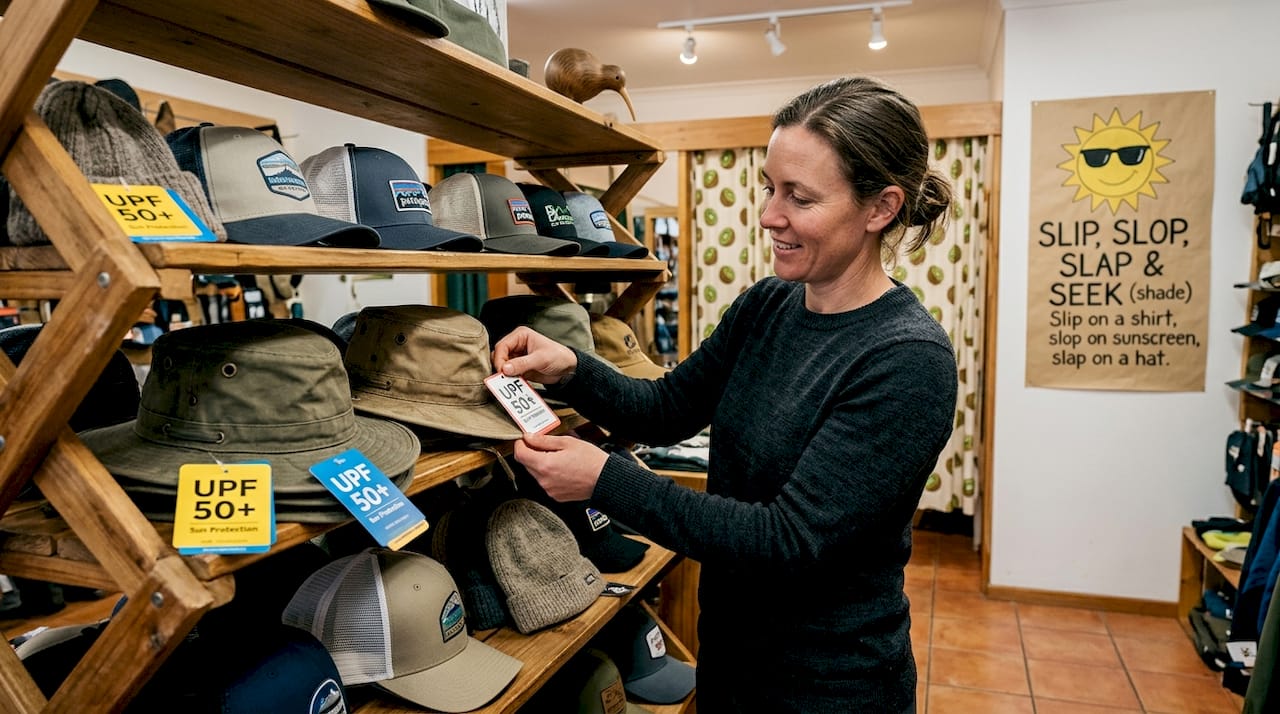
UPF 50+ hats tested as top performers for breathability, packability, and protection in hiking conditions. This matters in New Zealand because you’re often dealing with sun and wind at the same time. A hot, stuffy hat gets taken off, which defeats the purpose entirely.
Steps to pick the right hat for your adventure:
- Identify your main activity. Fishing, tramping, cycling, and mountain work have different demands.
- Check the UPF rating. Look for 50+ on the label. If there’s no rating, assume minimal protection.
- Measure the brim. For sun-heavy activities, 7.5cm or wider is the minimum worth wearing.
- Test the fit with a light tug. It should stay put without a chin strap in a brisk indoor breeze.
- Pack it in your bag before buying. If it doesn’t crush and recover well, check packability first.
- Wear it with your sunglasses. Some wide-brim hats conflict with goggle or glasses frames.
Hat materials comparison:
| Material | UPF performance | Dries fast | Best for |
|---|---|---|---|
| Treated synthetic | Excellent | Yes | Hiking, fishing, cycling |
| Wool | Moderate | No | Cold, damp conditions |
| Cotton (untreated) | Poor | No | Casual wear only |
| Merino blend | Good | Moderate | Year-round versatility |
| Straw/natural fiber | Variable | Yes | Beach, low-exertion days |
Pro Tip: Try hats in-store with your day pack on. The pack’s shoulder straps and head position change how a brim sits. What feels right on a shelf may not feel right on a trail after two hours. Look for hats that work as best hats for every season to get year-round value from one purchase.
Also consider selecting durable headwear that balances NZ-specific conditions with a look you’ll actually reach for every morning.
Real-life scenarios: How the right hat prevents risk and boosts enjoyment
The technical details matter, but nothing proves the value of the right hat like outdoor experience.
Consider three common New Zealand situations:
Trampers on an alpine track: Those without hats or with cotton caps report sunburned necks and early fatigue. Those with UPF legionnaire hats or wide-brim models stay protected for the full day and are more willing to push to the summit. The hat didn’t just protect them. It kept them in the game.
Coastal anglers: Fishing exposes you to direct sun and reflected UV from the water surface. A top summer hat with a wide brim and UPF 50+ fabric does double duty here. Anglers who skip the hat typically reach for sunscreen more often and still miss protected areas.
Road cyclists: Bright or reflective hats under a helmet aren’t just a style move. They improve visibility at intersections and on rural roads. Stylish headwear that combines function and appearance makes riders more likely to actually wear it every session.
Mistake vs. prepared: What actually happens outdoors
- Mistake: Wearing a fashion cap with no UPF rating on a full-day hike. Result: sunburn, eye strain, and early fatigue.
- Prepared: UPF 50+ wide-brim hat with chin strap. Result: comfortable, protected, and still going strong at hour six.
- Mistake: Leaving the beanie behind on a “summer” alpine walk. Result: wind chill on the exposed ridge drops body temperature fast.
- Prepared: Lightweight merino beanie in the pack. Result: stays warm, keeps moving, avoids early descent.
“For intense activity, breathability can matter more than maximum UV coverage. A hat that overheats you comes off. Test in wind and rain before committing to it on a long route.”
The best outdoor hat is the one you actually wear. That means it has to feel right, look right, and work across the conditions you’ll face.
What most outdoor guides miss about hats and safety in NZ
Here’s an honest take: most outdoor safety guides treat hats as a checklist item. Wear a hat. Done. But that misses the real reason so many people end up unprotected outdoors. They own a perfectly functional hat. They just don’t wear it because it doesn’t feel like them.
An uncomfortable hat gets left in the car. An ugly hat gets swapped for sunglasses. Real safety comes from gear you genuinely want to put on every single day, not gear that technically qualifies.
This is why style and comfort are not vanity. They’re core to safety outcomes. Invest in premium headwear for NZ that fits your personality and performs for your activity. You’ll wear it more consistently than a hat you tolerate.
Pro Tip: Prioritize hats that serve at least two roles. A hat that works for your morning walk and your weekend tramp becomes a habit, not an afterthought.
Find your perfect outdoor hat for safety and adventure
Ready to put these insights into practice? Urban Caps stocks a wide range of hats built for exactly what New Zealand outdoors demands. UPF-rated styles, wide-brim options, packable designs, and weather-ready beanies are all available, proudly delivered across NZ with free shipping.

You’ve done the reading. Now it’s time to find the hat that fits your lifestyle. Shop outdoor hats across all styles and activity types, or explore sun-smart hats matched to NZ conditions. Trusted by Kiwis nationwide, Urban Caps makes it easy to gear up and get out there with confidence.
Frequently asked questions
What is UPF in hats and why does it matter?
UPF (Ultraviolet Protection Factor) measures how well a fabric blocks UV rays. UPF 50+ hats block 98% of UV radiation, which is critical in New Zealand where UV levels far exceed the global average.
How wide should a brim be for sun safety?
Experts recommend at least a 7.5cm brim. A 7.5cm brim with neck coverage can reduce facial melanoma risk by up to 70% when combined with other sun protection practices.
Can a hat prevent hypothermia in summer?
Yes. Even in summer, warm hats retain body heat on exposed alpine ridges and cold, windy trails where temperatures can drop significantly within minutes.
Are all outdoor hats suitable for high-exertion activities?
Not always. For intense activity, breathability can matter more than maximum UV coverage, since a hot, poorly ventilated hat gets removed, which eliminates its protective value entirely.