

How to select durable headwear for NZ style in 2026
You buy a hat you love, wear it through one Kiwi summer, and by March it’s faded, misshapen, and barely holding together. Sound familiar? New Zealand’s intense UV, coastal winds, and unpredictable rain are genuinely tough on headwear. Durable headwear prioritizes materials like wool for year-round versatility, technical UPF 50+ fabrics for sun protection, and structured construction with reinforced stitching. This guide gives you a clear, practical path to choosing headwear that looks great and actually lasts.
Table of Contents
- What makes headwear durable?
- Essential preparation: Define your needs and climate
- Step-by-step: How to select the most durable headwear
- Common mistakes and expert troubleshooting tips
- How to know if you’ve chosen well: Signs of lasting headwear
- Where to find quality, durable headwear in New Zealand
- Frequently asked questions
Key Takeaways
| Point | Details |
|---|---|
| Material matters most | Wool and UPF 50+ offer the longest lifespan and sun safety for New Zealanders. |
| Features fit conditions | Choose wide brims for sun, chinstraps for wind, and adjustability for comfort. |
| Test for quality | Check construction, fit, and certified UV ratings before you buy. |
| Regular care extends life | Store hats properly and follow care instructions to ensure years of use. |
What makes headwear durable?
Durability in a hat isn’t just about thick fabric. It’s the combination of the right material, smart construction, and built-in resistance to the elements. A hat that ticks all three boxes will outlast a cheaper alternative by years.
Wool lasts 2-3x longer than most synthetics, and locally sourced New Zealand wool extends hat lifespan by around 25%. UPF 50+ certified fabrics block up to 98% of UV rays, which matters a lot given New Zealand UV protection levels that regularly hit extreme on the UV index. That’s not a minor detail. That’s the difference between a hat that protects you and one that just sits on your head.
Here’s a quick material comparison to help you decide:
| Material | Lifespan | UV Protection | Moisture Management | Best Use |
|---|---|---|---|---|
| Wool | 5-10+ years | Moderate to high | Excellent | Year-round, outdoors |
| UPF 50+ Synthetic | 3-5 years | Very high | Good | Sun-heavy activities |
| Cotton | 1-3 years | Low | Average | Casual, low-intensity |
| Polyester blend | 2-4 years | Moderate | Good | Everyday wear |
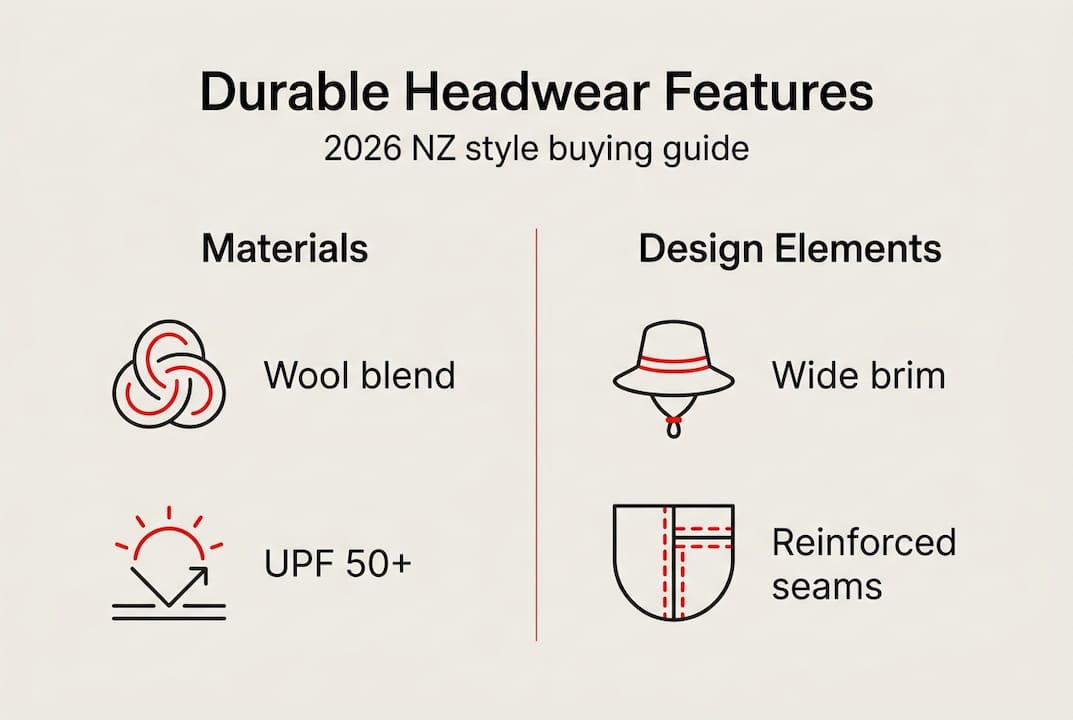
When you’re shopping, look for these five durability features:
- Material quality: Wool or certified UPF technical fabric
- Brim rigidity: Firm, reinforced brim that holds shape under wind
- Sun protection: UPF 50+ certification clearly labeled
- Moisture management: Sweatband lining or mesh panels for ventilation
- Reinforced fit band: Adjustable closure with strong stitching at stress points
For premium headwear for style and outdoor use, these five features are non-negotiable. You can also check expert-tested sun hats for independent performance benchmarks.
Essential preparation: Define your needs and climate
Once you know what makes a hat durable, it’s time to match those features to your unique Kiwi lifestyle and climate. Start by listing how you actually use headwear. Daily commuting, hiking, beach days, travel, or making a style statement each call for slightly different features.
New Zealand’s climate throws a specific set of challenges at your headwear:
- Strong UV: Extreme UV index ratings are common from October through March
- Coastal wind: Gusts that can lift an unsecured hat off your head in seconds
- Unpredictable rain: Sudden showers that soak unprotected fabrics fast
- Temperature swings: Cool mornings and hot afternoons in the same day
For outdoor hats for active Kiwis, matching features to conditions is the smartest move you can make. Wide brims (8cm or more) give serious sun coverage. Chinstraps are essential for coastal or high-wind environments. Mesh panels or ventilation eyelets keep you cool on warm days. Structured buckram panels help hats retain their shape over time, while packable styles work well for travel as long as you avoid machine drying them.
You can also check sun hat testing from OutdoorGearLab for real-world performance data across different conditions.
Pro Tip: Store your hat on a hook or hat stand, never crushed in a bag. Proper storage is one of the easiest ways to extend the life of any hat, structured or not.
Step-by-step: How to select the most durable headwear
Now that you understand your priorities, here’s how to confidently pick the right headwear for you. Follow this sequence and you’ll avoid the most common buying mistakes.
- Shortlist your use cases. Write down your top three activities. This narrows your feature list fast.
- Research materials and brands. Focus on wool, UPF-certified synthetics, or blends. Check if the brand lists material certifications.
- Check for certifications. UPF 50+ and local NZ wool sourcing are the two most reliable quality signals.
- Assess build quality. Look at stitching at the brim, sweatband attachment, and crown seams. Loose threads early on mean failure later.
- Test fit and function. Try adjustable bands, check the weight (under 120g is ideal for comfort), and look for ventilation eyelets or mesh panels.
Brim width between 3-8cm provides solid coverage without becoming unmanageable in wind. Weight under 120g keeps the hat comfortable for all-day wear. These aren’t arbitrary numbers. They come from real field testing.
Here’s a quick comparison of three common hat types for Kiwi conditions:
| Hat type | Durability | UV protection | Wind resistance | Style versatility |
|---|---|---|---|---|
| Wool fedora | Very high | Moderate | Good with brim | High |
| UPF 50+ bucket hat | High | Very high | Moderate | Moderate |
| Cotton baseball cap | Moderate | Low | Low | High |
For timeless hat styles that work across seasons, wool fedoras and structured caps consistently outperform casual cotton options. You can also browse classic hat design guides and sports hat examples for more inspiration. For a broader overview of top picks, the best premium hat choices guide is worth a read.
Pro Tip: Before buying, gently bend the brim. A quality hat springs back. A cheap one creases and stays that way. That simple test tells you a lot about long-term structure.
Common mistakes and expert troubleshooting tips
Even well-informed buyers can misstep. Here are the five most common errors people make when buying headwear for New Zealand conditions:
- Skipping the technical details: Ignoring UPF ratings or material specs because the hat looks good
- Ignoring care instructions: Machine washing or tumble drying hats that need hand washing and air drying
- Skipping fit testing: Buying online without checking sizing charts or adjustable fit options
- Choosing fashion over protection: Picking a narrow brim because it looks sleek, then getting sunburned
- Poor storage habits: Stacking hats or leaving them in hot cars, which warps brims and fades color
Expert note: Always hand wash structured hats with mild soap and cold water. Never use a machine dryer. Reshape the crown while damp and air dry on a flat surface or hat stand. This single habit can double the usable life of a quality hat.
Sunday Afternoons Ultra Adventure scores 83/100 in independent testing, and wool hats with proper care routinely last 5 to 10 years or more. That’s real-world proof that maintenance matters as much as the initial purchase.
If your hat loses shape, dampen it lightly and reshape by hand, then let it dry naturally. For stains, spot clean immediately with cold water. Fading usually means UV damage from extended exposure without rotation. Check the classic headwear style guide for more care and styling tips.
How to know if you’ve chosen well: Signs of lasting headwear
With everything in place, here’s how to confirm your new headwear stands up to daily Kiwi life. After six months of regular wear, a quality hat should show these signs:
- Shape retention: Crown and brim still hold their original form
- Color fastness: No significant fading despite sun exposure
- Comfort consistency: Fit band still feels secure without stretching out
- UV performance: UPF rating intact if washed per care instructions
- Structural integrity: No loose stitching, fraying, or brim separation
Natural wool outperforms synthetics by 2 to 3 times in longevity and holds its shape better with proper care. That’s a significant gap. A well-maintained wool hat bought today could still be your go-to in 2031.
Here’s a quick self-check after six or more months of wear. Ask yourself three questions: Does the hat still sit the same way it did on day one? Does the brim still block sun effectively? Is the fit band still snug without being tight? If you answer yes to all three, you made a smart choice.
For more guidance on building a wardrobe of pieces that last, the premium style guide covers how to pair durable headwear with everyday and outdoor looks.
Where to find quality, durable headwear in New Zealand
Ready to upgrade your headwear? Here’s where to find the best quality options without guesswork.
Buying local means you get faster delivery, easier returns, and access to headwear actually designed for Kiwi conditions. At Urban Caps, every product listing includes material details, care instructions, and customer reviews so you can make an informed call before you buy.

If you’re after a classic, long-lasting option, the fedoras hat selection features wool-blend styles built for both style and durability. For something more casual with serious sun coverage, the corduroy bucket hats are a popular pick with Kiwi customers. Browse the full range, check the material specs, and read the reviews. You’ll find the right hat faster than you think.
Frequently asked questions
What is the best material for durable headwear in New Zealand?
Wool, especially locally sourced, offers the best combination of longevity, UV protection, and comfort for Kiwi conditions. Local NZ wool extends hat lifespan by around 25% compared to standard synthetics.
How can I tell if a hat is truly UV-protective?
Look for a UPF 50+ tag, which means it blocks up to 98% of UV rays and retains that protection if you wash it according to the care instructions.
Are packable hats less durable?
Packable hats can last well if made with reinforced seams and quality fabrics. The key is to avoid machine drying them, which breaks down structure and shortens lifespan significantly.
Do structured hats last longer than unstructured ones?
Generally yes. Hats with buckram or reinforced panels hold their shape through regular wear and tend to have a longer usable life than soft, unstructured styles.