

How to select outdoor headwear that works
TL;DR:
- Choosing the right outdoor headwear requires assessing brim width, UPF ratings, and secure fit to ensure effective sun protection and durability. Wide-brim hats with UPF 50+ fabric and retention systems are essential for high-UV activities like fishing or hiking, while waterproof and ventilated designs suit wetter or hotter conditions. Proper fit and maintenance extend a hat’s protective performance, making practical features more important than style alone.
Knowing how to select outdoor headwear is one of those things that seems straightforward until you’re standing in a paddock at midday, your hat flying off in a gust, or realising your “waterproof” cap is soaking through. The right outdoor hat, what specialists call sun-protective headwear or performance headwear, does a lot of heavy lifting. It shields your face, ears, and neck from UV radiation, manages heat and moisture, stays put in wind, and ideally looks good doing all of it. This guide gives you the practical criteria to choose well, whether you’re hiking the Waitakere Ranges, fishing off the coast, or just gardening on a hot afternoon.
Table of Contents
- Key takeaways
- How to select outdoor headwear: functional features first
- Matching your hat to your activity
- Checking fit, coverage, and comfort before you buy
- Caring for your outdoor hat
- My honest take on outdoor hat selection
- Find your next outdoor hat at Urbancaps
- FAQ
Key takeaways
| Point | Details |
|---|---|
| UPF rating matters, but so does design | Aim for UPF 50+ fabric, but check brim continuity and coverage — label claims alone are not enough. |
| Brim width is your best sun defence | A brim of at least 7 cm (about 2.75 inches) around the full circumference covers your face, ears, and neck properly. |
| Match your hat to your activity | Ventilated caps suit high-output hiking; structured wide-brims suit slower, sun-heavy activities like fishing or gardening. |
| Fit and retention determine real-world performance | A hat that blows off or shifts in wind offers zero protection. Adjustable straps and chin cords are not optional extras. |
| Care extends protection | Washing and storing hats correctly preserves waterproof coatings and fabric integrity, keeping the protection you paid for. |
How to select outdoor headwear: functional features first
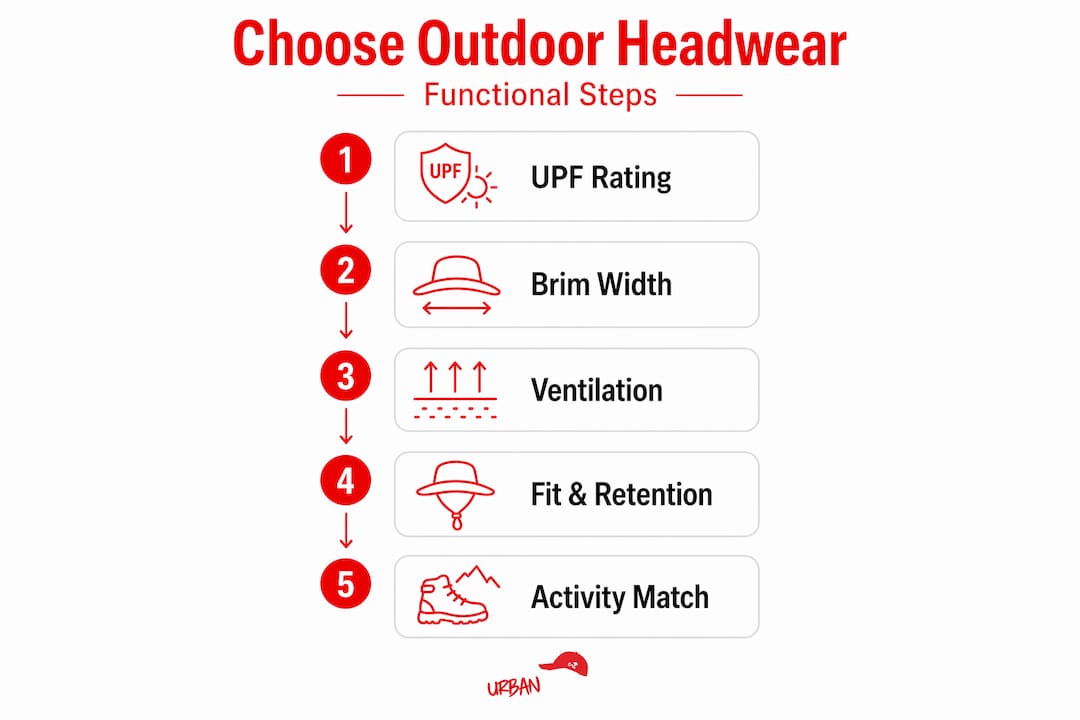
When choosing outdoor headgear, the instinct is to start with style. That is backwards. Start with what the hat needs to do, then find something you like the look of. The technical features below are the ones that actually determine whether a hat works.
UPF ratings and what they actually mean
UPF stands for Ultraviolet Protection Factor. It measures how much UV radiation a fabric blocks. UPF 50+ fabric is the standard to aim for, allowing less than 2% of UV radiation through. UPF 30 to 49 is acceptable, but 50+ gives you meaningful headroom on high-UV days.
Here is the catch: a hat can carry a UPF 50+ label and still leave you exposed. Only about 60% of hats tested in rigorous clinical studies actually met strict design and coverage protocols. The label tells you about the fabric. It tells you nothing about whether the brim covers your ears, or whether there are gaps at the ventilation points. You need to look at both.
Brim width and coverage
Brim width is arguably the single most impactful design variable. MD Anderson recommends brims close to 5 inches (about 12.5 cm) wide for best coverage of the face, ears, and neck. A minimum of 2.75 inches around the full circumference is workable for moderate UV exposure.
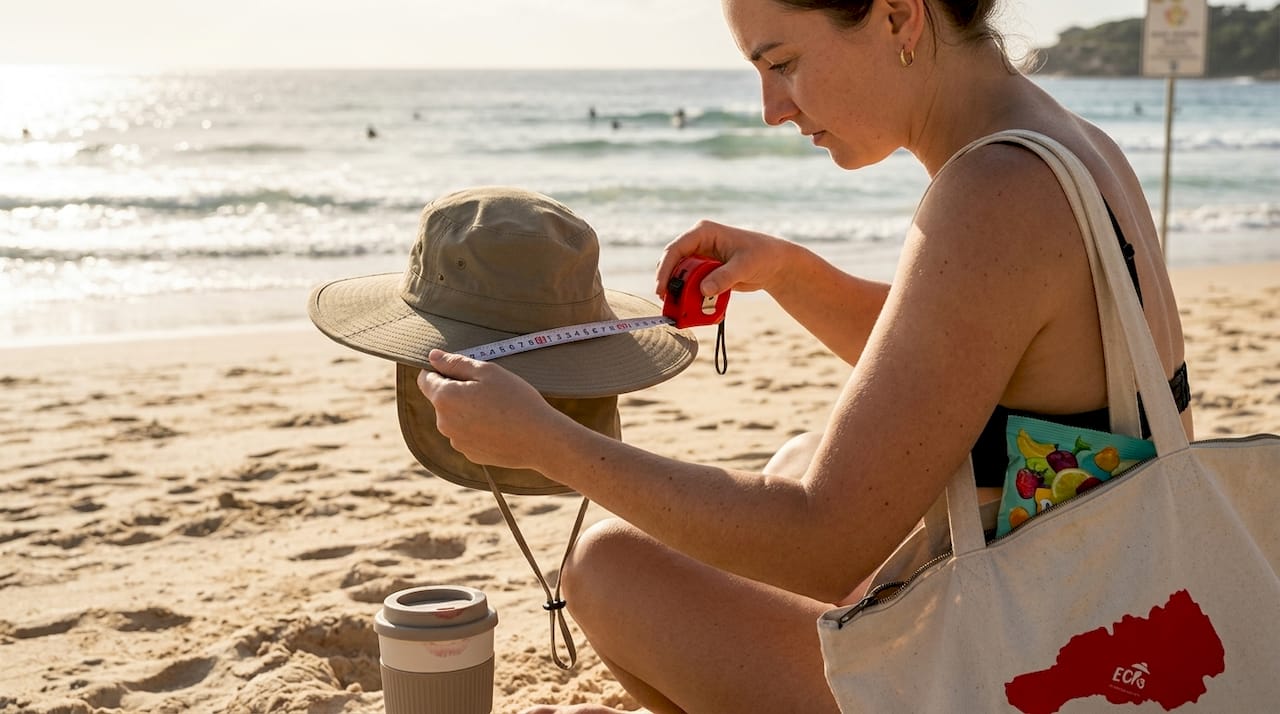
The key word is “around.” A wide front brim that tapers to nothing at the sides does not protect your ears. Look for continuous brim coverage all the way around the hat, not just at the front and back.
Materials for weather conditions
- Hot, sunny conditions: Lightweight, tightly woven fabrics in light colours. Light-coloured materials reflect sunlight and reduce heat absorption without compromising UPF performance.
- Wet or rainy conditions: Look for waterproof, breathable fabrics like GORE-TEX with fully taped seams. Taped seams prevent leakage at stitch points, which is where most “waterproof” hats actually fail.
- Cold conditions: Insulated beanies or fleece-lined caps. Less relevant for UV but critical for comfort and heat retention.
Ventilation and the tradeoff you need to know
Mesh panels and eyelets help heat escape, which is why ventilated hats feel so much more comfortable on a long, sweaty hike. The tradeoff is that mesh openings reduce UV protection at those points. Ventilation allows heat to escape, but tight weave and full coverage remain priorities for UV protection.
If you need ventilation, position it high on the crown rather than at the sides of the brim, where UV exposure is lower. Check that the mesh is still rated and tested, not just decorative.
Fit and retention systems
A hat that blows off is not protecting you. Adjustable chin straps and back cinches are the practical solution for windy conditions and active movement. These are not afterthoughts. For hiking, trail running, or coastal activities, retention systems engineered for motion keep the hat where it needs to be.
Pro Tip: When trying on hats for outdoor use, tilt your head down sharply and shake it. If the hat shifts significantly without a retention system, it will come off on a ridge or in a sea breeze. Try the chin cord before you decide you do not need it.
Matching your hat to your activity
No single hat suits all weather or all activities. The features that make a hat excellent for high-output trail running make it a poor choice for a slow fishing session under full sun. Here is how to match what you buy to what you actually do.
1. High UV exposure, slower-paced activities (fishing, gardening, beach days) This is where wide-brim hats earn their place. You want maximum brim coverage, a tight weave, and UPF 50+ fabric. Bucket hats and broad-brim sun hats work well here. Look for a hat with a neck flap if you spend long hours with the sun behind you. Fishing in New Zealand or Australia means UV levels that are consistently among the highest in the world, so this is not the category to compromise in.
2. Hiking and trail activities You need a balance of sun protection, ventilation, and secure fit. A vented wide-brim hat or a structured cap with a neck flap suits most day hikes. For multi-day trips with variable weather, consider a packable wide-brim with an integrated retention cord. Check out top headwear for outdoor activities to compare options suited to trail use.
3. Water sports and coastal activities Salt spray, wind, and full sun simultaneously. You need a hat that stays on, dries quickly, and has a full brim. Many surf and paddle hats use quick-dry nylon or polyester. Chin cords are non-negotiable here.
4. Wet weather hiking or tramping A structured brim that does not collapse when wet, combined with a waterproof shell, is the goal. Waterproof hats with fully taped seams and structural brims prevent both leaks and the soggy-brim effect that channels water onto your face and neck.
5. Everyday outdoor wear and casual use This is where style comes into the equation more readily. Dad hats, caps, and fedoras can all work for moderate outdoor use. Pair them with sunscreen for exposed areas the brim does not reach. The CDC and American Cancer Society advise applying sunscreen about 30 minutes before sun exposure and reapplying every two hours, making hats and sunscreen complementary tools, not alternatives.
Pro Tip: For selecting hats for hiking in variable conditions, pack two: a vented cap for high-effort uphill sections and a wide-brim for ridgelines and rest stops. The effort to carry a second hat is minimal; the difference in comfort and protection is significant.
Checking fit, coverage, and comfort before you buy
The best outdoor hat guide in the world means nothing if the hat you choose fits poorly. Here is how to assess fit properly.
Measuring head circumference
Wrap a soft tape measure around your head about 2.5 cm above your ears. That is the circumference you use to match size charts. Sizes vary significantly between brands, so always check the specific size chart rather than assuming your size is universal.
| Head circumference | Typical hat size |
|---|---|
| 53–54 cm | Small |
| 55–56 cm | Medium |
| 57–58 cm | Large |
| 59–61 cm | Extra large |
| 62 cm+ | XXL or adjustable |
Most outdoor performance hats come in S/M and L/XL with adjustable sweatbands or back cinches, which helps account for variation. Structured hats (stiff brims, reinforced crowns) tend to run truer to size than packable fabric hats.
What to check for coverage
- Run your fingers along the brim. Does it extend evenly all the way around? Any tapering at the sides means your ears and temples get less protection.
- Check opacity by holding the crown up to a light source. If you can see the light source clearly through the fabric, it is too loosely woven for reliable UV protection regardless of what the label says.
- Look at the seam construction. For sun hats, check that the brim is stitched or bonded to the crown without gaps. For waterproof hats, fully taped seams are visible on the inside.
Breathability and sweat management
Press the fabric lightly between your fingers. Natural fibres like linen and cotton breathe well but dry slowly. Synthetic fabrics dry faster and often have moisture-wicking treatments. For high-exertion activities, synthetic or blended fabrics are generally more practical.
Pro Tip (testing for breathability): Blow through the fabric gently. If air passes through with minimal resistance, it will breathe. If it takes real effort, it is dense enough to trap heat on a summer day. This test also gives you a rough sense of UV protection: fabrics you can barely breathe through offer better UV blocking.
Packability and maintenance considerations
- Wide-brim structured hats protect better but do not pack flat.
- Packable hats (crushable straw, soft nylon) are convenient but may lose shape over time.
- Check whether the hat is hand-wash only or machine washable. A hat you cannot clean practically is a hat you will stop using.
Common mistakes to avoid:
- Buying a hat purely for the UPF label without checking brim width and coverage continuity.
- Choosing fashion-forward narrow brims for genuinely high-UV conditions.
- Ignoring the retention system until the hat is already halfway to the horizon.
- Buying a size too large and relying on a sweatband to compensate.
Caring for your outdoor hat
Buying the right hat is half the work. Keeping it functional is the other half.
Cleaning and waterproofing
Proper cleaning and drying preserves water-resistant coatings and fabric integrity. The general rules:
- Spot-clean salt, sweat, and sunscreen residue after each use. These break down fabric treatments faster than washing does.
- Hand wash with mild soap and cool water for most outdoor hats. Hot water degrades DWR (Durable Water Repellent) coatings.
- Do not put structured hats in a tumble dryer. Air-dry on a flat surface or a round object that matches the crown shape to maintain structure.
- Reapply DWR spray periodically if the hat’s water beading diminishes. A quick spray and gentle heat (a hairdryer on low) restores the coating without full re-treatment.
Storing your hat correctly
Do not crush structured hats under other gear for extended storage. Keep wide-brim hats upright or hang them from the crown, not the brim, to prevent warping. Fabric hats can be rolled for transport but should be reshaped when stored.
When to replace your hat
- If the brim has deformed and no longer provides consistent coverage, replace it.
- If waterproofing cannot be restored after re-treatment, the coating has failed.
- If the fabric has faded significantly or thinned at stress points, the UPF protection has likely reduced as well.
Pro Tip: Do not rely on a hat alone for sun safety. Even wide-brim hats combined with sunscreen form a more effective defence than either alone. Your hat handles the areas it covers; sunscreen handles the rest.
Avoiding false security from UPF marketing is genuinely worth emphasising here. A hat that meets your activity needs, fits correctly, and is maintained properly will outperform a premium hat with impressive claims but poor brim coverage or a loose fit every single time.
For guidance on balancing style with sun protection, the good news is that well-designed outdoor hats have come a long way. You no longer have to choose between looking good and being protected.
My honest take on outdoor hat selection
I’ve watched people make the same mistakes with outdoor headwear repeatedly, and the pattern is always the same. They buy on aesthetics, discover the hat is impractical in real conditions, and then either tough it out or stop wearing it.
In my experience, the two most underestimated features are brim width and retention systems. People consistently underestimate how much brim width matters. A 6 cm brim looks decent and feels manageable, but on a midsummer day on open water or a ridge walk, that extra 3 cm to 9 cm of brim makes a measurable difference to how much UV your ears and neck actually receive.
What I’ve also found is that UPF claims without proper design are almost meaningless in practice. I’ve tested hats that carried UPF 50+ labels but had visible light passing through the fabric at the crown seams and side vents. The clinical data on hat design backs this up. The label is a starting point, not a guarantee.
Retention systems are the other thing people dismiss until they need them. A stiff sea breeze, a steep descent, or a sudden gust will test your hat in ways a shop fitting room never does. Retention systems built for motion rather than just shape friction keep hats stable in real outdoor conditions. If a hat I like does not have an adjustable chin cord or back cinch, I either add one or I reconsider.
The right hat does transform outdoor comfort. When you stop squinting, stop reapplying sunscreen to your neck every 45 minutes, and stop chasing your hat across a car park, you realise how much cognitive and physical load the wrong hat was adding to your day.
— Urban
Find your next outdoor hat at Urbancaps

At Urbancaps, we stock a wide range of outdoor hats built around the features this guide covers. Wide-brim options, structured bucket hats, and packable styles with UPF-rated fabrics are all part of the collection. Whether you’re after something that handles full-day sun on the water or a versatile everyday hat that works from the trail to town, you’ll find it here.
Every hat in the Urbancaps range is selected with durability and real-world function in mind. We’re proudly NZ owned and operated, with fast shipping across New Zealand and a focus on headwear that actually fits Kiwi outdoor conditions. Browse the full outdoor headwear range and find a hat that matches your activity, your climate, and your style. Free shipping on all NZ orders.
For more on what to look for in hats before you buy, the UV protection guide at Urbancaps breaks down the technical side in plain terms. Good gear, trusted by Kiwis nationwide. ♡
FAQ
What UPF rating should an outdoor hat have?
Aim for UPF 50+ for the best UV protection outdoors. UPF 30 to 49 is acceptable for moderate exposure, but higher-rated fabrics allow significantly less UV radiation through.
How wide should the brim be on a sun hat?
A brim of at least 7 cm (about 2.75 inches) all the way around provides solid coverage for your face, ears, and neck. MD Anderson recommends brims close to 12.5 cm (5 inches) for maximum sun protection.
Do I need a waterproof hat for outdoor activities?
Not always, but for hiking, tramping, or any activity in variable weather, a waterproof hat with breathable fabric and taped seams is worth having. It prevents the brim collapse and leakage that make standard hats uncomfortable in rain.
How do I know if my outdoor hat fits correctly?
Measure your head circumference 2.5 cm above your ears and check the brand’s size chart. The hat should sit level without pressure points, and any retention system should hold it firmly without the hat shifting when you move your head.
Can I trust UPF labels on outdoor hats?
UPF ratings reflect fabric testing, but not all labelled hats meet rigorous coverage standards in practice. Check brim width, coverage continuity, and fabric opacity as well as the UPF number before buying.