


Pack a Hat for Travel in NZ: 3 Pre Travel Checks to Avoid Mould
Pack structured hats crown-down: stuff the crown with soft items like socks or a t-shirt, then build a wall of rolled clothing around the brim so nothing can crush it. Keep the hat in carry-on where you can, since checked luggage gets thrown around far more. If you’re unsure a hat will survive the trip, wear it instead, but only once it’s completely dry.
TL;DR:
- Wearing fragile or structured hats is safer than packing them, especially if they have wired brims or are irreplaceable.
- Straw and finely woven hats should be worn or placed in rigid hat boxes, as they easily distort if folded or forced into shape.
- Crushedable synthetic hats are the easiest to pack because they recover shape quickly, requiring minimal or no steaming after travel.
- Proper packing involves stuffing the crown with soft items and building a brim fortress with rolled clothing to prevent flexing or crushing.
- Always ensure hats are completely dry before packing to avoid mold, and position them in carry-on luggage or protected containers for added safety.
Table of Contents
- How do you pack a hat for travel? Quick checklist
- Step-by-step: the crown-down packing method
- Packing by hat type: what changes for straw, wool, felt and crushable hats
- Packing for carry-on, checked luggage, duffels and backpacks
- The mistakes that ruin hats for good
- Fixing a squashed hat once you’ve landed
- Urban Caps’ pre-travel checks before you pack
- Three travel hats worth packing (or wearing) on your next trip
- Urban Caps travel picks and where to buy them
- Wear it or pack it: my final call
- Sources
- FAQ
How do you pack a hat for travel? Quick checklist
Before anything goes near the suitcase, run through a few checks. Skipping this is where most travel hat disasters start.
- Dry check: the hat must be bone dry, with no damp patches from sweat or a last-minute wash. Straw and felt fibres can start growing mould within 48 hours if packed even slightly damp.
- Clean check: brush off dust, and trim any loose threads before you pack. A sharp edge caught between fabric layers can pull a thread or scuff a felt surface.
- Material ID: straw, wool, felt, crushable synthetic, or a soft cap. Each behaves differently under pressure, and the method below assumes you know which one you’re dealing with.
- Stuffing supply: two or three soft, lightweight items per hat. Socks, a folded t-shirt, or a light scarf work. Skip anything with buttons, zips, or a hard seam.
- Placement: crown-down, brim flat, surrounded by a wall of rolled clothing on all sides.
- Bag position: top layer of a carry-on, away from shoes, chargers, and toiletry bottles.
- Final call: if the hat is fragile, expensive, or irreplaceable, wear it on the plane instead of risking it in transit.
Pro Tip: Pack your hat last, right before you zip the bag closed. If you pack it early and keep adding items on top, you’ve undone the whole point of crown-down packing.
Step-by-step: the crown-down packing method
This is the sequence hat-care specialists and packing guides consistently point to, because it turns the hat’s own shape into its protection rather than its weak point.
- Gather your soft fillers first. Two to three socks, a rolled t-shirt, or a light scarf. Avoid anything with a zip, button, or buckle that could press an indent into the felt or straw from the inside.
- Stuff the crown firmly, not tightly. Push the filler in until the crown holds its shape under light pressure, but stop before the fabric feels stretched or the brim starts to bow outward. A crown that bulges has been overstuffed.
- Set the hat crown-down in the suitcase, brim resting flat against the case floor. This isn’t a cosmetic choice. Crown-down packing distributes weight across the brim so the brim acts as a load-bearing plate rather than a fragile edge that catches every knock.
- Build the brim fortress. Roll two or three items of clothing (jeans, jumpers, anything with some bulk) and pack them tight against the brim’s outer edge, all the way around. This stops the brim from flexing if the bag gets squeezed or dropped.
- Layer lighter items on top. T-shirts, underwear, anything soft and flat. Save shoes, toiletry bottles, and chargers for a different section of the bag entirely.
- Close the case slowly, checking the lid doesn’t press down directly on the crown as it seals. If the lid resists or bulges near the hat, redistribute weight rather than forcing the zip.
The logic behind this whole approach comes down to movement. A packed-but-not-crammed bag gives hats better stability than a half-full one, because loose space is what lets everything shift and create pressure points against the crown. A bag packed firmly, with the brim wall doing its job, barely lets the hat move at all between check-in and baggage claim.
Packing by hat type: what changes for straw, wool, felt and crushable hats
Not every hat responds to the crown-down method the same way, and knowing the difference before you pack saves you a ruined brim on arrival.
Straw and toquilla hats are the ones to treat with the most caution. Genuine Panama hats and other fine straw weaves can be permanently distorted if folded or forced into a shape they weren’t built for. If you own one of these, wearing it through the airport or investing in a hard-shell hat box beats risking it in a suitcase, even with careful stuffing.
Wool and felt hats tolerate the crown-down method well, provided there’s no wire built into the brim. Check the edge of the brim for a stiff internal wire. Unstructured felt without wiring can handle a temporary fold far better than a wired or glued finish, and minor creasing usually steams out on arrival.
Crushable synthetic hats are the easiest option by a wide margin. These are engineered specifically to spring back after compression, which means less stuffing precision is needed and there’s no real need for post-travel steaming in most cases. If you’re building a travel wardrobe from scratch, this is the material category worth prioritising.
Baseball caps and other soft, unstructured hats need different handling again. Their fabric doesn’t hold a fixed shape, so the risk isn’t crushing, it’s the bill bending under weight. Position caps near the top of the bag or flat against one side, never jammed into a corner under other items.
- Straw or toquilla: wear it, or use a rigid hat box. Don’t fold.
- Wool or felt (no wire): crown-down packing works, steam fixes small creases.
- Crushable synthetic: pack freely, minimal aftercare needed.
- Baseball caps and soft hats: top of bag or flat against a side, bill unbent.
Pro Tip: If you’re not sure whether your felt hat has a wired brim, run your fingers slowly around the edge. A wire feels like a firm, continuous ridge under the fabric, unlike the softer give of an unwired brim.
Packing for carry-on, checked luggage, duffels and backpacks
Where you put the hat matters almost as much as how you pack it, and the right placement changes depending on the bag you’re using.
Carry-on is the best option every time it’s available. You control the handling, the bag rarely gets thrown, and you can adjust the hat’s position mid-journey if something shifts. Position it in a top corner or as the topmost layer, away from the wheels and the base of the bag.
Checked luggage takes more force from baggage handling systems, so add an extra buffer layer of rolled clothing around the whole hat, not just the brim. Avoid letting any hard-sided item press directly against the crown. A dedicated hat envelope or a compact hat box gives real peace of mind if you’re checking a structured hat you can’t avoid checking.
Duffel bags and backpacks need the hat positioned against a flat interior side, or right at the top under the main opening. These bags flex more than a hard suitcase, so there’s less structural protection built in. If your duffel is soft-sided and only half full, wearing the hat is often the safer choice than risking it inside.
- Carry-on: top layer or a firm corner, hat handled last, unpacked first.
- Checked bag: extra buffer layers, consider a hat box or envelope for structured styles.
- Duffel or backpack: flat against a rigid interior panel, or worn if the bag has spare room.
- On the move: a hat clip attached to a bag strap works for short transfers between transport, though it’s not a substitute for proper packing on longer flights.
The mistakes that ruin hats for good
Most hat damage on trips traces back to one of three avoidable mistakes, and each one is preventable with a few extra minutes of care before you close the bag.
Packing a hat that isn’t fully dry is the worst of the three, because mould can take hold in damp straw or felt fibres within about 48 hours, and by the time you unpack, the damage is often irreversible. Air-dry any hat completely before it goes anywhere near the suitcase, even if that means delaying packing by a day.
Overstuffing the crown is the second common error. Pushing filler in until the fabric strains stretches the sweatband and distorts the shape permanently, undoing the entire point of the crown-down method.
Third, keep heavy or rigid items (shoes, water bottles, hardback books) well away from the hat zone of the bag. And skip plastic bags for storage. Breathable fabric bags or the hat’s own box let air circulate, which matters far more than most travellers assume when a hat sits packed for days on end.
Fixing a squashed hat once you’ve landed
A crease or a slightly flattened crown after a long flight isn’t the end of the story for most hats. Fixing it takes minutes, not a trip to a milliner.
- Steam it briefly. Hold the hat 15 to 20 centimetres above a boiled kettle or use a garment steamer on a low setting. A short burst of steam softens the fibres enough to reshape, and most travel wrinkles come out within a couple of minutes. Keep steam away from leather trims or bands, since moisture can stain or warp leather.
- Reshape while the hat is still warm. Gently press the crown back into shape with your hands, working from the centre outward, and smooth the brim flat.
- Rest it to set the shape. Place the hat crown-down over a rolled shirt, a bowl, or another rounded form roughly its own size, and leave it to air-dry fully before wearing it again.
- Know when to stop. If a crease won’t budge after two gentle steam attempts, a professional hat cleaner or milliner can often save it. Forcing it further risks cracking straw or scorching felt.
Pro Tip: No steamer or kettle on hand? A hot shower works in a pinch. Hang the hat in the bathroom while you shower, then reshape it by hand once the steam has softened the fibres.
Urban Caps’ pre-travel checks before you pack
Every travel hat recommendation should be checked quickly for three criteria before suggesting it for a suitcase: material, structure, and dryness. Material tells you whether a hat is straw, wool, felt, or a crushable synthetic, which decides whether it goes in the bag at all. Structure means checking for wires, stiff buckram, or glued brims that won’t tolerate folding. Dryness is the non-negotiable one. A damp hat doesn’t go in a bag, full stop.
This is exactly why crushable materials get so much attention in some travel hat ranges. They’re built to survive the kind of packing described throughout this guide, without the material-specific caution that straw and structured felt demand. For a deeper breakdown of packability by style, the travel hats guide covers the checks in more detail.
Three checks worth running before every trip:
- Material check: confirm straw, wool, felt, or crushable synthetic before deciding how to pack.
- Structure check: feel the brim edge for wire or stiff glued seams.
- Dryness check: hats must be completely dry, with no residual dampness from wear or washing.
Three travel hats worth packing (or wearing) on your next trip
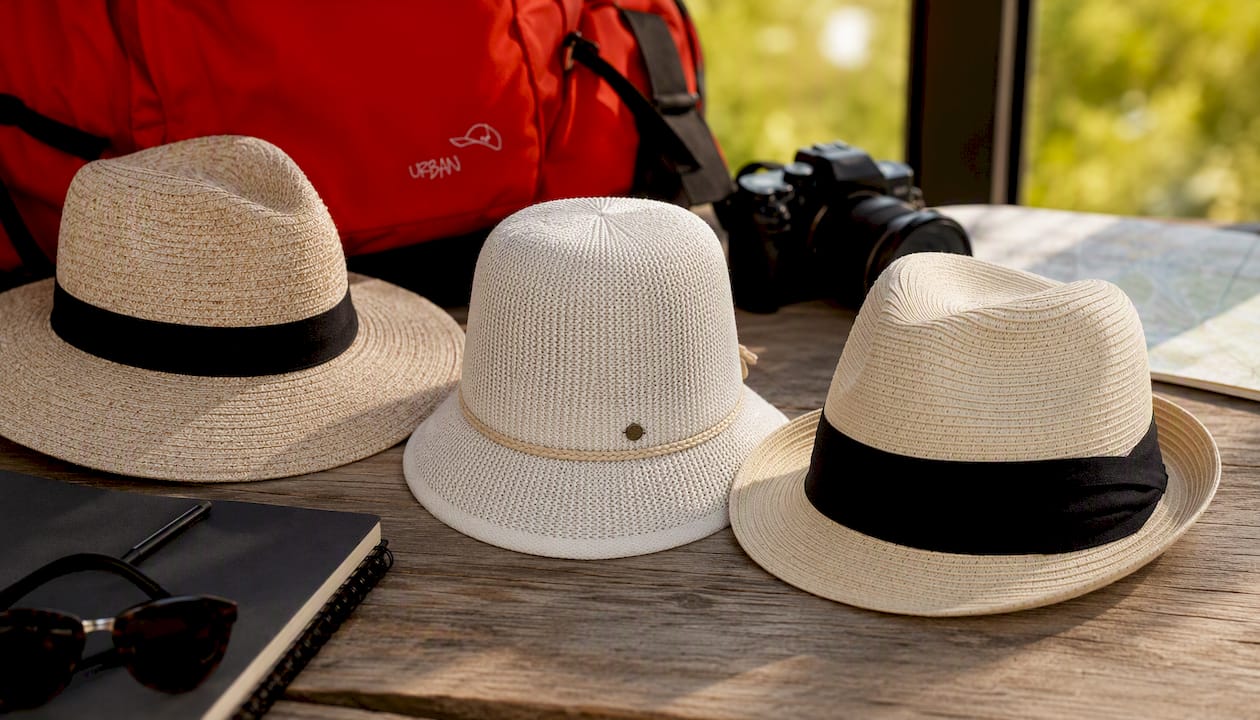
If you’re shopping for a hat that’s actually built for the suitcase, three options stand out for different kinds of travel.
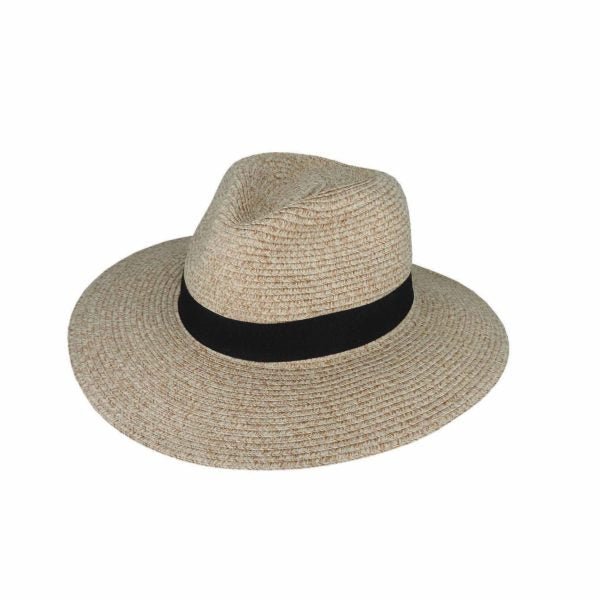
The Havana Crushable Two-Tone Safari Traveller Hat suits travellers heading somewhere sunny and outdoor-heavy. Its adjustable fit and crushable build mean it handles the crown-down method described above without complaint, and it bounces back after a long haul in carry-on.
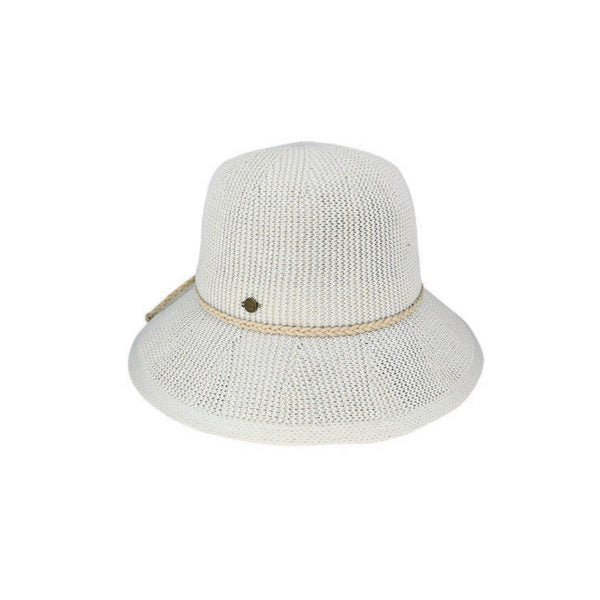
For lighter packing, the Henrietta Crushable Polyester Knit Facesaver Hat is built around sun protection without adding bulk to a bag. It’s a solid pick for travellers prioritising space over structure, since it compresses down small and recovers quickly.
If you want something with a sharper, more formal look that still survives a suitcase, the Mack Men’s Crushable Braided Trilby Hat offers structure without the fragility of a traditional felt trilby, thanks to its inner size adjuster and crushable construction.
Urban Caps travel picks and where to buy them
Some retailers stock travel hats built specifically to survive the crown-down method rather than fight against it, which matters more than most people realise until they’ve unpacked a squashed brim at the other end of a flight. The three picks above cover the main travel scenarios: outdoor and sun-heavy trips, minimalist packing, and smart-casual travel where you still want a proper shape on arrival. Each product page lists size and fit details, so check those before ordering if you’re buying for a specific head size or trip.
Ordering ahead of a trip is straightforward rather than a last-minute scramble when stock is held locally. Have a look at the Havana safari hat, the Henrietta facesaver hat, or the Mack trilby, check the size guide against your own measurements, and get your order in before your next trip lands on the calendar.
Wear it or pack it: my final call
Here’s the honest split. Wear anything fragile, expensive, or irreplaceable, and pack anything crushable without a second thought. That’s not a compromise, it’s just recognising that no packing method beats zero risk for a hat you’d genuinely be gutted to lose.
Think about how you’ll actually use the hat at your destination. A wide-brim straw hat for beach days earns its place on your head through security rather than in a suitcase corner. A crushable trilby for a smart dinner can go straight into carry-on and come out ready to wear. Match the packing decision to the trip, not the other way around.
— Urban
Sources
FAQ
What is the best way to pack a hat for travel?
Pack it crown-down with soft filler like socks or a t-shirt stuffed inside the crown, then surround the brim with rolled clothing so it can’t flex or collapse under pressure.
How do I protect a hat while travelling?
Keep it dry before packing, position it in carry-on where possible, and avoid placing anything heavy or rigid near it in the bag. Wear fragile hats instead of risking them in transit.
How do I pack a fitted or structured hat in a suitcase?
Fitted hats with wired or glued brims should go crown-down with firm (not tight) crown stuffing and a solid wall of rolled clothing around the brim edge. If the brim has a wire, avoid any folding.
How do I pack a packable or crushable hat?
Crushable hats, like Urban Caps’ crushable range, tolerate the crown-down method easily and spring back after compression, so precise stuffing matters less and post-travel steaming usually isn’t needed.