

Role of hats in fashion: premium style guide for NZ
Hats have transformed dramatically over centuries, evolving from essential sun and weather protection into powerful fashion symbols that define personal style. Today’s premium headwear blends heritage craftsmanship with modern design innovation, creating pieces that serve both functional and aesthetic purposes. In 2026, hats are declared the accessory of the year, with structured styles like fedoras, berets, and wide-brim designs leading global fashion trends. For New Zealand’s fashion-forward individuals, this evolution means access to locally crafted pieces that combine merino wool excellence with contemporary silhouettes, delivering both UV protection and runway-worthy appeal.
Table of Contents
- Key takeaways
- The history and evolution of hats in fashion
- Current global and New Zealand hat fashion trends
- Craftsmanship and materials in premium New Zealand headwear
- Choosing and styling hats for New Zealand fashion-forward individuals
- Explore premium New Zealand hats at Urban Caps
- Frequently asked questions about hats in fashion
Key Takeaways
| Point | Details |
|---|---|
| Structured styles dominate | In 2026 structured hats such as fedoras, berets, and wide brim designs lead fashion trends on runways and in street style. |
| NZ Merino Possum UV | New Zealand premium hats blend merino wool with possum fibers to provide UV protection and modern silhouettes. |
| Accessory of the year | Hats are declared the accessory of the year in 2026, reflecting their balance of style and function. |
| Global growth drivers | The global hat market is expanding, propelled by recycled wool fedoras and bucket hats across fashion conscious demographics. |
The history and evolution of hats in fashion
Hats evolved from practical protections to fashion symbols through centuries of material innovation and cultural transformation. Originally designed as shields against harsh weather and intense sun exposure, early hats used basic materials like woven straw and animal hides. These functional beginnings laid the foundation for increasingly sophisticated designs.
Material advancement revolutionized hat construction during the industrial era. Craftspeople discovered that felted wool offered superior shape retention and weather resistance compared to earlier materials. This discovery enabled structured styles that maintained their form through daily wear, transforming hats from temporary protection into durable fashion investments. Silk linings and grosgrain ribbons added luxury touches that elevated hats beyond mere utility.
Cultural significance expanded as different societies adopted hats as symbols of status, profession, and personal identity. Military uniforms incorporated distinctive headwear to denote rank and regiment. Religious communities developed specific hat styles that signaled devotion and tradition. Fashion houses in Paris and London began creating seasonal collections that showcased hats as central style elements rather than afterthoughts.
Key evolutionary milestones include:
- Ancient civilizations using basic woven materials for sun protection and ceremonial purposes
- Medieval Europe introducing felt-making techniques that enabled structured crown shapes
- Victorian era establishing hats as mandatory fashion accessories with elaborate decorative elements
- 1920s modernist movement simplifying designs toward sleek, geometric forms like the cloche
- Contemporary fusion of heritage techniques with performance fabrics for active lifestyles
Today’s premium headwear reflects this rich history while incorporating modern innovations. Designer bucket hats demonstrate how classic silhouettes adapt to current aesthetics. The transition from purely functional gear to fashion-forward accessories represents centuries of refinement in both craft and cultural perception.
Current global and New Zealand hat fashion trends
The global headwear market demonstrates remarkable momentum in 2026, with recycled wool fedoras and bucket hats driving sales across fashion-conscious demographics. Market analysts project continued growth at approximately 7.8% annually, fueled by consumers seeking accessories that make definitive style statements while supporting sustainable production methods.
Structured styles dominate high-fashion runways and street style photography. Fedoras with medium brims offer versatility for both formal and casual outfits. Pillbox hats return as sophisticated choices for special occasions, channeling vintage elegance with modern proportions. Berets maintain their artistic associations while wide-brim designs provide dramatic silhouettes that photograph exceptionally well for social media content.
| Style Category | Popular Materials | Price Range (NZD) | Key Features |
|---|---|---|---|
| Fedoras | Recycled wool felt | $120-$280 | Structured crown, medium brim, formal versatility |
| Bucket hats | Cotton canvas, corduroy | $45-$95 | Casual appeal, packable, streetwear favorite |
| Wide-brim | Merino wool blend | $150-$320 | Sun protection, dramatic silhouette, outdoor ready |
| Berets | Wool felt, cashmere | $65-$180 | Artistic aesthetic, compact form, European influence |
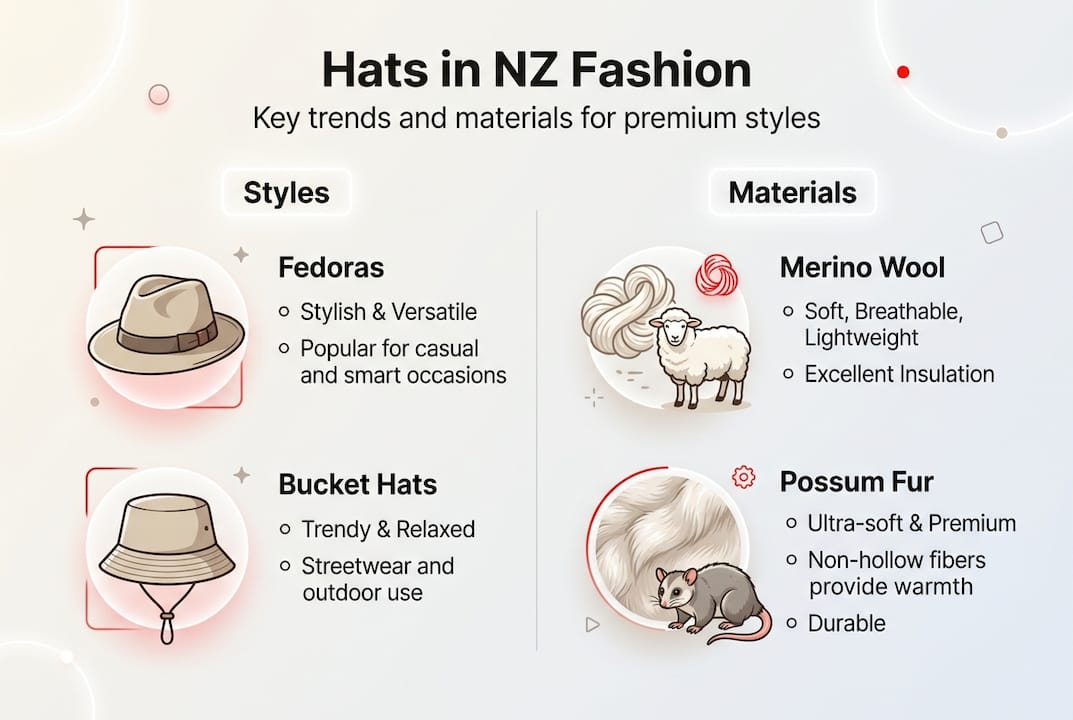
New Zealand consumers show distinct preferences that blend international trends with local environmental needs. Premium materials like merino wool and possum fur blends appeal to buyers seeking both fashion credibility and practical sun protection. The country’s intense UV exposure makes UPF50+ rated fabrics essential rather than optional, creating demand for headwear that performs across outdoor activities and urban settings.
Purchase motivations reveal interesting patterns:
- 62% of buyers prioritize functional sun protection as primary decision factor
- 38% select hats primarily for fashion statement and outfit completion
- 74% consider local craftsmanship important when choosing premium pieces
- 56% prefer natural fibers over synthetic alternatives for breathability
Pro Tip: When selecting trendy styles, verify the hat includes adequate brim width and UPF rating for New Zealand’s sun intensity. Fashion appeal shouldn’t compromise skin protection during outdoor wear.
The intersection of global trends and local requirements creates unique opportunities for brands that understand both dimensions. Hats serve dual purposes as style accessories and functional protection, making informed selection crucial. Sports and active lifestyle contexts further expand hat utility, with specialized designs addressing performance needs without sacrificing aesthetic appeal. Understanding why headwear matters in New Zealand helps consumers make purchases that deliver long-term value across multiple wearing occasions.
Craftsmanship and materials in premium New Zealand headwear
Premium New Zealand hats use merino wool and possum fur blends that deliver superior breathability while providing documented UV protection ratings. These natural fibers create microclimate regulation that keeps heads comfortable across temperature variations, from cool morning walks to midday sun exposure. The inherent properties of these materials resist odor accumulation and moisture retention better than synthetic alternatives.
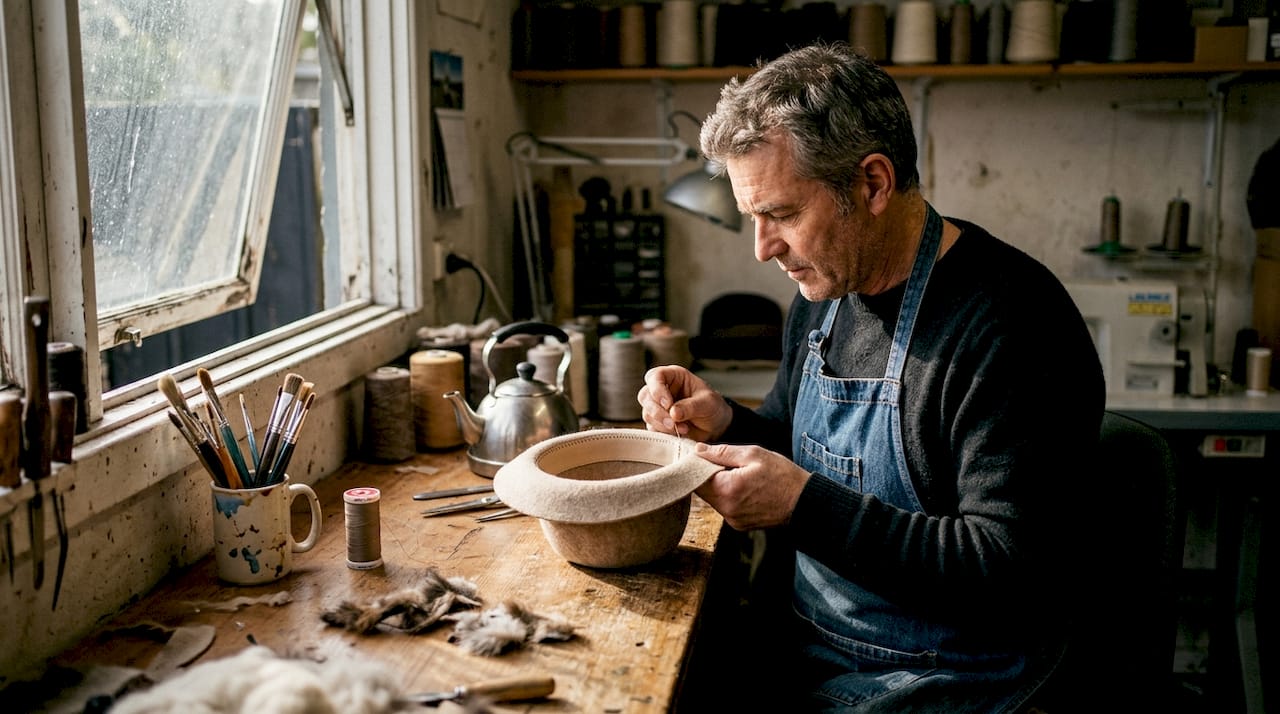
Handcrafting techniques distinguish quality pieces from mass-produced imports. Skilled artisans employ hand-stitching methods that create stronger seam integrity compared to machine-only construction. Reinforced crown structures maintain shape through years of wear, preventing the collapsed appearance that diminishes cheaper hats. Edge binding receives particular attention, with rolled brims requiring precise tension control to achieve uniform curves.
Local brands exemplify this commitment to craft excellence:
- Electric Pukeko combines traditional felting with contemporary color palettes
- Merinomink specializes in luxury possum-merino blends with silk-soft textures
- Labour of Wild focuses on heritage techniques adapted for active outdoor use
- Kiwi Hat Company produces wide-brim styles specifically rated for UV protection
| Material Type | Composition | UV Rating | Breathability | Price Range (NZD) |
|---|---|---|---|---|
| Pure merino wool | 100% merino fiber | UPF 40-50+ | Excellent | $120-$280 |
| Possum-merino blend | 40% possum, 60% merino | UPF 50+ | Superior | $180-$420 |
| Wool felt | Compressed wool fibers | UPF 30-40 | Good | $89-$195 |
| Luxury cashmere blend | 70% merino, 30% cashmere | UPF 35-45 | Excellent | $350-$960 |
Price variations reflect both material costs and labor intensity. Entry-level pieces using standard wool felt start around $89, offering solid construction suitable for occasional wear. Mid-range options incorporating merino blends command $150-$280, delivering enhanced comfort and durability for regular use. Premium pieces featuring possum fur or cashmere blends reach $350-$960, representing investment purchases that last decades with proper care.
Pro Tip: Examine interior stitching quality when evaluating premium hats. Hand-stitched sweatbands with multiple rows indicate superior construction that prevents premature wear at high-stress contact points.
Material selection impacts both immediate wearing experience and long-term value. Merino wool naturally regulates temperature, keeping heads cool during activity and warm during rest periods. Possum fur adds hollow-fiber insulation that enhances warmth without bulk. These performance characteristics make handmade mesh wool designs particularly effective for variable New Zealand weather.
Understanding timeless hat styles helps buyers recognize which designs maintain relevance across fashion cycles. Classic silhouettes crafted from premium materials resist trend obsolescence, making them sound investments. For active individuals, sports-specific designs demonstrate how functional requirements integrate with style considerations without compromise.
Choosing and styling hats for New Zealand fashion-forward individuals
Face shape analysis provides the foundation for selecting flattering hat styles. Brim width and crown adjustments suit all face shapes when properly matched to individual proportions. Round faces benefit from medium to wide brims that create vertical visual lines, while angular faces soften with rounded crowns and moderate brim widths. Long faces gain balance from shorter crowns and wider brims that add horizontal emphasis.
New Zealand’s intense sun exposure demands serious consideration of UV protection ratings. Standard fabric offers minimal defense against harmful radiation, making UPF-rated wool essential for outdoor activities. Quality merino wool naturally provides UPF 40-50+ protection, blocking 97.5-98% of UV rays during extended wear. This protection level matters significantly given New Zealand experiences UV indices reaching extreme levels during summer months.
Balancing fashion trends with practical needs:
- Assess your primary wearing contexts: urban commuting, outdoor recreation, or social occasions
- Select base styles that align with these contexts while incorporating current trend elements
- Choose colors that complement your existing wardrobe for maximum versatility
- Verify brim width provides adequate face and neck coverage for sun protection
- Test fit with typical hairstyles to ensure comfortable all-day wear
- Consider packability if traveling or storing in bags between wearing occasions
Occasion-specific recommendations help narrow selection:
- Formal events: Structured fedoras or pillbox styles in neutral tones
- Casual streetwear: Bucket hats or relaxed berets in bold colors or patterns
- Outdoor activities: Wide-brim designs with chin cords for wind resistance
- Beach and water: Quick-drying materials with maximum brim coverage
- Winter warmth: Wool beanies or felt fedoras with ear-covering depth
Pro Tip: Store premium hats upside down on crown rather than hanging by brim. This prevents brim distortion and maintains the carefully crafted shape that defines quality pieces.
Maintaining hat longevity requires simple but consistent care practices. Brush wool felt gently after each wear to remove surface dust and prevent particle embedding. Allow hats to air dry completely before storage if exposed to moisture. Use hat forms or stuffed crowns during long-term storage to maintain structure. Professional cleaning every 12-18 months refreshes appearance and extends usable life significantly.
Understanding how hats balance style and UV protection empowers confident purchasing decisions. Regional retailers offer alternatives worth exploring, with various bucket hat specialists and general hat retailers providing different selection approaches. Comparing options across multiple sources ensures you find pieces that meet both aesthetic preferences and functional requirements specific to New Zealand conditions.
Explore premium New Zealand hats at Urban Caps
Your search for headwear that combines fashion credibility with functional protection ends at Urban Caps. We curate collections featuring locally crafted pieces that embody the quality standards and style sensibilities discussed throughout this guide. Each hat undergoes rigorous selection to ensure it meets our criteria for materials, construction, and design excellence.

Our premium hat collection showcases merino wool and possum blend options that deliver UPF50+ sun protection without compromising on contemporary aesthetics. From handcrafted mesh wool bucket hats perfect for casual weekend wear to designer corduroy styles that elevate any outfit, we stock pieces that reflect current trends while honoring traditional craftsmanship. Fast New Zealand delivery and local customer support ensure your shopping experience matches the quality of our products.
Frequently asked questions about hats in fashion
What materials offer best sun protection in New Zealand?
Merino wool and possum fur blends provide superior UV protection with UPF50+ ratings that block over 98% of harmful radiation. These natural fibers also offer breathability and moisture management that synthetic materials cannot match, making them ideal for New Zealand’s variable climate conditions.
Which hat styles are trending in 2026?
Structured fedoras, pillbox hats, and wide-brim designs dominate high fashion, while bucket hats maintain strong streetwear appeal. Berets experience renewed popularity for their artistic associations and compact portability. Recycled wool options lead sustainable fashion conversations across all style categories.
Can all face shapes wear fedoras or berets?
Yes, with proper crown height and brim width adjustments. Round faces pair well with medium brims and taller crowns that create length, while angular faces benefit from softer curves and moderate proportions. Trying multiple sizes and styles helps identify the most flattering fit for your specific features.
How do I care for premium wool hats?
Brush gently after each wear using a soft-bristled hat brush to remove surface particles. Allow complete air drying if exposed to moisture before storage. Store upside down on the crown to prevent brim distortion, and seek professional cleaning annually to refresh appearance and extend longevity.
Are local New Zealand brands more sustainable?
Local brands typically demonstrate stronger sustainability through shorter supply chains, traceable material sourcing, and support for regional wool industries. Many prioritize natural fibers and traditional techniques that reduce environmental impact compared to mass-produced synthetic alternatives shipped internationally.