

The role of hats in sun protection: 2026 guide
TL;DR:
- Most hats do not fully protect against UV rays; brim width, fabric, and design are critical factors.
- Layering hats with sunscreen, sunglasses, and shade offers the most reliable sun protection, especially for high-risk areas.
Most people assume that pulling on a hat before heading outside means their head and face are covered. Job done. But the role of hats in sun protection is more layered than that, and getting it wrong leaves real skin exposed to real UV damage. The style you choose, the fabric it’s made from, the width of the brim, even where a ponytail slot sits — all of it affects how much UV actually reaches your skin. This guide breaks down the science, the design details, and the practical habits that turn a hat from a fashion accessory into a genuine sun shield.
Table of Contents
- Key takeaways
- How hats protect against UV rays
- Key design factors that affect protection
- Wearing hats as part of a sun-safe strategy
- Sun protection for children
- My take on sun hats and what people get wrong
- Hats that work as hard as you do
- FAQ
Key takeaways
| Point | Details |
|---|---|
| Brim width matters most | A brim of at least 4 to 5 inches provides meaningful coverage for the face, neck, and ears. |
| Fabric determines real protection | UPF 50+ woven fabrics block around 98% of UV; sprayed coatings degrade quickly with washing. |
| Hats work best in layers | Combining a hat with sunscreen, sunglasses, and shade delivers far more reliable protection. |
| Children need specific features | Neck flaps, adjustable straps, and breathable UPF fabrics are non-negotiable for kids’ sun hats. |
| Fit keeps the hat on your head | Adjustable drawcords and wire-edged brims improve stability in wind and encourage consistent wear. |
How hats protect against UV rays
UV radiation arrives in two primary forms that affect skin. UVB rays are the ones responsible for sunburn. UVA rays penetrate deeper and drive long-term ageing and skin cancer risk. Both are present year-round, and both can be substantially reduced by a well-designed hat.
The basic mechanism is shadow. A brim casts shade over the skin beneath it, blocking the direct path of UV from reaching your face, ears, and neck. Wide-brimmed hats can block up to 97% of UVB rays, making brim width one of the most measurable variables in hat selection. A brim of 4 to 5 inches is the practical minimum for adequate coverage across the face, neck, and ears.
How different hat styles compare
Not all hat styles for sun safety perform equally. Here is an honest comparison:
| Hat style | Brim width | Coverage areas | Limitations |
|---|---|---|---|
| Broad-brim hat | 4 to 6+ inches | Face, ears, neck, shoulders | Can be affected by wind |
| Bucket hat | 2.5 to 4 inches | Face and partial neck | Less ear and neck coverage |
| Baseball cap | 2 to 3 inches (front only) | Forehead and nose | Ears and neck fully exposed |
| Legionnaire/cape hat | Varies | Face, neck, back of neck | Can be warm in high heat |
Baseball caps are popular. They are also among the least protective options available. The peak shades only the front of the face. The ears, the back of the neck, and the sides of the face receive no coverage at all. That matters, because ears and the back of the neck are among the most common sites for skin cancer in people who work or exercise outdoors.
The limits of hat protection
Hats do not work in isolation. Reflected UV from sand, water, snow, and concrete can bounce upward underneath the brim and still reach your face and neck. That is why hats alone do not provide complete protection. They need to be paired with sunscreen and sunglasses to close the coverage gaps that reflected light creates.
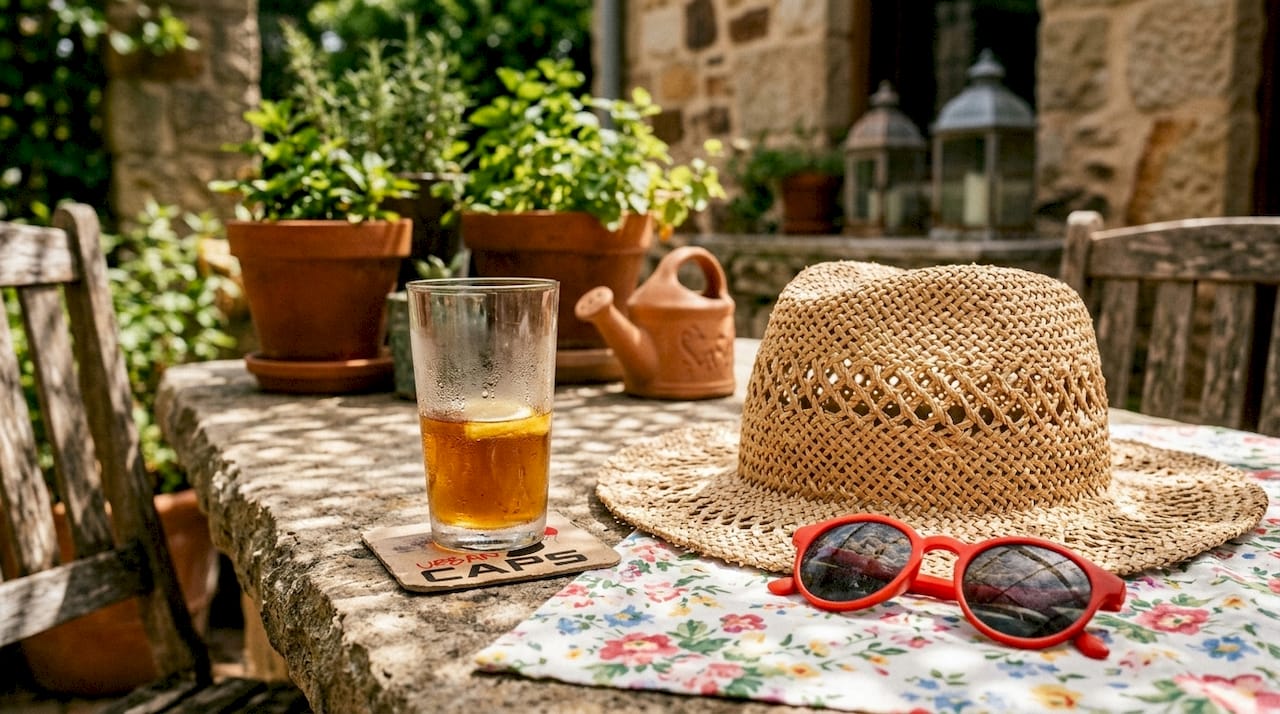
The fabric itself also matters. A hat with a loose weave, regardless of how wide the brim is, allows UV to pass through the material. UPF (Ultraviolet Protection Factor) rated fabrics are the standard to look for. UPF 50+ fabrics block approximately 98% of UV radiation, and unlike sunscreen, you do not need to reapply them.
Key design factors that affect protection
Understanding sun hats importance goes beyond knowing that bigger brims are better. The design details inside those broad categories determine whether a hat genuinely protects you or just looks like it does.
Brim width and shape
The minimum brim width for meaningful protection is 4 to 5 inches, measured all the way around the hat. But shape matters just as much as width. A downward-angled brim covers the neck better than a flat brim of the same width, because the angle extends the shadow further down toward the shoulders. Flat brims look sharp. Angled brims protect better. When you are choosing, decide which matters more for your use case.
Crown depth and ponytail slots
Two details most shoppers overlook completely. Shallow crowns expose the hairline and forehead to UV because the hat sits high on the head rather than sitting down over it. An optimal crown depth of 4.5 to 5 inches delivers full 360-degree shadow coverage.
Ponytail slots are similarly tricky. High ponytail slot placement creates a gap at the back of the skull, leaving the occipital region exposed. Slots should be positioned low on the crown to maintain coverage across the back of the head.
Material choices and their trade-offs
Here is where fashionable sun hats can deceive. A beautiful natural straw hat might look like a serious sun-protection choice, but not all straw hats protect equally. Loose weaves allow UV to pass straight through the crown, and natural straw degrades with use, reducing its protective ability over time. That seaside straw hat from three summers ago is likely offering less protection now than when you bought it.
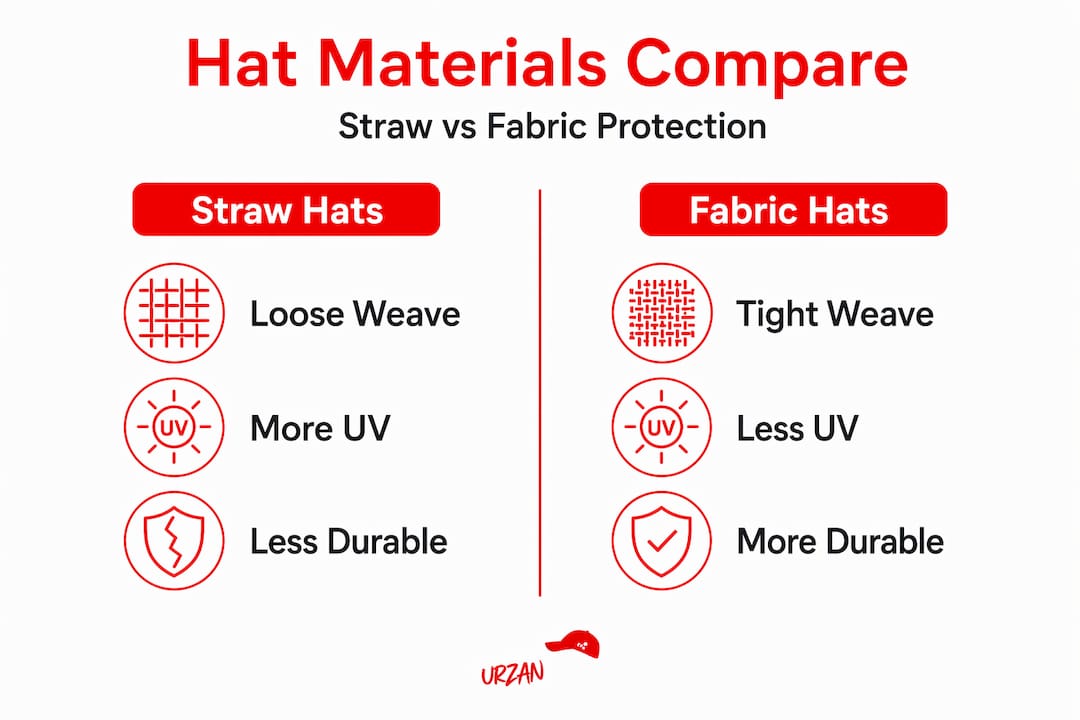
Microfibre fabrics with moisture-wicking properties are currently the strongest option for active use. They combine genuine UPF protection with breathability, which means you are more likely to keep the hat on when it gets warm. That point about compliance is not trivial. A hat that gets taken off because it is too hot provides zero protection.
Pro Tip: When evaluating any hat for UV protection, look for an intrinsic UPF rating in the fabric itself, not a sprayed-on coating. Sprayed coatings degrade with every wash and with sweat exposure. Intrinsic ratings, built into the weave, hold up across the life of the hat.
- Look for tightly woven fabrics rather than open or loosely knitted materials
- Choose darker colours where breathability allows, as they tend to absorb more UV
- For active and outdoor use, prioritise moisture-wicking microfibre over bonded straw
- Check that any UPF claim specifies a rating of 50+ rather than just “UV protective”
- Replace natural straw hats seasonally if they are your primary sun protection
You can explore more about choosing between styles over at the Urbancaps blog, which covers both the practical and aesthetic side of hat selection.
Wearing hats as part of a sun-safe strategy
Knowing how hats block sun is one thing. Building that knowledge into daily habits is another. Here is a practical approach to getting the most from your hat as part of a full sun protection routine.
-
Start with the right hat for the activity. A broad-brim hat is ideal for gardening, beach days, and any prolonged outdoor exposure. For sport and high-movement activity, a UV protection cap with a longer peak or a bucket hat with a full brim is more practical. Match the hat to what you are actually doing.
-
Layer your protection. Apply SPF 50+ sunscreen to any area the hat does not cover: the sides of the face, the ears, the neck, and lips. Wear UV-blocking sunglasses. When shade is available, use it. Hats are most effective as part of a combined approach that includes sunscreen, sunglasses, and shade.
-
Adjust the fit before you go out. A hat that sits too far back on the head leaves the forehead exposed. A hat that is too loose blows off in wind and comes off constantly. Use the adjustable drawcord if the hat has one. Wire-edged brims keep their shape and coverage angle in wind. These small adjustments make the difference between a hat that stays on and one that ends up in your hand.
-
Wear it year-round, not just in summer. UV radiation is present every month of the year, and cumulative sun damage builds over a lifetime, not just during beach season. The 2026 Hats On campaign from Biofrontera specifically addresses this, promoting consistent hat-wearing to reduce actinic keratosis and long-term skin cancer risk.
-
Maintain your hats properly. Check the care instructions and follow them. Some UPF fabrics can be damaged by harsh detergents. Store hats away from direct sunlight when not in use. Inspect natural straw hats each season for cracks, thinning, or loosening of the weave.
-
Make it a habit, not an afterthought. Keep a lightweight sun hat near the door alongside your sunscreen. When getting outside is automatic, hat-wearing follows naturally.
Pro Tip: If you struggle with heat retention, look for hats with ventilation eyelets in the crown. These allow warm air to escape without compromising the brim coverage around your face and neck. Many performance sun hats include this feature without sacrificing their UPF rating.
For a broader look at hat choices across different seasons and activities, the Urbancaps blog covers year-round hat options for every climate and lifestyle.
Sun protection for children
Children’s skin is more sensitive to UV damage than adult skin, and sun exposure in the early years contributes disproportionately to lifetime skin cancer risk. Getting kids into good sun habits early is one of the most effective protective measures available.
The features that make a children’s sun hat genuinely protective differ slightly from adult versions. Neck flaps and UPF fabrics reduce sunburn risk and help build habitual protection from a young age. Here is what to look for:
- Neck flaps or capes. These extend the coverage down the back and sides of the neck, which is otherwise almost completely unshielded by a standard brim. Non-negotiable for beach days and summer sport.
- Adjustable straps or chin ties. Children move quickly and unpredictably. A hat that stays on through running, climbing, and jumping means continuous protection rather than intermittent coverage.
- Soft, breathable fabrics. Cotton and moisture-wicking synthetics are both good options. Comfort drives compliance. A child who finds their hat uncomfortable will remove it constantly.
- UPF 50+ rated material. The same standard applies as for adults. Check the label and prioritise intrinsic ratings over surface treatments.
- Appropriate sizing. A hat that is too big slides down and obscures vision. Too small and it sits high, reducing coverage. Most children’s hats come in age-based size ranges; measure the head circumference for accuracy.
Sun safety habits formed in childhood tend to persist. When hats are a normal, everyday part of getting ready to go outside, children carry that behaviour into adulthood. Parents and caregivers modelling consistent hat use reinforce the message more effectively than any rule. Family sun protection routines that include hats alongside sunscreen and sunglasses give children a complete framework, not just a single habit.
You can explore how hats support outdoor safety across different New Zealand conditions on the Urbancaps blog, including options suited to active kids.
My take on sun hats and what people get wrong
I have spent years looking at how people actually use hats outdoors, not how they intend to use them. And the gap between intention and practice is where most sun damage happens.
The most common mistake I see is treating any hat as adequate sun protection. A baseball cap is better than nothing, but only just. The ears and neck, which are statistically high-risk sites for skin cancer, are left completely exposed. People feel covered because something is on their head. The false sense of security is worse than knowing you are unprotected, because the person who knows they are exposed will usually add sunscreen. The baseball cap wearer often does not.
The second thing I have noticed is that people consistently choose fashion over function and then are surprised when protection falls short. A fashionable sun hat can absolutely be a protective one. The two are not in conflict. But it requires choosing fashionable sun hats that also meet a minimum brim width and carry a genuine UPF rating. Those hats exist, and they look good.
Fit is underrated. A hat that fits well stays on. A hat that stays on provides protection. Wind dislodging hats is one of the most common real-world barriers to consistent wear, and it is entirely solvable with an adjustable drawcord or a wire-edged brim. Most people do not know to look for those features. Now you do.
The Hats On campaign is doing something genuinely useful by normalising year-round hat use. Sun protection is not a summer activity. The UV index in New Zealand is among the highest in the world for a temperate country, and the cumulative skin damage from years of casual outdoor exposure without a hat adds up in ways that only become visible much later. The time to build the habit is now, not after the first diagnosis.
My honest view: choose the widest brim you will actually wear consistently. A wide-brim hat left at home protects nobody.
— Urban
Hats that work as hard as you do

At Urbancaps, we stock a range of hats built specifically for the kind of UV exposure New Zealand and Australian conditions demand. From lightweight summer bucket hats with full-brim coverage to performance-ready caps with UPF-rated fabrics, every option in our range is chosen with both function and style in mind. We are proudly NZ owned and operated, and we understand that Kiwis need headwear that handles real sun, real wind, and real outdoor living. Browse our full collection at Urbancaps and find a hat that you will actually wear every day. Free shipping on all NZ orders. ♡
FAQ
Can hats prevent sunburn on the face and neck?
Yes, but only partially. Wide-brimmed hats block up to 97% of UVB rays reaching covered skin, but reflected UV from surfaces like sand and water can still reach the face, so combining a hat with sunscreen is the most reliable approach.
What brim width do I need for proper sun protection?
A minimum brim width of 4 to 5 inches all the way around the hat is the standard for adequate coverage of the face, ears, and neck. Downward-angled brims extend shadow coverage further down toward the neck and shoulders.
Are straw hats good for UV protection?
Some are, but many are not. Loose-weave straw hats allow significant UV penetration and degrade over time, reducing their protection further. Tightly woven materials with a verified UPF rating are the more reliable choice.
What should I look for in a sun hat for my child?
Look for a hat with a neck flap, adjustable straps, and a UPF 50+ fabric rating. Neck protection and UPF materials reduce sunburn risk and support the development of consistent sun-safe habits from a young age.
Is a baseball cap enough for sun protection?
No. A baseball cap shades only the forehead and nose. The ears, neck, and sides of the face receive no coverage. For activities with prolonged sun exposure, a broad-brim or bucket-style hat with a UPF rating provides far more reliable protection.