

The collector's guide to premium caps in New Zealand
New Zealand collectors should prioritise five categories right now: game-used and player-worn caps, limited-edition brand collaborations, designer and streetwear drops, heritage New Zealand-made pieces (particularly Hills Hats), and artisan limited runs. Provenance and condition drive value more than any other factor. Start your search at local NZ auction houses and Urbancaps’ curated range.
Shortlist by category:
- Game-used and player-worn caps — suits sports memorabilia collectors; prices can vary widely depending on provenance and LOA, often reaching significant sums for well-documented pieces
- Limited-edition brand collaborations — suits streetwear and fashion collectors; luxury-sport crossovers command strong resale premiums
- Designer and streetwear drops — suits trend-driven collectors; New Era collabs and regional drops sell out fast and appreciate quickly
- Heritage NZ-made caps (Hills Hats and equivalents) — suits local history and cultural collectors; institutional supply history adds genuine provenance
- Artisan and limited-run pieces — suits collectors who value craft; small-batch construction and unique materials create natural scarcity
Practical next step: Check Te Awamutu and Auckland-based auction listings weekly, and bookmark Urbancaps’ NZ baseball cap guide for local availability updates.
Pro Tip: Set up Google Alerts for “Hills Hats auction NZ” and “game-used cap LOA” to catch private listings before they reach the major platforms.
Key takeaways
Premium caps hold their value when provenance, condition, and maker identity are all documented and verifiable from the point of purchase.
| Point | Details |
|---|---|
| Prioritise by category | Game-used, heritage NZ-made, and limited collaborations offer the strongest long-term value. |
| Authentication comes first | Check interior labels, stitching, maker stamps, and LOA before any purchase decision. |
| Store correctly from day one | Acid-free boxes, hat forms, and UV-filtered display cases protect condition and grade. |
| Know your price bands | Entry pieces start around NZD —; museum-grade holy grails exceed NZD $15,000. |
| Urbancaps for local access | Urbancaps stocks premium NZ-available caps with fast local shipping and no import complications. |
Table of Contents
- What are the top premium caps for collectors to prioritise?
- What traits actually make a cap collectible?
- How do you authenticate a collectible cap and avoid fakes?
- What materials and construction mark a cap as genuinely premium?
- What price ranges should New Zealand collectors expect?
- Where can New Zealand collectors buy premium and rare caps?
- How should you store and care for collectible caps?
- Urbancaps’ practical checklist for spotting premium headwear
- A New Zealand collector’s perspective on what actually matters
- Urbancaps: premium headwear for New Zealand collectors
- Sources
- FAQ
What are the top premium caps for collectors to prioritise?
Each collecting category rewards a different kind of collector. Here is what you need to know about each one, with local context for New Zealand.
Game-used and player-worn caps are the blue-chip tier. A cap worn in an actual match carries a story no replica can replicate. Beckett’s collector guide confirms that most post-war game-used caps often sell for moderate to high sums, while rare pre-war and celebrity-worn pieces can fetch very high prices. The key trait to hunt for: visible wear patterns (sweat staining, brim creasing, interior sizing stamps) that match the player’s documented career period.
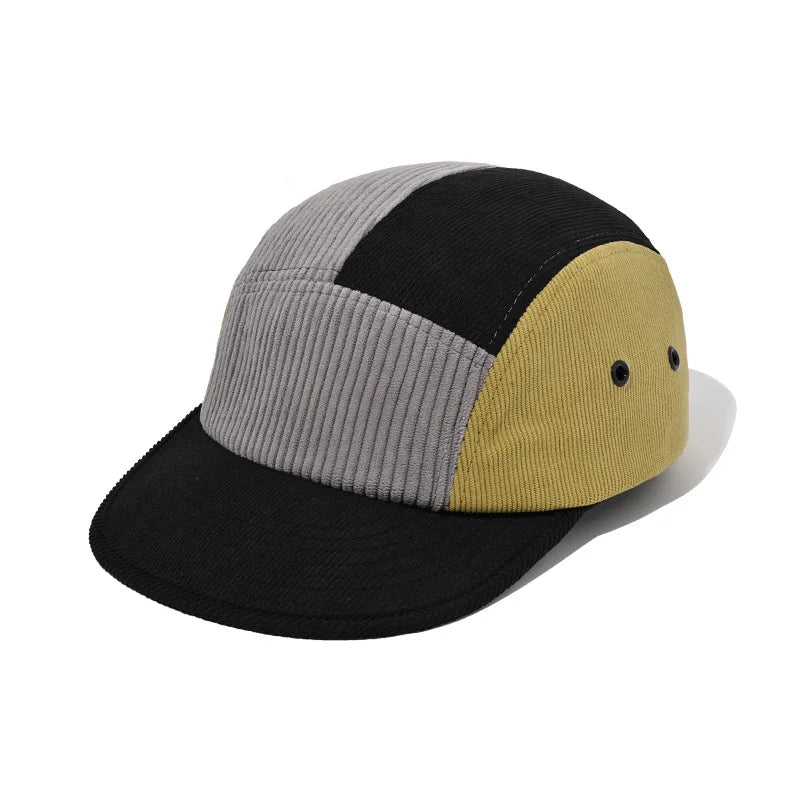
Limited-edition brand collaborations sit at the intersection of fashion and collectibility. Luxury-sport crossovers, where a heritage sports brand partners with a high-fashion house, consistently command resale premiums well above retail. The scarcity is built in from day one, and the narrative value is immediate.
Designer and streetwear drops are the most accessible entry point for new collectors. New Era’s regional and team-specific releases, for example, often sell out within hours and appear on resale markets within days at a markup. The collector’s edge here is speed and local knowledge.
Heritage New Zealand-made caps are a category that deserves more attention than it gets. MOTAT’s documentation of Hills Hats shows the brand’s long supply relationships with national sports teams and defence forces, which means surviving pieces carry genuine institutional provenance. That is rare in any collecting category.
Artisan and limited-run caps cover everything from small-batch wool caps made by independent NZ makers to specialist subculture pieces. The gothic and alternative headwear market is a good example of how niche production creates natural scarcity and a dedicated collector base.
What traits actually make a cap collectible?
Not every cap is worth collecting. These are the attributes that separate a display piece from a genuine collectible, and a simple grading scale you can apply on the spot.
Primary collectibility drivers
- Provenance and LOA — a documented chain of ownership or a letter of authenticity from a recognised source is the single biggest value driver
- Game use or player association — wear evidence matched to a specific player or event
- Limited production run — the fewer made, the stronger the scarcity premium
- Unique design or colourway — one-off or regional-exclusive designs that were never widely distributed
- Maker and manufacturer — known makers with documented production histories (Hills Hats, New Era, Starter) carry more weight than anonymous manufacturers
- Material quality — wool, wool blends, and premium cotton twill age better and signal original quality
- Condition — deadstock (unworn, with original tags) commands a significant premium over worn examples
Grading scale at a glance
| Grade | Label | Attributes |
|---|---|---|
| 1 | Common | Mass-produced, no provenance, worn condition, no tags |
| 2 | Desirable | Limited run or regional release, good condition, original tags present |
| 3 | Rare | Documented provenance, game-used or event-worn, LOA present, excellent condition |
| 4 | Holy grail | Pre-war or celebrity-worn, verified LOA, deadstock or near-deadstock, museum-grade provenance |
Quick authentication checks
- Check the interior label: era-accurate labels use specific fonts, materials and country-of-origin wording that changed decade by decade
- Look at the underbrim: specialist MiLB collector guides flag the green underbrim as a key authenticity marker for certain vintage periods
- Examine stitching density and thread colour: premium caps use tighter stitch counts and colour-matched thread
- Verify maker stamps: cross-reference manufacturer names against documented production catalogues such as those held by Adams Headwear
- Check size stamps: interior sizing stamps should match the era and manufacturer’s known format
Te Papa’s collections database records construction and classification details for baseball caps that collectors can use as a reference standard for authentication.
How do you authenticate a collectible cap and avoid fakes?
Authentication is not optional. A cap without verified provenance is worth a fraction of one that can be traced. Follow this workflow before any purchase.
Step-by-step authentication
- Inspect the interior label first. The label is the hardest thing to fake accurately. Check the font, the country-of-origin wording, and the material of the label itself. Labels changed significantly across decades — a label claiming 1960s manufacture but using post-1990s font is an immediate red flag.
- Examine stitching and construction. Count stitches per centimetre on the crown seams. Premium vintage caps used higher stitch counts than budget reproductions. Look for hand-finishing on the sweatband edges.
- Check maker stamps and size markings. Interior stamps should be consistent with the manufacturer’s documented format for that period. Cross-reference against known production records where possible.
- Assess screen-printing and embroidery quality. Original embroidery sits flush with the fabric and uses period-accurate thread weights. Screen-printed logos on vintage caps show specific cracking and fading patterns that are difficult to replicate convincingly.
- Review provenance paperwork. A letter of authenticity from a recognised auction house, a professional authenticator, or a museum curator carries the most weight. Beckett’s guidance on game-used caps stresses that LOAs from reputable sources are the critical determinant of value.
- Research the seller. Check feedback history, ask for additional photos of labels and interior construction, and verify any claimed auction provenance against the auction house’s own records.
- Document everything. Photograph labels, stamps, and any wear patterns before purchase. Store documentation with the cap.
Red flags to watch for
- Interior labels inconsistent with the claimed era or manufacturer
- Cheap synthetic sweatband material on a cap claimed to be pre-1980s
- Mismatched thread colours between the crown and the brim
- Provenance paperwork that references a seller rather than an independent authenticator
- Prices significantly below market for the claimed grade
For expert authentication in New Zealand, approach specialist auction houses, contact museum curators (Te Papa’s collections team has catalogued construction details useful for comparison), or engage a professional authenticator with documented experience in headwear.
What materials and construction mark a cap as genuinely premium?
Material and build quality are the foundation of long-term collectibility. A cap made from inferior materials will deteriorate faster, lose condition grade, and drop in value regardless of its provenance.
Premium materials worth knowing
- Wool and wool blends — the traditional standard for fitted caps; wool holds its shape, breathes well, and ages gracefully without the colour degradation that affects synthetic fibres
- Cotton twill — a tightly woven cotton that resists wear and holds embroidery detail cleanly; the Premium American Twill Snapback from Urbancaps uses this construction
- Leather trims and underbrim — leather brim edging signals a higher production tier and ages distinctively
- Satin underbrim — a satin lining on the underbrim reduces UV reflection and was standard on premium caps from certain eras; its presence is an authentication cue
- Performance and recycled fibres — modern limited-edition caps increasingly use technical fabrics; these are collectible for their innovation rather than their heritage
Construction cues that signal quality
- Reinforced panel seams with consistent stitch tension
- Structured crown with internal buckram or similar stiffening that holds shape over decades
- Sweatband material: genuine leather or high-grade cotton sweatbands outlast synthetic alternatives
- Stitched logos rather than heat-applied or screen-printed graphics; stitching survives washing and time far better
- Label and manufacturer identifiers that are sewn in, not printed on a paper tag
Wellington Baseball’s fitted hat guide notes that for collectors and players alike, a hat that runs slightly large is preferable to one that’s tight, and internal hat reducers are standard practice for preserving fit without stressing the crown structure.
Pro Tip: When assessing a cap’s construction, run your thumb along the interior crown seam. A premium cap will feel smooth and consistent; a budget piece will have irregular tension or exposed thread ends.
Materials directly affect how a cap ages in New Zealand’s climate. UV exposure is significant, particularly in summer, and wool caps are more vulnerable to fading than cotton twill. This is not a minor point for collectors: a faded cap drops at least one condition grade.
What price ranges should New Zealand collectors expect?
Prices vary enormously depending on category, condition, and provenance. Here are realistic bands based on auction records and specialist market data.
Vintage Starter hats are a well-documented entry point: script styles and deadstock examples consistently command premiums over worn pieces, with steady appreciation noted across the collector market. For game-used caps, Beckett’s auction data shows most post-war player-worn pieces landing in the high hundreds to low thousands in USD, while pre-war and celebrity-worn examples have reached six figures at major auction houses.
Factors that move prices up
- Player association with a documented career moment (championship game, record-breaking performance)
- Pre-war manufacture date with verified provenance
- Deadstock condition with original tags and packaging
- LOA from a recognised auction house or professional authenticator
- Unique design or colourway not available in the general market
- Heritage maker with documented institutional supply history (Hills Hats supplying national teams, for example)
NZD prices for imported pieces will also shift with exchange rates, so factor in currency movement when budgeting for US or UK auction purchases.
Where can New Zealand collectors buy premium and rare caps?
Finding quality stock in New Zealand takes a combination of local knowledge and online reach. Here are the channels worth using.
Local and online channels
- Specialist NZ retailers — Urbancaps stocks curated premium headwear with local shipping; their NZ online cap guide covers the main options
- NZ auction houses — Webb’s and International Art Centre in Auckland regularly handle memorabilia; check their sports and collectibles categories
- TradeMe — New Zealand’s primary resale marketplace; useful for vintage and deadstock finds, but apply full authentication checks before buying
- Museum deaccessions — Te Papa and MOTAT occasionally release duplicate or surplus items through trustee sales; worth monitoring their announcements
- Private dealers and consignments — the most reliable source for high-grade pieces, but requires established relationships and due diligence
- International platforms with NZ shipping — eBay, Heritage Auctions and specialist headwear platforms ship to NZ; factor in GST on imported goods over NZD $1,000 and any applicable customs duties
Buying checklist for NZ purchases
- Verify seller feedback and transaction history before committing
- Request clear photos of interior labels, size stamps, and any provenance documents
- Confirm shipping method and insurance for high-value pieces
- Check GST obligations: goods imported into NZ above the low-value threshold attract GST at the point of entry
- For resale, keep all purchase documentation — it forms the start of your provenance chain
Pro Tip: For limited drops, sign up to brand mailing lists and set stock alerts on retailer sites. Most high-demand caps sell out within minutes of release; being on the list is the only reliable way to get first access.
Securing limited drops in NZ requires speed. Follow Urbancaps’ local market updates and set alerts for new arrivals. For private deals, always meet in a public place or use a trusted intermediary, and never transfer payment before receiving and inspecting the cap.
How should you store and care for collectible caps?
Condition is value. A cap that degrades in storage loses grade and price. These are the practices that protect your collection.
Do and don’t checklist
- Do store caps in acid-free hat boxes with acid-free tissue paper to maintain shape and prevent yellowing
- Do use a hat form or crown insert to preserve the cap’s original shape during storage
- Do keep storage areas cool, dark, and dry; New Zealand’s summer UV is intense and will fade wool and cotton caps within months of direct exposure
- Do photograph and document each cap before storage, including labels and any provenance paperwork
- Don’t stack caps directly on top of each other; pressure deforms crowns and brims permanently
- Don’t use plastic bags or airtight containers; trapped moisture accelerates mould growth, particularly in NZ’s humid coastal regions
- Don’t apply commercial fabric sprays or stain removers to vintage caps without consulting a textile conservator first
- Don’t machine wash any cap with collector value; hand cleaning with a soft brush and cold water is the maximum intervention for most pieces
Humidity and UV control in New Zealand
New Zealand’s climate varies significantly by region. Auckland’s humidity and Wellington’s wind-driven moisture both create storage challenges. A silica gel packet inside each hat box controls moisture without the risks of an airtight seal. For display pieces, UV-filtering acrylic cases are worth the investment; standard glass transmits enough UV to cause visible fading within a year of direct light exposure.
Pro Tip: Review your provenance documentation annually. If a cap has changed hands or been authenticated since you acquired it, update the paperwork and photograph any new documentation alongside the cap. A complete paper trail adds value at resale.
Wellington Baseball’s fitted hat guidance recommends storing fitted caps in cool, dark conditions specifically to protect against UV fading in New Zealand’s climate. That advice applies equally to collectible pieces.
Urbancaps’ practical checklist for spotting premium headwear
Urbancaps has handled enough premium headwear in the New Zealand market to know what separates a genuinely collectible cap from a well-marketed average one. Here is the inspection checklist applied to every piece assessed.
Quick inspection checklist
- Materials first: feel the crown fabric. Wool and cotton twill have a density and texture that synthetic blends cannot replicate. If it feels light or slippery, it is not premium.
- Stitch count: run a finger along the crown seams. Tight, consistent stitching with no loose threads signals quality construction. Loose or uneven stitching is a red flag regardless of the label.
- Label verification: check that the interior label matches the claimed maker, era, and country of origin. Cross-reference against known label formats for that manufacturer and period.
- Crown shape: a premium cap holds its shape without being squeezed. Buckram or equivalent internal stiffening should be firm but not brittle.
- Sweatband construction: leather or high-grade cotton sweatbands are the standard on premium pieces. A thin synthetic sweatband on a cap claiming premium status is inconsistent.
- Provenance questions to ask a seller: Where did you acquire this? Is there documentation? Has it been authenticated? Who owned it before you? A seller who cannot answer these questions clearly is a seller to approach with caution.
Urbancaps’ guide to what makes a hat premium covers these construction traits in detail and is worth bookmarking as a reference.
Pro Tip: When assessing a limited-edition or collaboration cap, check whether the colourway and logo placement match documented release photos from the brand. Counterfeit collaboration caps often get the colourway right but miss small details in logo placement or font weight.
A New Zealand collector’s perspective on what actually matters
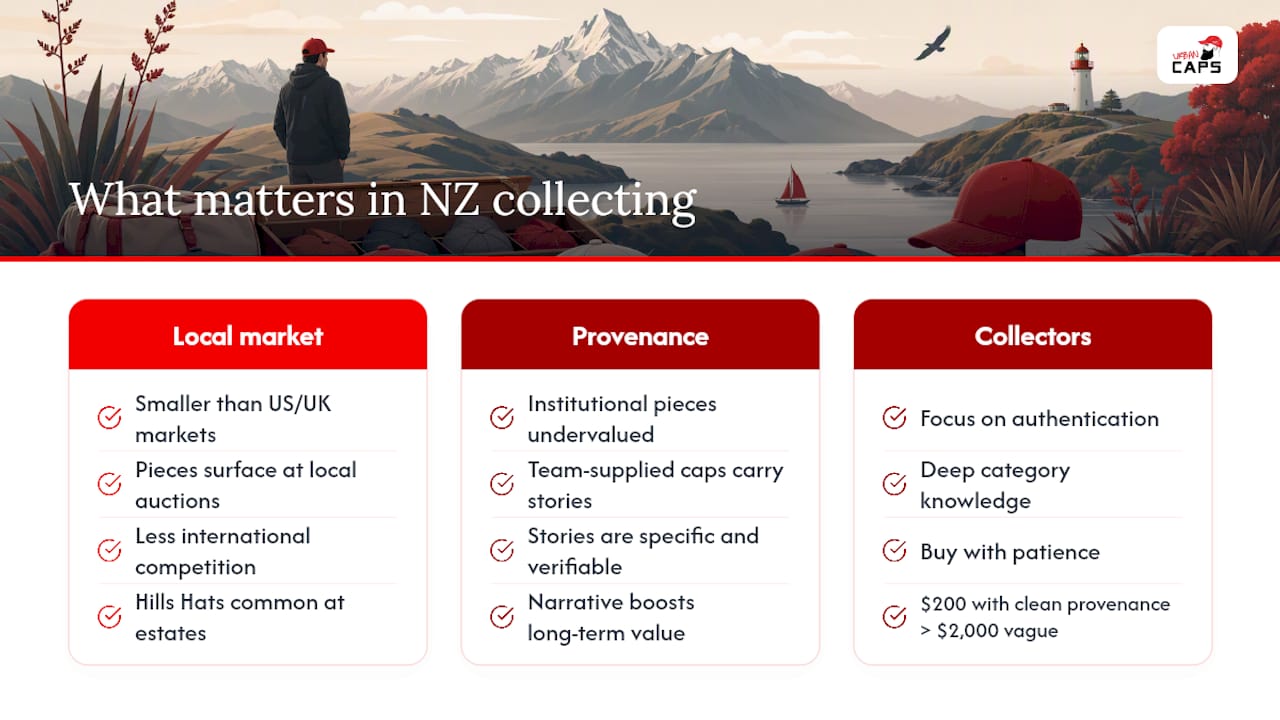
The NZ cap collecting scene is smaller than its US or UK counterparts, and that is actually an advantage. Pieces surface at local auction that would disappear instantly in a larger market. Hills Hats items, in particular, show up at estate sales and regional auctions with enough regularity that a patient collector with local connections can build a genuinely significant heritage collection without competing against international buyers.
What the local market underestimates is the provenance value of NZ institutional pieces. A Hills Hats cap supplied to a national sports team carries a story that is specific, verifiable, and irreplaceable. That is exactly the kind of narrative that drives long-term value in any collecting category.
The collectors who do best here are not the ones chasing the most expensive pieces. They are the ones who understand authentication, know their category deeply, and buy with patience. A $200 cap with a clean provenance chain will outperform a $2,000 cap with a vague story every time.
Urbancaps: premium headwear for New Zealand collectors
Collectors who want quality construction without the auction-house price tag have a straightforward option locally. Urbancaps stocks premium headwear with fast NZ delivery, no import delays, and no customs surprises. The range includes pieces suited to display, wearable deadstock, and everyday collector use.

For collectors after a structured display piece, the Impact Cap, structured 5-panel with pre-curved peak holds its crown shape reliably. The Premium Soft Mesh Cap suits collectors who want a wearable piece with cotton-front construction and contrast sandwich peak detailing. For those after a higher-spec snapback, the Premium American Twill Snapback delivers flat-peak construction with custom foil detail and American twill fabric. Collectors crossing into classic hat categories will find the Fedora Hat Jazz Style and the Steampunk Hat worth a look for artisan-style display pieces.
Browse the full range at Urbancaps and contact the team directly for condition queries or advice on specific pieces.
Sources
These sources underpin the guidance in this article. Use them directly for authentication reference, valuation research, and deeper reading on specific categories.
- What’s in a hat? MOTAT’s extensive Hills Hats collection
- baseball caps | Collections Online - Museum of New Zealand Te Papa Tongarewa
- Collecting Game‑Used Baseball Caps: Tips and Things to Look For
- Fitted hats: The professional standard for New Zealand baseball (2026)
- A Collector’s Guide to Vintage MiLB Team Hats
FAQ
Which brand makes the most expensive collectible caps?
No single brand holds that title outright. Pre-war New Era and Starter deadstock pieces, along with game-used caps from major league players, have reached six figures at auction when paired with verified LOAs and exceptional provenance.
What type of cap sells the most in the collector market?
Game-used baseball caps and limited-edition streetwear collaborations are consistently the highest-volume categories. Vintage Starter hats remain a popular entry point due to their accessibility and steady appreciation.
Which cap brands do serious collectors prioritise?
New Era, Starter, and heritage regional makers such as Hills Hats in New Zealand are the names serious collectors track. Luxury-sport collaboration caps from brands with documented limited runs also attract strong collector interest.
What are the most collectible cap styles right now?
Fitted wool caps with documented game use, deadstock limited-edition collaborations, and heritage NZ-made pieces with institutional provenance are the styles generating the most collector attention in 2026. Urbancaps’ NZ market guide tracks local availability for several of these categories.