

What is sustainable headwear? A guide for eco-friendly style
Eco-conscious Kiwis are pushing back against the idea that sustainable fashion means dull, low-quality choices. That myth is especially stubborn when it comes to headwear. The truth is that New Zealand’s demand for ethical, well-made hats is growing fast, and brands are responding with styles that are both planet-friendly and genuinely good-looking. Whether you’re heading to the beach, hitting a bush trail, or just running errands in the city, this guide breaks down what truly makes headwear sustainable, which materials matter most, and how to find the right hat for your life here in Aotearoa.
Table of Contents
- What makes headwear truly sustainable?
- Key materials: From organic cotton to recycled plastic
- Benefits of choosing sustainable headwear
- How to choose the right sustainable hat for NZ lifestyle
- Why true sustainability means more than just materials
- Discover sustainable headwear for your style and values
- Frequently asked questions
Key Takeaways
| Point | Details |
|---|---|
| Go beyond the label | True sustainability in headwear includes ethical sourcing, durability, and environmental impact. |
| Choose materials wisely | Organic, recycled, or renewable fibers make hats eco-friendly and comfortable for daily wear. |
| Prioritize lasting quality | Investing in a well-made sustainable hat means more use and less waste over time. |
| Support local values | Opting for hats from New Zealand brands amplifies your positive impact on people and planet. |
What makes headwear truly sustainable?
Sustainability in headwear is more than a buzzword on a hang tag. It covers three core areas: where materials come from, how the product is made, and what happens to it at the end of its life.
A hat that ticks all three boxes uses natural or recycled fibers, is produced under fair labor conditions, and is designed to last or biodegrade. As outlined in the guide to materials for sustainable hats, sustainable headwear uses eco-friendly materials, ethical manufacturing, and prioritizes a lower carbon footprint.
For New Zealand shoppers, the local context matters too. Choosing hats made from renewable or biodegradable materials reduces reliance on imported synthetics and supports a cleaner supply chain. New Zealand’s UV index is among the highest in the world, which means headwear here also needs to be functional, not just fashionable.
Here’s what to look for when evaluating whether a hat is genuinely sustainable:
- Natural fibers: Organic cotton, hemp, and wool are grown or raised with fewer chemicals and are biodegradable.
- Recycled content: Fabrics made from recycled plastic bottles or post-consumer waste reduce landfill pressure.
- Ethical production: Fair wages, safe working conditions, and transparent supply chains are non-negotiable.
- Minimal packaging: Sustainable brands often use recycled or compostable packaging too.
- Certifications: Labels like GOTS (Global Organic Textile Standard) or Fair Trade signal third-party verification.
“Eco-friendly doesn’t mean boring. The most sustainable hats on the market today are also some of the most stylish, built with craft and intention rather than just convenience.”
For everyday wear in New Zealand, a sustainable hat also needs to handle real conditions. That means breathability for warm summers, durability for outdoor use, and a style that works across different settings. The good news is that sustainable materials often deliver exactly that.
Key materials: From organic cotton to recycled plastic
With a definition in place, the next step is understanding which materials set sustainable headwear apart. Not all eco-friendly fabrics are equal. Each has its own strengths depending on your climate, activity, and personal values.
Organic cotton, hemp, and recycled PET are leading materials in sustainable hats, and each one brings something different to the table.
| Material | Breathability | Durability | Eco footprint | Best use |
|---|---|---|---|---|
| Organic cotton | High | Medium | Low chemical use | Everyday, casual |
| Hemp | Medium | High | Minimal water use | Outdoor, rugged |
| Recycled polyester | Medium | High | Diverts plastic waste | Sport, active |
| Bamboo | High | Medium | Fast-growing crop | Warm weather |
| Wool | Medium | High | Renewable if ethical | Cool weather, NZ outdoors |
Organic cotton is the most familiar option. It’s soft, breathable, and widely available. The key difference from conventional cotton is the absence of synthetic pesticides, which is better for soil health and the farmers who grow it.

Hemp is underrated. It uses very little water, grows quickly without chemicals, and produces a fiber that gets softer with wear. For outdoor enthusiasts doing bush walks or coastal hikes, hemp hats hold up well.
Recycled polyester, often labeled rPET, is made from plastic bottles. It’s a smart use of waste material and performs well in activewear settings. Just note that it’s not biodegradable, so it’s best for long-lasting pieces you’ll actually keep.
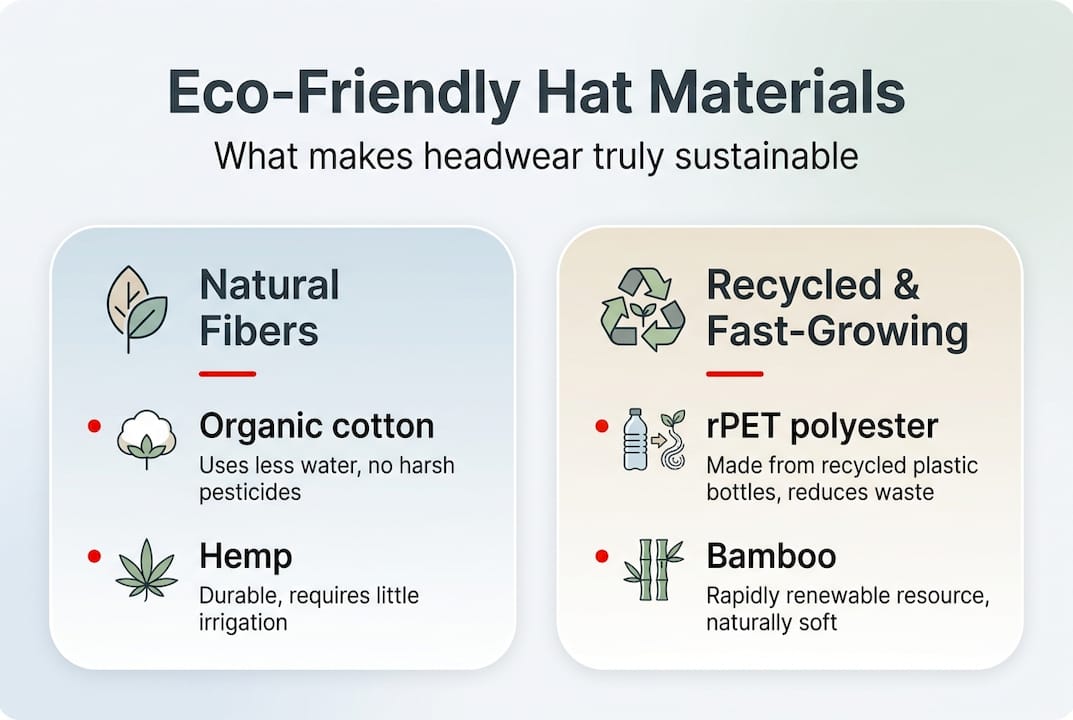
Bamboo is incredibly fast-growing and requires no pesticides. Hats made with bamboo blends tend to be lightweight and moisture-wicking, which suits New Zealand’s warmer months well.
Wool is a natural choice for Kiwis, and responsibly sourced New Zealand wool is one of the most sustainable options available locally. It regulates temperature, resists odor, and lasts for years.
Pro Tip: When reading a fabric label, look beyond the main material. A hat labeled “organic cotton” may still use synthetic dyes or plastic-based trims. Check the full product description and look for certifications that cover the entire garment, not just the outer shell.
Benefits of choosing sustainable headwear
Once you know your materials, it’s just as important to understand the impact of your choices. Sustainable headwear delivers benefits that go well beyond the environment.
Here are the key advantages, in order of impact:
- Reduced environmental harm: Natural and recycled fibers require fewer chemicals, less water, and generate lower emissions during production.
- Better skin comfort: Organic and natural fabrics are often hypoallergenic. If you’ve ever had a hat irritate your scalp, switching to organic cotton or bamboo can make a real difference.
- Support for fair labor: Certified sustainable brands commit to ethical working conditions, meaning your purchase supports better outcomes for workers across the supply chain.
- Long-term savings: A well-made sustainable hat lasts significantly longer than a cheap fast-fashion alternative. You buy less often and spend less overall.
- Less landfill waste: The fashion industry is one of the world’s largest waste producers. Choosing durable, biodegradable hats directly reduces your contribution to that problem.
The benefits of durable hats are well documented. Eco-friendly hats reduce waste and support better working conditions, making them a smarter choice on multiple levels.
Stat to know: The global fashion industry produces around 92 million tonnes of textile waste every year. Choosing one durable, sustainable hat instead of three cheap ones is a small but meaningful step in the right direction.
For Kiwis who spend time outdoors, there’s also a practical angle. Natural fibers breathe better under the sun, wick moisture more effectively, and don’t trap heat the way some synthetics do. If you want durable and stylish options that hold up through seasons of real use, sustainable materials are the practical choice, not just the ethical one.
How to choose the right sustainable hat for NZ lifestyle
Armed with the benefits, the next step is picking a hat that suits your style and everyday Kiwi adventures. New Zealand’s lifestyle is varied. One weekend you’re at a summer festival, the next you’re tramping in the Waitakere Ranges. Your hat needs to keep up.
Selecting the right hat involves balancing style, protection, and sustainability. Here’s how different hat types stack up for common NZ settings:
| Hat type | Best NZ setting | Key feature |
|---|---|---|
| Wide-brim fedora | Beach, outdoor events | Maximum UV coverage |
| Dad hat | Urban, casual everyday | Relaxed fit, easy style |
| Bucket hat | Bush walks, festivals | All-around sun protection |
| Beanie | Winter, alpine activities | Warmth, wool options |
| Flat cap | City wear, cooler days | Classic style, versatile |
For sun-smart hat tips in New Zealand’s high-UV environment, a wide brim is your best friend from October through March. Pair that with a breathable organic cotton or hemp construction and you’ve got a hat that’s both protective and comfortable.
When shopping, look for these sustainability signals:
- GOTS certification: Covers the full organic textile supply chain.
- Fair Trade label: Confirms ethical labor practices.
- OEKO-TEX Standard 100: Means the fabric has been tested for harmful substances.
- B Corp status: Indicates broader company-level sustainability commitments.
- Recycled content percentage: Transparent brands list exactly how much recycled material is used.
Browsing headwear examples from fashion-forward Kiwi collections can also help you see how sustainable styles translate into real outfits.
Pro Tip: If you want one hat that does it all, look for a wide-brim style in a neutral color made from organic cotton or hemp. It works for the beach, the market, and a casual lunch. Versatility is the most sustainable feature of all.
Why true sustainability means more than just materials
Most shoppers stop at the fabric label. They see “organic cotton” and feel good about the purchase. But a hat’s true sustainability is defined by its total impact, from sourcing to end of life.
That means asking harder questions. How long will this hat last? Will I care for it properly? Can it be composted or recycled when it’s worn out?
We think the real shift happens when you stop buying hats impulsively and start investing in one or two pieces you genuinely love. A single well-made hat worn for five years does far less damage than five cheap hats bought and discarded. That’s not just better for the planet. It’s better for your wallet and your wardrobe.
Supporting local New Zealand makers also amplifies your impact. Shorter supply chains mean lower transport emissions and a stronger local economy. When you buy from a proudly NZ-owned retailer, you’re keeping that value circulating at home. Explore the lasting value of quality hats and you’ll see why conscious consumption beats fast fashion every time.
Discover sustainable headwear for your style and values
Finding the right sustainable hat in New Zealand has never been easier. Whether you’re after a breathable summer style or a warm wool beanie for cooler months, there are quality options built for real Kiwi life.

At Urban Caps, we stock a wide range of headwear made from quality fabrics and designed to last. From classic styles to contemporary cuts, every hat in our collection is chosen with craftsmanship and durability in mind. Explore sustainable headwear in NZ and find a hat that fits your values as well as your head. We offer free shipping on all NZ orders, and we’re proudly Kiwi-owned and operated. Your next favorite hat is just a few clicks away.
Frequently asked questions
What materials are considered sustainable for hats?
Organic cotton, hemp, and recycled PET are leading materials, alongside bamboo and responsibly sourced wool, all of which are widely recognized as sustainable hat materials.
How can I verify if a hat is truly sustainable?
Look for certifications like GOTS, Fair Trade, or OEKO-TEX, and review the brand’s commitment to ethical sourcing and transparent production practices.
Are sustainable hats more expensive?
Some sustainable hats cost more upfront, but their durability means better value over time. As noted in the guide to durable hat benefits, eco-friendly hats last longer and are a better long-term investment.
What makes headwear suitable for New Zealand’s climate?
UV protection, breathable materials, and durability are essential for New Zealand’s varied outdoor settings. Selecting the right hat means balancing style, protection, and sustainability for local conditions.