

What makes a beret unique: history, materials and craft
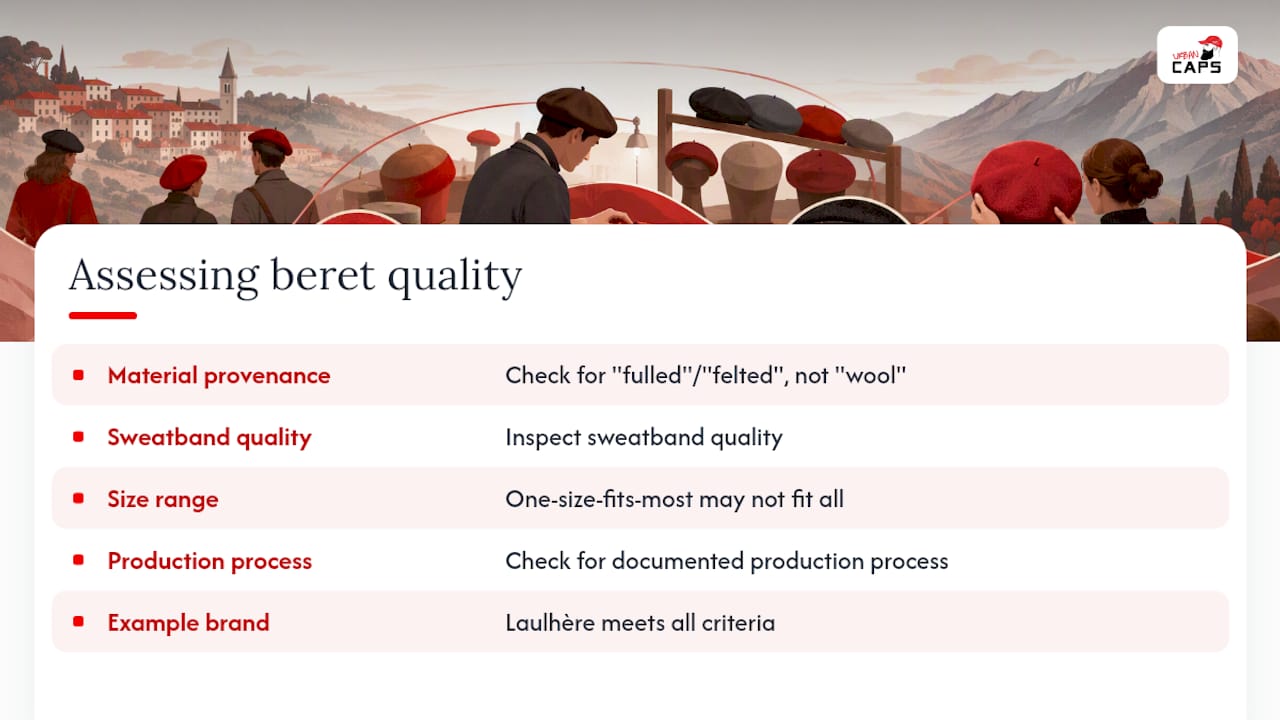
A beret is a soft, round, flat-crowned cap that sits close to the head with no brim — and what sets it apart from every other hat is the combination of its silhouette, its felted wool construction, and a multi-stage making process that no other common hat style shares.
The key distinguishing features at a glance:
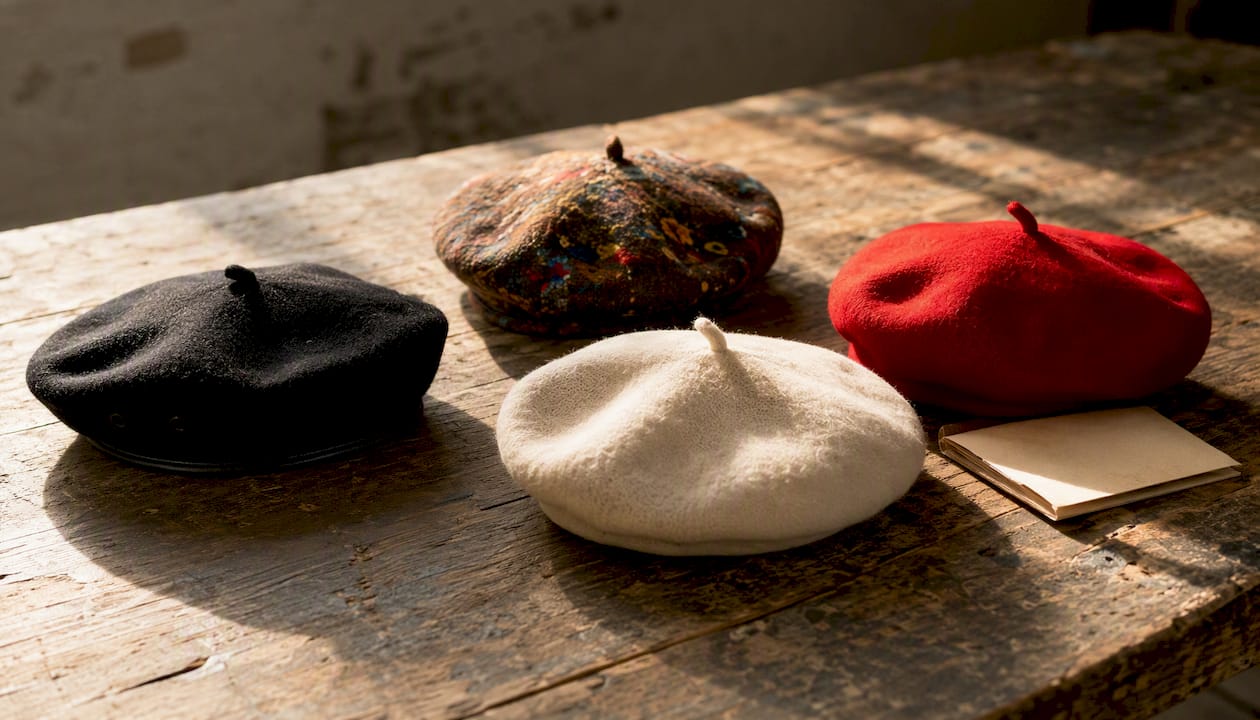
- Shape: A circular, brimless crown that can be shaped and repositioned on the head
- Material: Traditionally felted merino wool, produced by carding and fulling rather than weaving
- Construction: A multi-stage artisan process (knitting, remaillage, fulling, dyeing, shaping, finishing) that creates density and weather resistance
- Shaping ability: Unlike most hats, a beret can be reshaped by hand or steam and worn in multiple positions
- Symbolic versatility: No other hat has moved so freely between peasant wear, military uniform, artist accessory, and political statement
- Finish details: A small stem at the crown (the cabilhou), an inner sweatband, and often a drawstring for fit adjustment
The sections below cover where the beret came from, what it’s made of, the main variants, how to wear and care for one, and what to look for when buying in New Zealand.
Key takeaways
A beret’s unique character comes from the combination of its brimless silhouette, felted wool construction, and a multi-stage artisan process that no other common hat style replicates.
| Point | Details |
|---|---|
| Shape and silhouette | Soft, round, brimless crown that sits close to the head and can be repositioned or reshaped. |
| Felted wool construction | Fulling shrinks the knitted blank by up to around 30%, creating density, warmth, and weather resistance. |
| Artisan process | Quality makers like Laulhère use roughly sixteen distinct stages from raw wool to finished beret. |
| Symbolic range | The beret has moved between peasant wear, military uniform, artist accessory, and political symbol — no other hat matches that range. |
| Buying cue | Press the crown, check the sweatband, and look for a documented maker process before buying. |
| Urbancaps range | Three berets available with free NZ shipping: everyday, fashion-embellished, and artisan Laulhère options. |
Table of Contents
- Where did the beret come from?
- What are berets made of, and why does it matter?
- What are the main types of beret?
- What do berets symbolise, and who wears them?
- How do you wear and shape a beret?
- Why does craftsmanship matter when buying a beret?
- How do you care for a beret?
- Quick facts and common myths about berets
- A New Zealand seller’s view on buying a beret
- Berets available now at Urbancaps, with free NZ shipping
- Sources
- FAQ
Where did the beret come from?
The beret’s origins sit firmly in the Pyrenees, and understanding that geography explains almost everything about its construction. Shepherds in the Béarn and Basque regions needed a hat that was warm, water-resistant, and cheap to make from local wool. Felted wool delivered all three.
- Ancient antecedents: Flat, felt caps appear in archaeological records from ancient Greece and across medieval Europe. The silhouette is old; the word “beret” appears in French sources only in the 19th century.
- Pyrenees shepherd origins: The modern beret as we know it developed in the Béarn region of southern France. Shepherds knitted and felted wool caps that could withstand mountain weather — the Basque beret’s Béarnais roots are well documented, even though the “Basque beret” label stuck in popular culture.
- 17th–18th century regional craft: Production remained cottage-level for centuries, concentrated in villages around Oloron-Sainte-Marie and the Nive valley.
- 19th century industrialisation: Factories in Béarn scaled up production significantly. By the early 20th century, regional manufacturers were supplying berets across France and beyond.
- Military adoption: The French Chasseurs Alpins and, later, the British Royal Tank Regiment were among the first military units to adopt the beret as standard headwear, drawn by its practicality inside vehicles and on steep terrain. This military uptake is well recorded in Wikipedia’s beret history.
- 20th century global spread: Artists, intellectuals, and political movements adopted the beret from the 1920s onward, carrying it far beyond its regional origins.
The Béarnais vs. Basque naming dispute still surfaces today. Both regions claim the hat; the practical difference for buyers is mainly in diameter and stiffness conventions, with traditional Basque-style berets tending to run wider and flatter.
What are berets made of, and why does it matter?
The material and construction method are what make a beret feel and behave differently from a knitted beanie or a structured cap. Here’s how the main options compare:
- Felted merino wool: The traditional choice. Carded merino fibre is knitted into a large blank, then fulled (pounded and shrunk in hot water) until the fibres lock together into a dense felt. The result is warm, water-resistant, and shape-retaining — properties no other common hat material matches at the same weight.
- Knitted wool (non-felted): Softer and lighter, but less weather-resistant and more prone to stretching. Common in fashion berets and budget options.
- Crocheted cotton: Breathable and suited to warmer months, but offers no weather resistance and loses its shape more quickly.
- Synthetic fleece or acrylic: Lightweight, easy to wash, and affordable. Good for casual or seasonal wear, but lacks the density and longevity of felted wool.
The construction details that separate a quality beret from a basic one:
- Sweatband: A leather or grosgrain ribbon stitched inside the rim. It stabilises fit and wicks moisture. Cheap berets skip this or use a thin synthetic strip.
- Drawstring: A cord threaded through the inner band lets you tighten the fit. Traditional Basque berets include one; many fashion versions do not.
- Lining: Artisan berets are often partially lined at the crown for comfort. Fully unlined berets are lighter but feel rougher against the skin.
- Cabilhou: The small stem or nipple at the top of the crown. It’s a finishing detail that signals traditional construction.
Craft signal: A beret can lose up to a substantial portion of its volume during the fulling process alone, according to Manufrance’s account of Laulhère’s production. That shrinkage is what creates the density buyers feel when they press a quality beret between their fingers.
Price follows material directly. A felted merino beret from an artisan maker costs more because the raw wool input, the labour, and the process losses are all substantially higher than for a knitted synthetic version.
What are the main types of beret?
Beret styles differ more than most people realise. Five variants cover the majority of what you’ll find in shops:
- Béarnais/Basque beret: Wide diameter (often 10–12 inches), flat crown, traditional felted wool, usually in black, navy, or dark brown. The reference point for everything else.
- French fashion beret: Smaller diameter, softer drape, available in a wide range of colours and finishes. Often knitted rather than fully felted. Worn tilted to one side.
- Military beret: Fitted closely to the skull, with a stiffened band and a badge mount at the front. Colour signals regiment or unit. The fit is tighter than a civilian beret and there is no cabilhou.
- Scottish tam-o’-shanter: Wider and puffier than a Basque beret, with a central pom-pom and a different construction (usually knitted, not felted). Sits higher on the head. Technically a cousin of the beret rather than a true variant.
- Contemporary fashion berets: Embellished with rhinestones, faux fur, or contrast trim; often made from fleece or thick knit. Designed for visual impact rather than weather performance. These sit in the same brimless-round-cap category but prioritise style over craft.
Colour carries meaning in beret culture. Black is the default for both traditional Basque wear and most political uses. Military units use colour to signal corps: maroon for airborne, dark green for commandos, and so on. Fashion berets treat colour as pure style choice.
What do berets symbolise, and who wears them?
The beret has carried more symbolic weight than almost any other hat, and the history of that shift from peasant headwear to global icon is genuinely striking.
- Military: Adopted by elite and specialist units worldwide for practicality and unit identity. The beret signals discipline and belonging.
- Artists and bohemians: From Montmartre in the early 20th century onward, the beret became shorthand for creative independence. Painters, writers, and musicians wore it as a badge of non-conformity.
- Political movements: Che Guevara’s black beret became one of the most reproduced images of the 20th century. The Black Panther Party used black berets as a deliberate uniform element, signalling solidarity and resistance.
- Fashion and celebrity: The beret cycles in and out of mainstream fashion regularly, worn by everyone from Brigitte Bardot to Beyoncé. In this context it reads as chic rather than political.
- Rastafarian use: Large, crocheted berets (often in red, gold, and green) are worn to contain dreadlocks and carry religious and cultural significance.
The duality is the point. The same hat reads as “Parisian chic” on a fashion shoot and as “revolutionary” on a protest march. That flexibility is rare among garments and explains why the beret keeps reappearing across contexts.
How do you wear and shape a beret?
Getting the fit right makes the difference between a beret that looks deliberate and one that looks like it landed on your head by accident. Follow these steps:
- Measure your head at the widest point, roughly 2.5 cm above the ears. Use a soft tape measure. Check a hat sizing guide if you’re unsure which size to order.
- Put the beret on centred, with the inner band sitting just above the ears and the cabilhou at the top.
- Pull the beret to one side — typically to the right — so the excess fabric drapes over the opposite ear. This is the most common civilian styling position.
- Use steam or warm hands to mould the crown. Hold the beret over a steaming kettle for 10–15 seconds, then press and smooth the fabric into shape with your palms.
- Let it dry on your head or on a bowl of similar circumference so it holds the shape as it cools.
Quick styling notes:
- Wearing it square and centred reads as more formal or military-adjacent.
- Tilted to one side is the classic fashion position.
- Pulled back off the forehead suits rounder face shapes; pulled forward and low suits longer faces.
- A snug but not tight fit is correct — the sweatband should sit flat without digging in.
Pro Tip: Dampen the inner sweatband slightly before putting the beret on for the first time. It will mould to your head shape as it dries, giving a more personalised fit from the start.
Why does craftsmanship matter when buying a beret?
The difference between a $15 fashion beret and a $100 artisan one comes down to process. Laulhère’s traditional method involves roughly sixteen distinct stages — each one affecting the final hat’s density, shape retention, and lifespan.
The core steps in traditional artisan production:
- Raw merino wool selection (fibre length and grade affect felting quality)
- Carding (aligning fibres for effective felting)
- Knitting the blank (larger than the finished beret)
- Remaillage (closing the knitted seams)
- Fulling (hot water and mechanical pounding shrinks and locks the fibres)
- Dyeing
- Shaping on a form
- Trimming and finishing the rim
- Attaching the sweatband and drawstring
- Final quality control
That process is why artisan berets hold their shape after reshaping and resist light rain without a waterproof coating. Modern production left only a handful of historic factories in France still using this method, with Laulhère among the most recognised survivors.
Quality checklist when buying:
- Press the crown: it should feel dense and spring back, not floppy
- Check the rim: neat, consistent stitching with no loose threads
- Look inside: a proper leather or grosgrain sweatband, not a thin synthetic strip
- Test the drawstring: it should move freely and actually tighten the fit
- Feel the cabilhou: it should be firmly attached, not glued on
- Check the maker: established names with documented production processes are a reliable trust signal
Pro Tip: Reshape a beret after every few wears by steaming it lightly and pressing the crown flat. A quality felted wool beret will hold that shape; a cheap knitted one will gradually lose it regardless of care.
For more on what separates well-made headwear from budget alternatives, craftsmanship in headwear is worth reading before you buy.
How do you care for a beret?
Felted wool and synthetic berets need different handling. Getting this wrong — especially with felted wool — can shrink or distort a hat permanently.
For felted wool berets:
- Spot-clean minor marks with a damp cloth and a tiny amount of wool wash. Rub gently.
- For a full wash, hand-wash in cool water with a wool-specific detergent. Never wring.
- Press out excess water by rolling the beret in a clean towel.
- Reshape while damp by pulling the crown flat and smoothing the rim.
- Dry flat on a towel, away from direct heat and sunlight.
- Once dry, steam lightly and reshape if needed.
For synthetic or fleece berets:
- Most can be hand-washed in warm water with mild detergent.
- Reshape while damp and dry flat.
- Avoid tumble drying — heat distorts synthetic fibres.
Storage:
- Store flat or stuffed lightly with tissue paper to hold the crown shape.
- Keep in a breathable bag or box away from direct sunlight.
- Cedar blocks near wool berets deter moths without the chemical smell of mothballs.
Never store a beret crushed under other items. Felted wool holds a compressed shape surprisingly well, and a hat stored flat for months can be difficult to fully restore.
Quick facts and common myths about berets
- Flat, felt caps appear in ancient Greek art and medieval European records — the beret silhouette is far older than the word itself.
- The term “beret” entered French written records in the 19th century, though the hat it describes had existed for centuries.
- The French Chasseurs Alpins adopted the beret in the 1880s, making them one of the earliest military units to standardise it.
- Laulhère has been producing berets since 1840, making it one of the oldest surviving hat manufacturers in France.
- The Black Panther Party adopted the black beret in 1966 as a deliberate uniform element, drawing on its existing associations with military discipline and anti-establishment politics.
- Modern fashion revivals of the beret occur roughly every decade, driven by runway collections and celebrity styling.
Common myths, quickly settled:
- “Berets are French.” The traditional beret is Béarnais, from a region that straddles what is now the French-Spanish border. The French association came later, through military and artistic adoption.
- “All berets are the same.” Construction method, diameter, material, and finish vary enormously between a traditional Basque beret and a fashion fleece version.
- “Berets are hard to wear.” The shaping steps above take about two minutes. Most people find a comfortable position within the first few wears.
A quality felted wool beret can lose up to around 30% of its original volume during the fulling process — that shrinkage is what creates the dense, weather-resistant fabric that defines a traditional beret and separates it from every knitted alternative.
For a broader look at beret history, styles, and wearing advice, the Urbancaps beret guide covers the topic in detail.
A New Zealand seller’s view on buying a beret
Stocking berets for Kiwi customers means thinking about two things most overseas guides skip: NZ climate variation and the practical reality of buying online without trying first.
New Zealand’s weather swings between wet, cool winters in the south and mild, humid summers in the north. A felted merino beret handles Wellington winters well — it sheds light rain and stays warm without bulk. In Auckland’s milder, damper conditions, a lighter knitted wool or fleece beret is often more comfortable for everyday wear. For active outdoor use, a synthetic option washes easily and dries fast.
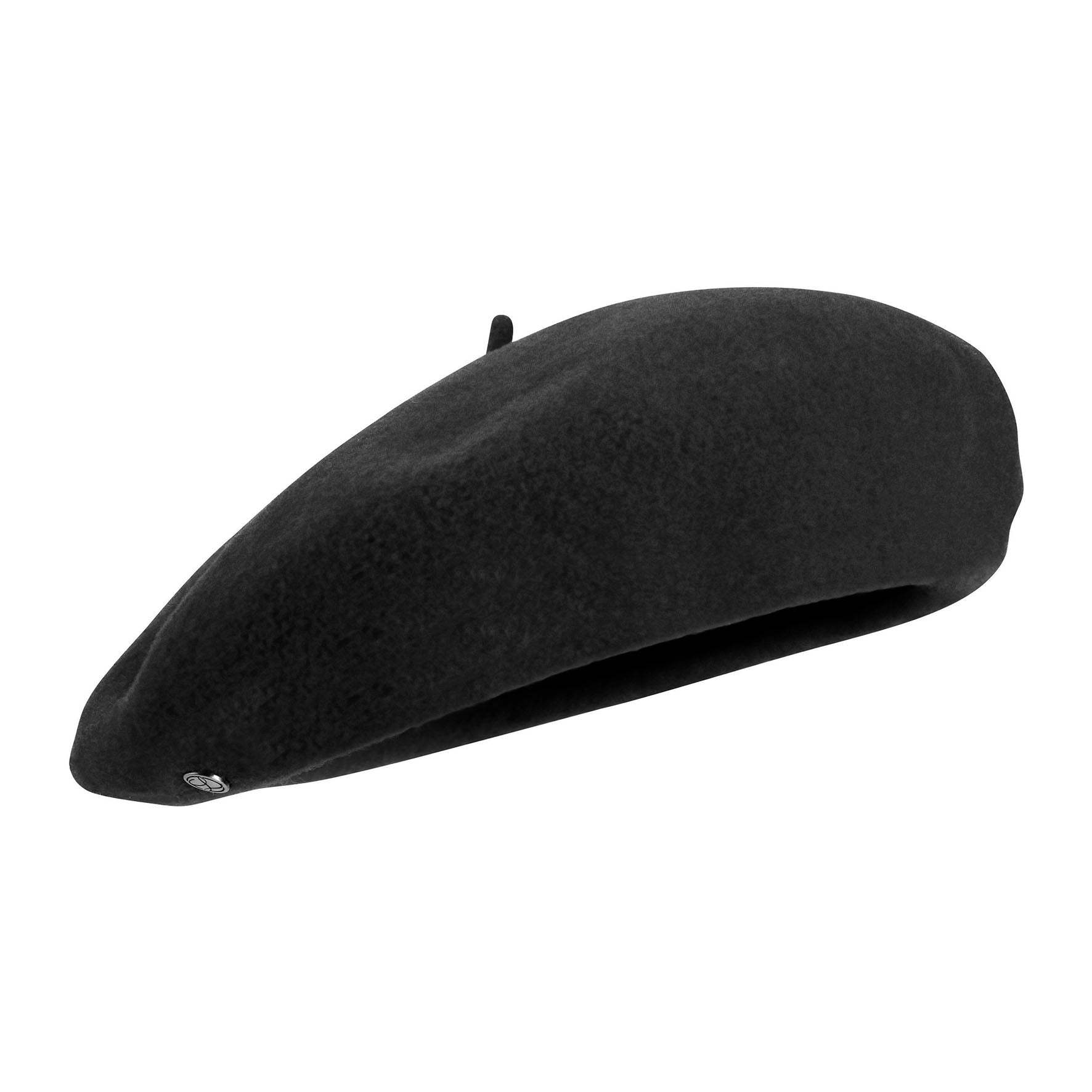
When assessing berets to stock, the checks that matter most are: material provenance (is it genuine felted wool or a knitted approximation?), sweatband quality, size range (one-size-fits-most works for many people but not all), and whether the maker has a documented production process. Laulhère meets all of those criteria. Fashion berets serve a different purpose and are assessed on finish quality and embellishment durability rather than craft process.
Pro Tip: For NZ shoppers buying a beret online, check the product description for “fulled” or “felted” rather than just “wool.” A knitted wool beret and a felted wool beret feel and perform very differently, and the distinction is rarely obvious from photos alone.
If you’re weighing up wool headwear options more broadly, the premium wool hats guide is a useful reference.
Berets available now at Urbancaps, with free NZ shipping
Three berets worth considering, each suited to a different buyer:
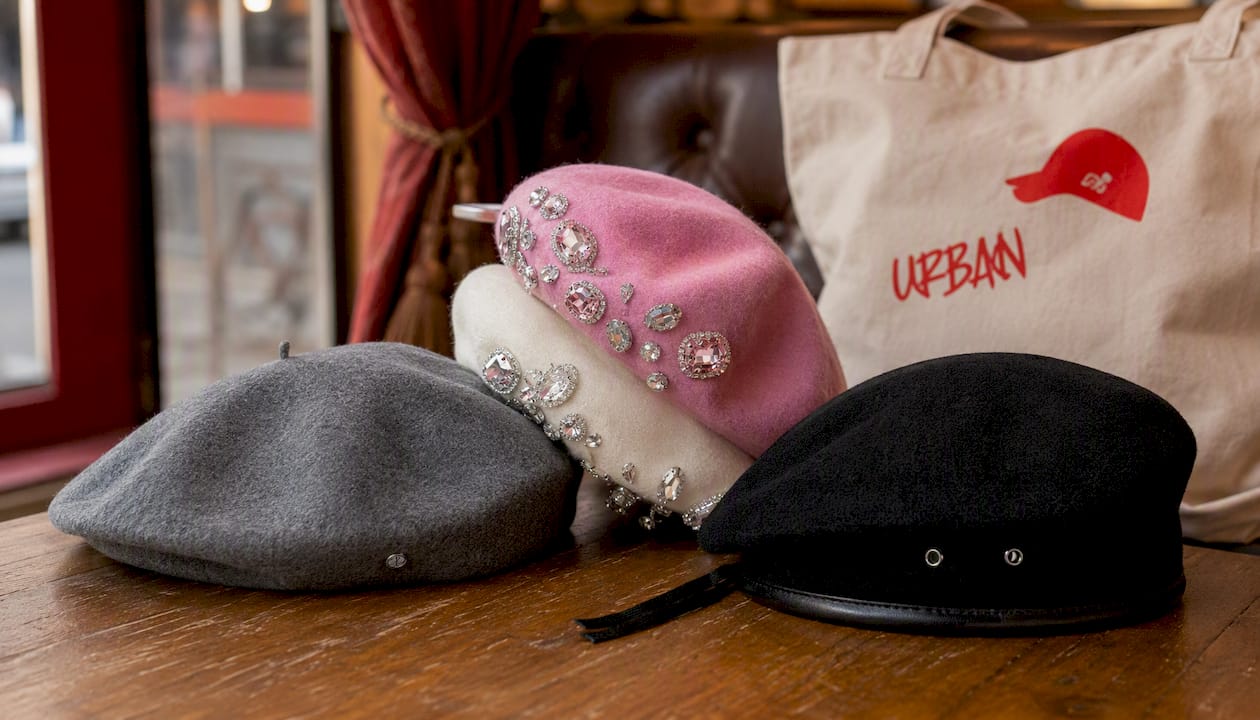
- The Montmartre Unisex Solid Colour Beret: A warm, versatile everyday beret in a classic silhouette. Suits the buyer who wants a reliable, wearable option that ticks the shape and sweatband boxes without the artisan price tag.
- Montmartre Rhinestone Wool Beret: A fashion-forward embellished beret for buyers who want visual impact. The rhinestone detailing makes it a statement piece for events or seasonal styling.
- Laulhère Vrai Basque Wool Beret, 10" diameter: The artisan option. Made using the traditional multi-stage felting process described above, with documented maker provenance. This is the one to buy if craftsmanship and longevity matter most to you.
All three ship free within New Zealand. Browse the full range and check sizing at Urbancaps — or go straight to the product pages above to check stock.
Sources
- The Basque Beret is Actually Bearnais
- The History of the Beret: How a Peasant’s Hat Turned into a Political Statement
- Beret
- The history of the beret between tradition and French symbol – Manufrance
- History of the Beret | PieceWork
FAQ
What’s the point of wearing a beret?
A beret provides warmth and weather resistance in a compact, brimless form that suits both outdoor and urban wear. Beyond function, it carries strong style and cultural associations — from artistic identity to military discipline — making it one of the most symbolically versatile hats available.
What do berets symbolise?
The beret has represented peasant practicality, military elite status, bohemian creativity, and political resistance at different points in history. Its meaning shifts with context: the same black beret reads as chic in a fashion setting and as defiant in a political one.
Who typically wears berets?
Berets are worn across a wide range of groups — military personnel, artists, political activists, and everyday fashion wearers. Historically associated with Pyrenees shepherds and French culture, the beret has been adopted globally and suits any gender or age.
What are some interesting facts about berets?
Laulhère has been making berets since 1840. The word “beret” only entered French written records in the 19th century, despite the hat style existing for centuries before that.
How is a beret different from other hats?
A beret’s combination of a brimless round silhouette, felted wool construction, and multi-stage artisan process sets it apart from structured caps, knitted beanies, and woven hats. It can be reshaped by hand or steam and worn in multiple positions — something almost no other hat style allows.