

Why support local hat brands: a Kiwi's guide
TL;DR:
- Supporting local hat brands strengthens communities, boosts the economy, and reduces textile waste. Buying locally ensures better product quality, preserves craftsmanship, and minimizes environmental impact through sustainable practices. Consumer support for local hats influences industry sustainability and helps preserve valuable skills and manufacturing infrastructure.
Supporting local hat brands is one of the most direct ways to strengthen your community, reduce textile waste, and get a better product. The case for buying local goes well beyond patriotism. Local sourcing influences the buying decisions of 41% of New Zealand shoppers, even under cost-of-living pressure. Every dollar you spend with a local hatmaker circulates through wages, local suppliers, and community services before it leaves the region. Urbancaps, proudly NZ owned and operated, is built on exactly this principle: quality headwear that supports Kiwi makers and the communities around them.
Why support local hat brands for a stronger local economy?
The economic case for buying local hats is grounded in a well-documented principle called the local multiplier effect. Every $5 spent locally can generate up to $15 in economic impact as that money cycles through local wages, suppliers, and services. That means your hat purchase does not stop working when you walk out the door.
Local hat businesses are also socially accountable in a way that multinational suppliers are not. The owner of a local brand lives in your suburb, pays rates to your council, and hires from your community. Small local suppliers use other local suppliers far more extensively than national or multinational companies do. That creates a self-sustaining economic loop that mass imports simply cannot replicate.
The risk of ignoring this loop is real. New Zealand’s apparel manufacturing workforce collapsed from around 110,000 workers to just 9,500, a contraction that hollowed out entire regional manufacturing clusters. When consumers consistently choose imported headwear over local alternatives, they accelerate that decline. Specialised jobs disappear, and the skills that supported them go with them.
The secondary economic benefits extend further than most shoppers realise. A local hat brand that thrives will:
- Pay wages to local pattern makers, cutters, and finishers
- Source materials from NZ or Australian suppliers where possible
- Contribute GST and business rates that fund local infrastructure
- Support local freight, packaging, and retail services
Pro Tip: When you buy a locally made hat, ask the brand where they source their materials. Brands that buy fabric locally multiply the economic benefit of your purchase even further.
43% of consumers prioritise shopping at local businesses despite cost pressures. That figure shows consumer values are already aligned with local purchasing. The gap between intention and action is where local brands need your support most.
What environmental advantages come from choosing local hat brands?
New Zealand sends 78% of its textiles, around 107,000 tonnes annually, to landfill. Local circular models that prioritise quality over volume could reduce that figure to 4% by 2038. That is not a marginal improvement. It is a near-total reversal of one of the country’s most persistent waste problems.
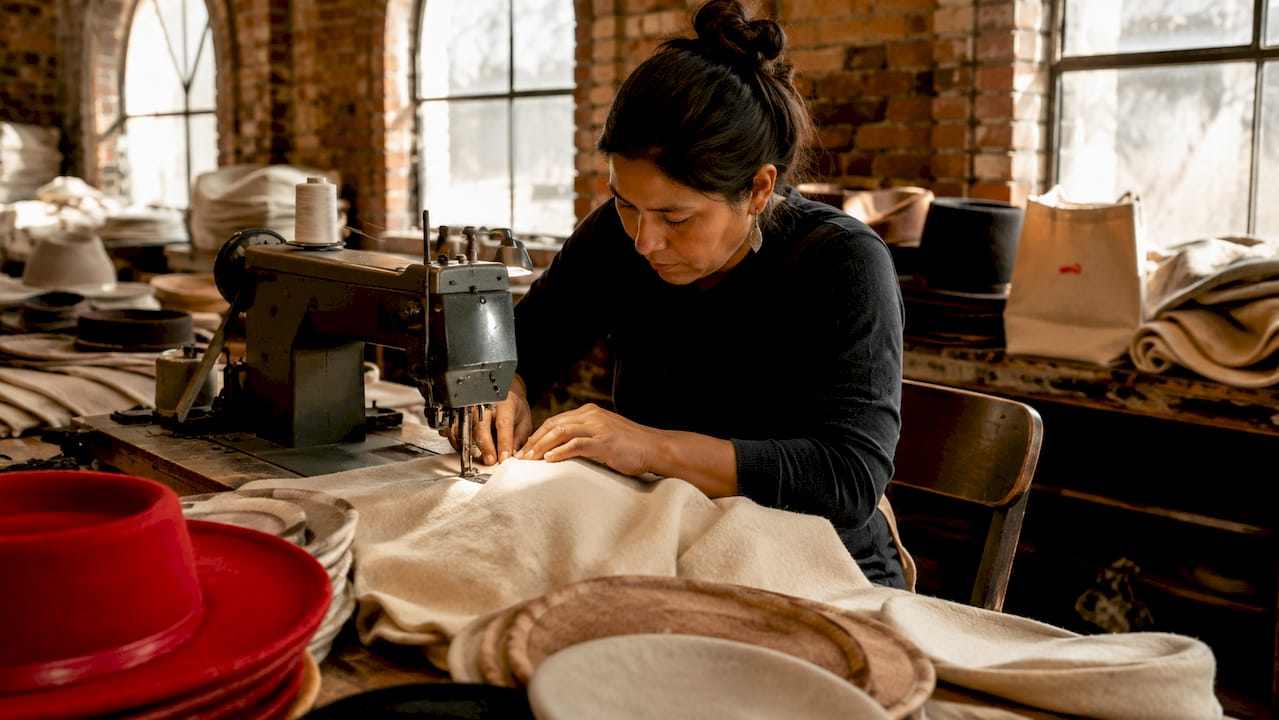
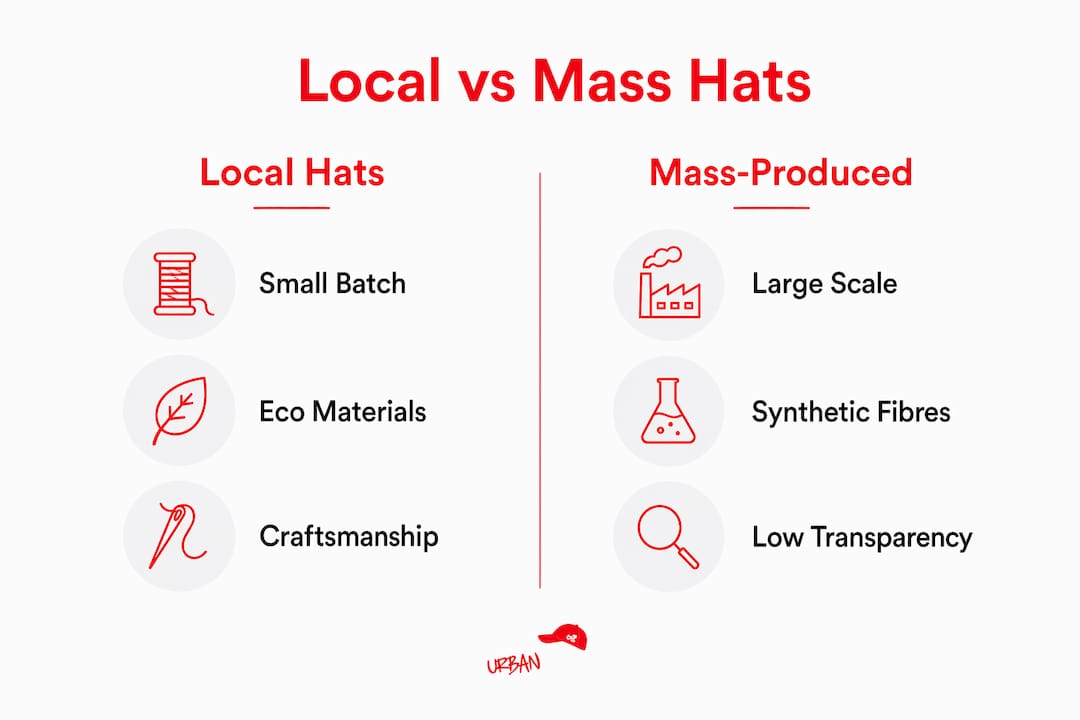
Local hat brands are better positioned to adopt circular production because they operate at smaller scale. They can use natural fibres, avoid overproduction, and build relationships with customers who return for repairs or replacements rather than disposal. Mass-produced headwear is designed for volume, not longevity. A locally made wool or cotton hat, built to last several seasons, keeps material out of landfill far longer than a fast-fashion cap.
The nuance here matters. Environmental impact depends not just on where a hat is made, but on the fibre source, energy used in production, and process efficiency. A locally made hat produced with coal-fired energy and synthetic fibres is not automatically greener than an imported one made with renewable energy and organic cotton. True sustainability requires looking at the full picture.
| Factor | Local hat brands | Mass-produced alternatives |
|---|---|---|
| Production scale | Small batch, lower overproduction | High volume, frequent surplus |
| Material traceability | Often higher, direct supplier relationships | Often opaque, multi-country supply chains |
| Transport emissions | Lower for domestic sale | Higher due to international freight |
| Repairability | More likely supported by maker | Rarely supported, designed for disposal |
| Landfill contribution | Lower when quality is prioritised | Higher due to fast-fashion turnover |
Pro Tip: Look for local hat brands that list their fabric sources on their website. Natural fibres like wool, cotton, and linen biodegrade far faster than polyester blends, making them a better choice for landfill reduction.
Local apparel manufacturing generates $1.85 billion in sector revenue annually. Keeping that revenue circulating through local production, rather than offshore factories, funds the kind of quality-focused, low-waste manufacturing that benefits the environment most.
Why is preserving craftsmanship and skilled manufacturing important?
The skills required to make a quality hat are not generic. Patternmaking, fabric cutting, brim shaping, and finishing are specialised techniques built over years of practice. Once local manufacturing infrastructure is lost, re-establishing it becomes nearly impossible. Artisans retire, equipment is sold off, and the knowledge that took decades to accumulate simply disappears.
New Zealand has already experienced this at scale. 80% of NZ wool apparel value is captured offshore due to import dependence. That means the raw material is grown here, but the skilled work and the profit margin leave the country. Supporting local hat brands reverses that equation.
Local production also delivers measurable quality advantages. Designers involved in all production stages achieve better durability and fit because they can inspect, adjust, and iterate without the communication delays and minimum order constraints of offshore manufacturing. A local maker can change a brim width, adjust a sweatband, or switch a fabric mid-run. An offshore factory cannot.
The skills worth preserving in local hat manufacturing include:
- Patternmaking: Translating a design into precise fabric templates that determine fit and structure
- Fabric cutting: Matching grain lines and minimising waste across natural materials
- Brim construction: Shaping and stiffening brims to hold form across seasons
- Hand finishing: Attaching linings, sweatbands, and trims with the care that machines skip
- Quality inspection: Catching fit and finish issues before a hat reaches the customer
Artisan-made hats also carry cultural weight that mass-produced headwear cannot replicate. A locally made fedora or flat cap reflects the aesthetic sensibility of the maker, the materials available in the region, and the design traditions of the community. That story adds value that no offshore factory can manufacture. You can read more about the value of local headwear and what it means for Kiwi consumers specifically.
How can you identify and choose high-quality, sustainable local hats?
Choosing a local hat with genuine sustainability credentials takes more than checking a “Made in NZ” label. The most reliable approach is to evaluate the brand across four areas: material quality, production transparency, brand provenance, and durability claims. Each one tells you something different about the hat’s real environmental and social footprint.
39% of Gen X and 38% of Millennials prefer supporting local businesses through online shopping. That shift shows the convenience argument against buying local no longer holds. Local brands with strong online stores offer the same speed and ease as global marketplaces, with the added benefit of fast domestic delivery and direct customer service.
Here is a practical framework for evaluating any local hat brand before you buy:
- Check the fibre content. Natural fibres like wool, cotton, and straw biodegrade and breathe better than synthetic alternatives. Brands that list fibre content prominently are usually more transparent overall.
- Look for production location details. A brand that names its factory or maker is more accountable than one that uses vague language like “ethically sourced.” Local production should be verifiable, not just claimed.
- Read the durability story. Quality local brands talk about how their hats are built to last. Look for details on construction methods, lining materials, and care instructions that extend the hat’s life.
- Assess the brand’s repair or return policy. Brands that offer repairs or take back worn hats for recycling are operating with a circular mindset. That is a strong signal of genuine sustainability commitment.
- Support small runs over mass catalogues. Brands that produce limited quantities reduce overproduction waste. A smaller range, made well, is a better environmental outcome than hundreds of styles made cheaply.
Buying from a local online store like Urbancaps keeps the convenience of e-commerce while directing your spending toward NZ-based operations. Fast NZ delivery, local customer support, and a curated range of quality headwear make the local choice genuinely practical, not just principled. For more on why durable hats matter, the investment case is straightforward: a well-made local hat outlasts three or four fast-fashion alternatives and costs less over time.
The consumer actions that sustain local industry are simple. Buy less, buy better, and buy local when you can. Share local brands with your network. Leave reviews that help other shoppers find quality makers. Ask brands directly about their production practices. Each of these actions costs nothing extra but compounds into real industry support over time.
Key takeaways
Supporting local hat brands delivers economic, environmental, and quality benefits that mass-produced alternatives cannot match, making it the most effective choice for sustainable fashion consumers.
| Point | Details |
|---|---|
| Local multiplier effect | Every $5 spent locally generates up to $15 in regional economic impact through wages and local supply chains. |
| Textile waste reduction | Local circular models could reduce NZ’s 78% landfill textile rate to 4% by 2038 through quality-focused production. |
| Craftsmanship preservation | NZ’s manufacturing workforce dropped from 110,000 to 9,500; buying local slows the loss of irreplaceable skills. |
| Sustainability nuance | True environmental benefit depends on fibre source and energy use, not just the “made locally” label. |
| Practical consumer action | Evaluate brands on material transparency, production location, durability, and repair policies before purchasing. |
Urban’s take on why local hats are worth it
I have watched the conversation around local fashion shift considerably over the past few years. The argument used to be almost entirely emotional: buy local because it feels good, because it supports your neighbour, because it is the right thing to do. Those reasons are real, but they are not enough on their own to change purchasing habits at scale.
What actually moves people is realising that local hats are often the better product. When a designer is present at every stage of production, the hat fits better, lasts longer, and looks sharper after a season of wear. That is not sentiment. That is the direct result of granular production control that offshore manufacturing cannot offer.
The misconception I hear most often is that local means expensive and inconvenient. The price gap is real, but it narrows quickly when you account for longevity. A locally made wool hat that lasts five years costs less per wear than a cheap import replaced every season. The convenience gap has closed entirely. Local brands with good online stores now deliver as fast as any global retailer.
The harder truth is that consumer choices today are shaping what will be available in ten years. If local hat manufacturing continues to contract, the skills, the makers, and the cultural knowledge go with it. Rebuilding that from scratch is not realistic. The time to support local hat makers is while they are still here, still producing, and still able to teach the next generation. That is not a guilt trip. It is just how industries work.
— Urban
Urbancaps’ locally crafted headwear collection
Urbancaps stocks a range of headwear built around quality materials, considered design, and the kind of durability that makes each purchase worth it.

The Fedora Hat Jazz Style is a standout example: a classic silhouette made with attention to brim structure and finish that fast-fashion headwear simply does not deliver. For outdoor use, the Outdoor Travel Hat offers practical protection without sacrificing style. Every purchase through Urbancaps supports NZ-based operations, fast local delivery, and a catalogue built for Kiwi lifestyles. Browse the full range at urbancaps.co.nz and find a hat worth keeping.
FAQ
Why does buying local hats benefit the economy?
Local hat purchases trigger the local multiplier effect, where every $5 spent locally generates up to $15 in regional economic activity through wages, local suppliers, and community services.
Are locally made hats actually more sustainable?
Local hats can be more sustainable, but the real environmental benefit depends on fibre source and energy use, not just production location. Brands using natural fibres and renewable energy deliver the strongest environmental outcomes.
How has NZ’s hat manufacturing industry changed?
New Zealand’s apparel manufacturing workforce dropped from around 110,000 to just 9,500 workers, with 80% of NZ wool apparel value now captured offshore. That contraction directly threatens the survival of local hat-making skills and infrastructure.
What should I look for when buying a sustainable local hat?
Check fibre content, production location transparency, construction quality, and whether the brand supports repairs or recycling. These four factors reliably separate genuine local quality from marketing claims.
Do younger consumers actually prefer buying local?
Yes. Research shows 39% of Gen X and 38% of Millennials prefer supporting local businesses through online shopping, proving that local purchasing and digital convenience are no longer in conflict.