

Why support local hatmakers: a guide for Kiwis
TL;DR:
- Supporting local hatmakers in New Zealand helps sustain artisan skills, strengthen the regional economy, and promote environmentally responsible fashion choices. Buying locally made hats preserves craft traditions, offers superior quality and durability, and reduces the environmental impact of long-distance shipping and overproduction. Each purchase supports community resilience, cultural identity, and a more sustainable, quality-focused approach to headwear.
Supporting local hatmakers is one of the most direct ways New Zealand consumers can invest in jobs, preserve artisan traditions, and make genuinely sustainable fashion choices. The term “local hatmaker” covers everything from sole-trader milliners working from a Wellington studio to small factories producing heritage-style fedoras and flat caps for the domestic market. When you choose a locally made hat over a mass-produced import, you are doing more than buying headwear. You are keeping a craft alive, strengthening your community’s economy, and getting a product built to last. This article covers the economic, cultural, quality, and environmental reasons why supporting local hatmakers matters for Kiwi consumers.
Why support local hatmakers in New Zealand’s economy?
Local hatmakers are small businesses, and small businesses are the backbone of the New Zealand economy. Small-business sales rose 3.9% year on year recently, with jobs up 1.1%, showing that local enterprise is gaining momentum even under economic pressure. That growth is fragile, though, and it depends on consumers choosing local over imported alternatives.
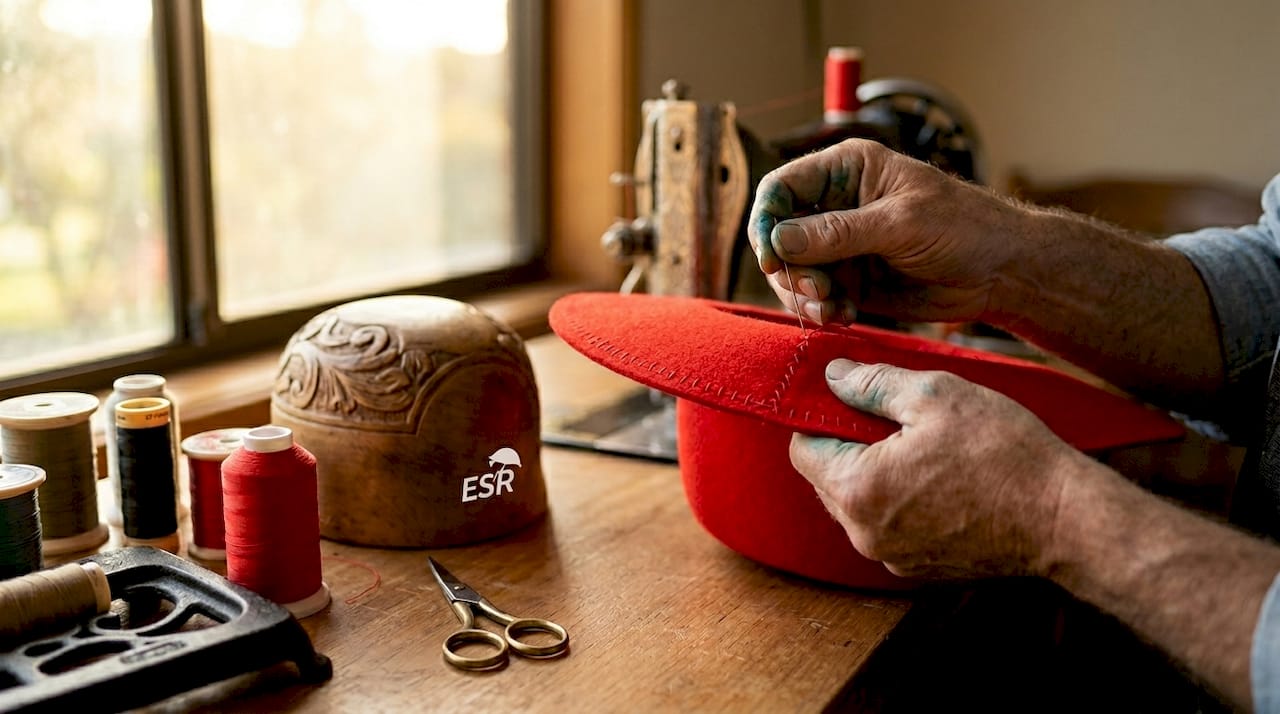
The challenge is real. Global competition puts enormous pressure on local producers. The Bollman Hat Company in the United States is a useful reference point: despite operating since 1868 and employing 72 workers, only 23% of its hats are now made in the local factory. The rest have shifted offshore. That figure shows exactly what happens when consumer purchasing drifts toward cheaper imports over time. New Zealand hatmakers face the same structural pressure.
When you buy from a local hatmaker, your money circulates within the regional economy. The maker pays a local supplier for materials, a local accountant for bookkeeping, and local staff for production. That multiplier effect is absent when you buy an imported hat. Supporting local hat manufacturing is not just a feel-good choice. It is an economic one with measurable downstream benefits for your community.
Here is how your purchasing decision directly supports the local economy:
- Job retention: Every consistent local customer helps a maker justify keeping staff on rather than scaling back.
- Regional wage growth: RNZ data shows wages rising alongside small-business sales, particularly in South Island regions.
- Supply chain depth: Local makers source materials domestically where possible, supporting other small producers in the process.
- Business reinvestment: Profits stay in New Zealand and get reinvested into better tools, training, and product development.
- Community resilience: A thriving local maker scene reduces a region’s dependence on global supply chains that can be disrupted overnight.
Pro Tip: Ask your local hatmaker where their materials come from. Makers who source domestically create a deeper economic ripple than those who import raw materials and only assemble locally.
How does buying local preserve craft and cultural traditions?
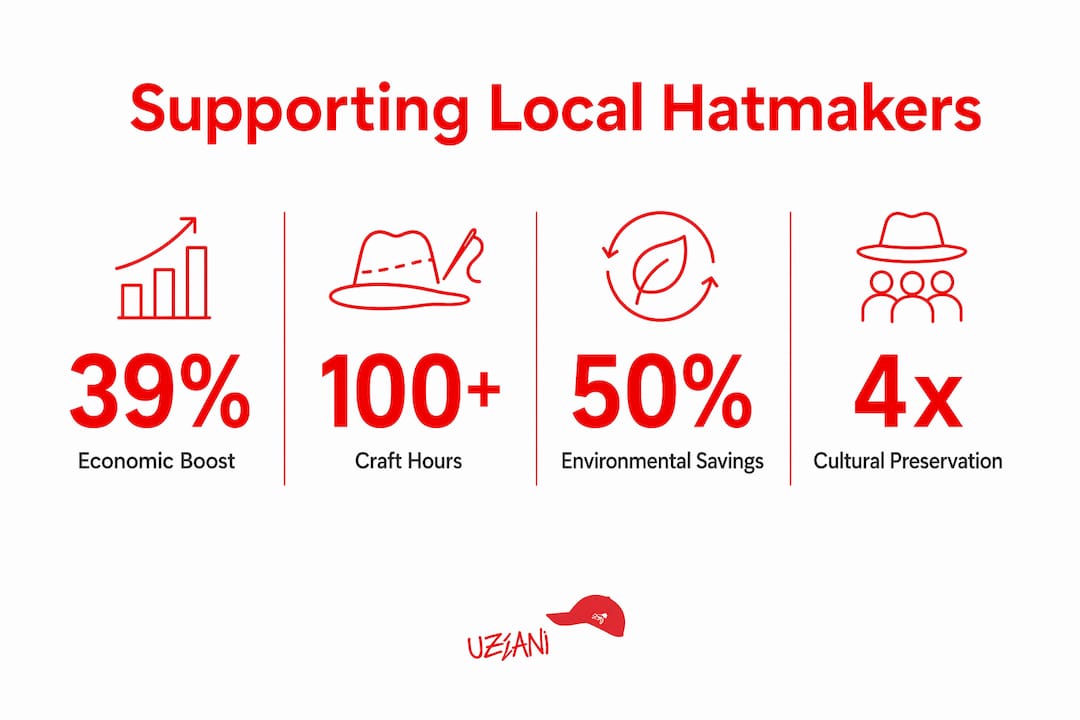
Hatmaking is a skilled trade with a long history, and that history disappears when the training pipeline dries up. Supporting local hatmakers means supporting education and apprenticeship access, not just buying a product. When demand for handmade hats falls, makers cannot afford to take on apprentices, and the knowledge dies with the last generation that holds it.
The story of Luton’s straw-hat tradition illustrates this perfectly. A 19-year-old maker is keeping Luton’s heritage alive with handmade boaters, reviving a craft where children were once trained from age three. That level of skill depth takes generations to build and only one generation of neglect to lose. New Zealand has its own craft traditions in hat and textile making, and those traditions face the same vulnerability.
Apprenticeships and maker communities are the mechanism through which craft knowledge transfers. When a local hatmaker has enough paying customers, they can afford to bring in a junior maker, teach the trade, and pass on techniques that no YouTube tutorial can fully replicate. The physical knowledge of how felt responds to steam, how to shape a brim by hand, or how to finish a leather sweatband properly is embodied knowledge. It lives in the hands of practitioners, not in manuals.
Interactive experiences deepen consumer appreciation for this craft. Hat bars, where customers build custom hats with staff support, have shown that hands-on engagement changes how people value handmade goods. Once you have watched a maker shape a crown over a wooden block, you understand why a handmade hat costs more than a factory import. That understanding translates into loyal, informed customers who keep local makers viable.
Here are four signs that a hat is genuinely handmade and rooted in traditional craft:
- A lead time of weeks or months. Makers producing quality work cannot turn orders around in 48 hours. A wait signals genuine production, not warehouse fulfilment.
- Visible hand-finishing. Look for hand-stitched sweatbands, hand-blocked crowns, and slight asymmetries that reflect individual shaping rather than machine uniformity.
- Material specificity. Authentic makers name their materials: beaver felt, rabbit fur blend, Ecuadorian toquilla straw. Vague descriptions like “premium fabric” are a red flag.
- Maker story and provenance. A real artisan can tell you where they trained, who taught them, and how long they have been making. That narrative is part of the product.
“When you buy a handmade hat, you are not just buying a hat. You are buying the years of practice that went into making it.”
The cultural identity woven into Kiwi headwear is worth protecting. New Zealand has a distinctive relationship with outdoor and heritage styles, from the classic Akubra-influenced broad-brim to the flat cap worn at farmers’ markets and rugby grounds. Local makers keep those styles relevant and alive.
What quality and fashion advantages do handmade hats offer?
Handmade hats from local artisans offer quality that mass production cannot replicate, and the difference is measurable in time, materials, and fit. Custom hats require 10 to 12 hours of skilled labour, with shaping, steaming, and resting happening in stages to perfect both fit and style. A factory-produced hat is shaped in seconds by a machine set to a standard size. The difference in outcome is significant.
Materials matter as much as process. Artisan hatmakers work with beaver felt, fur blends, and natural fibres that hold their shape, breathe well, and age beautifully. Mass-produced hats typically use synthetic felts and pressed wool composites that lose their form after a season of regular wear. The craftsmanship behind quality headwear is the reason a well-made hat from a local maker can last a decade or more, while a fast-fashion import might not survive a single New Zealand winter.
Consumer willingness to pay a premium correlates directly with makers investing 10 to 12 hours and closely listening to each customer’s lifestyle needs. A good local hatmaker asks how you wear your hat, what weather you face, and what your head shape requires. That conversation produces a hat fitted to you, not to a statistical average.
Demand for this level of quality is growing. One maker in Houston averages around 200 hats per year with waits of up to 10 months. That waitlist is not a failure of supply. It is a signal of genuine quality and a maker who refuses to cut corners to meet demand faster.
| Quality aspect | Handmade local hat | Mass-produced import |
|---|---|---|
| Production time | 10 to 12 hours per hat | Seconds to minutes per unit |
| Materials | Beaver felt, fur blends, natural fibres | Synthetic felt, pressed composites |
| Fit | Custom to individual head shape | Standard sizing, limited options |
| Durability | 10 or more years with proper care | One to three seasons typical |
| Lead time | Weeks to months | Immediate from stock |
| Maker relationship | Direct, personalised consultation | None |
Pro Tip: When commissioning a custom hat, bring photos of styles you admire and describe the occasions you will wear it. The more context you give a local maker, the better the result.
The role of hats in New Zealand fashion has shifted toward considered, quality-first purchasing. Kiwi consumers are increasingly choosing fewer, better pieces over seasonal fast-fashion cycles. A handmade hat fits that philosophy precisely.
In what ways does local hatmaking support environmental sustainability?
Local production has a smaller environmental footprint than global supply chains, and the difference is not marginal. A hat made in New Zealand travels metres to its buyer, not thousands of kilometres. That reduction in transport alone cuts carbon emissions significantly compared to a hat manufactured in Asia, shipped to a distribution centre in Europe, and then forwarded to a New Zealand retailer.
Made-to-order production eliminates the overstock problem that plagues mass manufacturing. Fast-fashion brands routinely produce more than they sell, and unsold inventory is often incinerated or sent to landfill. A local hatmaker who produces to order generates almost no waste from unsold stock. Every hat made has a buyer waiting for it.
The durability of handmade hats compounds the sustainability benefit over time. A hat that lasts ten years replaces roughly five to ten fast-fashion hats over the same period. Each of those replacements carries its own manufacturing footprint, packaging waste, and transport emissions. Buying one well-made local hat is, over a decade, a genuinely lower-impact choice than cycling through cheaper alternatives.
Here is a summary of the environmental advantages of supporting local hatmakers:
- Reduced transport emissions: Local production means negligible shipping distances compared to global supply chains.
- Made-to-order efficiency: No overproduction, no unsold stock, no waste from excess inventory.
- Longer product lifespan: Handmade hats last years longer than mass-produced alternatives, reducing replacement frequency.
- Responsible material sourcing: Many local makers prioritise natural, sustainably sourced fibres over synthetic alternatives.
- Smaller overall footprint: The combination of local sourcing, local production, and direct-to-consumer sales removes multiple carbon-intensive steps from the supply chain.
Supporting local makers preserves an ecosystem, not just a product line. That ecosystem includes the suppliers, the training networks, and the community fabric that keeps regional economies stable. When a local hatmaker closes, the environmental and social costs of that closure extend well beyond one business.
Key takeaways
Supporting local hatmakers delivers economic, cultural, quality, and environmental benefits that mass-produced headwear simply cannot match.
| Point | Details |
|---|---|
| Economic impact | Small-business sales in NZ rose 3.9% year on year; local purchases keep that momentum going. |
| Cultural preservation | Craft traditions collapse without training pipelines; buying local funds apprenticeships and keeps skills alive. |
| Superior quality | Handmade hats involve 10 to 12 hours of skilled labour and custom fitting that factory production cannot replicate. |
| Environmental benefit | Local, made-to-order production eliminates overstock waste and cuts transport emissions significantly. |
| Long-term value | A handmade hat lasting a decade replaces multiple fast-fashion purchases, saving money and reducing waste. |
Why I think Kiwis underestimate the value of local hatmakers
From where I sit at Urbancaps, the conversation about local hatmaking rarely gets the depth it deserves. Most people frame it as a price question. Local costs more, import costs less, end of discussion. That framing misses the actual calculation entirely.
The real question is what you are paying for over time. A handmade hat built from quality materials and fitted to your head will outlast three or four cheaper alternatives. When you factor in replacement costs, the local option often works out cheaper over five years. That is before you account for the fact that you are not contributing to a supply chain that produces waste at industrial scale.
What I find more compelling, though, is the cultural argument. New Zealand has a genuine craft identity. We value things made well, made here, and made to last. That value shows up in how we talk about food, furniture, and architecture. It should show up in how we buy headwear too. Every time a Kiwi chooses a locally made hat, they are voting for the kind of economy and culture they want to live in. That is not a small thing.
The makers I respect most are the ones who turn away orders rather than compromise on quality. A 10-month waitlist is not a problem to solve. It is proof that the maker has standards. Consumers who understand that become the best kind of customers: patient, loyal, and genuinely appreciative of what they receive. That relationship between maker and buyer is something no import can replicate.
— Urban
Explore local headwear at Urbancaps

Urbancaps is proudly NZ owned and operated, and we stock headwear that reflects the quality and craftsmanship Kiwis deserve. Whether you are after a heritage-inspired flat cap, a classic fedora, or a durable everyday beanie, our range is curated with the same values this article covers: quality materials, lasting construction, and local pride. We support local artisans and bring you headwear that suits the Kiwi lifestyle, from the South Island high country to the Auckland waterfront. Browse our full collection at Urbancaps NZ and find a hat worth keeping for years, not seasons. Fast NZ delivery. No fuss.
FAQ
Why does supporting local hatmakers matter for New Zealand?
Supporting local hatmakers keeps skilled jobs in New Zealand, preserves artisan craft traditions, and strengthens regional economies. Small-business sales in NZ rose 3.9% year on year, and local purchasing decisions directly contribute to that growth.
Are handmade hats worth the higher price?
Yes. Custom hats require 10 to 12 hours of skilled labour and are fitted to your individual head shape, producing a hat that typically lasts a decade or more. That durability makes the upfront cost lower over time than replacing cheaper alternatives repeatedly.
How do I know if a hat is genuinely handmade?
Look for a lead time of several weeks or months, named materials like beaver felt or toquilla straw, visible hand-finishing, and a maker who can describe their training and process. Immediate availability from stock is a reliable sign of mass production.
What is the environmental benefit of buying a local hat?
Local production eliminates long-distance shipping emissions, and made-to-order practices mean no overstock waste. A handmade hat lasting ten years also replaces multiple fast-fashion purchases, reducing the total environmental footprint of your headwear choices.
How can I find and support local hatmakers in New Zealand?
Start with NZ-based retailers like Urbancaps that stock locally made and heritage-quality headwear. Visit craft markets, follow local makers on social media, and ask retailers directly about the provenance of their products. Choosing NZ-made or NZ-stocked headwear is the most direct way to support the local craft community.