

Stop an Itchy Wool Hat in 30 Minutes with NZ DIY Fixes
The fastest fix is a hair conditioner soak in tepid water, which relaxes the coarse fibre ends causing the prickle within one wash. If that doesn’t cut it, sew in a thin fleece or silk headband, or swap to a superfine merino beanie. Treatment works well on borderline cases; lining or replacement wins when the wool itself is simply too coarse.
TL;DR:
- Soaking a wool hat in conditioner or vinegar can relax scaly fibres and temporarily reduce prickle, but coarse fibres often need lining or replacement for lasting comfort.
- Linings made of fleece, silk, or cotton are quick, affordable fixes that create a physical barrier between coarse wool fibres and skin, improving wearability.
- Wool with fibres above 30 microns tends to cause discomfort, while finer merino wool (below 24 microns) generally feels softer and more suitable for sensitive skin.
- Mechanical irritation from coarse fibre ends accounts for nearly all wool prickle, which can often be mitigated through proper treatment without diagnosing a true allergy.
- For persistent itchiness despite treatments, investing in a high-quality, finer wool beanie with a brushed interior is the most effective long-term solution.
Table of Contents
- Fix an itchy wool hat with quick at-home treatments
- Sewing in a lining or replacing the hat for good
- What micron rating actually means for comfort
- Is it actually a wool allergy, not just prickle?
- How to wash and reshape a wool hat without ruining it
- Why these treatment methods actually work
- Why wool itches in the first place
- Author perspective: treatment or replacement?
- Soft wool beanies that skip the itch altogether
- Sources
- FAQ
Fix an itchy wool hat with quick at-home treatments
Most prickle problems respond to a treatment you already have in the bathroom cabinet. Here’s the order worth trying, cheapest and gentlest first.
- Conditioner soak. Fill a basin with tepid or cool water (never hot). Add a capful of ordinary hair conditioner, no volumising or silicone-heavy formulas, and submerge the hat for 5 to 30 minutes. Squeeze gently, never wring. You can rinse it out or leave a light residue behind for extra softness.
- Vinegar soak. Mix one part white vinegar to three parts cool water and soak for 15 to 20 minutes. Vinegar helps relax the scaly outer layer of the wool fibre. Rinse thoroughly afterwards or the hat will smell like a chip shop.
- Wool-safe detergent. A dedicated wool wash (rather than standard laundry powder) cleans without stripping the natural lanolin that keeps fibres supple.
- Freezer trick and wearing-in. Some people swear by a damp hat sealed in a bag and frozen overnight, then thawed and worn while slightly damp. Simpler still: just wear the hat around the house for short stretches over a few days. Fibres do soften with handling and body heat, and you’ll know within a week whether it’s ever going to feel right.
Every one of these steps hinges on gentle handling. Wool felts and shrinks when it’s agitated in hot water or twisted while wet, so treat a soaking hat the way you’d treat a jellyfish: minimal contact, no sudden moves.
Pro Tip: Test any treatment on the underside of the brim or a hidden seam first. If the colour bleeds or the fibres mat, stop before you ruin the whole hat.
Sewing in a lining or replacing the hat for good
When a soak only takes the edge off, a physical barrier between wool and skin solves the problem outright.
- Headband lining: Cut a strip of polar fleece, silk, or tightly woven cotton to fit the inside brim, then hand sew it in with a simple running stitch. Twenty minutes, a needle, and thread from your sewing kit are all you need.
- Full lining: A satin or cotton liner sewn around the entire inner crown gives more even coverage, useful for hats worn all day.
- Pre-cut liners: Some craft shops sell ready-made sweatband liners that just need trimming to size.
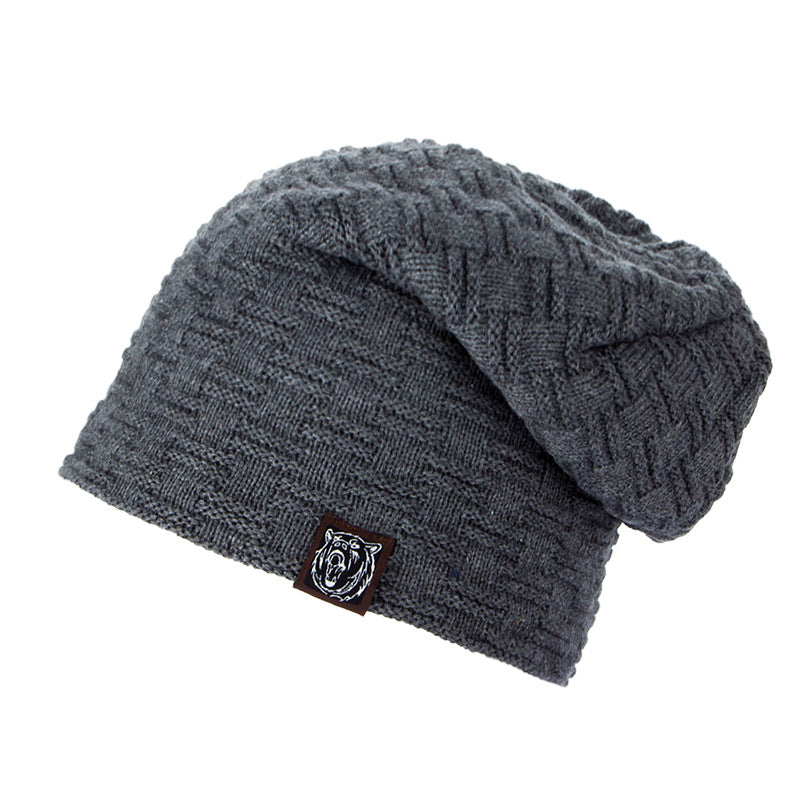
Replacement makes more sense than repair when the wool is genuinely coarse (thick, wiry fibres that spring back stiffly when pinched) or when you’ve tried two or three treatments with no real change. DIY lining costs next to nothing beyond fabric scraps and half an hour. A softer beanie built the right way from the start, like a velvet-lined wool beanie, sidesteps the whole exercise.
Pro Tip: If you’re handy with a needle, line the hat before you throw out the softening treatments. A lined, treated hat is usually the most comfortable outcome of all.
What micron rating actually means for comfort
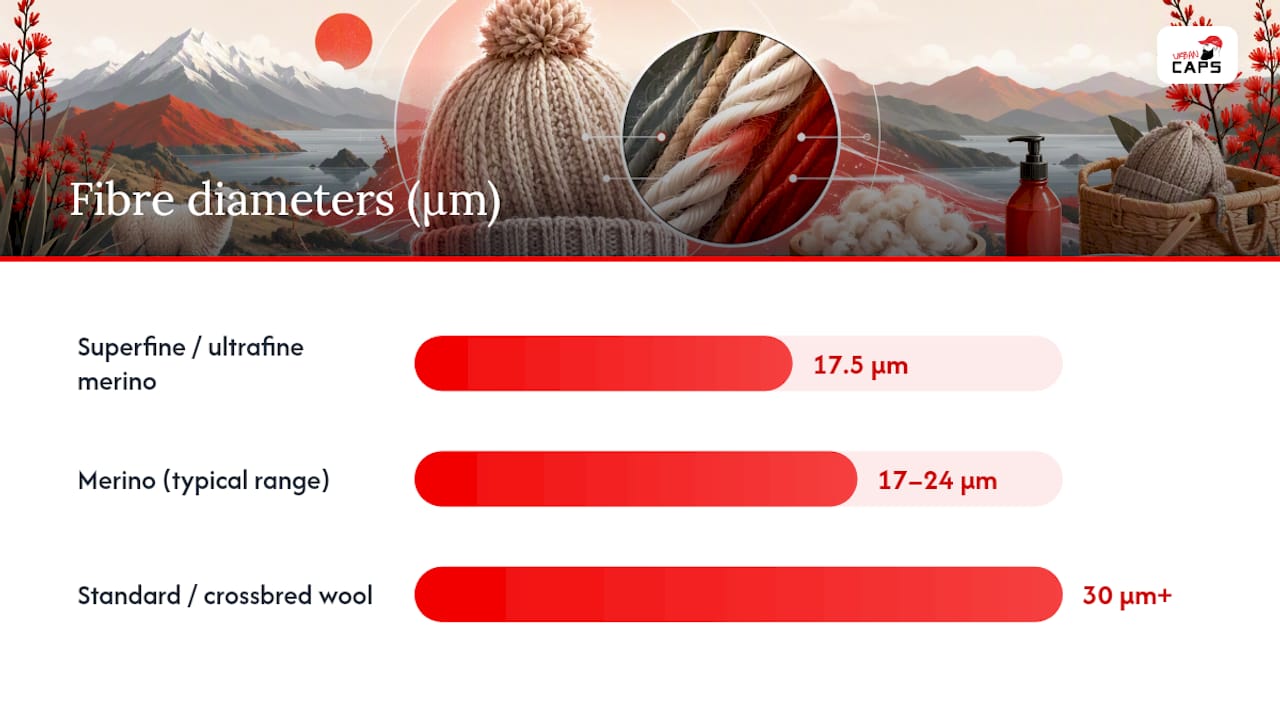
Fibre diameter, measured in microns (µm), is the single biggest driver of how itchy a wool garment feels. Fibres above roughly 30 µm behave like stiff little rods against skin, and industry fibre diameter guidance notes that comfort holds up when fewer than 5% of fibre ends exceed that threshold. Below that, wool bends rather than pokes.
Labels worth knowing when you’re shopping:
- Merino: typically 17 to 24 µm, a solid baseline for comfort.
- Superfine or ultrafine merino: 17.5 µm or finer, the gold standard for sensitive skin.
- Standard or crossbred wool: often 30 µm and up, the usual culprit behind a scratchy beanie.
Knit structure matters almost as much as the fibre itself. Ribbed knits leave more fibre ends exposed against skin, while a tighter, brushed single-jersey construction tucks them away. An outdoor wool knit beanie built with a finer blend and a brushed interior avoids the problem most cheap acrylic-wool blends run into.
Is it actually a wool allergy, not just prickle?
Genuine wool allergy is uncommon; most reactions are mechanical irritation from coarse fibre ends rather than an immune response. Still, a few signs point toward something more than ordinary prickle:
- Raised welts, hives, or a spreading rash rather than localised itch
- Swelling around the forehead or ears
- Symptoms that persist well after you’ve taken the hat off
If you notice any of those, stop wearing the hat immediately and wash the exposed skin with a mild, fragrance-free cleanser. A soothing emollient or an over-the-counter antihistamine can calm mild reactions; swelling that spreads or breathing difficulty needs urgent medical attention. Before writing off wool entirely, patch test a small offcut against your inner wrist for 24 hours. If that stays clear but the hat still stings your forehead, you’re dealing with prickle, not allergy, and the treatments above are worth another go.
How to wash and reshape a wool hat without ruining it
Softening a hat is only half the job. Getting it through a wash without felting or losing its shape matters just as much.
- Hand wash in cool water with a wool-specific detergent, or use your machine’s wool cycle if it has one.
- Avoid wringing or twisting. Press water out flat between two towels instead.
- Dry flat, away from direct heat or sunlight, and reshape the crown and brim by hand while still slightly damp.
- Skip volumising conditioners and silicone-heavy formulas. They can leave a filmy residue that actually feels worse on skin.
Urbancaps’ own wool hat care guide walks through the full process step by step, and the reshaping guide covers getting a beanie back to its proper form after a soak.
Why these treatment methods actually work
Prickle comes down to physics, not chemistry. Coarse fibre ends act as tiny levers against nerve endings in the skin, and anything that softens or reorients those ends reduces the sensation. Conditioner and vinegar soaks work by temporarily relaxing the fibre’s outer scales, which is why the effect fades over time and needs repeating. Lining sidesteps the physics altogether by keeping fibres away from skin.
The pattern we see across every fix, from a conditioner soak to a sewn-in fleece band, is that they all target the same mechanical problem: stiff fibre ends meeting skin. Treat that, and the itch usually goes with it.
Our own care guides reflect this same logic in every maintenance step we recommend.
Why wool itches in the first place
Wool prickle is a mechanical reaction, not an allergic one for the overwhelming majority of people who complain about it. The culprit is fibre diameter: coarse fibres above roughly 30 µm are stiff enough to bend against the skin’s nerve endings rather than flex away from them, triggering the same low-grade pain response as a light scratch.
Genuine wool allergy, by contrast, is rare and usually involves lanolin sensitivity rather than the fibre itself. That distinction matters because it changes what you should try first. If the sensation is a general “everywhere it touches” scratchiness rather than a rash confined to contact points, you’re almost certainly dealing with mechanical prickle. The good news is that prickle responds to physical intervention in a way allergy never would: soften the fibre ends or put a barrier between them and skin, and the itch drops away regardless of why the wool felt coarse to begin with.
Knit finishing plays a role too. Two hats made from identical fibre can feel completely different depending on whether the yarn is tightly spun and brushed smooth, or left loose with exposed ends poking through a looser knit. That’s why one merino beanie can feel silky while another, technically the same micron rating, still stings.
Author perspective: treatment or replacement?
Try treatment first when the hat is otherwise well made and the coarseness is mild. It’s cheap, quick, and often enough. Reach for replacement when you’ve soaked and lined and it’s still scratchy after two or three tries. A well-built plush wool beanie will outlast a repeatedly treated hat that’s fighting its own fibre diameter every winter.
— Urban
Soft wool beanies that skip the itch altogether
If you’ve tried a conditioner soak, sewn in a headband, and it’s still scratchy, the fibre itself is probably the problem, not the treatment. Urbancaps carries three wool beanies built with finer, brushed interiors specifically to avoid that outcome.
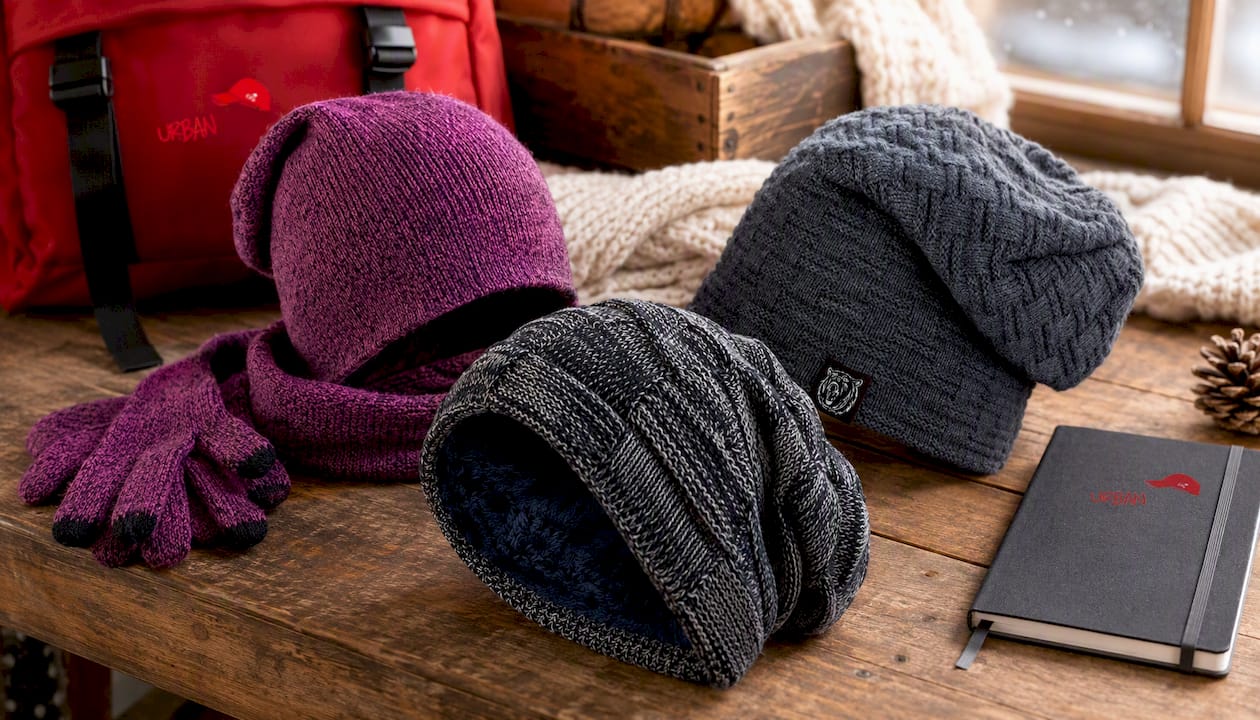
The Outdoor Wool Knit Beanie suits hikers and daily commuters who need warmth without a scratchy edge digging in under a hood or hat brim. The Velvet-Lined Wool Beanie has that barrier built in already, so you get instant comfort with none of the sewing. The Plush Wool Beanie goes furthest on softness, aimed at readers who want the warmth of wool with none of the compromise. Browse the full range at Urbancaps and pick the one that matches how you’ll actually wear it this winter.
Sources
Fibre diameter guidance comes from IWTO/American Wool; treatment steps are drawn from TECHknitting and WikiHow; prickle science from Live Science and Smart Merino.
- Why merino wool is so fine and itch-free | Smart Merino
- QUICKtip: softening itchy wool | TECHknitting
- Wool and skin: fibre diameter guidance (IWTO/American Wool)
- Why is wool itchy? | Live Science
FAQ
How do I stop a wool hat from itching?
Soak it in tepid water with ordinary hair conditioner for 5 to 30 minutes, handling it gently to avoid felting. If that doesn’t fully fix it, sew in a thin fleece or silk headband.
How do I make itchy wool less itchy?
A vinegar soak (one part vinegar to three parts cool water for 15 to 20 minutes) relaxes the fibre’s outer scales, and a wool-safe detergent helps preserve natural softness on future washes.
Why does my head get so itchy when I wear a beanie?
Coarse fibre ends above roughly 30 µm act like stiff rods against skin, triggering a mechanical irritation response rather than a true allergic reaction in most people.
Does the itchiness of wool go away?
Mild prickle often fades with a treatment soak or a short wearing-in period, but genuinely coarse wool tends to stay scratchy no matter how many times you wash it, in which case a finer merino beanie like the Plush Wool Beanie solves it for good.