

Between Hat Sizes in NZ? Size Up and Try a $2 Fix
If your head measurement lands between two sizes, size up for structured or fitted hats, choose either the middle size or a stretch style for beanies, and always go exact for helmets. Padding solves most “too big” problems cheaply; shrinking and stretching carry real risk. Measure twice, record both centimetres and inches, and check that number against the brand’s own chart before you buy.
TL;DR:
- Choosing to size up when between two sizes is safest for fitted or structured caps, as these styles have little to no stretch and can be uncomfortable if too tight.
- Padding foam strips can effectively adjust slightly loose hats at low cost, whereas shrinking or stretching carries significant risk of damage or warping.
- Helmets and safety headwear require exact sizing because improper fit compromises safety and there are no flexible fixes.
- Beanies and stretch-fabric caps offer more forgiveness with borderline measurements, allowing for rounding or selecting the middle size.
- Always measure twice in centimetres and compare against specific brand charts before purchasing to avoid costly sizing mistakes.
Table of Contents
- How do I measure my head for a hat size?
- What size should I choose for different hat styles?
- How do you adjust a hat that doesn’t fit?
- When does exact sizing actually matter?
- What does Urbancaps recommend for borderline sizing?
- What mistakes do people make when sizing hats?
- Why the standard sizing advice undersells the risk of guessing small
- Get the right fit the first time with Urbancaps
- Where these sizing figures come from
- Sources
- FAQ
How do I measure my head for a hat size?
Wrap a flexible tape measure around your head, sitting it just above your ears and across the middle of your forehead, roughly where a hat’s sweatband would rest. Keep the tape snug but not tight, take the reading, then repeat it two or three times. Small movements in tape position change the number more than people expect, so a single reading isn’t reliable enough to buy from.
Record the result in centimetres. Most reputable hat brands anchor their charts in centimetres and convert to US, UK, or European sizing from there, so cm is the number worth keeping on file for every future purchase.
Fitted hat sizes step up in tiny 1/8 inch increments, and each step corresponds to a real jump in centimetres. Typical conversions look like this:
- 22 in = US size 7 (56 cm)
- 22 3/8 in = US size 7 1/8 (57 cm)
- 22 3/4 in = US size 7 1/4 (58 cm)
If your measurement sits between two of these marks, tailor-grade sizing advice recommends rounding up rather than down, because a rigid hat that’s slightly too small is far harder to fix than one that’s slightly too large. Most adult heads sit between 22 and 23 inches (56 to 58.5 cm), which is why so many “one size” caps are built around that exact window, according to the Dirt Cheap Headwear fit guide. Save your measurement, then cross check it against each brand’s own chart, since sizing runs slightly differently between manufacturers. Urbancaps’ own cap size conversion guide is a fast way to check a centimetre reading against US, UK, and EU equivalents before you commit to a purchase.
What size should I choose for different hat styles?
Not every hat behaves the same way when your measurement falls between sizes, so the “size up” rule doesn’t apply universally.
- Fitted or structured caps: size up. These have almost no give, and a snug crown edge that presses on your temples after twenty minutes ruins the hat.
- Flexfit and stretch-fabric caps: either size usually works. Check the brand’s grouped ranges (commonly small/medium and large/extra large) rather than a single number.
- Beanies and knit hats: pick the middle. Knit stretches in both directions, so a borderline measurement rarely causes trouble either way.
- Straw, felt, and cowboy hats: size up, and don’t expect much correction later. Straw has essentially no stretch, and felt only shrinks or stretches slightly with careful use of moisture and heat, per The Fashion Choice’s sizing breakdown.
- Adjustable caps with a strap or snapback: if you’re genuinely unsure of your size, this closure style removes the guesswork almost entirely.
Cowboy hats deserve a special mention here, since their rigid felt or straw builds behave more like fitted caps than knitwear. Urbancaps’ cowboy hat size guide walks through the measurement quirks specific to wide-brim styles, where crown depth matters as much as circumference.
Pro Tip: When you’re stuck between two structured sizes and can’t try the hat on in person, buy the larger size and budget for a $2 pack of adhesive foam strips. It’s cheaper and far less risky than trying to stretch a hat that’s genuinely too small.
How do you adjust a hat that doesn’t fit?
Four fixes cover almost every borderline sizing problem, ranked from safest to riskiest.
- Padding. Adhesive foam sizing strips stick inside the sweatband and are the standard fix for a hat that’s slightly loose. A single strip typically tightens the circumference by around a quarter to half an inch depending on thickness, according to RareCustom’s sizing guide, and you can layer more than one if needed.
- Controlled shrinking. Wool and some cotton hats respond to a light dampening followed by careful drying, gradually tightening the fibres. This works, but uneven dampening can warp the brim or fade colour, so it’s a last resort for a hat you’re prepared to risk.
- Gentle stretching and steam. Leather hats can be stretched slightly by a specialist using a hat stretcher and steam, and some structured fabrics respond to the same treatment. Straw and stiff felt generally won’t budge.
- Professional adjustment. A milliner or experienced cobbler can resize leather bands, adjust internal fittings, or steam-block felt more precisely than a home attempt, usually for a modest fee with a turnaround of a few days to a couple of weeks.
Padding costs only a few cents a strip against the cost of a replacement hat, which is why it’s worth trying first, per RareCustom. A too-small fitted hat has no cheap fix at all, which is the real argument for sizing up whenever you’re unsure.
When does exact sizing actually matter?
Some hats punish a borderline guess more than others. Helmets and other safety headwear need exact sizing every time. There’s no padding or stretching workaround that makes an ill-fitting helmet safe, and guessing here isn’t worth the risk.
Structured hats worn for professional, athletic, or team-kit purposes also reward precision. A cap that’s visibly loose or pinching looks sloppy in photos and under pressure. For these, take the exact measurement and match it to the chart rather than rounding for convenience.
Casual wear is far more forgiving. Beanies, adjustable caps, and slouchy knit styles tolerate real variance without anyone noticing. To judge fit in the mirror, check for:
- Pressure marks or redness at the temples after a few minutes
- A brim that sits level, not tilted by an uneven crown
- Movement when you shake your head gently, without sliding off
What does Urbancaps recommend for borderline sizing?
Urbancaps built its cap fit guide around the same principle this article follows: measure in centimetres, round up when in doubt, and check the size against the specific product before ordering. That habit alone prevents most avoidable returns.
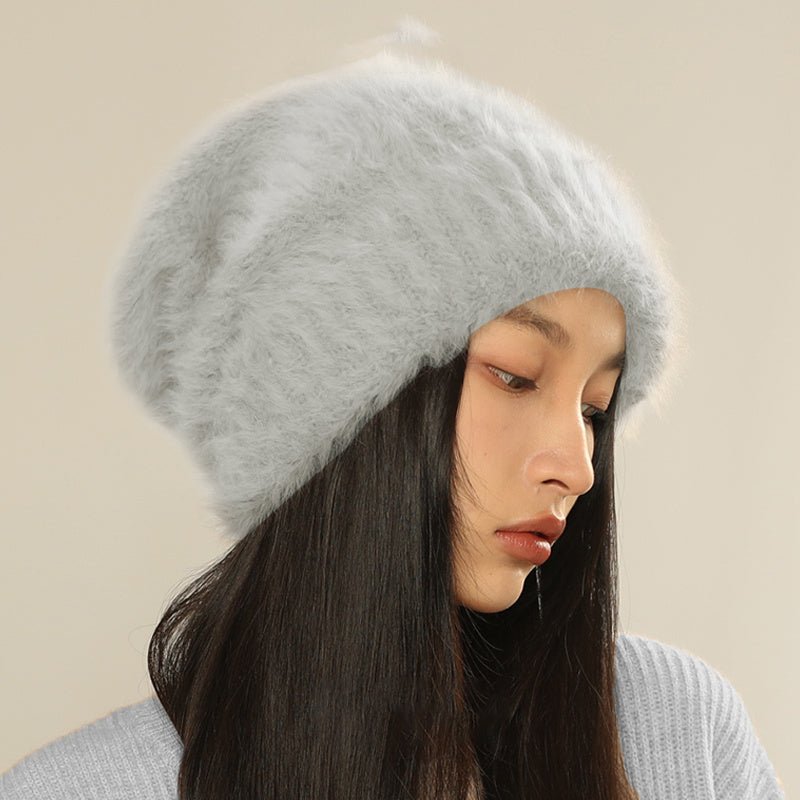
For readers genuinely stuck between sizes, two product types solve most cases. The oversized knit wool beanie suits larger or borderline heads where a standard beanie feels tight at the ears. Adjustable caps suit anyone unsure of their exact number, since the strap absorbs the guesswork. Wear a new hat around the house for an hour before committing. Fabric relaxes slightly with normal wear, and that small give often settles a fit that felt marginal in the mirror.
What mistakes do people make when sizing hats?
The most common error is measuring once and trusting it. A tape that slips half a centimetre higher or lower than your natural hatline can shift the reading enough to bump you into the wrong size bracket entirely.
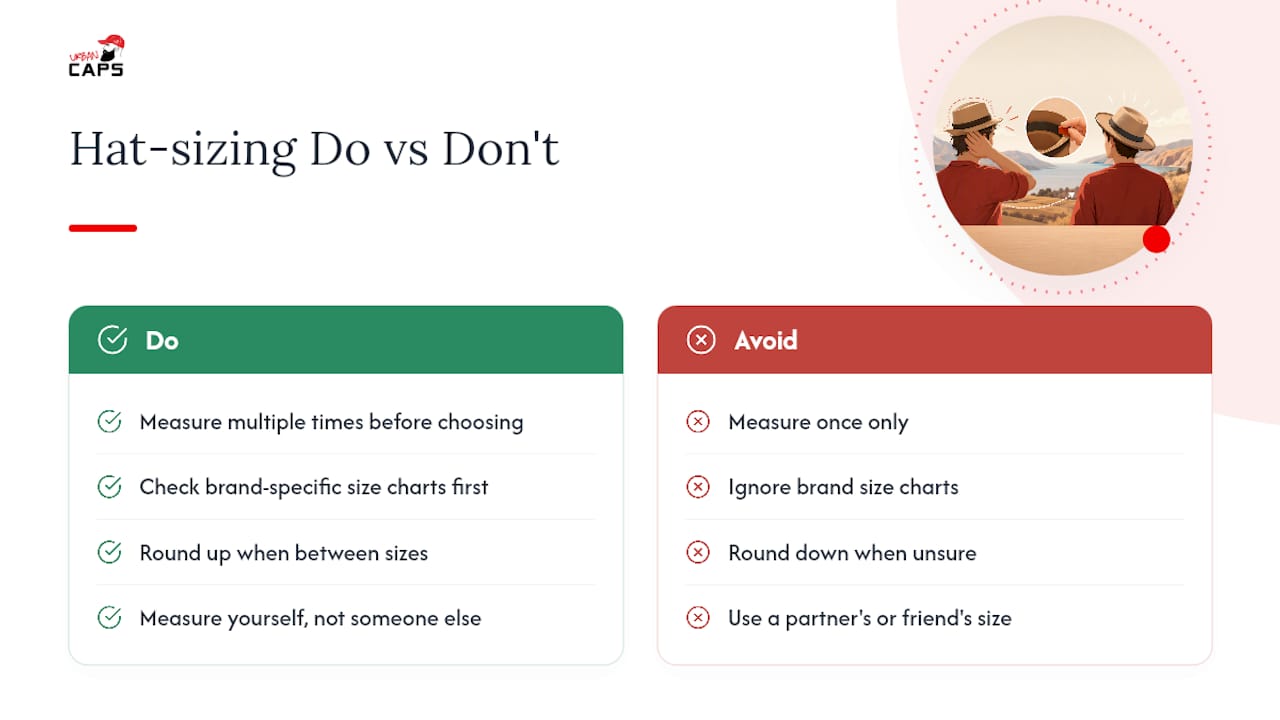
The second is ignoring brand-specific charts and assuming all “size 7” hats fit the same. Manufacturing tolerances differ, so a snapback and a fitted wool cap labelled the same size can feel noticeably different.
Rounding down when between sizes causes more grief than rounding up, especially with rigid materials. A too-small structured hat has no easy fix, while a too-large one can be padded for a few dollars.
Buying based on a partner’s or friend’s size, rather than your own measurement, is a surprisingly frequent mistake, particularly with gifted hats or team orders. And attempting aggressive shrinking on an expensive felt or leather hat without testing on a cheaper item first can permanently warp the shape or fade the colour, turning a minor fit issue into a wrecked hat.
Finally, some buyers skip trying the hat on altogether once it arrives, missing the window to exchange it. Testing fit within the first day, before tags are removed or adjustments are made, keeps your return options open.
Why the standard sizing advice undersells the risk of guessing small
Most sizing guides treat “between two sizes” as a minor inconvenience solved by a single rule. It isn’t quite that simple. The real asymmetry is in the cost of getting it wrong in each direction. A hat that’s slightly too big costs you a couple of dollars in foam strips and five minutes of effort. A hat that’s slightly too small often costs you the whole purchase, because rigid materials like straw and structured felt don’t stretch reliably no matter what a home remedy promises.
That asymmetry is the actual reason “size up” has become common advice, not tradition or caution for its own sake. The overlooked nuance is that this rule only holds for rigid and semi-rigid styles. Applying it to knitwear or Flexfit caps, where stretch genuinely swings both ways, just leads to a floppier hat than necessary. Measure first, then match the rule to the fabric in front of you, not the other way around.
— Urban
Get the right fit the first time with Urbancaps
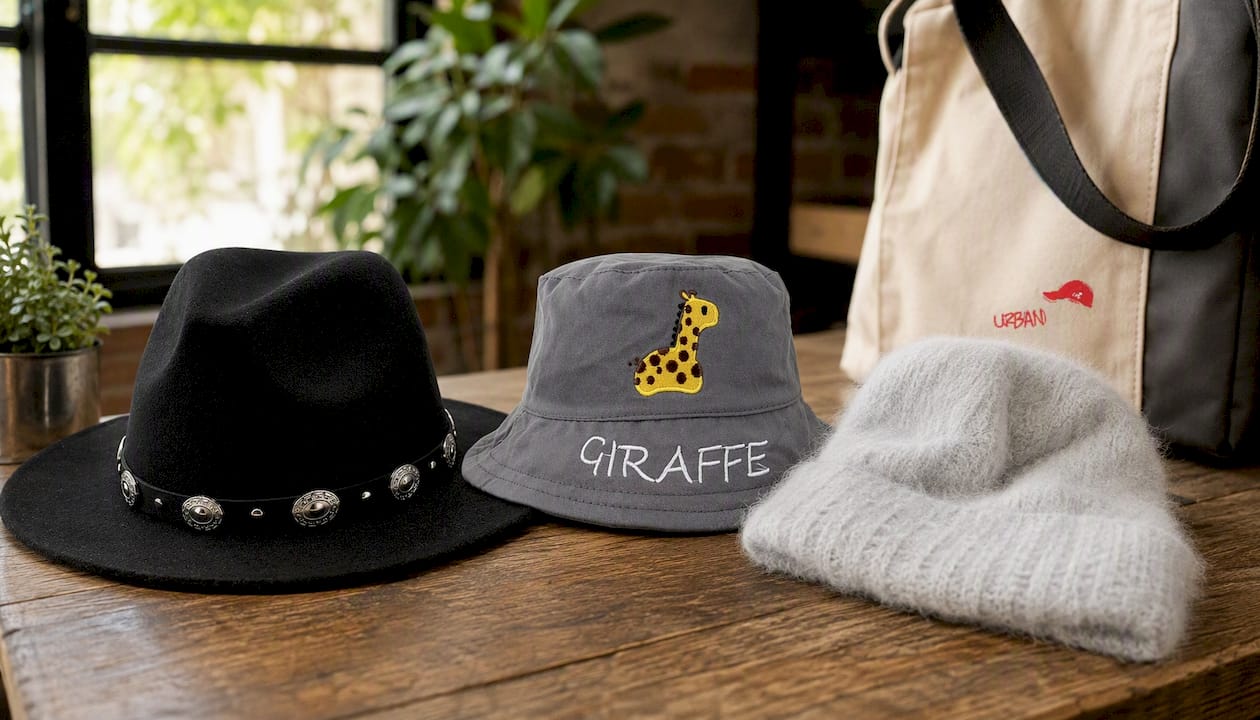
Guessing between two sizes is the single biggest cause of avoidable hat returns, and Urbancaps built its sizing tools specifically to close that gap before you check out. If you’ve measured yourself and landed on a borderline number, three products cover almost every scenario this guide has walked through. The oversized knit wool beanie is built for larger or borderline heads where a standard beanie pinches at the ears, using stretch wool to absorb the guesswork. The retro top hat with metal belt trim suits anyone who’s decided to size up for a structured look and wants a statement piece rather than a plain fedora. And for parents sizing kids rather than adults, the kids’ classic everyday hat covers the 3 to 5 age range where growth spurts make exact sizing even trickier.
Before you buy, run your measurement past Urbancaps’ step-by-step sizing guide to confirm which size bracket you land in, and check the product page’s size chart against your own centimetre reading. If a hat still doesn’t sit right once it arrives, Urbancaps’ exchange process means a borderline guess doesn’t have to be a wasted purchase. Take your measurement now, compare it against the chart on the product page you’re eyeing, and order with confidence instead of a guess.
Where these sizing figures come from
For a full centimetre-to-size conversion table, the tailor sizing guide is the most reliable reference. For padding techniques and adjustable closures like Flexfit and snapback, RareCustom’s sizing guide and the Dirt Cheap Headwear fit guide cover the practical fixes in more depth. For adjustable strap examples outside knitwear, Gulf of America’s baseball cap shows a typical snapback closure in action.
Sources
- How to Measure Your Head for a Hat (All Brands, All Styles)
- Custom hat sizing guide: Finding the perfect fit for every head | RareCustom Blog
- Ultimate hat fit guide: Find your perfect size | Dirt Cheap Headwear
FAQ
Is a 57cm head size small?
No, 57cm sits close to the average adult range, and typically converts to a US fitted size around 7 1/8, right in the middle of common sizing charts.
Is a US 7 5/8 hat bigger than a 7 3/4?
No, it’s the other way round. Sizes increase with the number, so 7 3/4 is larger than 7 5/8, and the difference is roughly one 1/8 inch increment, or about 3mm in circumference.
What order do hat sizes run in?
Fitted hat sizes run smallest to largest in 1/8 inch steps, with each step adding approximately 3 centimetres of circumference.
Is a 7 1/4 hat size medium or large?
It generally falls in the medium to large range depending on the brand, so it’s worth checking the specific chart. Urbancaps’ flat cap sizing guide breaks down where that size lands across different heritage styles.
What should I do if my head measurement falls exactly between two sizes?
Size up for fitted or structured hats and use padding strips if it ends up loose, choose the middle size for stretch knit styles, and never round for helmets or safety headwear.