

How to clean hats and keep them looking great
TL;DR:
- Proper hat cleaning extends the lifespan of headwear by matching methods to the material and avoiding damage.
- Hand washing in cold water, pre-treating stains with white vinegar, and air-drying on a form are the safest techniques.
Hat cleaning is the process of carefully removing dirt, sweat, and stains from headwear while preserving its original shape and material quality. Done correctly, it extends the life of any hat significantly, whether you own a structured baseball cap, a wool fedora, or a knit beanie. The key is matching your cleaning method to the material. Cotton, wool, and synthetic fabrics each respond differently to water, heat, and detergent. This guide covers how to clean hats at home using proven techniques, from pre-treatment with white vinegar through to proper drying on a form.
What do you need before cleaning hats?
Getting your tools together before you start saves time and prevents mistakes. Using the wrong product on the wrong fabric is the most common cause of hat damage, and it happens before the cleaning even begins.
Here is what you need:
- Mild detergent: A gentle, colour-safe detergent protects hat fabric and colours. Mild detergent preserves fibres and reduces wear from repeated cleaning. Avoid anything with bleach or strong enzymes.
- White vinegar: White vinegar is the go-to pre-treatment agent for sweat and oil stains. It breaks down salt and grease deposits without stripping colour or weakening fibres.
- Soft-bristled brush: A clean toothbrush or a dedicated garment brush works well for scrubbing stained areas gently. Stiff brushes scratch delicate fabrics.
- Clean white cloths: White cloths prevent colour transfer onto your hat during spot cleaning.
- A bowl or basin: You need a container large enough to submerge the hat for hand washing.
- A hat form, bowl, or inflated balloon: These hold the hat’s shape while it dries. This step is non-negotiable for structured caps and stiff-brimmed hats.
Water temperature matters. Always use cold or lukewarm water. Hot water shrinks wool, warps cardboard brims, and sets stains rather than lifting them. Cold water is the safe default for every hat material.
The table below shows which tools suit which hat types.
| Hat type | Recommended tools |
|---|---|
| Cotton baseball cap | Mild detergent, soft brush, bowl, hat form |
| Wool fedora or flat cap | Wool-safe detergent, white cloth, hat form |
| Synthetic sports cap | Mild detergent, soft brush, cold water basin |
| Knit beanie | Wool-safe detergent, basin, flat towel for drying |
| Straw or structured hat | Damp white cloth only, no soaking |
How to clean hats by material: step-by-step methods
The best way to clean hats depends entirely on what they are made from. A method that works perfectly on a cotton dad hat can ruin a wool felt fedora. Follow the steps below for your specific hat type.
Pre-treating sweat and oil stains
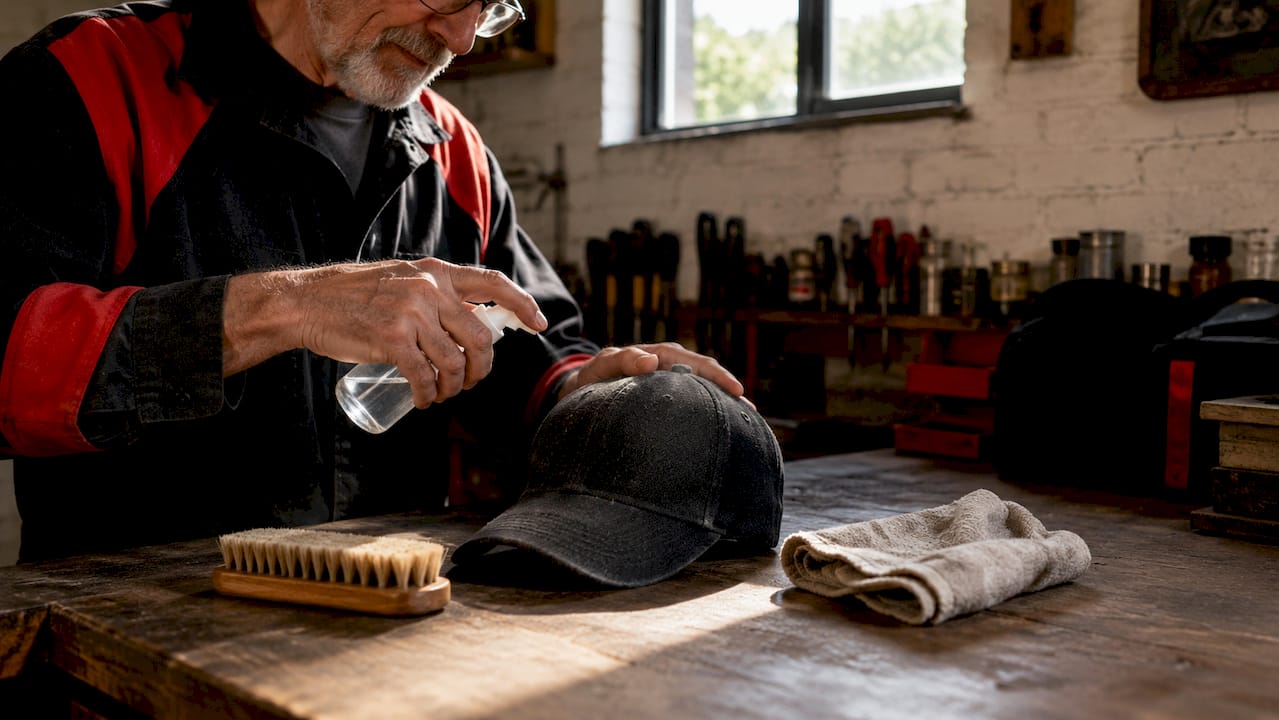
Pre-treatment is the most important step most people skip. White vinegar pre-treatment breaks down sweat oils before washing, making the main clean far more effective. Apply undiluted white vinegar directly to the stained area using a soft brush or cloth. Work it in gently with small circular motions, then leave it to sit for 10–15 minutes before washing.
For heavy staining, follow the vinegar treatment with a cold water soak. Soaking in cold water with a small amount of mild detergent for up to 30 minutes loosens tough dirt without damaging the material. Cold water is critical here. Hot water sets protein-based stains like sweat permanently into the fabric.
Hand washing cotton and synthetic hats
Hand washing is the preferred method for cleaning caps and hats because it gives you full control over pressure and water temperature. Washing machines and dishwashers apply mechanical force that deforms structured brims and shrinks fitted caps.
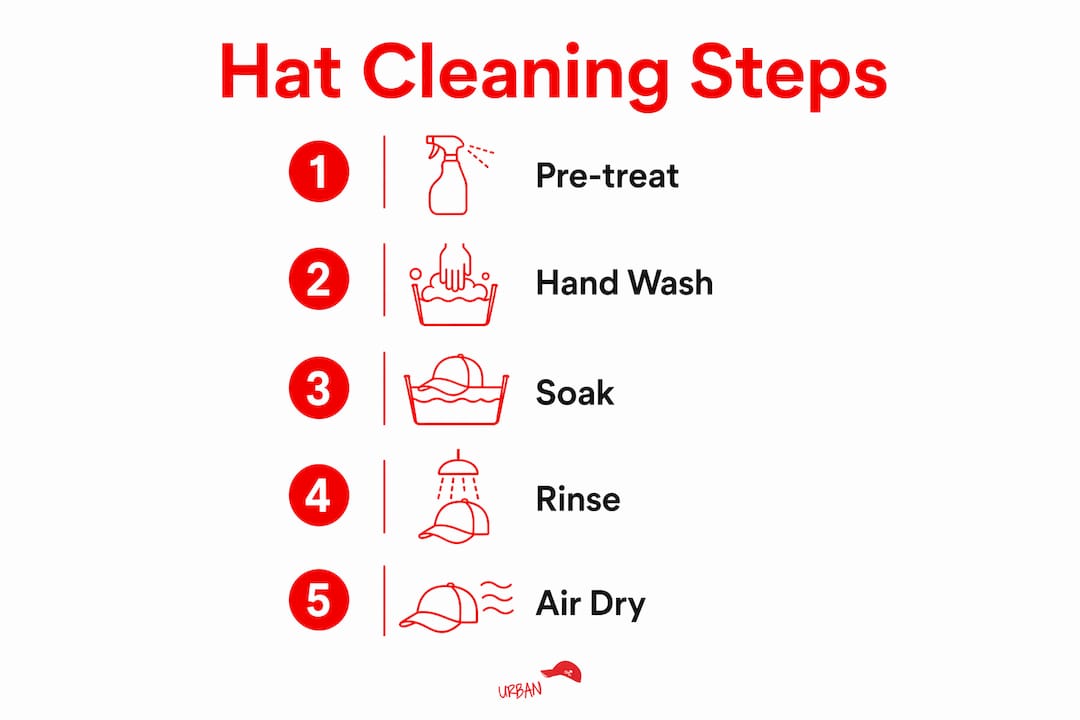
Follow these steps for cotton and synthetic hats:
- Fill a clean basin with cold or lukewarm water and add a small amount of mild detergent.
- Submerge the hat and gently agitate the water with your hands for 2–3 minutes.
- Use a soft brush to work detergent into any remaining stained areas, particularly the sweatband.
- Rinse thoroughly under cold running water until no detergent remains.
- Press out excess water gently. Never wring or twist the hat.
- Place the hat on a bowl, inflated balloon, or hat form to dry at room temperature.
The sweatband is the dirtiest part of any cap. Give it extra attention with the soft brush and a small amount of undiluted detergent before the main wash.
Pro Tip: After rinsing, stuff the crown of a baseball cap with a clean dry towel before placing it on a bowl to dry. The towel absorbs moisture from the inside while the bowl holds the shape from the outside.
Washing wool hats
Wool requires a gentler approach than cotton or synthetics. Use a detergent specifically labelled as wool-safe or suitable for delicates. Avoid any product containing enzymes, as enzymes break down wool protein fibres.
Fill a basin with cold water and add a small amount of wool-safe detergent. Submerge the hat and press it gently into the water several times. Do not agitate or scrub. Let it soak for no more than 10 minutes, then rinse carefully under cold water. Support the hat’s full weight when lifting it out of the water, as wet wool stretches easily under its own weight.
For wool hat care specifically, drying technique matters as much as washing. Place the hat on a form or upturned bowl immediately after pressing out water. Reshape the brim and crown by hand before it dries. Wool holds its shape well once dry, but it sets in whatever position you leave it.
Drying hats correctly
Air-drying on a curved surface retains a hat’s shape far better than flat drying or machine dryers. A hat dryer or cap form is ideal, but a large bowl, a small inflated balloon, or even a round pot works just as well.
Never use a tumble dryer. Heat warps plastic brims, shrinks wool, and causes cotton to pucker. Always dry hats at room temperature away from direct sunlight, which fades colour over time.
Spot cleaning delicate and signed hats
Spot cleaning protects signatures and delicate fabrics from damage caused by soaking or mechanical washing. If you own a signed cap or a hat with embroidered patches, do not submerge it. Instead, dampen a white cloth with a small amount of mild detergent solution and dab the soiled area gently. Work from the outside of the stain inward to prevent spreading.
What mistakes damage hats during cleaning?
Most hat damage happens not from dirt, but from the cleaning process itself. Knowing what to avoid is as valuable as knowing the correct technique.
- Using fabric softener: Fabric softener weakens embroidered badges and printed logos on hats. It coats fibres with a waxy residue that attracts dirt over time and degrades embroidery thread.
- Machine washing: The spin cycle applies enough force to crush a structured brim permanently. Even a gentle cycle creates more mechanical stress than hand washing.
- Using a dishwasher: Dishwashers use hot water and harsh detergents designed for grease removal. Both destroy hat materials and fade colours rapidly.
- Wringing the hat dry: Twisting a wet hat distorts the crown and brim in ways that are very difficult to reverse.
- Using hot water: Hot water shrinks wool and sets sweat stains into cotton fibres.
- Scrubbing too hard: Aggressive scrubbing pills fabric, damages embroidery, and leaves visible marks on structured panels.
Harsh chemicals and high heat are the two fastest ways to ruin a quality hat. Mild detergent and cold water are all you need for the vast majority of cleaning jobs. Patience does more work than force.
For tough stains that do not respond to vinegar pre-treatment and hand washing, repeat the process rather than escalating to stronger chemicals. A second gentle treatment is almost always more effective and safer than a single aggressive one.
How to care for hats between cleanings
Routine upkeep reduces how often you need a full wash. A hat that is stored and maintained well between cleanings stays fresh far longer and holds its shape better over time.
Storing hats in cool, dry places and brushing them occasionally keeps them fresh and wearable for much longer. Mildew forms quickly in humid environments, particularly inside stored hats that were put away slightly damp.
Key maintenance habits include:
- Brush regularly: A soft garment brush removes dust and surface dirt from wool, felt, and fabric hats before it works into the fibres. Brush in one direction, following the nap of the fabric.
- Spot clean promptly: Address sweat marks and small stains as soon as they appear. Fresh stains lift far more easily than dried, set-in ones.
- Air out after wearing: Hang your hat or place it on a form after each wear. This allows moisture from sweat to evaporate before it soaks into the sweatband.
- Store on a form or hook: Stacking hats or storing them in tight spaces crushes the crown and brim over time. A hat hook or dedicated shelf keeps the shape intact.
- Use a protective spray: Water-repellent sprays formulated for fabric or wool add a layer of protection against light rain and surface staining. Check that the spray is compatible with your hat’s material before applying.
Pro Tip: Place a small sachet of cedar or activated charcoal inside stored hats to absorb moisture and prevent musty odours. Replace the sachet every few months for best results.
Seasonal care matters too. Wool hats stored over summer benefit from a light brush and a breathable storage bag to keep dust off without trapping moisture. Synthetic and cotton caps worn through summer need more frequent sweatband cleaning due to higher perspiration levels. For hats used outdoors regularly, the weatherproof hat maintenance guide from Urbancaps covers material-specific protection in detail.
Key takeaways
The most effective way to clean hats is to match the method to the material, pre-treat stains with white vinegar, hand wash in cold water, and air-dry on a form to preserve shape.
| Point | Details |
|---|---|
| Pre-treat before washing | Apply white vinegar to sweat stains and leave for 10–15 minutes before washing. |
| Hand wash only | Machine washing and dishwashers deform structured hats and damage embroidery. |
| Cold water is non-negotiable | Hot water shrinks wool, warps brims, and sets sweat stains permanently. |
| Dry on a form | Air-dry on a bowl, balloon, or hat form to retain the crown and brim shape. |
| Maintain between washes | Regular brushing, prompt spot cleaning, and proper storage reduce heavy cleaning frequency. |
What I have learned from cleaning hats the hard way
The first time I ruined a good hat, it was a structured wool cap that went through a warm hand wash with the wrong detergent. It came out misshapen, slightly felted, and a shade darker than it started. That experience taught me more about hat care than any guide I had read.
The single most underrated step is the pre-treatment. Most people go straight to washing, but white vinegar applied before the wash does the heavy lifting on sweat and oil stains. The wash itself just rinses away what the vinegar has already broken down. Skipping pre-treatment means scrubbing harder during the wash, which causes more damage than the stain ever would.
The other thing most guides get wrong is the drying step. People focus so much on the washing method that they pull the hat off the form too early, or they skip the form entirely and lay it flat. A hat dried flat loses its crown height. A hat dried on a form comes out looking almost new. The reshaping process after washing is genuinely as important as the wash itself for wool and structured hats.
My honest advice: invest in a hat form or at least keep a large bowl handy. Use cold water every time without exception. And if a stain does not come out on the first attempt, repeat the process rather than reaching for something stronger. Patience is the real cleaning tool.
— Urban
Premium hats worth caring for, from Urbancaps
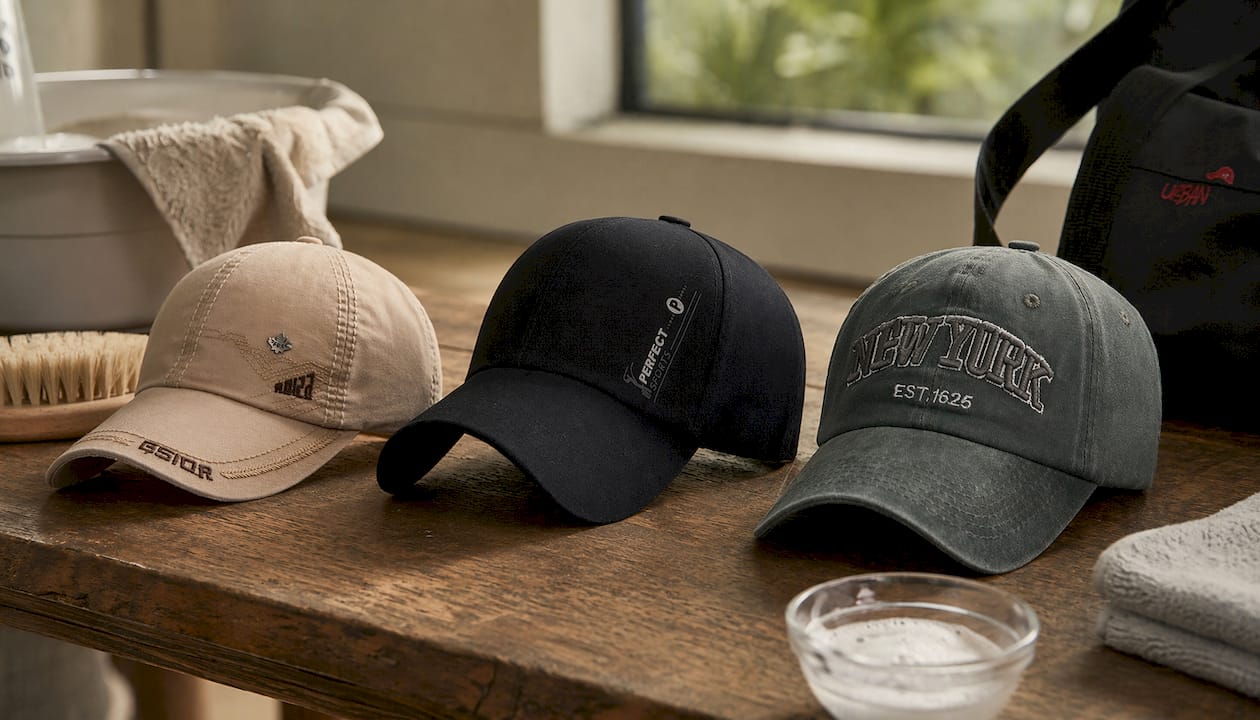
A hat worth wearing is a hat worth maintaining. Urbancaps stocks a range of premium headwear built from quality materials that respond well to the gentle cleaning methods covered here. The Churchill Heritage Homburg is crafted from Australian wool felt and rewards careful hand washing and proper drying. For winter warmth, the Fashion Knit Beanie is easy to care for and built to last. Browse the full range at Urbancaps for headwear that holds its shape, season after season, with the right care behind it.
FAQ
What is the safest way to wash a hat at home?
Hand washing in cold water with a mild detergent is the safest method. It gives you control over pressure and temperature, preventing shrinkage and deformation.
Can you put a hat in the washing machine?
Washing machines can permanently deform structured hats and damage embroidery. Hand washing is always the recommended approach for caps and hats.
How do you remove sweat stains from a hat?
Apply undiluted white vinegar to the stained area, leave it for 10–15 minutes, then hand wash with mild detergent in cold water. This method breaks down sweat oils without damaging the fabric.
How do you dry a hat without losing its shape?
Air-dry the hat on a bowl, inflated balloon, or hat form at room temperature. Avoid tumble dryers, as heat warps brims and shrinks wool.
How often should you clean a hat?
Spot clean after each wear if needed, and do a full hand wash every few weeks for regularly worn hats. Hats worn in hot weather or during physical activity need more frequent sweatband cleaning.