

How to style a fedora: outfit ideas for every occasion
A fedora works best when the hat matches the outfit’s weight and occasion — pair a wide-brim felt fedora with a structured coat for smart-casual polish, or a straw style with linen and sandals for summer ease. The 2026 trend leans toward wider brims, earthy textures, and relaxed luxury that moves between travel, festivals, and elevated everyday wear.
- Casual: Dark-wash jeans, a plain white tee, a tan felt fedora, and leather boots. Simple, grounded, done.
- Dressed up: Charcoal trousers, a fitted roll-neck, a classic wool fedora, and Chelsea boots. No tie needed.
Table of Contents
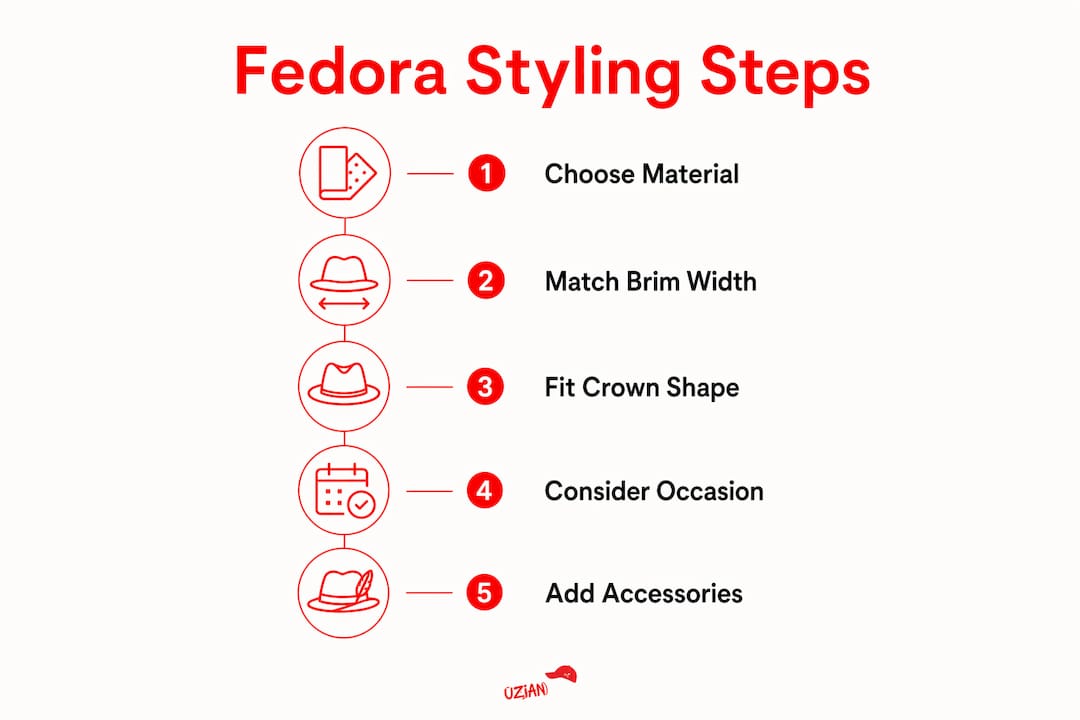
- What do crown shape, brim width, and material actually tell you?
- How to style a fedora with outfits for every occasion
- Fit, angle, and positioning: how to wear a fedora so it flatters
- Which brim and crown suit your face shape?
- Seasonal styling for New Zealand: what works for our climate and events
- Care and maintenance: cleaning, storing, and travelling with a fedora
- What makes a fedora look like a costume — and how to avoid it
- Accessories and final styling cues: bands, feathers, and outerwear
- Wearing a fedora with confidence in different social settings
- Key takeaways
- A stylist’s note from Urban
- Urbancaps has the fedoras to match this guide
- Useful sources and further reading
- FAQ
What do crown shape, brim width, and material actually tell you?
Three variables decide whether a fedora looks intentional or accidental: crown shape, brim width, and material.
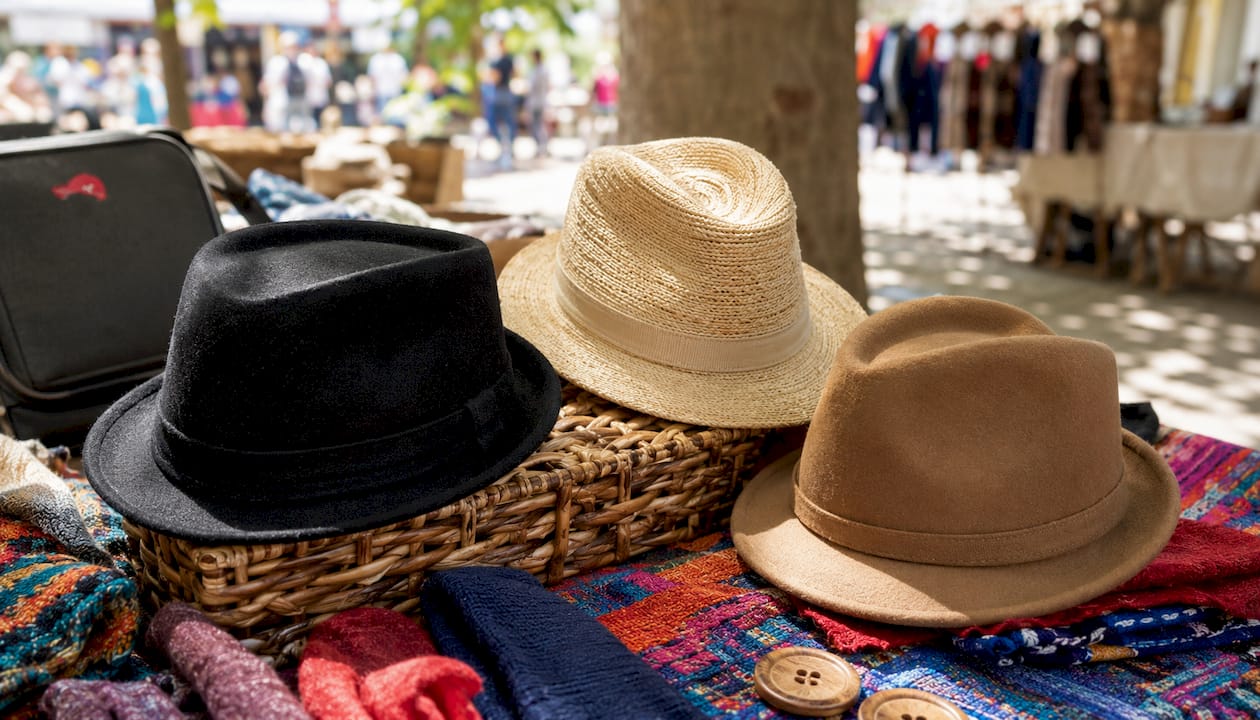
Crown shapes fall into two main types. A pinched or diamond crown, where the front is pressed into a point, gives a sharper, more structured silhouette. A centre-dent crown is softer and rounder, reading more relaxed. According to The Manual’s expert hatmaker guidance, a modest crown height of around 4 inches is the safest starting point for new wearers, keeping the hat proportional without veering theatrical.
Brim widths range from stingy (under 2 inches, closer to a trilby) through standard (2–2.5 inches) to wide (3 inches and above). Stylist Fola recommends 2–2.5 inches for modest, versatile looks and wider brims for bolder statements. Wider brims also add sun protection, which matters for NZ summers.
| Material | Best season | Occasion fit | Notes |
|---|---|---|---|
| Wool/felt | Autumn, winter | Casual to formal | Holds shape well; natural drape |
| Straw/panama | Spring, summer | Casual, resort, festival | Lightweight; breathes well |
| Leather | Year-round | Statement, casual | Ages with character; water-resistant |
| Fur felt | Autumn, winter | Smart-casual, formal | Gold standard for structure and warmth |
Pro Tip: Avoiding the costume trap comes down to material integrity and proportion. High-quality wool or fur felt with a brim proportional to your shoulder width reads authentic every time. Synthetic felts that feel stiff or shiny are the fastest route to looking like a Halloween prop.
How to style a fedora with outfits for every occasion
Modern fedora styling is more relaxed than its formal origins suggest. Consumers now want hats that integrate with everyday wardrobes and develop character through wear.
Casual looks:
- Dark-wash or straight-leg jeans, a plain tee or flannel shirt, a tan or olive felt fedora, and leather boots or clean white sneakers.
- A leather jacket over a simple tee with a jazz-style fedora adds a rock-and-roll edge without trying too hard.
- Stick to earth tones — camel, tan, olive, rust — so the hat anchors rather than competes with the outfit.
Smart-casual:
- Chinos or tailored trousers, a knit jumper or open-collar shirt, a structured wool fedora, and loafers or Chelsea boots.
- A blazer with a fedora works well when the hat’s brim width matches the jacket’s shoulder structure. Wide brims pair with structured coats; narrower brims suit slimmer jackets.
Formal:
- A wool fedora with a well-cut suit reads elegant, not costume-y, provided the hat colour is neutral (grey, navy, camel) and the brim is proportional. Avoid chalk-stripe suits paired with a fedora — that combination leans theatrical.
- The Howard Feathers Wool Fedora with pheasant feather accents suits race-day or wedding outfits where a touch of detail is welcome.
Festival and travel:
- Wide-brim straw or panama styles in natural or cream tones work across summer festivals, beach days, and resort wear.
- Light linen trousers, a loose shirt, and a straw fedora is a practical combination that also offers genuine sun protection. For UV-rated options, sun-protective fedora styles are worth considering for long outdoor days.
Fit, angle, and positioning: how to wear a fedora so it flatters
Getting the fit right is the single biggest factor between a hat that looks intentional and one that looks borrowed.
- Measure your head by wrapping a soft tape measure around your head, roughly one inch above your ears. Use that circumference to match hat sizes before buying.
- Position the hat slightly above the centre of your forehead, sitting level across both ears. A fedora should rest comfortably without leaving a red mark when removed — that is the fit check.
- Set the tilt. A slight forward tilt reads most flattering for most wearers. Wearing it dead-straight and centred is always safe. Tilting sharply to one side is a style choice that works with casual outfits but can look forced in formal settings.
- Check movement. Walk around, look down, and turn your head. The hat should stay put without gripping. If it shifts with every movement, it is too large.
Adjusting for hair:
- Long hair down: the hat sits naturally on top; a slight tilt forward works well.
- Low bun or ponytail at the nape: keeps the hat stable and is a clean, polished look.
- Short hair or shaved head: fit becomes more precise since there is less hair to fill the crown. Hat tape or felt sizing pads inside the band solve this discreetly.
- Curly or voluminous hair: go up a size and let the hair fill the crown naturally.
Pro Tip: Hat tape and adhesive felt pads are the cleanest internal sizing fix. They cost almost nothing, add no bulk on the outside, and let you wear a slightly larger hat without it shifting. Far better than altering the hat itself.
Quick do/don’t list:
- Do keep your chin level when wearing a fedora — dropping your head forward makes the hat slide.
- Do not push the hat back on your head; it reads sloppy and exposes the forehead awkwardly.
- Do adjust the brim angle before leaving the house, not in public.
- Do not wear a hat that leaves a visible pressure line on your forehead after ten minutes.
Which brim and crown suit your face shape?
The goal is balance: the hat should offset, not amplify, your face’s dominant proportions.

| Face shape | Recommended brim width | Crown style | Why it works |
|---|---|---|---|
| Oval | 2–3 inches (most widths) | Any | Oval faces balance most hat shapes |
| Round | 2.5–3 inches, asymmetric tilt | Medium to tall crown | Width and height elongate the face |
| Square | 2–2.5 inches, soft pinch | Rounded or centre-dent | Softens angular jaw |
| Heart | 2–2.5 inches | Lower crown | Balances wider forehead |
| Long/narrow | 3 inches and above | Lower, wider crown | Wider brims add visual width |
A few quick tests worth doing in-store or at home:
- Hold the hat at arm’s length and compare the brim width to your shoulder width. They should be roughly proportional.
- Check that the crown height does not add more than a few centimetres to your silhouette when viewed side-on.
- If the hat overwhelms your face in a mirror, try a narrower brim before assuming the style is wrong for you.
For deeper guidance on hat shape and face balance, Urbancaps has a practical resource that walks through the same principles with local product examples.
Seasonal styling for New Zealand: what works for our climate and events
New Zealand’s climate varies sharply between regions and seasons, and the right fedora material makes a real difference to comfort and wearability.
Summer (November–March):
- Straw and panama fedoras are the practical choice. They breathe, they are lightweight, and a wider brim gives meaningful sun protection during long outdoor days.
- Neutral and natural tones — cream, sand, natural straw — pair well with the summer fashion palette common across Australia and NZ.
- For summer festivals (Rhythm and Vines, Homegrown, local markets), a wide-brim straw with a simple band is practical and on-trend.
Winter (June–August):
- Wool and felt fedoras come into their own. Pair with a structured overcoat, a chunky knit, or a tailored blazer.
- Darker tones — charcoal, navy, deep brown — work with winter wardrobes and do not show weather marks as readily.
- For race days (Auckland Cup, Wellington Cup) or winter weddings, a wide-brim formal fedora in felt reads polished and occasion-appropriate.
Year-round events:
- Rural weekends and country shows: a leather or mid-weight felt fedora in tan or brown suits the setting.
- City weekends and café culture: a jazz-style or standard felt fedora in neutral tones works across most casual outfits.
Pro Tip: Packing a fedora for a NZ trip? Stuff the crown with socks or a soft scarf to hold its shape in your bag. A rigid hat box is ideal for checked luggage, but for carry-on travel, the stuffed-crown method protects the structure without adding bulk.
Care and maintenance: cleaning, storing, and travelling with a fedora
A well-cared-for fedora lasts years. The basics are simple, but a few wrong moves — especially with water — can permanently distort the shape.
- Brush regularly. Use a soft-bristled hat brush and work in a counter-clockwise direction on felt and wool hats. This lifts dust and lint without matting the fibres.
- Spot-clean carefully. For small marks on felt, a barely damp cloth dabbed gently works for most surface dirt. Never soak felt or submerge it in water.
- Straw hats: wipe with a slightly damp cloth and allow to air-dry away from direct sunlight, which can bleach and crack the fibres.
- Store upright or upside-down on a hat stand or in a hat box. Never rest a fedora brim-down on a flat surface for extended periods — it distorts the brim over time.
- Travel: stuff the crown with soft items, place the hat brim-up in a rigid bag or hat box, and keep it out of direct sunlight in the car.
Pro Tip: If your felt fedora loses its crown shape, hold it over steam from a kettle at a safe distance (20–30 cm) for 10–15 seconds, then gently reshape by hand while the felt is warm and pliable. Work slowly and let it cool in the correct shape before wearing.
For more detail on wool hat care, Urbancaps has a step-by-step guide covering brushing, storage, and seasonal maintenance.
What makes a fedora look like a costume — and how to avoid it
The costume trap is real, and it usually comes from one of four mistakes.
- Wrong fit. A hat that is too large slides around and reads sloppy. Too small, and it perches on top of the head like a prop. Neither looks intentional.
- Exaggerated brim relative to your frame. A very wide brim on a slight frame overwhelms the silhouette. Match brim width to shoulder width as a starting proportion.
- Poor material quality. Stiff, shiny synthetic felts are the clearest signal of a costume hat. Natural wool or fur felt drapes differently and ages with character.
- Excessive embellishment. Multiple feathers, oversized bands, and novelty pins compete with each other. One considered detail is enough.
Quick corrections:
- Swap theatrical embellishment for a single clean ribbon band.
- Choose grey, camel, or navy over black-and-white combinations, which read more costume-y in most contexts.
- If the hat is the loudest thing in the outfit, simplify everything else.
One etiquette note: remove your hat indoors, particularly in formal settings, restaurants, and places of worship. It is a small gesture that signals you know how to wear a hat, not just own one.
Accessories and final styling cues: bands, feathers, and outerwear
The finishing touches on a fedora look are where most people either nail it or overdo it.
Bands and trims:
- A narrow ribbon band reads contemporary and pairs with most modern outfits.
- A wide grosgrain bow is more vintage in character — suits formal or heritage-inspired looks.
- Feather accents, like those on the Howard Feathers Wool Fedora, read classic and are associated with country pursuits and dressed-up casual wear. One feather, positioned over the bow, is the right amount.
Outerwear pairings:
- Leather jacket: the most reliable casual pairing. Works with both felt and straw fedoras depending on season.
- Trench coat: a felt fedora with a belted trench is a clean, timeless combination that suits city wear and travel.
- Structured blazer: keep the hat’s brim proportional to the jacket’s shoulder. A wider brim with a strong-shouldered blazer looks considered; the same brim with a slim-cut jacket can look top-heavy.
Sunglasses, scarves, and brooches:
- Sunglasses and a fedora together can work, but keep the rest of the outfit simple. The Gentleman’s Gazette advises choosing one or the other as the focal point in more formal contexts.
- A scarf tucked into a coat collar pairs naturally with a felt fedora in winter.
- A small brooch on the band is a subtle personalisation that does not overwhelm.
Pro Tip: Tie your colour accents together through one small accessory. If your outfit is neutral, a band or scarf in a single accent colour — rust, forest green, burgundy — pulls the whole look together without adding visual noise.
Wearing a fedora with confidence in different social settings
Confidence is the most important styling element, and it is also the one most people skip thinking about.
In casual settings — markets, weekends, travel — a fedora is simply a hat. Wear it, keep your posture natural, and do not draw attention to it. The hat works when you forget you are wearing it.
In smart-casual or semi-formal settings (race days, weddings, work events), a fedora signals intentionality. That is a good thing, provided the rest of the outfit matches the hat’s formality level. A felt fedora with a linen suit at a summer wedding reads polished. The same hat with board shorts does not.
Culturally, the fedora carries some historical weight — it has been associated with jazz culture, 1940s film noir, and various subcultural moments. Wearing one today reads as a fashion choice rather than a cultural statement in most NZ contexts, provided the styling is contemporary rather than costume-referential. Avoid leaning into the gangster or noir aesthetic deliberately unless it is clearly intentional (a themed event, for example).
Indoors, the etiquette is consistent: remove the hat. At a restaurant, a theatre, or a formal gathering, holding or stowing the hat is the right call. It also protects the hat’s shape.
Key takeaways
A fedora works across casual, smart-casual, and formal outfits when the material, brim width, and fit are matched to the occasion and your proportions.
| Point | Details |
|---|---|
| Match material to season | Wool and felt for NZ winters; straw and panama for summer festivals and outdoor events. |
| Start with a modest brim | A 2–2.5 inch brim and a 4-inch crown is the safest starting point for new wearers. |
| Fit is non-negotiable | The hat should sit above the centre of the forehead, stay put when you move, and leave no pressure mark. |
| Avoid the costume trap | Natural wool or fur felt, proportional brim width, and minimal embellishment keep the look authentic. |
| Urbancaps for NZ buyers | Urbancaps stocks felt, wool, and jazz-style fedoras with fast NZ shipping and practical care guides. |
A stylist’s note from Urban
The question we hear most often from customers is some version of: “Will I actually be able to pull this off?” The honest answer is yes — almost always — provided the hat fits properly and the outfit is not fighting it.
What we see in NZ is that people reach for a fedora for specific moments: a race day, a summer festival, a weekend away somewhere with good weather. That is a perfectly reasonable starting point. The hat earns its place in a wardrobe when it starts showing up for ordinary Saturdays too, not just the occasions.
Quality matters more than most buyers expect. A well-made wool or felt fedora from a reputable source holds its shape, ages with character, and looks better after a year of wear than a cheaper hat does on day one. When buying online, check the material description carefully — “felt” can mean anything from compressed synthetic fibre to quality wool felt, and the difference is visible immediately.
Our advice: start with a neutral colour (camel, grey, or tan), a standard brim width, and a style that suits your most common outfit. Get the fit right. Wear it. The confidence follows from the wearing, not the other way around.
Urbancaps has the fedoras to match this guide
Urbancaps is a proudly NZ-owned headwear retailer with fast shipping across New Zealand and a range that covers every style in this guide — from relaxed jazz-style fedoras to classic wool felt and wide-brim formal options.
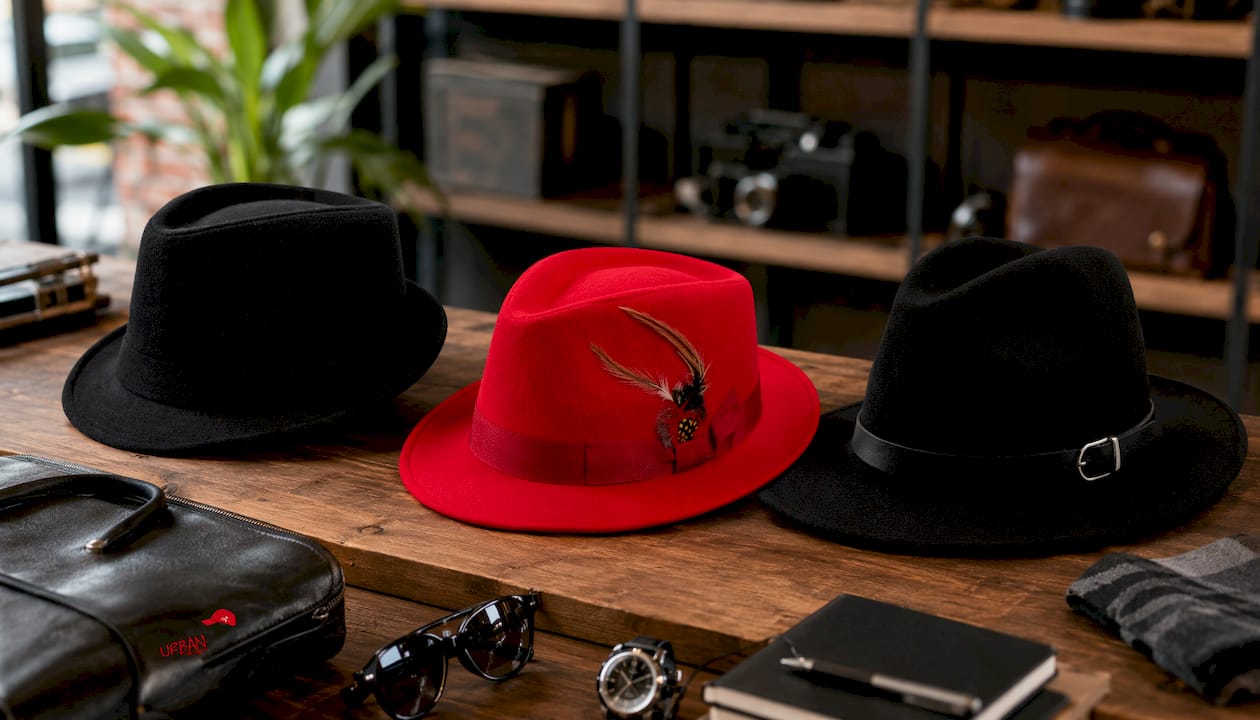
The Jazz Style Fedora is the go-to for casual and smart-casual outfits. The Howard Feathers Wool Fedora suits race days, weddings, and any occasion where a considered detail makes the difference. For NZ winters and formal events, the Classic Felt Fedora with its wide brim is the practical and polished choice.
Sizing help is available, and the team is happy to assist with fit questions before you order. Browse the full fedora range at Urbancaps and find the style that fits your wardrobe.
Useful sources and further reading
- StylePrimes — What Fedora Hats Are Trending in 2026? Trend analysis covering wider brims, western influence, and relaxed luxury for 2026. Good for outfit and colour direction.
- The Manual — How to Style a Fedora Hat Expert hatmaker guidance on crown height and brim-width starting points. Practical for new buyers.
- The Chic Tribe — How to Properly Wear a Fedora Covers materials, reshaping techniques, and NZ/AU-relevant neutral palettes. Useful for care and basics.
- Tenth Street Hats — How to Wear a Fedora Brim-width guidance linked to face-shape balance. Good reference for the face-shape section.
- Eric Javits — Master the Art of Wearing a Fedora Fit and positioning guidance including the correct tilt and forehead placement.
- The 360 Mag — Fedora Hat Brands Still Driving Culture Covers material quality, proportion, and avoiding the costume trap.
- Gentleman’s Gazette — The Fedora Hat Guide Deep dive into fedora anatomy, materials, and classic menswear pairing. Authoritative reference for formal styling.
- Urbancaps — Top 6 Fedora Options 2026 NZ-specific buyer’s guide to fedora styles stocked locally.
- Urbancaps — Wool Hat Care Basics Step-by-step care and storage guide for wool and felt hats.
- Urbancaps — Best Hats for Every Season Seasonal guide covering NZ climate and event-specific hat choices.
FAQ
What looks good with a fedora?
Earth tones and neutrals work best — camel, grey, olive, and tan pair naturally with most fedora colours. For casual outfits, jeans, a plain tee, and leather boots are reliable; for smart-casual, chinos, a knit, and Chelsea boots keep the look balanced.
Are fedoras in style in 2026?
Yes. The 2026 trend direction favours wider brims, textured felts, and relaxed luxury styling that works across travel, festivals, and elevated casualwear — fedoras fit squarely within that direction.
How do you correctly wear a fedora?
Position the hat slightly above the centre of your forehead with a slight forward tilt for the most flattering result. The hat should sit level across both ears and stay put when you move without gripping tightly.
What does wearing a fedora symbolise?
In most contemporary NZ contexts, a fedora reads as a deliberate fashion choice that signals style awareness and confidence. Historically associated with jazz culture and classic menswear, today it is worn as a versatile accessory rather than a cultural statement.
Can anyone wear a fedora, or does it suit specific face shapes?
Most face shapes suit a fedora with the right brim width. Oval faces work with almost any width; round and long faces benefit from wider brims; square and heart-shaped faces suit a moderate 2–2.5 inch brim with a softer crown. Getting the fit right matters more than face shape alone.