


Remove hat odour: quick fixes and safe cleaning methods
Most hat smells come from sweat and oils breaking down in the sweatband, not from the fabric itself. For most hats, a baking-soda bag or a light vinegar/alcohol mist removes the smell quickly without wetting the brim or risking its shape.
Start with the dry option: seal the hat in a bag with some baking soda overnight. If bacteria is the real culprit (that sour, locker-room smell), a vinegar-and-water spray or a light mist of isopropyl alcohol on the sweatband works faster.
- Baking soda bag: best for general staleness, oils, and musty odour.
- Vinegar or alcohol mist: best for sharp, bacteria-driven sweat smell.
- Skip soaking entirely if the brim feels stiff or “crunchy” (often cardboard), the hat is wool or felt, or the label says spot clean only.
Pro Tip: Always test a hidden seam with your chosen liquid first and let it dry before treating the visible parts. Some dyes can bleed with vinegar or alcohol, so it’s best to test first to avoid damage to the brim.
Key Takeaways
Removing hat odour comes down to matching the method to the material: dry treatments first, spot cleaning second, and a full soak only for hats confirmed safe to wet.
| Point | Details |
|---|---|
| Start with dry methods | A sealed baking-soda bag overnight or a light vinegar/alcohol mist handles most odour without wetting the hat. |
| Test before you treat | Dab an inside seam with your cleaner and check for dye transfer before touching visible fabric. |
| Hand wash beats machine wash | Cool water, mild detergent, and a 15 to 30 minute soak clean safely without warping the brim. |
| Dry away from heat | Air-dry in shade over a rounded form; dryers and direct sun shrink wool and weaken fibres. |
| Choose breathable materials | Urbancaps’ active-wear caps and accessories bags reduce sweat build-up and make ongoing care easier. |
Table of Contents
- How do you deodorise a hat without washing it?
- Can you spot clean just the sweatband?
- Is it safe to hand wash a hat to get rid of odour?
- What’s the best way to dry a hat without ruining its shape?
- How can you stop hat odour from coming back?
- What does Urbancaps recommend for premium hat materials?
- Can activated charcoal or odour sachets replace washing?
- How do you get rid of a mouldy or mildew smell in a hat?
- How do you clean a leather or suede hat that smells?
- What actually matters when your hat starts to smell
- Where to find gear that resists odour build-up
- Sources
- FAQ
How do you deodorise a hat without washing it?
Dry methods sit at the bottom of the risk ladder, which is exactly why they should be your first move on any hat you’re not ready to soak.
- Baking soda bag. Pour a cup or two of baking soda into a large zip-top bag or pillowcase, drop the hat in, seal it, and leave it somewhere cool overnight. Shake out the residue in the morning and brush the sweatband clean. Baking soda pulls moisture and oil out of the fabric rather than masking the smell.
- Vodka or alcohol mist. Lightly spray the sweatband and inner crown with vodka or 70% isopropyl alcohol using a spray bottle set to mist, not soak. Alcohol evaporates fast and kills the bacteria causing the smell as it dries, which makes it a solid pick for wool blends and structured shapes you don’t want damp for long. Go easy near leather sweatbands and trims. Alcohol can dry leather out and cause cracking over time.
- The freezer trick, debunked. Popping a smelly hat in the freezer overnight is a common suggestion, but cold only slows bacterial activity temporarily. It doesn’t remove the oils or dead skin cells causing the smell, so the odour tends to return within a day or two of wear.
Between full treatments, a dryer sheet tucked inside overnight, a few hours airing on a hook, or a quick pass with a hat brush and lint roller keeps things fresh with almost no effort.
Pro Tip: Keep a small spray bottle of diluted alcohol in your gym bag or car. A 10-second mist after a hot day at the footy beats letting sweat set into the band overnight.
Can you spot clean just the sweatband?
Yes, and for most odour problems, spot cleaning the sweatband alone solves the issue without touching the rest of the hat.
Before anything touches the fabric, test for colourfastness. Pick an inside seam, dab it with your cleaner of choice using a white cloth, wait a minute, and check the cloth for dye transfer. No colour, you’re clear to proceed.
- Grease and oil build-up: a thin baking-soda paste (water plus soda until it’s spreadable) lifted with a soft toothbrush.
- Salt rings or general staleness: a few drops of mild, non-bleach detergent diluted in water.
- Deep-set protein sweat stains: an enzyme pretreatment left to sit per the label’s instructions before rinsing.
Apply sparingly, let it sit for a few minutes, brush gently, then blot with a damp cloth rather than rinsing under a tap. Reshape the brim as you go and let it air-dry fully. If you’ve spot-cleaned the same hat three or four times in a season and the smell keeps coming back, that’s your cue to move to a full hand wash or consider a specialty cleaner.
Is it safe to hand wash a hat to get rid of odour?
For hats built to handle water, hand washing is the deep-clean method most experts recommend over the machine. Cool water and a small amount of mild, non-bleach detergent does the job without stressing the fibres or the brim’s internal structure.
Check the care label and flex the brim gently first. Anything stiff, cardboard-backed, or marked “spot clean only” should never go near a soak.
- Fill a basin with cool water and a small squirt of mild detergent, no more than you’d use on a delicate garment.
- Submerge the hat and let it soak for 15 to 30 minutes.
- Use a soft brush to work gently around the sweatband, where most of the odour lives.
- Rinse under a slow, cool tap stream until no more suds appear, squeezing rather than wringing.
For colourfast, washable caps with stubborn oily staining, a colour-safe oxygen-based cleaner used at the label’s exact dilution can lift what a plain detergent soak misses. It’s not suitable for wool, leather, or dyes that aren’t stable, and it should never be mixed with chlorine bleach in the same wash.
Machine washing is a last resort at best. GQ’s care guidance is blunt about it: agitation and heat routinely warp brims and pull structured caps out of shape. If you’re determined to try it, use a hat cage, cold water only, and the gentlest cycle your machine has.
What’s the best way to dry a hat without ruining its shape?
Drying matters just as much as cleaning. A hat washed carefully and then dried badly can come out more misshapen than one that was never cleaned at all.
- Air-dry in a shaded, well-ventilated spot keeps your hat fresh and helps avoid damage, as detailed in How to store vintage metal t shirts for lasting quality. Direct sun and dryers both risk fading colour and weakening fibres, and heat shrinks wool while warping brims.
- Dry over a rounded support such as a clean bowl, a coffee tin, or an inflated balloon to keep the crown from flattening, rather than laying the hat flat on a towel.
- Structured or cardboard-brimmed hats should only ever be spot cleaned. Leather and suede trims should stay away from vinegar or alcohol applied directly, since both can dry out the material and cause cracking.
- Check the sweatband and lining are completely dry, not just the outer fabric, before storing. Trapped moisture is exactly what invites mildew.
Wool hats need extra care while damp, since they stretch easily under their own weight. Urbancaps’ guide to reshaping wool hats covers the technique in more detail if you’re dealing with a felt fedora or wool cap.
How can you stop hat odour from coming back?
Prevention is cheaper and easier than any deep clean, and it comes down to a handful of habits repeated consistently.
- Air the hat out on a hook or stand after every wear instead of tossing it straight back in a bag or drawer.
- Wipe the sweatband with a dry cloth after sweaty sessions. Bacteria feeds on the sweat, oils and skin cells trapped there, and routine wiping slows that build-up considerably.
- Rotate between two or three hats rather than wearing the same one daily, giving each one time to fully dry out between wears.
- Use a hat brush weekly and a lint roller for quick touch-ups between proper cleans.
Removable sweatband liners and washable inserts cut down on how much sweat actually reaches the hat’s fabric, and storing hats in a breathable accessories bag keeps dust and moisture away when they’re not in use. Vintage pieces, high-value felt, or anything with delicate leather trim is generally better sent to a specialty cleaner than risked at home.
Pro Tip: Rotation does more work than any spray. A hat that gets 48 hours to air out between wears rarely develops the deep, ground-in smell that forces you into a full soak.
What does Urbancaps recommend for premium hat materials?
Wool felt, leather trims, and structured brims all behave differently under cleaning, which is exactly why a one-size-fits-all method fails so often on premium headwear.
- Wool and felt: stick to dry methods and light misting first. Heat and heavy moisture are the two biggest risks to shape and texture, as covered in Urbancaps’ wool hat care guide.
- Leather trims and bands: avoid alcohol and vinegar applied directly. A barely damp cloth and leather conditioner afterwards protects against cracking.
- Structured cotton and polyester caps: these tolerate spot cleaning and light hand washing well, provided you skip the dryer.
Removable liners and a dedicated storage bag make day-to-day maintenance considerably easier, particularly for anyone rotating multiple hats through regular wear. Urbancaps’ broader hat cleaning guide walks through material-specific handling in more depth.
Premium materials reward patience. A wool felt fedora or a leather-trimmed rancher hat holds its shape far longer when it’s air-dried on a form and never rushed with heat.
Can activated charcoal or odour sachets replace washing?
Activated charcoal and odour-absorbing sachets work as a maintenance layer between proper cleans, not as a substitute for them. Charcoal is porous at a microscopic level, which lets it trap airborne moisture and the volatile compounds that carry smell, rather than masking them with fragrance the way some sprays do.
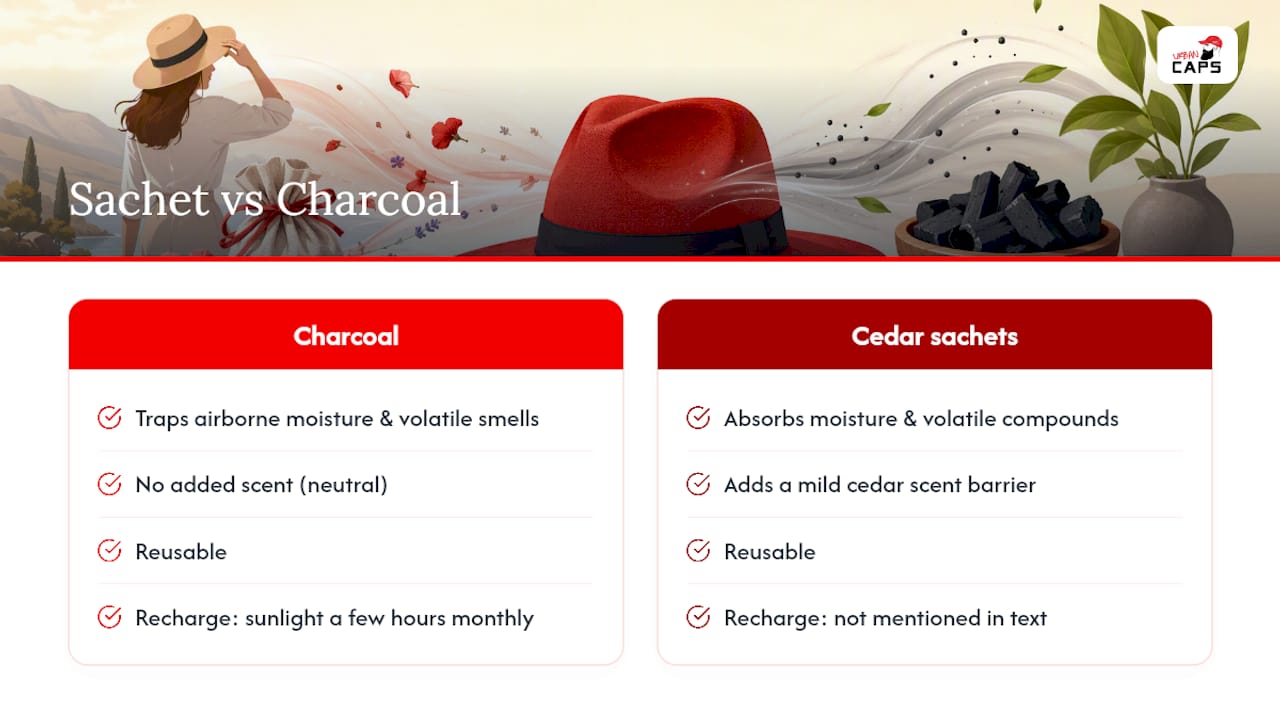
A small charcoal pouch or sachet tucked inside the crown overnight can noticeably cut down on staleness, particularly for hats that get light daily wear rather than heavy sweating. Cedar-based sachets work on a similar principle and add a mild scent barrier as a side benefit. Both are reusable. Charcoal bags typically need a few hours in direct sunlight every month or so to “recharge,” since sunlight releases the trapped moisture and lets the charcoal absorb again.
Where charcoal falls short is on odour that’s already bonded to the sweatband fibres through repeated wear. At that point you’re dealing with a physical build-up of oils and dead skin cells, not just airborne smell, and no sachet will pull that out. Think of charcoal as your between-wears defence and the baking-soda bag or vinegar mist as your active treatment when the smell has already set in. Used together on a rotation, sachets during storage and active treatments after heavy wear, they cover both ends of the odour problem without any risk to the hat’s shape.
How do you get rid of a mouldy or mildew smell in a hat?
Mould and mildew smell distinctly different from sweat odour: musty, damp, sometimes with a faint sourness that doesn’t fade with airing alone. It shows up when a hat gets stored while still slightly damp, or left in a humid gym bag or car for too long.
Start by getting the hat fully dry in sunlight if the material allows it (avoid this step for wool felt or anything with unstable dye, since UV exposure fades colour fast). Direct sun has a mild antimicrobial effect that helps knock back surface mould before you treat it further.
For washable hats, the vinegar-and-water mist doubles as a mild antifungal treatment; vinegar’s acidity disrupts mould growth in a way plain water doesn’t. Spray it over the affected area, let it sit for a few minutes, then follow with a full hand wash using cool water and mild detergent to clear away the dead spores and any residue. Baking soda afterwards helps absorb any lingering musty smell once the hat is dry.
If the mould has left visible dark spotting rather than just a smell, that’s usually a sign it has worked into the fibres rather than sitting on the surface, and a home treatment may not fully clear it. At that point, a specialty cleaner is worth the cost, particularly for wool or leather pieces where aggressive scrubbing risks more damage than the mould itself.
How do you clean a leather or suede hat that smells?
Leather and suede can’t go anywhere near a soak, a machine wash, or even the vinegar and alcohol mists that work well on fabric hats. Both materials are porous in a different way to cotton or wool; they absorb liquid unevenly, which leads to staining, stiffening, or cracking once dry.
For everyday odour on leather, wipe the sweatband and interior with a cloth that’s barely damp, just enough to lift surface oils without soaking into the leather itself. Follow with a leather conditioner formulated for hats or garments to replace any moisture lost and keep the material supple. Skip this step entirely on suede, which needs to stay dry.
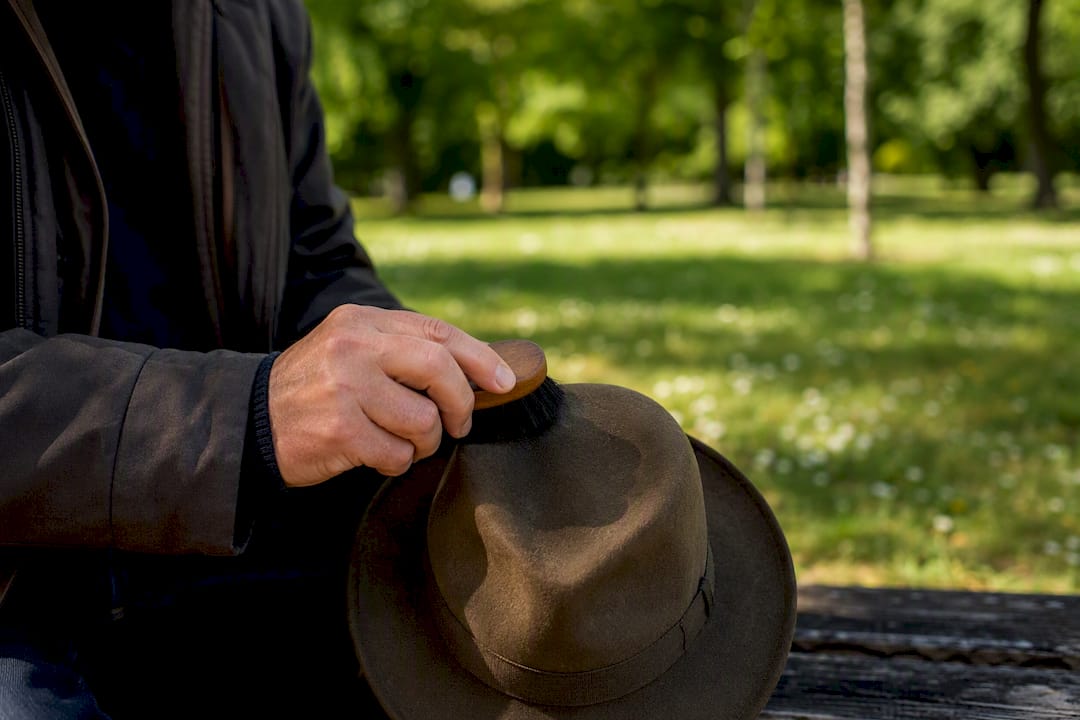
Suede responds best to a dry approach: a suede brush worked in gentle circular motions lifts trapped dust and refreshes the nap, while a light dusting of cornstarch or talcum powder left overnight can help absorb oils before being brushed out the next day. Baking soda works here too, sprinkled lightly rather than packed in a sealed bag, since suede doesn’t handle prolonged enclosed moisture well even from something as mild as baking soda’s natural humidity.
For genuinely persistent odour in either material, a leather-specific cleaner formulated for the exact hide type is safer than improvising with kitchen ingredients. When in doubt, a professional leather cleaner is the better call than risking a hat that can’t simply be rewashed if the first attempt goes wrong.
What actually matters when your hat starts to smell
Most guides jump straight to “wash it,” which is the riskiest advice for the widest range of hats. The order that actually protects your gear runs dry first, spot-clean second, and full soak only when the first two genuinely fail. That’s not caution for its own sake. It’s because heat, agitation, and prolonged moisture are the three things that permanently change a hat’s shape, and none of them are reversible once a wool felt brim has warped or a cardboard structure has softened.
The bit conventional advice tends to skip is prevention doing more work than any product. A rotation of two or three hats, wiped down and aired properly, will smell better after six months than a single hat “deep cleaned” every fortnight with increasingly aggressive methods.
If you’re buying new headwear, that’s where material choice starts paying off. A breathable, well-constructed cap resists odour build-up far better than a cheap synthetic one, which is exactly why Urbancaps builds its range around fabrics and sweatbands that hold up to regular wear and cleaning.
Where to find gear that resists odour build-up
Some hats simply fight odour better than others, and that usually comes down to breathable fabric, a removable liner, and materials that tolerate regular cleaning without falling apart.

If you’re active outdoors, the Thunderbolt Ski Hat is built with ear protection and weatherproof fabric that handles sweat and moisture from winter sport without holding onto smell the way a cheaper knit does. For everyday travel, the Outdoor Travel Hat uses easy-care fabric suited to quick washes between trips, and the Motorcycle UV Cap is designed for long rides where sun and sweat both take a toll on a lesser cap. To protect whatever you’re already wearing, an Accessories Bag keeps hats dust-free and ventilated between wears rather than crushed at the bottom of a drawer, which is half the battle against musty odour returning.
Urbancaps ships fast across NZ, and every order comes with local support if you need help with sizing, care, or returns. Browse the full headwear range to find a hat built to handle the way you actually wear it.
Sources
- How to get sweat stains out of hats: The Output by Peloton
- How to wash a hat (GQ)
- How to clean a hat (OxiClean)
FAQ
How do you get a stinky smell out of a hat?
For deeper odour, a cool-water hand wash with mild detergent works if the hat is confirmed washable.
Why does my hat smell so bad?
Sweat, oils, and dead skin cells build up in the sweatband, feeding the bacteria that create the smell. Regular wiping and rotating between hats slows this build-up considerably.
My hat smells like vinegar. How do I get rid of that?
Vinegar smell fades on its own as the hat finishes air-drying, usually within a few hours in a well-ventilated spot. If it lingers, a light rinse with plain cool water followed by full air-drying clears the last of it.
Is there a spray that removes odour from hats?
Commercial fabric-refresher sprays can help too, though they mask odour rather than eliminating its source the way alcohol does.
Can you use a washing machine to remove hat odour?
Machine washing is a last resort and risks warping brims and damaging structure, according to GQ’s hat care guidance. Hand washing in cool water with mild detergent is safer for most hats.