

What is a trilby: simple definition and style guide
A trilby is a soft felt or fibre hat with a short brim that angles down at the front and flicks up slightly at the back, paired with a shorter crown than a fedora. It’s one of the easiest hats to spot once you know what to look for.
- Brim: short, narrow, snapped down at the front, turned up at the back
- Crown: shorter than a fedora’s, usually with a centre crease or teardrop pinch
- Materials: wool felt, straw, or vegetable fibre, depending on the season
- Vibe: casual to smart-casual, rarely formal wear
Key takeaways
A trilby is identified by its short, front-down and back-up brim and its shorter crown, which sets it apart from the wider, taller fedora.
| Point | Details |
|---|---|
| Core identifier | Short brim angled down at front, up at back, distinguishes a trilby at a glance. |
| Name origin | Comes from the 1895 stage adaptation of du Maurier’s 1894 novel Trilby. |
| Trilby vs fedora | Trilby brims run under 1.5 inches; fedora brims typically run 2 to 4 inches. |
| Material choice matters | Wool suits everyday wear, vegetable fibre suits travel, straw suits summer only. |
| Where to start | Urbancaps stocks wool, textured, and breathable fibre trilbies suited to first-time buyers. |
Table of Contents
- What is a trilby hat’s design made of?
- Where did the trilby hat come from?
- Trilby vs fedora: what’s actually different?
- How do you wear a trilby without overdoing it?
- Which trilby style suits your lifestyle?
- How do you buy the right size and keep it in shape?
- Who made the trilby famous?
- Why a trilby makes a good first hat
- Where the trilby sits in a modern wardrobe
- Find your trilby with Urbancaps
- Sources
- FAQ
What is a trilby hat’s design made of?
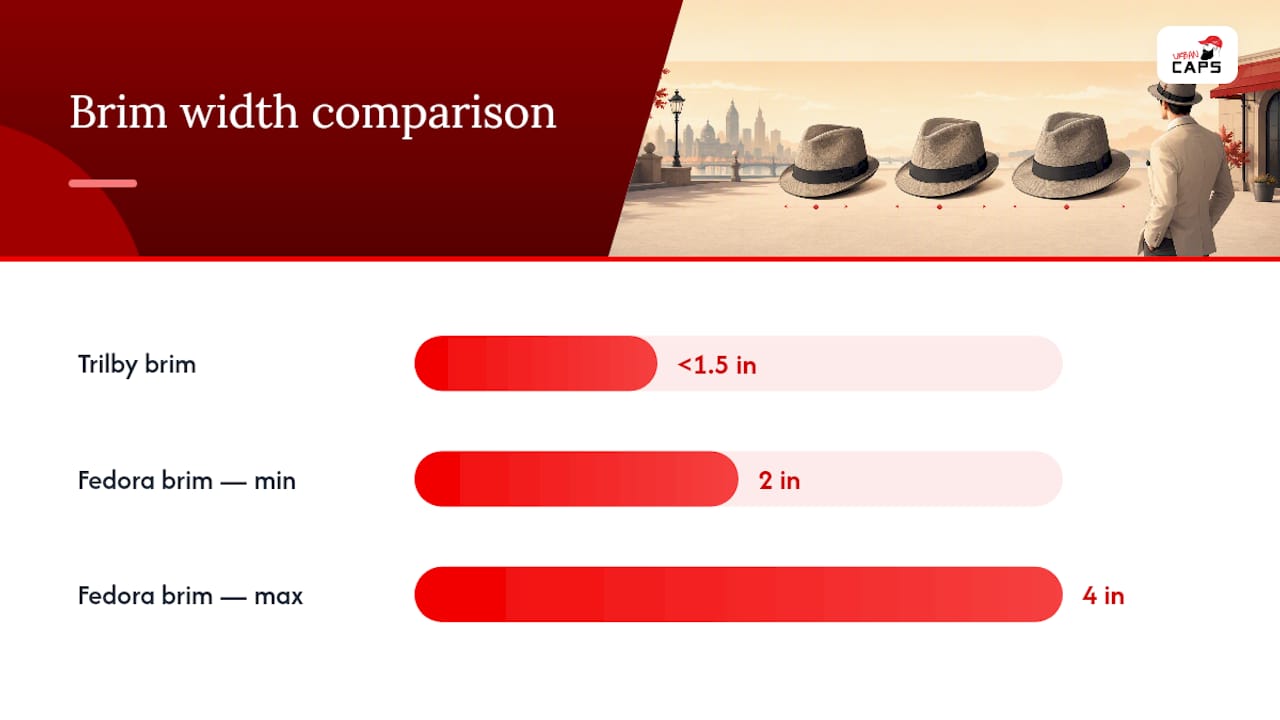
The trilby’s defining feature is that brim, and it’s narrower than most people expect. Where a fedora brim can stretch to 2 to 4 inches, a trilby usually sits under about 1.5 inches, snapped down over the eyes at the front and kicked up at the back. That upward flick at the back is what separates a trilby from a flat cap or a simple felt hat at a glance.
The crown tells the rest of the story. Trilby crowns run shorter and rounder than fedora crowns, often shaped with a centre crease running front to back or a teardrop pinch near the front. That shorter profile is why a trilby sits closer to the head and reads as less formal than its taller cousin.
Materials vary by season and use. Wool felt is the classic choice for cooler months, holding its shape well and blocking wind. Straw trilbies show up in warmer weather, lightweight and breathable but less structured. Vegetable fibre versions, like the Delmare Feather Trilby Hat, split the difference: breathable enough for travel, sturdy enough to hold a crease.
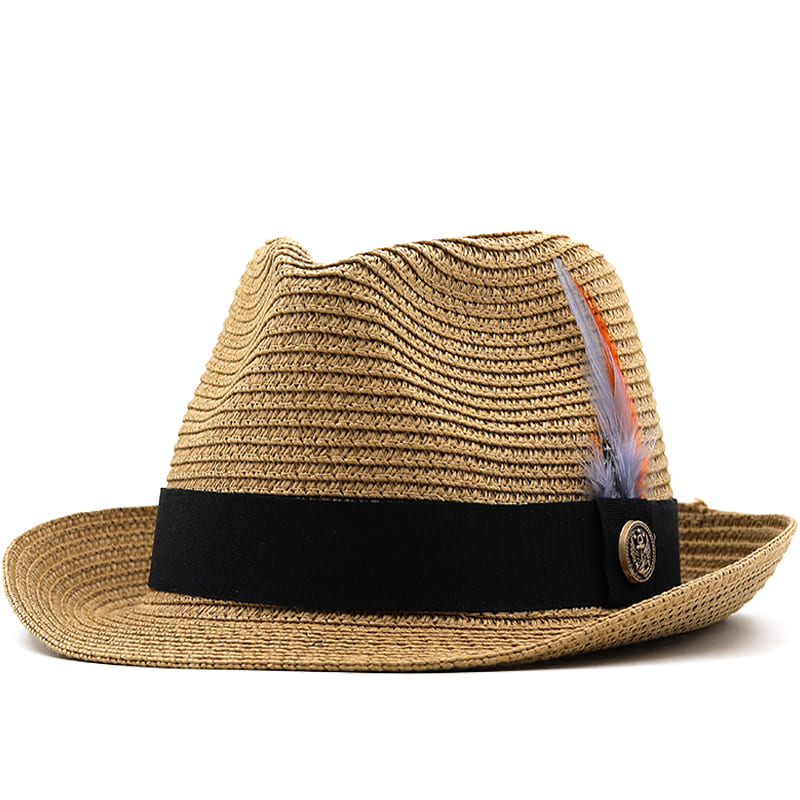
The band, usually a grosgrain ribbon circling the base of the crown, finishes the look and often signals quality. A cleanly stitched band with a small bow or feather detail is a good sign of proper construction rather than a mass-produced shortcut.
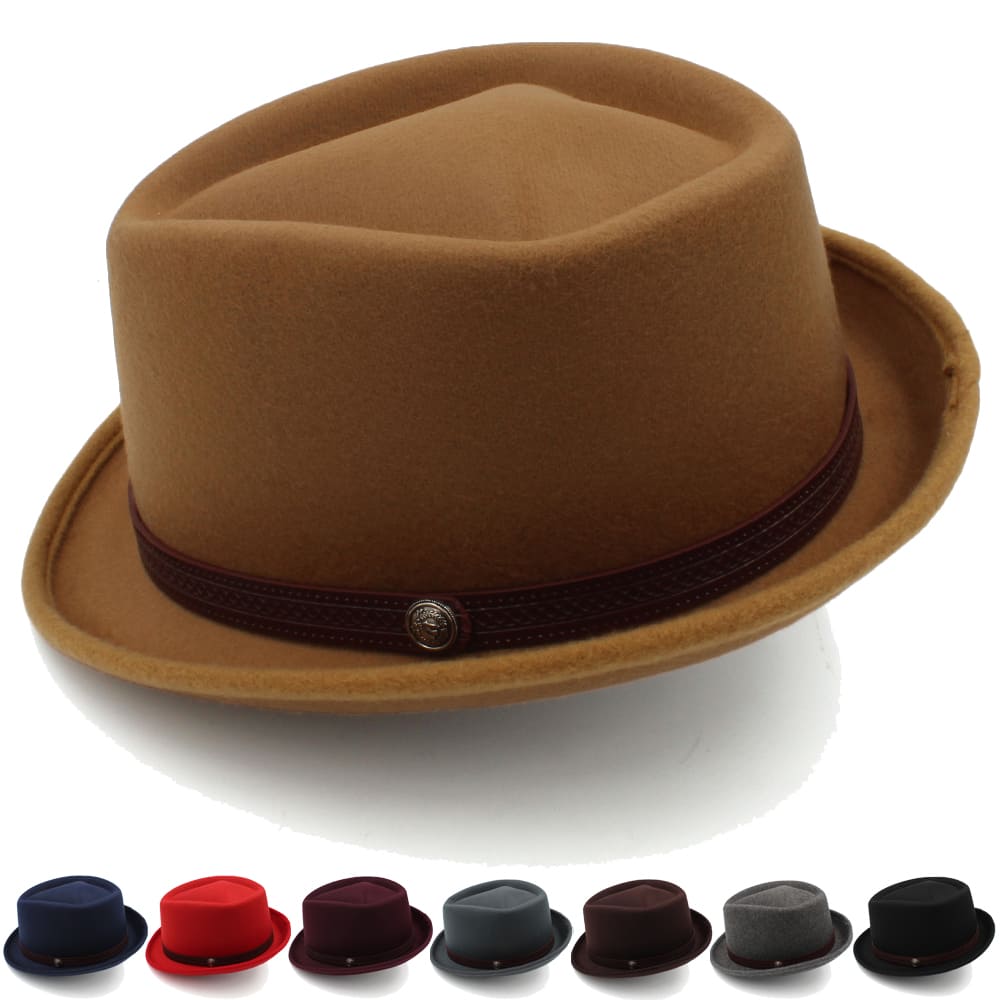
Pro Tip: When trying one on, tilt the brim slightly down at the front rather than wearing it flat. That small angle shortens a long face and adds definition to a rounder one, doing more for your proportions than the hat’s colour or material ever will.
Where did the trilby hat come from?
The name comes from a stage play, not a hatmaker. George du Maurier’s novel Trilby was published in 1894, and when it hit the London stage in 1895, a character wore a short-brimmed felt hat that audiences began asking for by name. Within a few years, “trilby” had stuck as the term for the style itself.
- 1894: Du Maurier’s novel Trilby appears in serial form
- 1895: The stage adaptation opens in London, popularising the hat worn on stage
- Early 1900s: Racegoers and fashionable city dwellers adopt the trilby as everyday headwear
- Mid to late 20th century: The trilby cycles through several style revivals, moving from aristocratic accessory to a staple of jazz, ska, and mod fashion scenes
A single costume choice in a London theatre production turned a fictional character’s hat into a household name still used well over a century later.
The trilby’s social status has shifted as much as its shape. What started as a hat for the racing set became a working musician’s signature, then a retro fashion statement, and now sits comfortably as a smart-casual option for almost anyone.
Trilby vs fedora: what’s actually different?
The confusion between these two hats comes down to three things: brim, crown, and how formal each one reads. A trilby’s brim usually stays under 1.5 inches, while a fedora’s brim typically runs 2 to 4 inches. That width difference alone changes how each hat sits on the face and how much shade or coverage it offers.
| Feature | Trilby | Fedora |
|---|---|---|
| Brim width/shape | Short, narrow, snapped down front | Wider, more even all round |
| Crown height/profile | Shorter, centre crease or teardrop | Taller, pinched crown |
| Typical materials | Wool felt, straw, vegetable fibre | Wool felt, sometimes heavier fur felt |
| Formality | Casual to smart-casual | Smart-casual to formal |
| Historical association | Racegoers, jazz and mod culture | Business wear, classic Hollywood |
Pick a trilby when you want a hat that feels current and easy to wear with jeans or a blazer. Reach for a fedora when the occasion calls for something with more presence, like a suit or a more traditional outfit.
- Choose a trilby for everyday smart-casual outfits, travel, or a modern take on vintage style
- Choose a fedora for formal events, business settings, or a classic old-Hollywood look
How do you wear a trilby without overdoing it?
Face shape matters more than most people realise. Oval and heart-shaped faces suit a trilby worn almost anywhere on the head, while round faces benefit from tilting the brim down at the front to add angles. Square faces look sharper with the hat pushed slightly back, softening a strong jawline rather than boxing it in further.
Outfit pairing depends on the setting. For casual days, a wool trilby works with a denim jacket or a simple knit, especially in earthy tones like brown or grey. For smart-casual looks, pair a textured trilby such as the Kent Marbled Trilby Hat with a tailored coat and chinos. For semi-formal occasions, a darker wool trilby sits well with a blazer, provided the rest of the outfit stays understated.
- Match hat tone to your outerwear, not your shirt, for a cleaner look
- Keep the brim angle consistent with your face shape rather than following trends
- Remove the hat indoors at formal or semi-formal gatherings, same etiquette as any other dress hat
Pro Tip: Millinery convention treats the trilby as a “walking hat,” meant to be worn tilted back rather than pulled low like a fedora. Wearing it too far forward is the single biggest giveaway of someone new to hats.
For more on blending classic silhouettes with modern outfits, vintage-inspired styling guides are worth a look, and anyone pairing headwear with outdoor gear might find these outdoor styling tips useful too.
Which trilby style suits your lifestyle?
Not every trilby is built the same way, and the differences matter more than they look on a shelf.
- Snap brim trilby: the classic shape, brim snapped down front and up back, most versatile for everyday wear
- Straw trilby: lightweight and breathable, best for summer events but less durable in wind or rain
- Wool or felt trilby: structured and warm, holds its shape well, suited to city wear and cooler months
- Vegetable fibre trilby: breathable and travel-friendly, resists crushing in a bag better than straw
A wool option like the Plymouth Wool Trilby Hat suits someone wanting one hat for most of the year, while a lightweight fibre trilby earns its keep on holidays where packability counts more than warmth.
How do you buy the right size and keep it in shape?
Getting the fit right starts with a simple measurement.
- Wrap a soft tape measure around your head, just above the ears, and note the circumference in centimetres.
- Check that measurement against the sizing guide for the specific hat you’re considering, since sizing can vary between materials.
- Try the hat on and confirm it sits snug without pinching, with about a finger’s width of room at the brim.
- Look for even balance front to back rather than tipping forward over the eyes.
Material choice should follow how you’ll use the hat. Wool suits regular wear and cooler climates, vegetable fibre suits travel and warmer conditions, and straw suits occasional summer outings rather than daily rotation.
- Brush felt trilbies gently with a soft hat brush to lift dust and restore nap
- Reshape a softened brim by steaming lightly and pressing back into form by hand
- Store on a hat rack or stuffed with tissue paper, never flat under other items
For a broader rundown on choosing between styles, this hat selection guide covers the basics well.
Who made the trilby famous?
Musicians and screen stars have kept the trilby in circulation for decades. Frank Sinatra is more closely tied to the fedora, though the two styles were often confused in fan photography from the era. Ska and mod scenes in the 1960s and 1970s adopted the trilby as a signature look, and it’s remained a recurring choice in music photography ever since.
- Jazz and ska musicians through the mid-20th century
- Mod subculture icons of the 1960s
- Contemporary musicians reviving the look in album artwork and stage wear
The trilby’s staying power comes from its size. It’s a hat that reads as stylish without demanding the same commitment as a wide-brimmed classic.
Look for black-and-white photography from jazz clubs and 1960s music scenes for the clearest visual examples of the trilby in its element.
Why a trilby makes a good first hat
A trilby’s smaller profile makes it far less intimidating than a wide-brimmed fedora, which is why it’s often recommended as a starting point for anyone new to hats. It pairs easily with jackets you already own and doesn’t demand the same formality as a dress hat.
For a first purchase, choose a neutral colour like navy, brown, or grey, and lean toward wool or vegetable fibre for versatility across seasons. Urbancaps carries several trilby styles built around exactly this brief, from breathable travel-ready fibre hats to classic wool options for cooler weather.
Pro Tip: If you’re unsure about brim angle, start with a snap brim style rather than a flat brim. It’s more forgiving on different face shapes and easier to adjust as you get used to wearing a hat regularly.
Where the trilby sits in a modern wardrobe
A trilby earns its place as one of the lowest-commitment hats you can own. It suits someone testing out headwear for the first time just as well as it suits a reader chasing a sharper, more considered take on smart-casual dressing.
Find your trilby with Urbancaps
Urbancaps is the straightforward alternative to hunting through overseas retailers or guessing your size from a photo. Every trilby on the site ships from New Zealand stock with fast NZ and AU delivery, so you’re not waiting weeks to find out whether the fit works.
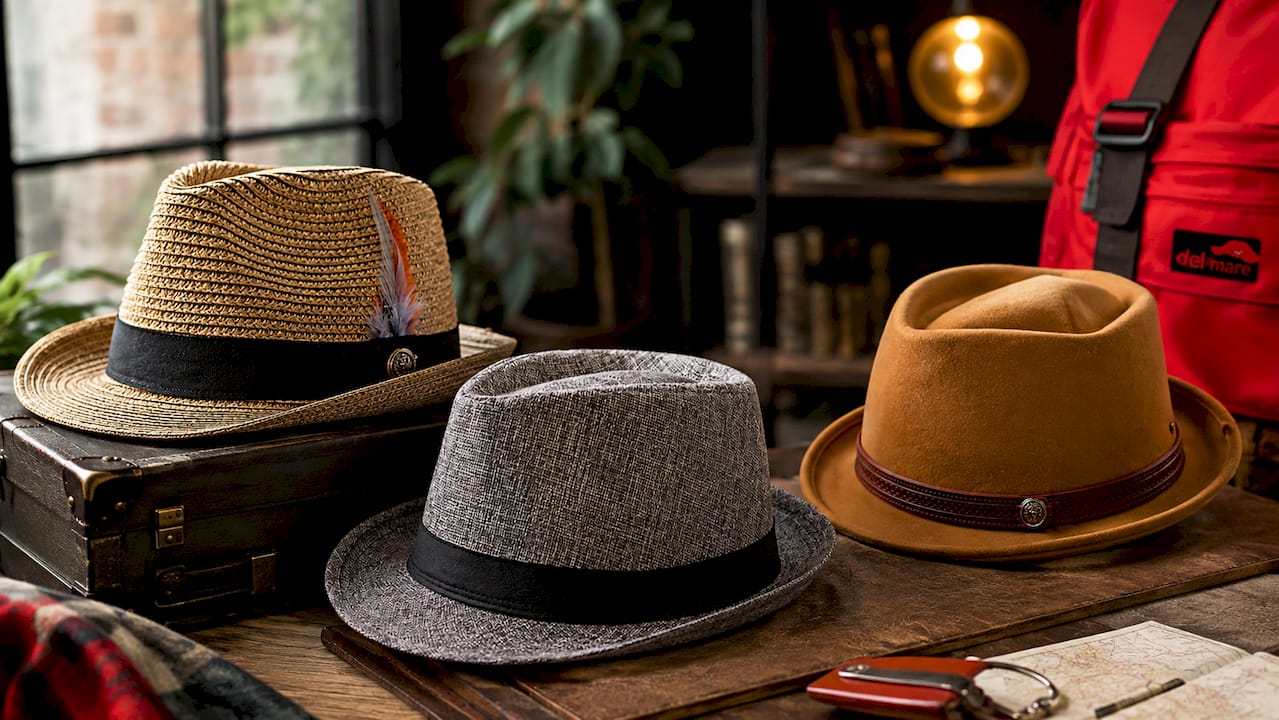
Whether you want a breathable option for travel, a textured adjustable fit, or a classic wool trilby for cooler months, the range covers each material this guide walked through. The Delmare Feather Trilby Hat suits warm-weather travel, the Kent Marbled Trilby Hat offers an adjustable fit for everyday wear, and the Plymouth Wool Trilby Hat handles cooler months with proper structure. Check the sizing guide, pick your material, and place your order today to have a trilby on your head this week.
Sources
- trilby | Etymonline
- Trilby hat — Wikipedia
- Trilby vs Fedora Hats: Differences Explained - Hat Realm
- A short (brimmed) history of the trilby hat | Foyer
For buying guidance, see the hat sizing guide and the style selection guide.
FAQ
What’s the difference between a trilby and a fedora?
A trilby has a shorter brim, usually under 1.5 inches, angled down at the front and up at the back, with a shorter crown than a fedora. A fedora’s brim runs wider, typically 2 to 4 inches, and reads as more formal.
Who is famous for wearing a trilby?
Jazz and ska musicians through the mid-20th century, along with mod subculture figures of the 1960s, are closely associated with the trilby. It remains a recurring choice in music photography and stage fashion today.
Why is it called a trilby hat?
The name comes from George du Maurier’s 1894 novel Trilby, and the 1895 stage adaptation featured a character wearing the short-brimmed hat that audiences began requesting by name.
Did Frank Sinatra wear a fedora or a trilby?
Sinatra is most closely tied to the fedora, though photographs from his era sometimes get mislabelled given how similar the two styles can look at a glance. The wider brim and taller crown in most of his signature looks point to a fedora rather than a trilby.
Is a trilby a good hat for beginners?
Yes. Its smaller profile and shorter brim make it less imposing than a wide-brimmed hat, and neutral wool or vegetable fibre versions from Urbancaps suit most first-time buyers looking for everyday versatility.