

Role of headwear in streetwear: 73% identity boost
Headwear in New Zealand streetwear isn’t just an accessory, it’s a defining element that shapes personal identity and cultural expression. From snapbacks signaling hip-hop roots to merino beanies reflecting Kiwi practicality, each hat choice communicates style values and lifestyle priorities. This guide explores how various headwear types function in streetwear, how global trends adapt to NZ’s unique climate and culture, and practical strategies for selecting pieces that balance fashion, function, and authenticity. You’ll learn to choose headwear that aligns with your face shape, weather needs, and streetwear vision while understanding the cultural signals each style sends.
Table of Contents
- Key takeaways
- Understanding key headwear types in streetwear
- How global streetwear trends shape New Zealand’s headwear scene
- Balancing function, identity, and premium style in New Zealand streetwear headwear
- How to choose and style headwear for your streetwear look in New Zealand
- Explore premium headwear collections at Urban Caps
- FAQ
Key Takeaways
| Point | Details |
|---|---|
| Headwear defines identity | In New Zealand streetwear, hats like snapbacks and beanies signal culture, personal style, and practical priorities. |
| Diverse hat styles | From snapbacks to beanies and trucker hats, each style shapes proportions and outfits. |
| Climate based materials | NZ climate dictates fabric choices from breathable cottons to merino wool for warmth without bulk. |
| Global trends influence NZ | Customization and logomania push local brands toward personalized pieces and limited releases. |
| Balance style and function | Choosing headwear balances fashion, face shape, and weather needs to optimize wearability. |
Understanding key headwear types in streetwear
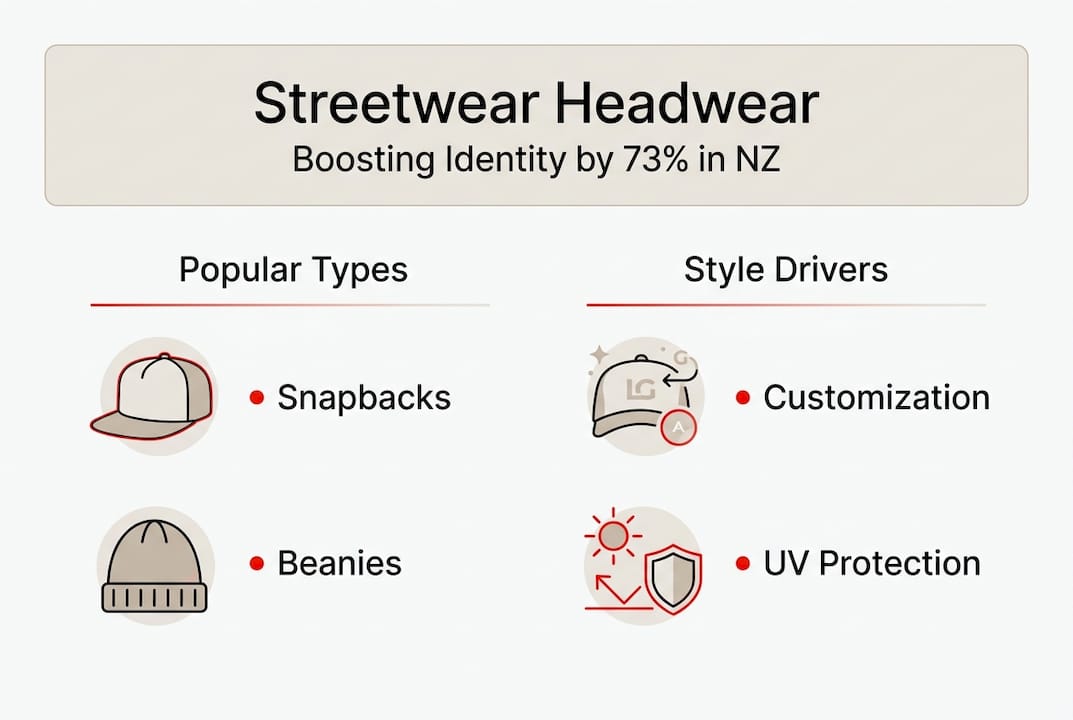
Key headwear types in streetwear include snapbacks, dad hats, beanies, trucker hats, and flat caps, each offering distinct styling mechanics for balancing proportions, adding texture, and completing urban outfits. Snapbacks deliver structured silhouettes with adjustable backs, creating clean lines that elongate round faces and complement oversized hoodies. Dad hats provide relaxed, unstructured crowns that soften angular features and pair naturally with layered streetwear looks.
Beanies add vertical dimension during colder months while signaling affiliations with skate or hip-hop subcultures. Trucker hats combine mesh breathability with foam fronts, ideal for NZ’s humid summers and outdoor activities. Flat caps bridge heritage style with contemporary streetwear, offering texture contrast against technical fabrics and athleisure pieces.
NZ climate directly influences material selection across these styles. Summer demands breathable cotton, polyester blends, or mesh panels that manage moisture during outdoor wear. Winter requires wool blends, fleece linings, or merino constructions that provide warmth without bulk. Premium headwear for outdoor use prioritizes these climate-responsive materials while maintaining streetwear aesthetics.
Cultural signals embedded in headwear choices reflect NZ’s diverse influences:
- Snapbacks connect to hip-hop culture and urban identity expression
- Beanies signal skate, surf, or snowboard community affiliations
- Trucker hats reference rural heritage adapted for city streetwear
- Flat caps blend European style with contemporary NZ fashion
Pro Tip: Mix structured snapbacks with relaxed dad hats across seasons to build a versatile rotation that handles NZ’s variable weather while maintaining consistent streetwear identity.
How global streetwear trends shape New Zealand’s headwear scene
Global forces reshape how NZ enthusiasts approach headwear selection and styling. Customization growth projected at $734B by 2034 drives demand for personalized embroidery, patches, and unique colorways that express individual identity. This trend manifests locally through small-batch NZ brands offering custom services and limited releases that compete with international labels.
Oversized beanies and bucket hats dominate youth styles, particularly among Gen Z consumers seeking comfort and statement pieces. These styles challenge traditional fitted approaches, introducing relaxed proportions that pair with baggy jeans and layered outerwear. Logomania reflects global branding trends, with visible logos and brand names becoming focal points rather than subtle details.

| Global Trend | NZ Streetwear Manifestation | Local Adaptation |
|---|---|---|
| Customization boom | Personalized patches and embroidery | Small-batch local releases |
| Oversized silhouettes | Slouchy beanies and wide-brim buckets | Climate-appropriate sizing |
| Logomania | Prominent brand placement | Heritage NZ brand integration |
| Sustainable materials | Organic cotton and recycled fabrics | Merino wool emphasis |
NZ brands provide practical guides addressing face shape matching and weather adaptation that global labels often overlook. UV protection considerations become critical given NZ’s ozone sensitivity, requiring UPF-rated fabrics even in streetwear contexts. Summer hat selections balance breathability with sun safety, integrating performance features into fashion-forward designs.
Local adaptations include:
- Adjustable sizing systems accommodating diverse head shapes
- Water-resistant treatments for unpredictable NZ weather
- Merino wool options providing temperature regulation
- UPF50+ fabrics addressing ozone hole concerns
The tension between streetwear authenticity and fast fashion influences purchasing decisions, with collectors prioritizing quality construction and timeless design over trend-chasing disposability. This shift supports local manufacturers emphasizing craftsmanship and durability aligned with NZ values.
Balancing function, identity, and premium style in New Zealand streetwear headwear
NZ’s ozone-sensitive environment elevates UV protection from optional feature to essential requirement. Ultraviolet exposure risks demand UPF-rated fabrics even in casual streetwear contexts, creating tension between fashion-forward aesthetics and practical sun safety. This balance separates functional traditionalists who prioritize protection from trend-chasers favoring bold logos regardless of performance features.
Functional traditionalists prioritize UV protection and warmth specific to NZ conditions, while global trend-chasers favor bold logos and customization that signal style awareness. Premium collectors seek heirloom-quality merino pieces over hype drops, valuing longevity and craftsmanship that justify higher price points. These contrasting approaches create diverse market segments within NZ streetwear.
| Feature | Premium Merino Hats | Synthetic Weather-Resistant Hats |
|---|---|---|
| Temperature regulation | Natural fiber breathability | Moisture-wicking treatments |
| Durability | Long-term shape retention | Fade-resistant synthetic dyes |
| Weather performance | Naturally water-repellent | Engineered waterproof coatings |
| Style longevity | Timeless texture and drape | Technical aesthetic appeal |
| Price point | Higher initial investment | Budget-friendly accessibility |
Face shape considerations influence style effectiveness. Round faces benefit from structured snapbacks that create vertical lines and elongate proportions, while angular faces suit softer dad hats that balance sharp features. Water-resistant synthetics prevent rain damage during NZ’s unpredictable weather, protecting investment pieces from moisture deterioration.
Collectors evaluate multiple factors when building headwear rotations:
- Fabric quality and construction durability
- Style versatility across outfit combinations
- Climate appropriateness for year-round wear
- Cultural authenticity and brand heritage
- Resale value and collectibility potential
Pro Tip: Avoid over-customization that clutters visual impact. Limit patches and embroidery to 2-3 strategic placements that enhance rather than overwhelm the base design, maintaining clean lines essential to streetwear aesthetics.
Hats in fashion and UV protection demonstrate how functional requirements integrate with style priorities. Premium outdoor headwear bridges performance features with streetwear design language, proving protection and style aren’t mutually exclusive. This integration defines modern NZ headwear choices that respect both fashion trends and practical realities.
How to choose and style headwear for your streetwear look in New Zealand
Selecting headwear that enhances your streetwear identity requires systematic evaluation of face shape, climate needs, and style goals. Follow this framework to build a functional and fashionable rotation:
- Identify your face shape by measuring width-to-length ratios and jawline angles. Round faces need structured crowns, oval faces suit most styles, square faces benefit from curved brims.
- Assess climate requirements based on seasonal activities. Summer demands breathable fabrics with UV protection, winter requires insulating materials with wind resistance.
- Define your style direction by identifying cultural influences and aesthetic preferences. Hip-hop leans toward snapbacks, skate culture favors beanies, heritage styles embrace flat caps.
- Test adjustability features ensuring comfortable fit across head sizes. Snapback closures, elastic bands, and drawstring systems accommodate growth and styling variations.
- Evaluate material performance for NZ conditions. Prioritize UPF50+ for ozone protection, merino for temperature regulation, and adjustable fits for versatility.
Styling tips for maximizing headwear impact:
- Coordinate hat colors with outfit undertones rather than exact matching
- Balance proportions by pairing oversized hats with fitted clothing
- Layer textures mixing smooth snapbacks with textured knitwear
- Position brims to frame face shape and enhance features
- Rotate styles preventing visual monotony across weekly looks
Customization limits maintain style balance. Restrict personal touches to embroidered initials, single patches, or subtle pin placements that add character without overwhelming the design. Excessive customization fragments visual cohesion and dates pieces quickly as trends shift.
Adjustable fits accommodate head size variations and styling preferences. Snapback closures allow precise circumference control, while elastic bands provide stretch comfort during extended wear. UV protection caps with adjustable features combine performance with customization, addressing both safety and style requirements.
Versatile pieces anchor effective rotations. Neutral-colored snapbacks pair with diverse outfits, black beanies transition across seasons, and classic flat caps bridge casual and elevated streetwear contexts. Building around these foundations allows experimental pieces to shine without requiring complete wardrobe overhauls.
Pro Tip: Invest in 2-3 premium quality pieces rather than 10 budget options. Quality construction maintains shape, color, and style integrity across years, delivering better long-term value and consistent streetwear impact than disposable alternatives.
Understanding UV protection importance guides material selection for outdoor activities. Source from local suppliers offering global premium quality aligned with NZ practicality, ensuring headwear performs across both style and functional dimensions.
Explore premium headwear collections at Urban Caps
Now that you understand how headwear shapes streetwear identity and the practical considerations for NZ conditions, explore curated collections designed for fashion-forward enthusiasts. Urban Caps offers premium options balancing global trends with local climate requirements, from breathable summer caps to insulating winter pieces.

Discover specialized offerings like classic fedoras that bridge heritage style with contemporary streetwear, or warm woolen fedoras providing temperature regulation during colder months. Autumn and winter fedoras deliver seasonal versatility with premium materials suited to NZ’s variable weather patterns.
Each piece emphasizes quality craftsmanship, durable fabrics, and timeless design that transcends seasonal trends. Adjustable fits accommodate diverse head shapes, while UV-protective options address NZ’s ozone sensitivity. Browse collections reflecting authentic streetwear culture adapted for Kiwi lifestyles, supporting local suppliers committed to style and substance.
FAQ
What is the role of adjustable fits in streetwear headwear?
Adjustable fits ensure comfort across size variations and contribute to better style fit by accommodating diverse face shapes. Snapback closures, elastic bands, and drawstring systems allow precise circumference control, preventing the loose or tight fit issues that compromise both comfort and appearance. This versatility extends headwear usability across different styling contexts and hair volumes.
How does New Zealand’s climate influence streetwear headwear choices?
Breathable materials like cotton and mesh suit humid summers, managing moisture during outdoor activities. Wool blends provide warmth and wind protection during NZ’s colder months, while maintaining breathability that prevents overheating. Material choice often reflects cultural affiliations, with merino signaling premium quality awareness and synthetic performance fabrics indicating technical streetwear preferences.
What are the top headwear trends influencing New Zealand streetwear?
Customization growth, oversized beanies, bucket hats, and logomania dominate current trends. Gen Z consumers favor relaxed silhouettes and personalized details that express individual identity. Local brands adapt these global movements to NZ’s cultural context and climate requirements, integrating UV protection and weather resistance into trend-forward designs that balance international style with practical functionality.
Why do premium collectors prefer merino wool headwear?
Merino offers natural temperature regulation, moisture management, and odor resistance that synthetic materials struggle to match. The fiber’s fine texture provides comfort without itch, while natural elasticity maintains shape across years of wear. Premium collectors value merino’s heirloom quality and timeless aesthetic that transcends seasonal trends, justifying higher initial investment through long-term durability and consistent style performance.
How do face shapes affect streetwear headwear selection?
Round faces benefit from structured snapbacks creating vertical lines that elongate proportions and balance width. Oval faces suit most styles due to balanced dimensions. Square faces pair well with curved brims softening angular jawlines. Angular faces benefit from unstructured dad hats adding softness, while long faces suit wider brims providing horizontal balance. Matching headwear structure to face geometry enhances overall appearance and style effectiveness.