


NZ Cap Care: Wash a Baseball Cap Without Ruining the Brim
Spot-clean structured or vintage caps, hand wash most modern soft caps in cold water with a mild detergent, and save machine washing for the specific soft cotton or poly caps that can handle a protective bag on a gentle cold cycle. Skip the tumble dryer, the dishwasher, bleach, and hot water every time. When you’re not sure which category your cap falls into, spot-cleaning is always the safer starting point, and Urbancaps’ own care advice follows the same logic.
TL;DR:
- Most modern soft caps can be hand washed in cool water with mild detergent, but structured or vintage caps require spot cleaning to avoid damage.
- Spot cleaning with gentle tools and solutions matching specific stains is safer and prevents warping, especially near the brim and crown.
- Machine washing is only suitable for certain soft cotton or polyester caps with plastic brims and no internal stiffening, using a delicate cycle and reshaping immediately.
- Air drying over a rounded form is the safest way to reshape caps, avoiding heat sources like tumble dryers that can permanently warp structures.
- Proper care involves regular airing-out, minimal washing, and cautious odour removal techniques, with strict avoidance of bleach, hot water, and harsh scrubbing.
Table of Contents
- Wash a baseball cap: the pre-wash checklist that saves your brim
- How do you spot clean a baseball cap safely?
- How do you hand wash a cap the right way?
- Can you machine wash a baseball cap?
- What’s the best way to dry and reshape a cap?
- How should you care for wool, vintage or foam-front caps?
- How often should you wash a baseball cap?
- Does washing frequency actually affect how long a cap lasts?
- What actually gets rid of tough, set-in odours?
- How do you disinfect a cap without damaging it?
- What detergent and how much should you actually use?
- Urban’s notes on caring for caps that actually last
- Looking for a cap that’s easier to keep clean?
- Sources
- FAQ
Wash a baseball cap: the pre-wash checklist that saves your brim
Check the care label first. Most modern caps have one stitched inside the sweatband, and it will tell you outright whether the maker considers the fabric machine-safe or hand-wash only.
If there’s no label, or you’ve inherited a cap with a faded one, you need to inspect the build yourself. Brim material and internal stiffening determine everything about which method is safe.
- Flex the brim gently. A plastic or rubber brim will bend slightly and spring back; a cardboard or layered-fibre brim feels stiffer and more brittle.
- Check the crown. Squeeze it lightly. If it holds a rigid shape, there’s likely buckram (a stiffened fabric) inside that can soften or warp when wet.
- Test colourfastness. Dab a damp cloth with a little detergent on an inside seam or the underside of the brim, then check for dye transfer before you commit to a full wash.
- When in doubt, spot-clean only. That single rule prevents more ruined caps than any other piece of advice in this guide.
How do you spot clean a baseball cap safely?
Spot cleaning is the lowest-risk method going, and it works on almost any cap regardless of age or construction. Soft brushes, a damp microfibre cloth, and small amounts of mild soap handle sweatband grime and local stains without soaking the structure.
Match the product to the stain: mild laundry detergent for general sweatband grime, a drop of dish soap for greasy marks, white vinegar for set-in yellowing around the band, and a baking soda paste for oily patches.
- Mix your chosen cleaner with a small amount of water to make a light solution or paste.
- Apply it to the stain and work it in with a soft brush or old toothbrush, using small circular motions rather than hard scrubbing.
- Wipe the area with a clean, damp cloth to lift the loosened residue.
- Blot dry with a towel rather than rubbing, which can push moisture deeper into the fabric.
Never let the brim get wet during this process, even if the stain runs close to the edge. If you’re dealing with a genuinely valuable or unusual vintage piece, it’s worth consulting a professional restorer before you touch it with anything.
Pro Tip: Work from the outside of a stain inward. Cleaning from the edges first stops the mark from spreading further into the fabric before you tackle the centre.
How do you hand wash a cap the right way?
Hand washing is the method most cleaning experts recommend for modern soft caps, and it strikes the right balance between a proper clean and structural safety. It takes longer than tossing a cap in the machine but gives you full control over water temperature, agitation, and drying.
- Fill a basin or sink with cool water and add a small amount of mild detergent, just enough to create a light suds. Too much soap makes rinsing harder and can leave residue behind.
- Pre-treat any visible stains around the sweatband or brim edge with a dab of detergent before submerging the cap.
- Submerge the cap and gently agitate it by hand. Use a soft toothbrush on the sweatband and any grimy patches, working in small circles.
- Rinse under cool running water, turning the cap as you go, until no suds remain.
- Press the crown gently between two towels to remove excess water. Never wring or twist the fabric, and keep pressure off the brim.
- Stuff the crown with a dry towel or a bowl to hold its shape, then set it to air-dry on a round form.
If you notice colour bleeding into the rinse water, stop and rinse in fresh cool water immediately rather than continuing to agitate. That’s usually a sign the dye isn’t fully set, and further agitation only makes it worse.
Pro Tip: Turn dark-coloured caps inside out for the soak stage. It protects the outer fabric from fading and still gets the sweatband clean where it matters most.
Can you machine wash a baseball cap?
Only under narrow conditions. Machine washing can work for specific soft cotton or polyester caps with a plastic brim and no internal buckram stiffening. If your cap has a cardboard brim or a structured crown, skip this method entirely and go back to spot cleaning or hand washing.
- Place the cap in a mesh laundry bag or a dedicated hat cage before it goes anywhere near the drum.
- Run a delicate or gentle cycle in cold water only, with a minimal spin setting.
- Wash the cap alone or with a small load of light, soft items. Don’t mix it in with jeans, towels, or anything heavy enough to knock it around.
- Reshape the cap immediately once the cycle finishes. Don’t leave it balled up in the machine or laundry basket.
One insight worth taking seriously: dishwashers and dryers remain popular shortcuts online purely because they’re convenient, not because they’re safe. The heat, harsh detergents, and agitation involved in both routinely damage brims and shrink crowns, and cleaning experts specifically warn against the dishwasher method despite how often it gets recommended as a life hack. If you’re at all unsure whether your cap qualifies for the machine, hand washing is the safer default every time.
What’s the best way to dry and reshape a cap?
Heat is the enemy of cap shape. Tumble dryers and direct heat sources warp brims and shrink crowns, sometimes permanently, which is why air-drying is the only method worth using regardless of how the cap was cleaned.
- Dry the cap over a rounded form. A bowl, a ball, a rolled towel, or a proper hat stand all work.
- Stuff the crown loosely with a dry towel or paper to help it hold its shape as it dries.
- Reshape the brim by hand while the cap is still slightly damp, since fabric is more pliable at this stage than once fully dry.
- Keep the cap out of direct sunlight while drying. UV exposure fades colour fast, especially on darker fabrics.
- Expect a full air-dry to take anywhere from several hours to a full day depending on fabric thickness and humidity.
Pro Tip: An upside-down bowl slightly smaller than your cap’s crown gives a rounder, more natural finish than a flat surface, which tends to leave a pressed-in look at the top.
How should you care for wool, vintage or foam-front caps?
Not every cap follows the same rules, and treating a delicate material like a standard cotton cap is where most damage happens.
Wool caps felt when exposed to heat, agitation, or enzyme-based cleaners meant for protein stains. Use a wool-specific detergent and cold water, and handle the fabric gently rather than scrubbing. Our guide on reshaping wool hats covers the drying side in more depth.
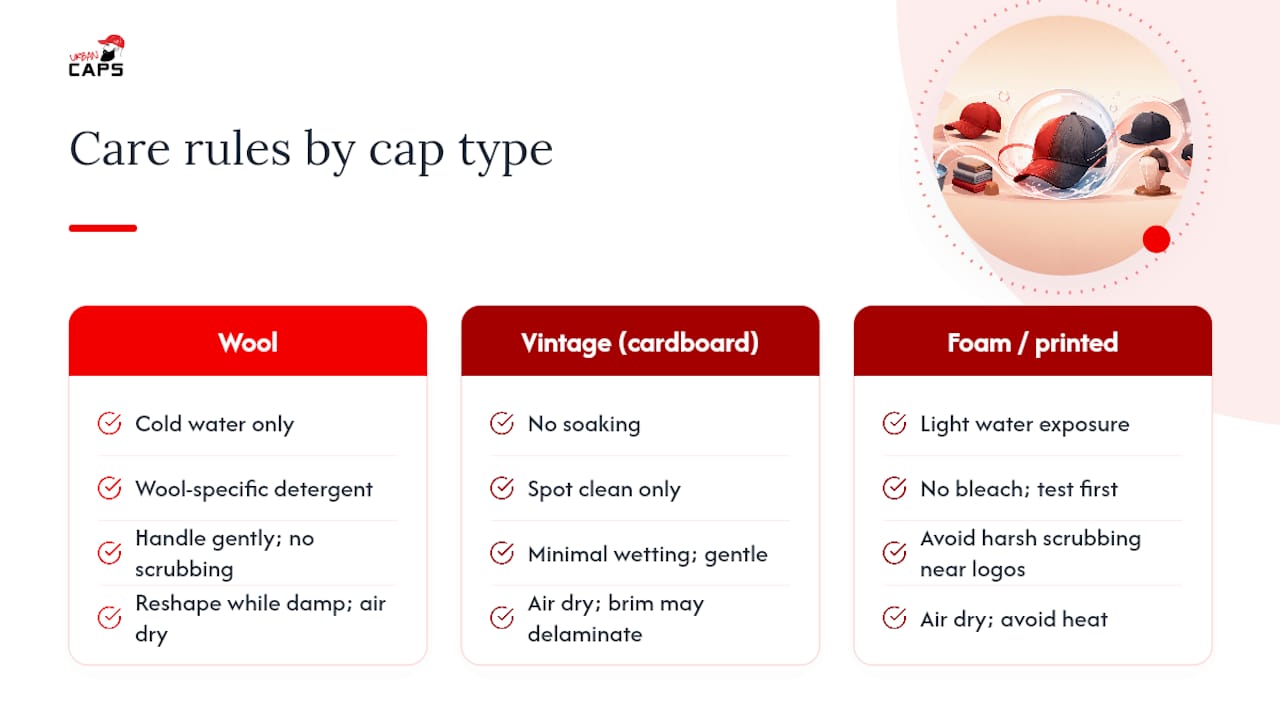
Vintage or cardboard-brim caps should never be soaked. Even minor water exposure can cause a cardboard brim to swell and delaminate, and once that happens, reshaping won’t reliably restore the original stiffness. Spot cleaning is the only safe path here.
Foam-front and printed caps need a lighter touch than you’d think. Avoid harsh scrubbing near printed logos or foam mesh panels, skip bleach entirely, and test any pretreatment product on a hidden area first. Our broader cap-cleaning guide walks through fragile and collectible cap care in more detail if you’re working with something irreplaceable.
How often should you wash a baseball cap?
Frequency depends entirely on how hard you’re wearing it. A cap worn most days, especially for sport or outdoor work, picks up sweat and oils fast enough to need a proper clean roughly once a month. A cap worn occasionally for casual outings might only need washing a handful of times a year.
- Air it out after every wear. Leaving a cap somewhere with airflow rather than a closed bag or drawer stops sweat and odour from setting into the fabric.
- Use a baking soda sachet in storage. A small pouch tucked inside the crown absorbs moisture and odour between washes.
- Spray white vinegar on the sweatband for a quick refresh, then follow up with a light spot clean rather than a full wash.
- Know when to stop trying. If a stain has set permanently or the fabric has started breaking down at the seams, no amount of further washing will fix it, and replacement is the sensible call.
Does washing frequency actually affect how long a cap lasts?
Yes, and the relationship runs both ways. Wash too rarely and sweat, oils, and salt build up in the fabric fibres, gradually breaking down the material and weakening stitching around the sweatband. Wash too often, or too aggressively, and you accelerate fading, loosen the crown’s structure, and stress the brim every time it gets handled wet.
The sweet spot is washing only as often as genuinely needed, using the gentlest method that gets the job done. A cap spot-cleaned regularly between full washes tends to outlast one that gets a full hand wash every fortnight, simply because it’s handled less and exposed to less moisture overall.
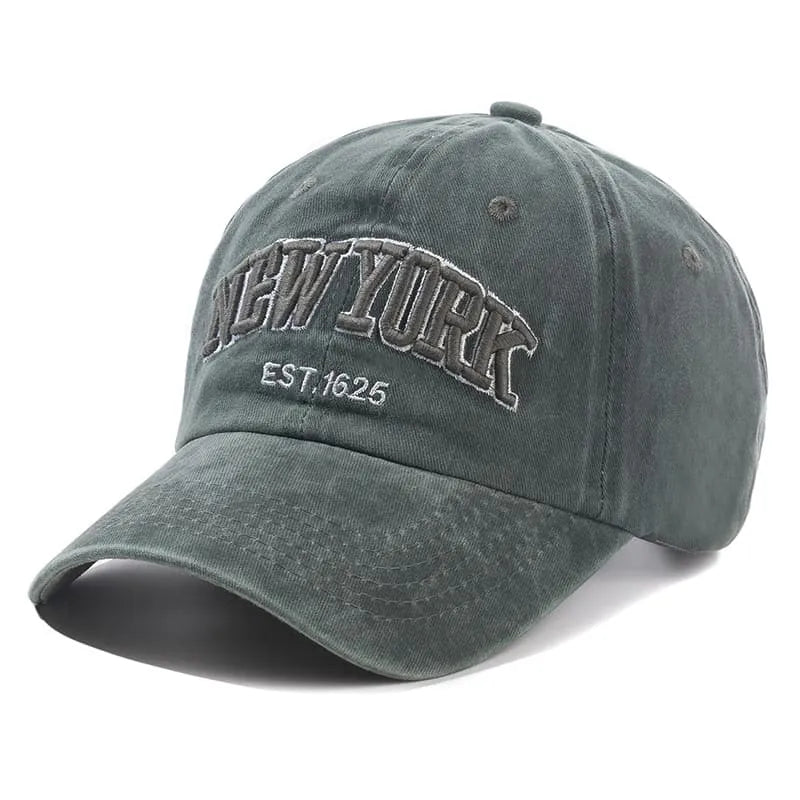
Fabric type changes this equation too. A washed-cotton cap, already pre-shrunk and treated during manufacturing, tolerates repeated gentle washing far better than a structured wool or cardboard-brim cap ever will. That’s part of why easy-care fabrics have become so popular for everyday caps: they’re built to survive the wash cycle a normal cap actually needs over its lifetime, not just one careful clean.
The other factor is drying method consistency. A cap that’s air-dried properly every time keeps its shape wash after wash. One that gets rushed near a heater or left balled up damp loses structure a little more with each cycle, and that damage compounds. By the tenth or twentieth wash, the difference between a cap that’s been cared for properly and one that hasn’t is usually obvious in the brim’s stiffness and the crown’s shape.
What actually gets rid of tough, set-in odours?
Quick fixes handle everyday sweat smell, but a cap that’s been worn hard for months sometimes needs a stronger approach. Set-in odour usually means bacteria and salt have worked deep into the sweatband fibres, not just the surface.
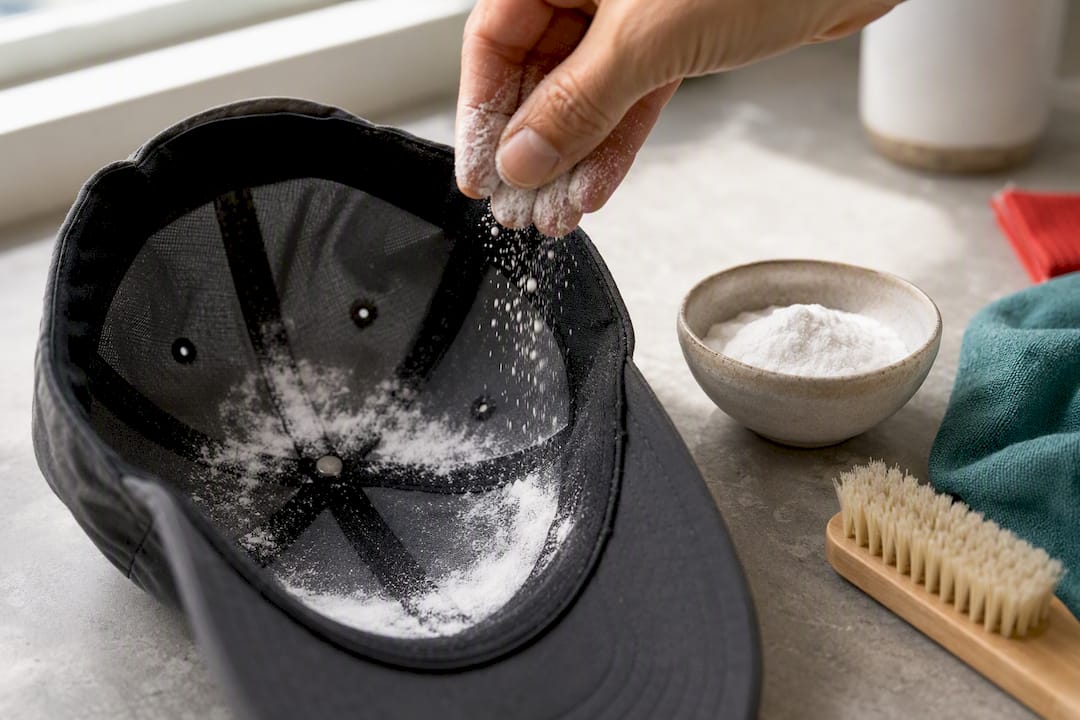
Start with an overnight baking soda treatment. Sprinkle it generously over the sweatband and crown interior, leave it for a full 24 hours, then brush or vacuum it out before you wash. Baking soda absorbs odour molecules rather than just masking them, which is why it works better than a quick spray for stubborn cases.
For genuinely persistent smell, a diluted white vinegar soak on just the sweatband, held in place for 15 to 20 minutes before rinsing, breaks down the bacterial buildup that plain detergent often misses. Follow it immediately with a normal hand wash to clear the vinegar smell itself.
Sunlight also plays a role, carefully. A short spell in indirect sunlight (not direct, which fades colour) helps kill odour-causing bacteria through UV exposure. Limit this to an hour or two and always dry the cap fully first.
If odour persists after both a baking soda treatment and a full hand wash, the smell has likely worked into materials that a normal wash can’t reach, foam padding or older sweatband material that’s begun breaking down. At that point, no home method will fully clear it, and it’s a sign the cap is nearing the end of its usable life.
How do you disinfect a cap without damaging it?
Disinfecting is different from just cleaning, and it matters more than people think if you’re sharing hats, dealing with a cap worn during illness, or just want peace of mind after heavy gym or sport use.
Skip bleach entirely. It’s the instinctive reach for a lot of people, but bleach breaks down fabric fibres and strips colour fast, especially on anything other than plain white cotton. A cap bleached even once often shows visible damage.
Instead, a solution of one part white vinegar to four parts water gives you a genuine antibacterial effect without the fabric damage. Spray it onto the sweatband and any high-contact areas, let it sit for 10 minutes, then rinse and hand wash as normal.
For a stronger option, some fabric-safe disinfectant sprays designed for shoes and sports gear work on caps too, provided you check the label for colour-safety and spot-test first on a hidden seam.
Whatever method you choose, always follow disinfecting with a full air-dry in good airflow. Damp fabric left to sit is exactly the environment bacteria need to return.
What detergent and how much should you actually use?
The detergent question trips more people up than it should, mostly because “more soap” feels like it should mean “cleaner cap.” It doesn’t, and it usually means the opposite.
A mild, dye-free liquid detergent is the safest all-purpose choice for both hand washing and the rare machine wash. Avoid detergents with added bleach, optical brighteners, or heavy fragrance, all of which can affect colour or leave residue on synthetic fabrics.
For hand washing, a teaspoon of detergent in a full basin of water is plenty. You’re aiming for a light suds, not a foam bath. Using too much detergent makes rinsing harder, and any leftover residue in the fibres attracts dirt faster afterwards, which defeats the purpose of washing in the first place.
Wool caps need a dedicated wool-safe detergent, since standard detergents often contain enzymes formulated to break down protein-based stains, the same enzymes that attack wool fibres and cause felting. A dish soap works fine as a spot-clean substitute for grease but shouldn’t be used for a full wash, since it’s formulated to cut through grease more aggressively than fabric detergents and can dry out fibres over repeated use.
If you’re machine washing one of the rare caps that tolerates it, use roughly half the detergent you’d use for a normal small load. Caps are a fraction of the fabric volume of a typical wash, and machines already dose more detergent than a single cap needs.
Urban’s notes on caring for caps that actually last
Writing about headwear care consistently turns up the same pattern: most cap damage isn’t from wear, it’s from one rushed wash. Urbancaps has built its product guidance around durable, easy-care fabrics precisely because that’s what stops good caps ending up in landfill after a single mistake. Our hat-cleaning and sweat-stain guides go deeper on specific fixes. If a cap’s beyond saving, a robust, easy-care replacement is often the more sensible call than fighting a lost cause.
— Urban
Looking for a cap that’s easier to keep clean?
Washed cotton is pre-treated during manufacturing to handle exactly the hand-wash steps covered in this guide, so you get a cap that softens with age rather than warping or fading after one wash. That’s the practical advantage over structured or cardboard-brim caps: less risk, less guesswork, and a fabric already broken in before it reaches you.
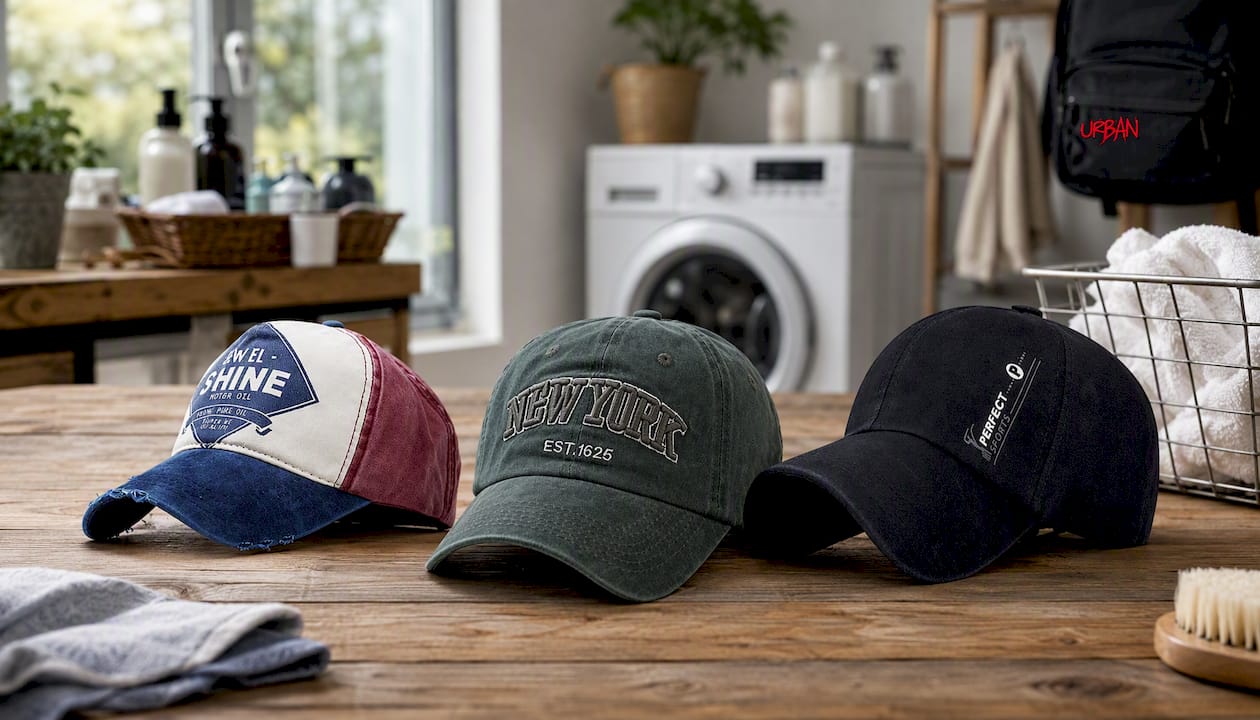
Urbancaps stocks a small range built around this same principle. The Washed Cotton Cap is the strongest fit if you want a genuinely low-maintenance everyday cap that tolerates the full hand-wash method without fuss. For something adjustable with the same easy-care fabric, the NY Washed Cotton Baseball Cap fits a wider range of head sizes. If you want a lighter, sun-focused style for casual outdoor wear, the Retro Washed Sun Hat covers that brief with the same simple care instructions. Browse the washed cotton range and pick the style that matches how often you’ll actually be washing it.
Sources
- How to wash your hat (without ruining it) | GQ
- An expert guide on how to wash a baseball cap | Good Housekeeping
- How to clean a baseball cap by cap type and material | WonderHowTo
- The best way to clean a baseball cap | The Art of Manliness
FAQ
Can you wash baseball caps in the washing machine?
Only specific soft cotton or polyester caps with a plastic brim and no internal buckram. Use a mesh bag or hat cage, a cold delicate cycle, and reshape the cap immediately afterwards.
How do you clean a baseball cap without ruining it?
Spot-clean sweatbands and stains with mild detergent and a soft brush for most caps, and reserve full hand washing in cool water for caps that clearly tolerate submersion. Avoid heat, bleach, and hard scrubbing throughout.
Is it better to wash baseball caps in the dishwasher or washer?
Neither is ideal, but a gentle machine wash in a protective bag is safer than a dishwasher. Dishwasher detergents and heat are strong enough to damage fabric and warp brims, which is why cleaning experts advise against that method entirely.
Does washing a hat ruin the brim?
It can, particularly if the brim is cardboard or layered fibre and gets soaked. Plastic-brim caps handle moisture far better, which is exactly why identifying brim material before washing matters so much.