

Australian heritage style hats: what to look for
TL;DR:
- Australian heritage hats feature wide, stiff brims and durable felts rooted in rural Australian tradition. They are made from high-quality rabbit-fur felt or boiled wool with specific crown shapes like Cattleman or teardrop. Urbancaps offers locally stocked options suitable for NZ conditions, emphasizing construction quality and proper care for longevity.
Australian heritage style for headwear means wide-brimmed felt bush hats, woven cabbage-tree pieces, flat caps, and homburg-style shapes built for sun protection and durability. The defining cues are a broad brim, rabbit-fur felt or boiled wool construction, and a crown profile rooted in rural Australian tradition. When you’re scanning a product photo, check three things fast:
- Brim width and profile: wide and stiff, often with a turned-up side (slouch style) or a flat, structured edge
- Material tag: look for “rabbit-fur felt,” “100% wool felt,” or “woven palm” rather than polyester
- Crown shape: Cattleman (flat top), indented pinch-front, or teardrop — not a soft, unstructured dome
Urbancaps stocks heritage-inspired headwear across all these categories, with local NZ stock and fast NZ delivery.
Table of Contents
- What defines the look of an Australian heritage hat?
- How did these hat styles become Australian heritage?
- Which materials actually make a heritage hat worth buying?
- How heritage hats fit into a modern NZ wardrobe
- How to choose the right heritage hat in NZ
- Caring for your heritage hat
- Key takeaways
- Why heritage hats deserve more credit than they get
- Heritage hats from Urbancaps, delivered across NZ
- FAQ
What defines the look of an Australian heritage hat?
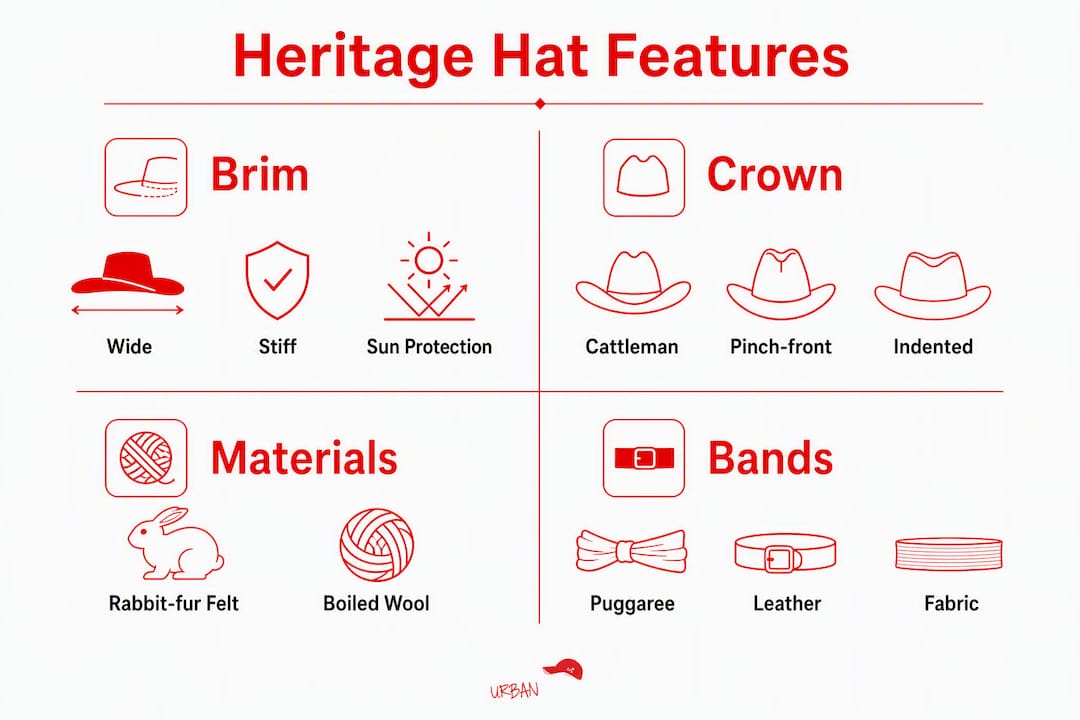
The visual signature of Australian heritage design comes down to four features working together: brim, crown, band, and material.
Brim: Wide and purposeful. A genuine heritage brim sits wide enough to offer good sun protection, with enough stiffness to hold its shape in wind. Slouch-style hats carry a turned-up left brim — originally practical for rifle clearance during military drill. Rancher and bush styles keep the brim flat or with a slight downward curve all around.
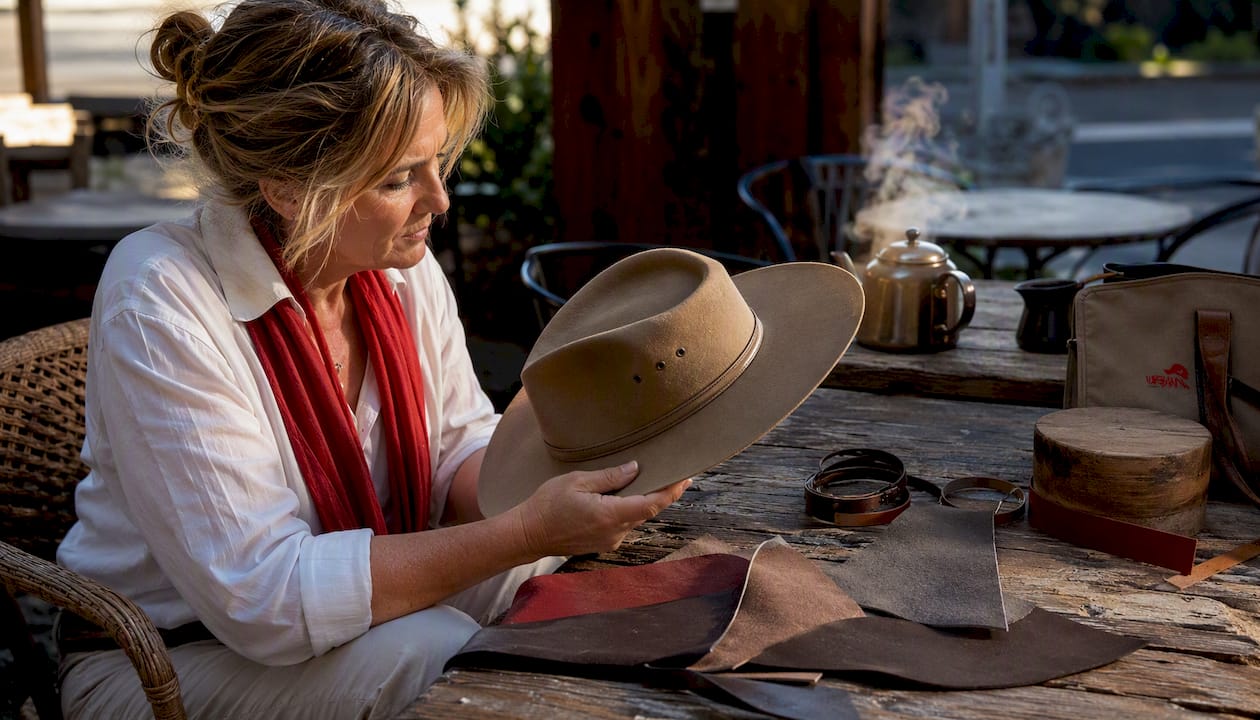
Crown: The three shapes you’ll see most are the Cattleman (flat top, straight sides), the indented or “pinch-front” crown, and the teardrop (rounded, slightly tapered). Each reads differently — Cattleman is the most rural, teardrop the most urban-formal.
Hatband and puggaree: A puggaree is a pleated fabric band wrapped around the crown, historically used to secure the brim in its turned-up position. On modern heritage pieces it’s a styling detail. Leather or grosgrain ribbon bands signal a more dressed-up finish.
Material and construction on the label: Rabbit-fur felt and boiled wool are the two materials worth paying for. Both hold their shape, resist light rain, and age well. A stitched brim binding (rather than glued) and a leather sweatband inside are signs of quality construction. Climate and rural use shaped these choices — the materials had to perform outdoors, not just look good.
Pro Tip: On any product page, scroll straight to the specs and look for felt weight in grams or a “hand-blocked” note. A heavier felt (above 100g) holds its shape longer. If the spec line just says “felt” with no qualifier, that’s usually a lighter, fashion-grade material.
How did these hat styles become Australian heritage?
The story starts with the cabbage-tree hat. Woven from the fibre of the native Livistona australis palm, it was one of the first distinctively Australian garments — made entirely from local materials by convicts and early settlers who needed sun protection and had no access to imported goods. By the mid-19th century, cabbage-tree hat making had become a cottage industry, particularly in New South Wales.
Felt hats overtook woven palm styles in the late 19th century, largely because imported rabbit-fur felt was cheaper to produce at scale. The slouch hat entered Australian military use from 1885, with formal adoption in 1903, and went on to serve in the Boer War and both World Wars. Its turned-up brim, puggaree, and unit badge became a national symbol.
Rural workers adopted similar wide-brim felt styles through the 20th century. By the time urban Australians started wearing them as fashion pieces, the design had already been tested across a century of outdoor use. That functional lineage is what separates heritage headwear from a hat that merely looks old.
Which materials actually make a heritage hat worth buying?
| Material | Best for | Care | Durability | Typical price band |
|---|---|---|---|---|
| Rabbit-fur felt | All-weather outdoor wear, sun protection | Brush regularly, air dry, re-block if needed | Very high | Mid to premium |
| Boiled wool | Shape retention, cold-weather wear | Spot clean, reshape when damp | High | Mid |
| Woven palm / cabbage-tree | Breathability, historical authenticity | Keep dry, brush lightly | Moderate | Mid |
| Straw | Summer and festival wear | Keep dry, store flat | Moderate | Entry to mid |
| Leather trims | Sweatbands, hatbands, brim binding | Condition annually | High | Adds to overall cost |
The core materials each have real trade-offs:
- Rabbit-fur felt is water-resistant and long-lasting when correctly blocked and cared for. Construction quality — felt density, hand-blocked crown, stitched sweatband — predicts longevity better than price alone.
- Boiled wool is lighter than rabbit-fur felt and holds a clean shape well, making it a practical choice for flat caps and homburg styles.
- Woven palm is the most breathable option and carries the most historical weight, but it doesn’t handle rain well and needs careful storage.
- Straw works for summer events but isn’t a year-round NZ proposition.
A bonded felt brim (layers glued together) is cheaper to produce than a hand-blocked one and will lose its shape faster. If a seller can’t tell you whether the brim is bonded or blocked, that’s your answer.
How heritage hats fit into a modern NZ wardrobe
Wide-brim bush and rancher styles suit outdoor work, weekend markets, and country events — pair them with a waxed jacket or a chambray shirt and boots. The rural-to-urban styling shift means these shapes now work equally well at a casual city event, especially when the crown is a cleaner teardrop rather than a full Cattleman.
Flat caps and ivy caps in herringbone wool sit naturally with a tailored coat or a heavy knit jumper — a classic NZ winter combination. They read as smart-casual without effort.
Homburg and fedora shapes are the most dressed-up option in the heritage range. They pair with a structured jacket or a long coat and work for weddings, races, or any occasion where you want a hat that reads intentional rather than functional.
Knit beanies are the winter-layering workhorse. They’re not traditional heritage shapes, but wool-blend beanies in neutral tones sit alongside heritage outerwear without clashing. For face shape and proportion: a taller crown adds height on rounder faces; a shorter, wider brim balances a longer face. Check the latest NZ hat trends for current pairings.
How to choose the right heritage hat in NZ
- Measure your head first. Use a soft tape measure around your head, 2 cm above your ears. Most heritage hats size in centimetres (55, 57, 59, 61). If you’re between sizes, size up — a hat that’s too tight is uncomfortable and can distort the crown.
- Match brim width to your use case. Sun protection outdoors: 8 cm or wider. City fashion: 6–7 cm reads cleaner. Dress occasions: a shorter, structured brim on a homburg or fedora.
- Check the material spec. Rabbit-fur felt or boiled wool for year-round NZ wear. Straw or woven palm for summer only.
- Ask about construction. Hand-blocked or bonded brim? Stitched or glued brim binding? Leather or synthetic sweatband? These questions separate a $60 fashion hat from a hat that lasts a decade.
- Review the returns policy. Fit is personal. A seller with a clear NZ returns policy is worth more than a marginally lower price from an overseas retailer with no local support.
| Price band | What to expect |
|---|---|
| Under $60 | Fashion-grade felt, bonded brim, synthetic sweatband |
| $60 | Wool felt or boiled wool, better construction, basic lining |
| $60–$120 | Rabbit-fur felt, hand-blocked crown, leather sweatband, stitched brim |
Caring for your heritage hat
- Do brush felt hats with a soft-bristle hat brush after each wear, moving counter-clockwise with the nap.
- Do air dry a wet felt hat on a flat surface or hat stand — never near direct heat.
- Do store your hat crown-down or on a hat stand to keep the brim flat.
- Don’t put a felt or wool hat in the washing machine — water and agitation will shrink and distort the felt permanently.
- Don’t crush a straw or woven palm hat into a bag — the weave cracks under sustained pressure.
- Don’t use household stain removers on rabbit-fur felt; they strip the natural oils that give the felt its water resistance.
For waterproofing, a light spray of hat-specific water repellent (applied outdoors, allowed to dry fully) refreshes the felt’s resistance without affecting colour. Re-blocking — reshaping a misshapen crown using steam — is best done by a professional hatter if the hat has significant sentimental or monetary value. Expect to pay $30–$60 for a professional re-block in NZ.
Key takeaways
Australian heritage style headwear is defined by wide brims, durable felt or woven construction, and a rural-to-urban lineage — and construction quality is the single most reliable predictor of longevity.
| Point | Details |
|---|---|
| Spot heritage cues fast | Check brim width (7 cm+), material tag (rabbit-fur felt or boiled wool), and crown shape in any product photo. |
| Construction beats brand | Hand-blocked crowns, stitched brim bindings, and leather sweatbands outlast fashion-grade alternatives regardless of price. |
| Match material to climate | Rabbit-fur felt suits NZ year-round; straw and woven palm are summer-only options. |
| Measure before you buy | Head circumference in centimetres is the most reliable sizing guide — size up if between sizes. |
| Urbancaps for NZ shoppers | Urbancaps stocks heritage rancher hats, fedoras, flat caps, and beanies with local NZ stock and fast NZ delivery. |
Why heritage hats deserve more credit than they get
There’s a tendency to treat heritage headwear as a costume — something you wear to a country event and then hang on a hook. That undersells what these hats actually are.
The wide-brim felt hat was refined over more than a century of outdoor use in one of the harshest sun environments on earth. The design decisions — brim width, felt density, turned-up side — weren’t made by stylists. They were made by people who needed a hat to work all day. That functional rigour is exactly why these shapes have outlasted dozens of fashion cycles.
For NZ shoppers, the relevance is direct. The UV index here is among the highest in the world, and a properly constructed wide-brim felt hat offers real, lasting sun protection — not just a style statement. The mistake most buyers make is prioritising price over construction. A $50 fashion hat with a bonded brim and synthetic sweatband will look tired within a season. A well-constructed rabbit-fur felt hat, properly cared for, will outlast most things in your wardrobe.
The heritage styles Urbancaps carries — rancher hats, fedoras, herringbone flat caps, homburgs — aren’t replicas or costumes. They’re the same functional shapes, made with materials that hold up. Buy once, buy well.
Heritage hats from Urbancaps, delivered across NZ
Urbancaps carries the full range of Australian heritage-inspired headwear — and everything ships fast within NZ with no minimum order.

For outdoor and sun protection wear, the Dakota Heritage Wool Rancher Hat is a 100% wool felt rancher with a wide structured brim built for real outdoor use. Dress it up or wear it to the farm — it handles both. The Churchill Heritage Homburg in Australian wool felt is the go-to for weddings, races, or any occasion that calls for a hat with presence.
For urban heritage looks, the Heritage Herringbone Ivy Cap pairs with a coat or a heavy knit without effort. Winter layering? The Fashion Knit Beanie, Winter Bonnet Beanie, and Classic Knit Beanie cover the full range from fashion-forward to everyday warmth. And the Fedoras Hat sits squarely in the heritage-influenced dress category.
Every product page includes detailed specs, customer reviews, and care guidance. Check sizing, read the reviews, and order with confidence — free shipping on all NZ orders. ♡
FAQ
What is Australian heritage style for hats?
Australian heritage style for headwear refers to wide-brimmed felt bush hats, woven cabbage-tree pieces, flat caps, and homburg shapes with roots in 19th-century rural and military Australian use. Key markers are rabbit-fur felt or boiled wool construction, a structured brim of 7 cm or wider, and crown shapes like the Cattleman or teardrop.
How do I spot a genuine heritage-style hat versus a fashion imitation?
Check the material spec for rabbit-fur felt or boiled wool, look for a stitched (not glued) brim binding, and confirm the sweatband is leather rather than synthetic. A hand-blocked crown note in the product description is the strongest single quality signal.
Are Australian heritage hats suitable for NZ conditions?
Yes. Rabbit-fur felt is naturally water-resistant and performs well in NZ’s variable weather, while the wide brim provides meaningful sun protection given NZ’s high UV index. Straw and woven palm styles are better suited to dry summer days only.
How should I store and care for a felt heritage hat?
Store felt hats crown-down or on a hat stand, brush after each wear with a soft-bristle brush, and air dry away from direct heat if the hat gets wet. Never machine wash a felt or wool hat.
Where can I buy Australian heritage-style hats in New Zealand?
Urbancaps stocks a full range of heritage headwear including rancher hats, fedoras, flat caps, homburgs, and beanies, with local NZ stock and free shipping on all NZ orders.