

Benefits of wool headwear: warmth and performance for NZ
TL;DR:
- Wool headwear offers superior warmth, moisture regulation, and durability for outdoor use in New Zealand conditions. Its ability to trap heat and buffer humidity makes it practical for variable weather, and proper care extends its lifespan significantly. Wool’s biophysical properties and eco-friendliness make it a versatile, long-lasting choice for outdoor enthusiasts.
Wool headwear delivers superior thermal regulation, moisture control, and long-term durability for everyday and outdoor use in New Zealand. Whether you’re commuting through a Wellington southerly or tramping in the Fiordland drizzle, wool is the material that keeps working when conditions shift.
The core benefits at a glance:
- Insulation: Crimped fibres trap air and release a small amount of heat when they absorb moisture, keeping your head warm even when it’s damp.
- Breathability and moisture management: Wool buffers humidity swings rather than trapping steam, so you stay comfortable during stop-go activity.
- Longevity and care: With basic airing and gentle washing, a quality wool hat outlasts most synthetic alternatives and often improves with age.
Urbancaps stocks a range of wool and merino beanies suited to NZ conditions. Read on for the science, the comparisons, and the practical guidance to choose well.
Table of Contents
- What are the real benefits of wool headwear for warmth?
- How does wool manage moisture and breathability?
- How to care for wool headwear so it lasts
- Wool vs other hat materials: which suits your needs?
- Are wool hats good for your hair and scalp?
- How to choose wool headwear for New Zealand conditions
- Key takeaways
- Why we back premium wool headwear
- Wool hats worth trying from Urbancaps
- Sources and further reading
- FAQ
What are the real benefits of wool headwear for warmth?
Wool insulates by trapping still air inside its naturally crimped fibres. Each fibre’s wave-like crimp creates thousands of tiny air pockets across the fabric, and still air is one of the most effective insulators available. The result is a hat that holds warmth close to your head without the bulk of a synthetic fleece.
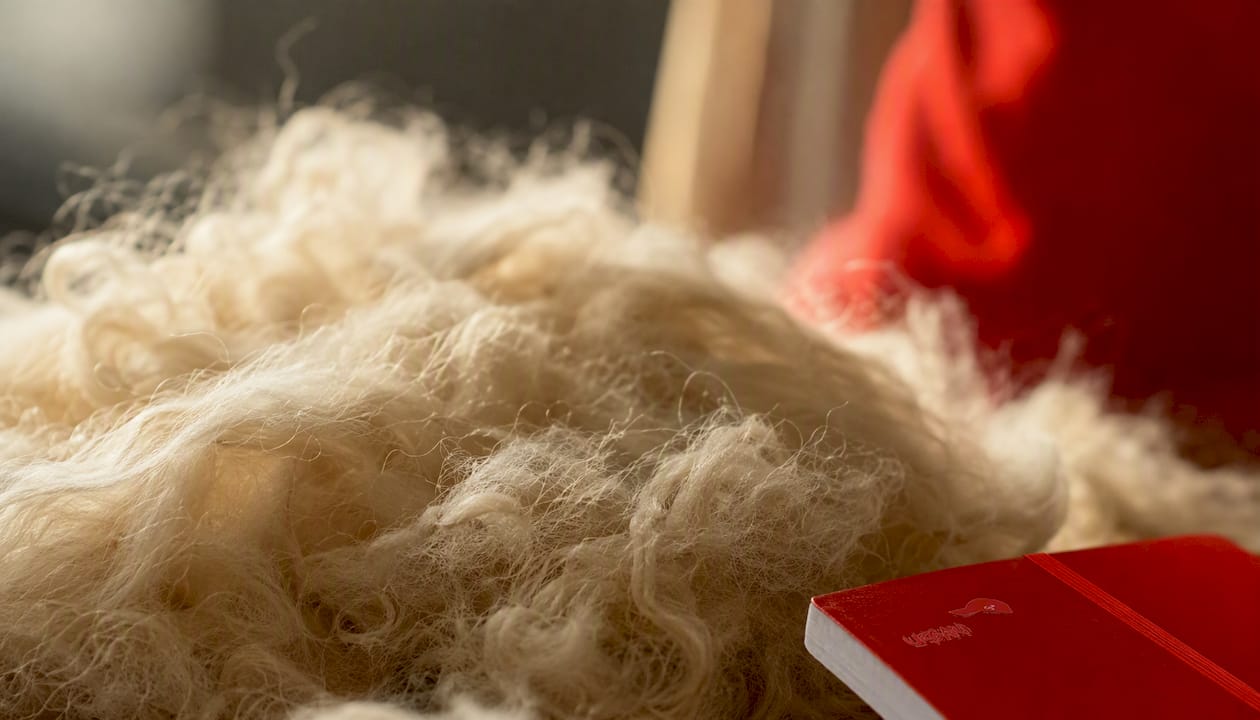
There’s a second mechanism that sets wool apart from acrylic and polyester: an exothermic moisture reaction. When wool fibres absorb moisture vapour from sweat or damp air, they release a small amount of thermal energy, helping maintain a steady temperature rather than letting the chill creep in. Acrylic fibres have no equivalent process.
How wool’s insulation works:
- Exothermic absorption — means wool actually generates a little warmth as it takes on moisture.
Stat to know: AWI research found wool’s humidity buffering was 96% better than polyester in stop-go activity conditions, meaning the warmth you feel is steadier and more consistent.
For NZ winters, where a dry morning can turn into a wet afternoon without warning, that combination of loft insulation and moisture-driven heat release is genuinely practical rather than just a marketing claim.
How does wool manage moisture and breathability?
Wool’s comfort advantage isn’t just warmth. It’s what researchers at the Australian Wool Innovation (AWI) call “dynamic breathability”: the fibre absorbs moisture vapour from the skin, holds it within the fibre structure, and releases it gradually to the outside air. The micro-climate between your head and the hat stays stable rather than swinging between hot and clammy.
In sweating manikin tests, 100% wool fabrics showed superior humidity buffering compared to viscose, cotton, and polyester. The practical payoff is most obvious during resting phases. When you stop hiking and your body heat drops, a polyester hat leaves you feeling the chill almost immediately. Wool slows that transition, reducing the after-chill effect that sends many walkers reaching for an extra layer.
Stat to know: AWI research found wool’s humidity buffering was 26% better than viscose, 45% better than cotton, and 96% better than polyester in stop-go activity conditions, meaning the warmth you feel is steadier and more consistent.
Undyed wool also absorbs moisture vapour and releases it slowly, remaining light and dry to the touch across extended wear, and it resists odour retention in a way that polyester simply does not. Wool can be aired between wears rather than washed after every outing, which is a real advantage for multi-day trips.
Pro Tip: For high-output activities like trail running or cycling, choose a mid-weight merino knit with a vented construction or a thin cotton lining. That combination lets moisture escape faster while keeping the wool’s buffering properties intact.
How to care for wool headwear so it lasts
Properly cared-for wool lasts longer than most synthetic alternatives and often looks better with age. The fibres are naturally resilient, but they do need a little attention to stay at their best.
Basic care routine:
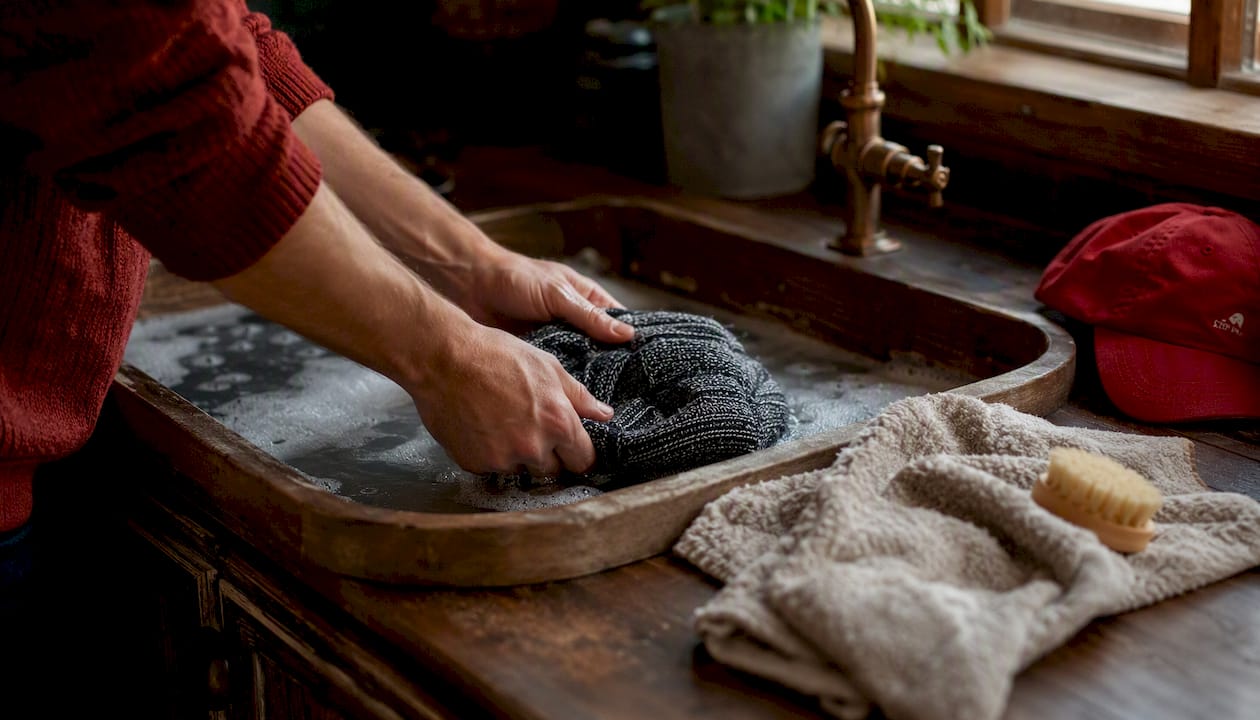
- Air after every wear — Hang the hat on a peg or brim form for a few hours. Wool fibres recover their shape and shed odour without washing.
The two most common wear issues are pilling and felting. Pilling happens when short fibres work loose and tangle on the surface; it’s cosmetic rather than structural. Felting is more serious and occurs when heat, moisture, and agitation combine to mat the fibres permanently. A cool, gentle hand wash prevents felting almost entirely.
Pro Tip: Remove pills with a fabric shaver or a fine-toothed lint comb, working in short strokes. Never pull pills off by hand — you risk pulling live fibres and thinning the fabric. For a misshapen brim or crown, check Urbancaps’s hat reshaping guide before attempting steam at home.
For a full step-by-step reference, Urbancaps’s complete wool hat care guide covers washing, storage, and pilling in detail.
Wool vs other hat materials: which suits your needs?
Wool offers the best overall balance of warmth, breathability, and durability across most NZ conditions. No single material wins every category, but wool comes closest for year-round outdoor use.
Quick comparison by use case:
- Warmth: — Wool and fur felt lead; cotton and thin synthetics trail significantly in cold or wet conditions.
Use-case recommendations:
For a deeper look at styles and constructions, Urbancaps’s premium wool hat style guide breaks down each option by weather and occasion.
Are wool hats good for your hair and scalp?
Wool is unlikely to cause hair loss. Cleveland Clinic dermatologists are clear that hat-related hair loss is primarily linked to chronic tension from very tight headwear, not hat material. A well-fitted wool hat worn normally poses no meaningful risk.
Common concerns, answered briefly:
- Allergy or itch: — Coarser wool fibres have pronounced scales that can irritate sensitive skin. Fine merino (typically 15–25 microns in fibre diameter) bends on contact rather than poking, which dramatically reduces mechanical friction on hair cuticles and scalp.
- Biological compatibility: Wool is primarily keratin, the same protein family as human hair. MDPI research shows keratin from wool supports cell growth and has been processed into nanofibres for wound dressings, underlining that wool is a functional protein fibre rather than an inert synthetic.
Pro Tip: If you have a sensitive scalp or textured hair, choose The Zermatt merino beanie — 100% merino wool with fine fibres that sit gently against the scalp and reduce friction on hair strands.
How to choose wool headwear for New Zealand conditions
Pick your wool hat by activity first, then wetness, then warmth level. NZ weather shifts fast, so a hat that handles damp and wind is more useful than one optimised purely for dry cold.
Buying checklist:
- Fibre type: — Merino for sensitivity, softness, and next-to-skin comfort; standard wool for rugged outdoor or structured felt styles.
- Fit: — Snug but not tight. Chronic tension is the real hair-health risk, not the material.
For sustainability-minded buyers, wool is a renewable, biodegradable fibre. Research shows wool keratin can be recycled into medical textiles, and wool’s end-of-life impact is far lower than synthetic alternatives. Pairing that with a natural fibre accessory approach, as outlined in The Cork Store’s eco accessory guide, gives you a genuinely lower-footprint wardrobe choice.
For NZ-specific picks, Urbancaps’s best wool caps for NZ winter rounds up the top options by season and use case.
Key takeaways
Wool headwear outperforms synthetics and cotton across warmth, breathability, and longevity, making it the most practical choice for New Zealand’s variable outdoor conditions.
| Point | Details |
|---|---|
| Thermal insulation | Crimped fibres and air pockets trap heat; wool releases warmth as it absorbs moisture. |
| Moisture buffering | AWI testing found wool’s humidity buffering was 26% better than viscose, 45% better than cotton, and 96% better than polyester in stop-go conditions. |
| Durability and care | Air after each wear, spot clean promptly, hand wash cool — a wool hat lasts years with basic care. |
| Hair and scalp safety | Tight fit causes traction risk, not wool itself; choose fine merino for sensitive scalps. |
| Urbancaps range | Urbancaps stocks merino and wool beanies suited to NZ commuters, hikers, and outdoor workers. |
Why we back premium wool headwear
There’s a tendency in headwear retail to treat wool as a premium add-on, something you pay more for and then worry about ruining in the wash. That framing gets it backwards. Wool is the baseline that other materials are measured against, and the science backs that up consistently.
What most buyers underestimate is how much the fibre type matters within wool itself. Standard wool and fine merino are not interchangeable. A coarse-gauge knit beanie might be warm, but it will irritate sensitive scalps and snag on textured hair. A fine merino beanie at a similar price point does everything better for everyday wear. The AWI humidity buffering data and the Cleveland Clinic’s guidance on hat fit both point to the same conclusion: buy the right wool, fit it correctly, and you get a hat that performs across seasons without the trade-offs.
Urbancaps stocks wool and merino options with care guides, fit advice, and local NZ stock, so you’re not guessing at sizing from an overseas warehouse. If you’re unsure which weight or construction suits your use case, the customer service team can help you narrow it down.
Wool hats worth trying from Urbancaps
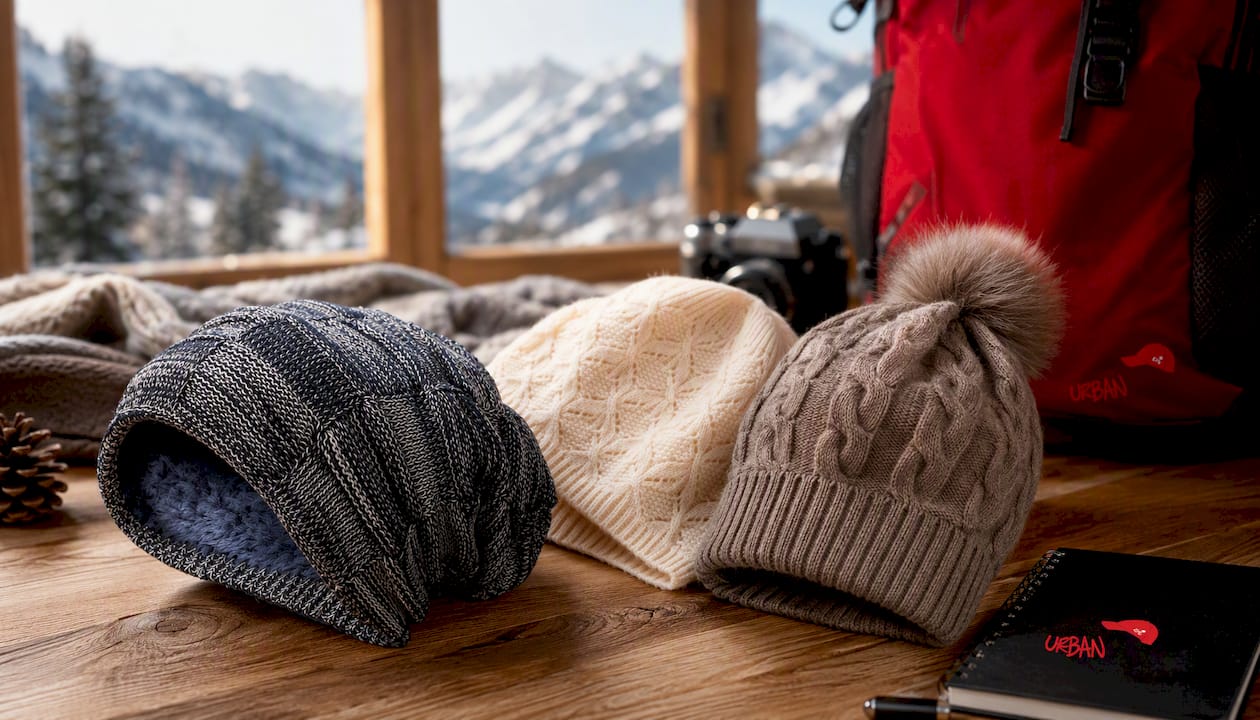
Three options cover most NZ needs. The Outdoor Wool Knit Beanie is a thick, mid-weight knit built for hiking and daily winter wear — it handles wind, light rain, and stop-go exertion without overheating. For a style-forward option with practical ear coverage, The Cervinia is a 100% wool elastic beanie that balances warmth and a clean everyday look. Sensitive scalp or fine hair? The Zermatt is 100% merino with ear protection and a fine knit that sits gently against the skin.
All three ship free within NZ. Browse the full range at Urbancaps and find the fit that works for your winter.
Sources and further reading
Useful references for the research and guidance in this article:
- AWI: Dynamic breathability study — Sweating manikin tests comparing wool, polyester, cotton, and viscose in stop-go sport conditions. The source for the humidity buffering figures cited above.
- MDPI: Wool keratin nanofibres for biomedical use — Peer-reviewed research on keratin’s biocompatibility and its use in wound dressings and tissue scaffolds.
- Cleveland Clinic: Does wearing a hat cause hair loss? — Dermatological guidance on traction alopecia and hat fit; the primary source for the hair-loss section.
- IJFTE: Valorisation of wool waste for medical textiles — Research on recycling wool keratin into electrospun nanofibre patches, supporting the sustainability and circular-economy claims.
- Urbancaps: Complete wool hat care guide — Step-by-step washing, storage, and pilling guidance for wool headwear owners.
FAQ
What are the main benefits of wearing a wool hat?
Wool hats insulate through crimped fibre loft and air pockets, manage moisture by absorbing and gradually releasing vapour, resist odour between washes, and hold up well with basic care. AWI testing found wool’s humidity buffering was 26% better than viscose, 45% better than cotton, and 96% better than polyester in active conditions.
What healing properties does wool have?
Wool is primarily keratin, a biocompatible protein that supports cell growth. Research published in MDPI shows wool keratin has been processed into nanofibres used in wound dressings and tissue scaffolds, though these are specialist medical applications rather than everyday hat-wearing benefits.
Are wool hats good for your hair?
Yes, particularly fine merino. Cleveland Clinic dermatologists confirm that hat-related hair loss is caused by chronic tension from very tight headwear, not hat material. Fine merino fibres bend on contact with hair rather than scratching, reducing mechanical friction on the cuticle.
What is better, a wool or felt hat?
It depends on the use case. Knit wool beanies offer flexibility, packability, and active-use breathability. Wool felt hats provide structure, shape retention, and light rain resistance, making them better for formal wear or outdoor work in wet conditions. Both outperform synthetic alternatives for NZ weather.
Is wool headwear eco-friendly?
Wool is a renewable, biodegradable fibre with a lower end-of-life impact than synthetics. Research shows wool keratin can be recycled into medical textiles, and wool garments biodegrade naturally at end of life, unlike polyester or acrylic.