

Moisture wicking explained: keep drier during activity
TL;DR:
- Moisture-wicking fabrics move sweat away from the skin for faster evaporation, keeping wearers drier and cooler. Polyester and nylon are the top materials because they repel water at the fiber level, while Merino wool naturally wicks and resists odor. Proper construction and layering are essential for effective wicking and breathability in outdoor gear.
Moisture wicking moves sweat away from your skin to the outer surface of a fabric, where it evaporates faster. The result: you stay drier, cooler, and more comfortable during activity.
TL;DR: Wicking fabrics pull perspiration outward so it can’t pool against your skin.
- Activewear and running gear — base layers, tees, shorts
- Gym and training clothing — tanks, leggings, sports bras
- Outdoor headwear — caps and hats with sweatband liners or mesh crowns
- Everyday performance wear — casual tees and polos built for warm days
Table of Contents
- How moisture wicking actually works
- Which fabrics actually wick moisture?
- Wicking is not the same as waterproof or breathable
- Benefits of moisture-wicking clothing and the trade-offs
- How to choose moisture-wicking clothing or headwear
- How to care for moisture-wicking garments
- Breathability vs wicking: what NZ outdoor users need to know
- Key takeaways
- What actually matters when choosing moisture-managing headwear
- Urbancaps headwear for active Kiwis
- FAQ
How moisture wicking actually works
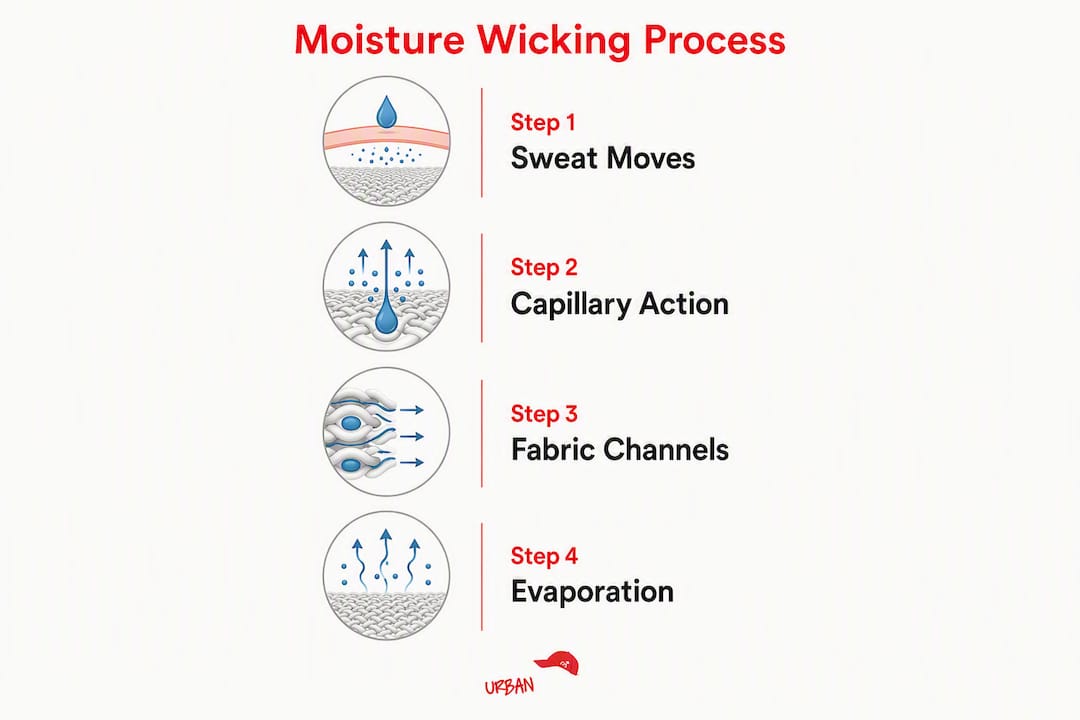
Capillary action is the engine behind wicking. Narrow channels between fibres create surface tension that pulls liquid from the warm, humid skin side through to the cooler, drier exterior. Once moisture reaches the outer surface, it spreads over a larger area and evaporates quickly.
Fabric construction matters as much as fibre type. A knit structure with open channels moves moisture efficiently; a tight weave can block that movement entirely, even in a synthetic fabric. According to James Heal’s wicking research, effective wicking requires channels created by both fibre geometry and fabric construction. The fibre alone cannot do the job if the knit or weave prevents capillary movement.
Pro Tip: A well-constructed cotton blend with engineered channels can outperform a poorly built synthetic. Check the construction, not just the fibre label.
Which fabrics actually wick moisture?
Polyester and nylon lead the field. Both are hydrophobic (they repel water at the fibre level), which forces moisture to travel along the surface rather than soaking in. That surface travel is exactly what wicking needs.
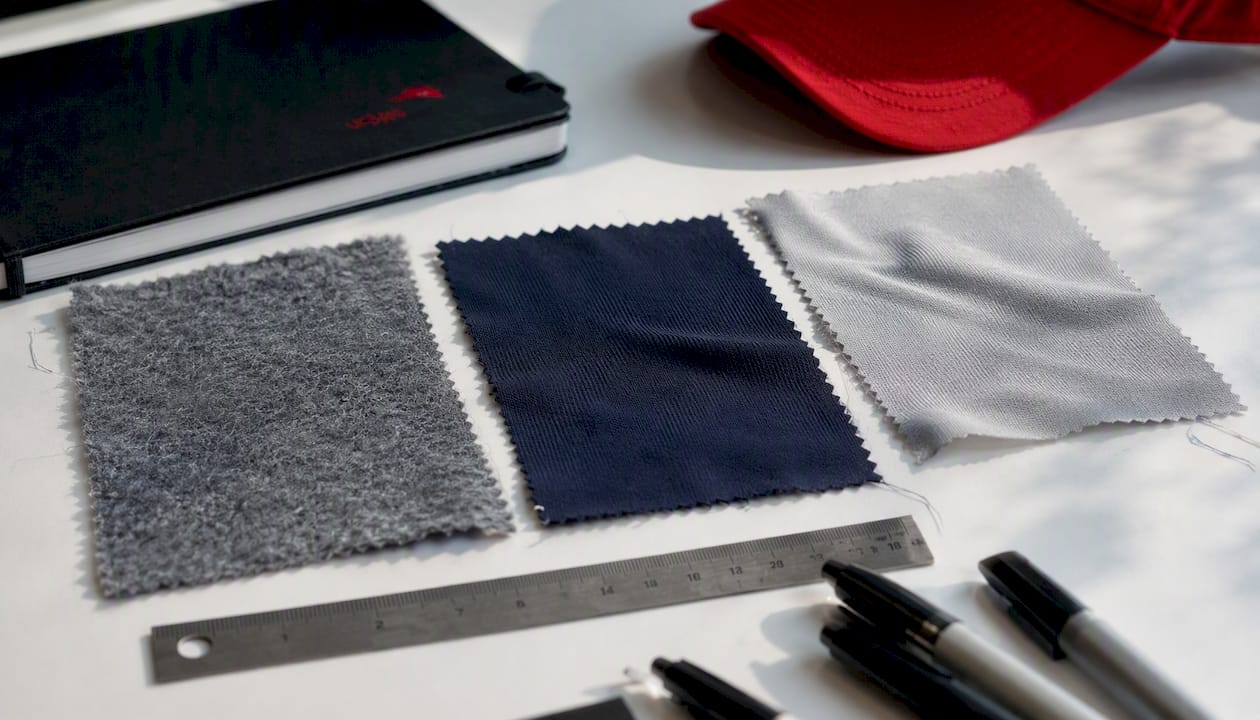
Merino wool is the natural-fibre standout. It wicks moisture while also resisting odour, making it a strong choice for multi-day hikes or activities where you can’t wash gear daily. Standard cotton absorbs and holds moisture, which is why a plain cotton tee feels heavy and clingy after a workout.
Treated cotton changes that picture. TransDRY® technology blends repellent and absorbent yarns to create channels that spread moisture and speed evaporation, giving cotton performance closer to synthetics while keeping its soft feel.
| Material | How it moves moisture | Best for | Drying speed | Odour resistance |
|---|---|---|---|---|
| Polyester | Hydrophobic surface channels | High-intensity sport | Fast | Low |
| Nylon | Surface tension along fibres | Running, gym | Fast | Low–moderate |
| Merino wool | Fibre absorption + surface spread | Hiking, multi-day | Moderate | High |
| TransDRY® cotton | Engineered repellent/absorbent channels | Casual to moderate activity | Moderate–fast | Moderate |
| Cotton (untreated) | Absorbs and retains | Low activity only | Slow | Moderate |
For headwear, the liner fabric and crown construction are what count. Mesh crown panels allow airflow; sweatband liners in polyester or Merino pull perspiration away from the forehead before it runs into your eyes.
Wicking is not the same as waterproof or breathable
These three terms solve different problems, and mixing them up leads to poor gear choices.
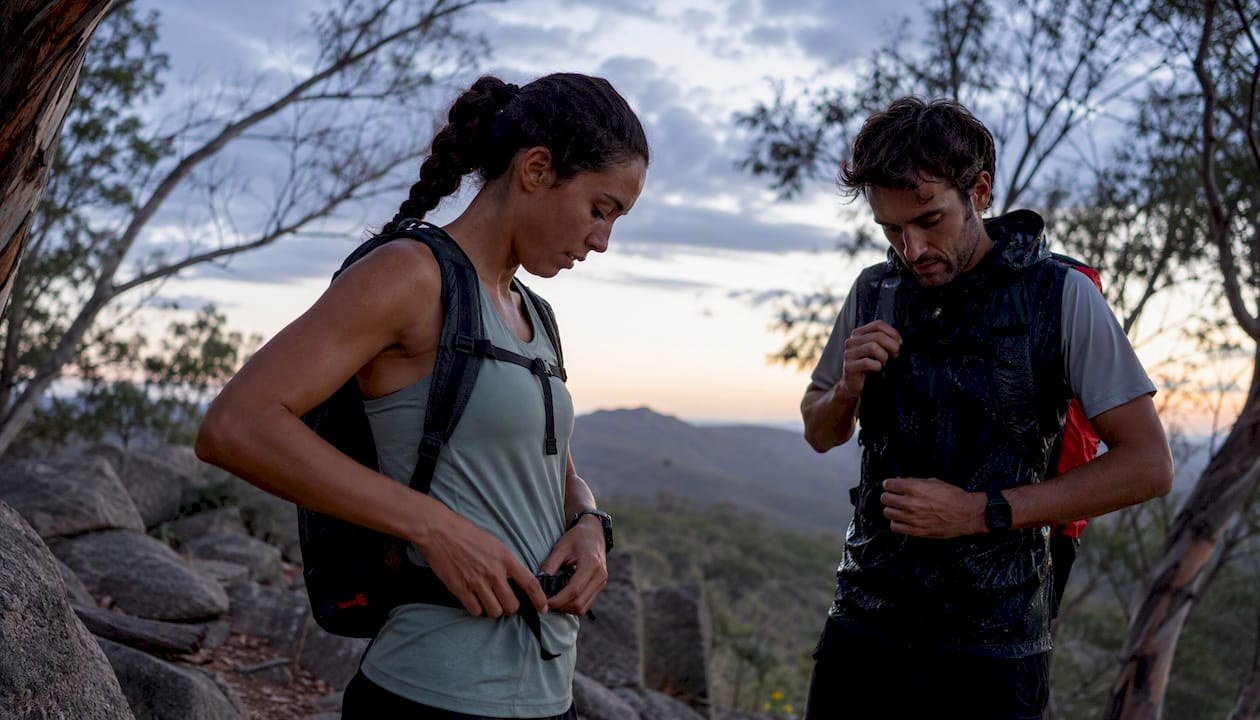
Wicking moves sweat from your skin outward. Waterproofing stops external water from getting in. Breathability allows air to pass through the fabric. A garment can be one, two, or all three of these, depending on how it is engineered.
Waterproof performance is often measured by hydrostatic head, which is the pressure of water a fabric can withstand before leaking. A high hydrostatic head rating means strong rain resistance, but it says nothing about how the fabric handles your sweat.
For NZ conditions, that layering approach is practical. A summer trail run might need only a wicking tee. A winter tramp in Fiordland calls for a wicking base layer under a waterproof/breathable shell, because the weather can shift from warm exertion to cold rain within an hour.
Pro Tip: For breathable hat options in mixed conditions, look for mesh panels combined with a wicking sweatband — you get airflow and moisture management without needing a full shell.
Benefits of moisture-wicking clothing and the trade-offs
The core benefits are straightforward. Wicking fabrics dry faster, reduce the clammy feeling of wet clothing against skin, and lower the risk of chafing on long runs or hikes. They also support thermoregulation: when sweat evaporates efficiently, your body cools more effectively.
The trade-offs are worth knowing before you buy:
- Odour retention in synthetics. Polyester and nylon can trap bacteria and hold smell after repeated use. Merino wool avoids this naturally.
- Feel difference. Synthetics feel slicker than cotton. Some people find this uncomfortable for casual wear.
- Pilling. Lower-quality synthetic knits can pill with washing, reducing both comfort and wicking performance over time.
- Wicking finishes wear off. Chemical finishes applied to cotton or blends degrade with washing. Construction-based wicking (fibre geometry) lasts longer.
For a short gym session, any decent polyester tee does the job. For a multi-day hike, Merino’s odour resistance and natural wicking make it worth the higher price.
Pro Tip: Turn synthetic garments inside out before washing. This exposes the inner surface (where bacteria accumulate) directly to detergent and water, reducing odour build-up.
How to choose moisture-wicking clothing or headwear
Match fabric performance and fit to your activity intensity and the weather you’ll face; for details on breathability versus moisture management in protective gear, see Motorcycle Gear Breathability: What Every Rider Must Know.
- Activity intensity. High-intensity sport (running, cycling, gym) benefits most from fast-drying synthetics. Lower-intensity or multi-day activities suit Merino.
- Fabric type. Polyester or nylon for speed and durability; Merino for odour control and comfort; TransDRY® cotton for a softer feel with reasonable wicking.
- Garment weight. Lighter fabrics dry faster. Heavier knits offer more warmth but slow drying.
- Seam placement. Flatlock seams reduce chafing on long runs or hikes. Avoid thick seams under pack straps or helmet edges.
- Venting panels. Mesh underarm or back panels add airflow. In headwear, mesh crown panels serve the same purpose.
- Fit. A close but not tight fit keeps wicking fabric in contact with skin so capillary action can work. Loose-fitting wicking garments perform less efficiently.
- Headwear specifics. For outdoor headwear that works, look for a structured brim for sun protection, a mesh or quick-dry crown, and a polyester or Merino sweatband liner.
How to care for moisture-wicking garments
Proper care preserves wicking performance. The short rule: cool or warm water, no fabric softener, air dry or tumble dry low.
- Wash inside out in cool or warm water (30°C or below for most synthetics).
- Use a small amount of liquid detergent. Powder residue can clog fibre channels.
- Skip fabric softener entirely. Fabric softeners coat fibres and block the channels that make wicking work.
- Avoid bleach. It degrades synthetic fibres and destroys chemical finishes on treated cotton.
- Air dry when possible, or tumble dry on low heat. High heat can melt or distort synthetic fibres and break down wicking finishes.
- Follow the garment label. Merino, in particular, has specific temperature and agitation requirements.
Pro Tip: For persistent odour in synthetics, soak the garment in a solution of cold water and white vinegar (roughly one part vinegar to four parts water) for 30 minutes before washing. Alternatively, sport-specific detergents like Nikwax BaseWash are formulated to clean wicking fabrics without damaging their structure.
Breathability vs wicking: what NZ outdoor users need to know
Breathability and wicking are related but not the same thing. Breathability is about air moving through a fabric; wicking is active liquid transport from skin to surface.
As Men’s Health describes it, wicking fibres act like tiny water slides, channelling moisture away from the skin so it can evaporate on the outer surface rather than pooling against the body. A fabric can be breathable without wicking (open-weave linen lets air through but absorbs moisture), or it can wick without being highly breathable (a tight synthetic knit moves sweat but limits airflow).
NZ’s variable climate makes this layering logic especially relevant. A hat suited to NZ outdoor conditions combines a quick-dry liner with a structured brim, handling both sun and sudden showers without becoming waterlogged or uncomfortable.
Key takeaways
Moisture-wicking fabrics move sweat from your skin to the fabric surface via capillary action, where it evaporates faster, keeping you drier and more comfortable during activity.
| Point | Details |
|---|---|
| How wicking works | Capillary action in narrow fibre channels pulls sweat from skin to fabric exterior for faster evaporation. |
| Best materials | Polyester and nylon wick fastest; Merino wool adds odour resistance; TransDRY® cotton offers a softer alternative. |
| Care basics | Wash cool, skip fabric softener, avoid high heat to preserve wicking channels and finishes. |
| Wicking ≠ waterproof | Wicking moves sweat out; waterproofing blocks rain in. Layer both for full protection in wet conditions. |
| Urbancaps headwear | Urbancaps stocks hats with wicking sweatband liners and mesh crowns suited to NZ outdoor and active use. |
What actually matters when choosing moisture-managing headwear
Most wicking guides focus on base layers and forget the head entirely. That is a gap worth closing. Your forehead generates significant sweat during activity, and a hat with a poor liner turns that into a dripping distraction.
The features that make a real difference are a polyester or Merino sweatband liner, a mesh or quick-dry crown panel, and a structured brim that keeps sun off without trapping heat. These are not premium extras. They are the baseline for any hat you plan to wear while moving.
Urbancaps stocks locally available options built with these features in mind, suited to the kind of varied NZ conditions where you might start a walk in sunshine and finish in a drizzle. Their care guides are also worth bookmarking for keeping liners and finishes performing wash after wash.
Urbancaps headwear for active Kiwis
If you want headwear that handles sweat as well as style, Urbancaps has NZ-stocked options ready to go.

The Embroidered Fashion Fedoras Hat and Jazz Style Fedoras Hat combine structured brims with quality liner fabrics, making them practical for warm-weather outdoor wear as well as everyday style. For something more distinctive, the Steampunk Fedoras Hat brings a bold look with the same attention to construction. All orders within NZ ship free. Browse the full range at Urbancaps and find the hat that fits your activity and your style.
FAQ
What fabric is best for moisture wicking?
Polyester and nylon are the fastest-wicking synthetics for high-intensity activity. Merino wool is the best natural option, adding odour resistance alongside moisture transport.
Does moisture wicking mean waterproof?
No. Wicking moves sweat from your skin to the fabric exterior; waterproofing blocks external water from entering. They are separate technologies that can be combined through layering.
What is the difference between Dri-FIT and moisture wicking?
Dri-FIT is Nike’s branded name for their moisture-wicking polyester fabric technology. All Dri-FIT garments are moisture-wicking, but not all moisture-wicking garments are Dri-FIT.
Is cotton or moisture-wicking fabric better for exercise?
For exercise, purpose-built wicking fabrics (polyester, nylon, or Merino) outperform standard cotton. Plain cotton absorbs and holds moisture, making garments feel heavy and clingy. Treated cotton such as TransDRY® closes much of that gap.
How do I know if a garment is truly moisture wicking?
Look for fibre labels (polyester, nylon, Merino) or finish names (TransDRY®, Dri-FIT) on the care tag. Wicking performance can be verified through AATCC standard tests that measure how quickly moisture moves through and leaves a fabric.