

Why timeless hat design matters: style, value and longevity
TL;DR:
- Timeless hat design depends on balanced proportions, durable materials, and restrained detailing. These principles ensure the style remains relevant, reduces waste, and offers long-term value. UrbanCaps offers heritage styles built for longevity suited to New Zealand conditions.
Timeless hat design matters because it combines balanced proportions, durable materials and clear detailing to deliver enduring style, lower lifetime cost and reduced environmental impact. A hat built on these principles stays relevant across seasons, occasions and trends rather than dating itself within a year.
- Style: Classic silhouettes flatter consistently because they are built around proportion, not trend signals.
- Value: A well-constructed hat worn for years costs far less per wear than a cheap replacement cycle.
- Sustainability: Timeless designs reduce replacement frequency, spreading environmental cost across more wears and less waste.
Table of Contents
- What design principles actually make headwear timeless?
- How history and culture shape which hat styles endure
- Essential timeless hat styles and when to wear them
- Which materials and construction choices determine how long a hat lasts?
- How does crown-to-face proportion affect the way a hat looks and wears?
- Why timeless hat design matters for sustainability and long-term value
- How to choose a timeless hat: a practical buying checklist
- Care and maintenance routines that keep a hat looking its best
- How Urbancaps puts timeless design into practice for New Zealand customers
- Key takeaways
- Why timeless design is worth defending
- Urbancaps timeless hats: three styles worth considering
- Useful sources and further reading
- FAQ
What design principles actually make headwear timeless?
Three principles do most of the work: balanced silhouette, restrained detailing, and human-centred function. Get these right and a hat reads as considered rather than dated.
- Balanced silhouette: The crown height and brim width work together as a unit. A fedora’s pinched crown and medium brim, a Panama’s open weave and modest brim, a flat cap’s low profile — each holds its shape because the proportions are internally consistent.
- Symmetry and clarity: Symmetric aesthetics raise intended and actual length of product usage. A hat with clean, even lines simply gets kept longer.
- Restrained detailing: A grosgrain band, a single stitch line, a subtle leather trim. Details that serve the silhouette rather than compete with it age well. Oversized logos or novelty embellishments tie a hat to a specific moment.
- Modularity and versatility: A style that moves from casual to semi-formal — a wool felt fedora, a leather bucket hat — earns more wear per year than a single-occasion piece.
- Human-centred function: Comfort, thermoregulation and fit are not afterthoughts. A hat that traps heat or loses its shape after a few wears gets retired early regardless of how good it looks on a shelf.
Subtle contemporary updates — a slightly softer felt, a tonal band instead of a contrasting one — can refresh a classic without breaking its timelessness. The silhouette stays; only the surface detail shifts.
Pro Tip: When evaluating a hat’s timelessness, cover the brim with your hand and assess the crown alone. If the crown looks proportionate and clean in isolation, the overall silhouette is likely sound.
How history and culture shape which hat styles endure
Hat shapes that survive decades do so because they solved a real problem first. Social meaning came second, and emotional attachment followed.
- Practical origins: The fedora emerged as a soft, packable alternative to the rigid top hat. The Panama became the working hat of tropical labourers before it reached the leisure class. The flat cap was rural workwear before it became a city staple.
- Social signalling: Once a style attached itself to a recognisable group — the working man, the jazz musician, the country gentleman — it carried that meaning forward. Wearing it became a reference, not just a choice.
- New Zealand context: NZ outdoor life created its own hat logic. High UV exposure (New Zealand’s UV index regularly reaches extreme levels) made wide-brim styles practical rather than decorative. Rural workwear heritage pushed durable wool and leather into everyday use. City tailoring adopted the same heritage silhouettes and gave them a cleaner finish. The result is a local preference for hats that work outdoors and still look right at a city event.
- Emotional attachment: A hat worn at a significant occasion — a wedding, a first job, a road trip — becomes almost impossible to discard. That emotional longevity is one of the most effective mechanisms for keeping something out of the waste stream.
Essential timeless hat styles and when to wear them
The styles below have each demonstrated staying power across multiple decades. The table covers their defining traits, ideal occasions and NZ-specific use cases.
| Style | Defining traits | Ideal occasions | NZ use case |
|---|---|---|---|
| Fedora | Structured crown, pinched front, medium brim | Formal, city, evening | City events, winter commute |
| Panama | Toquilla straw weave, open structure, breathable | Summer, outdoor, smart casual | Beach, outdoor festivals, summer weddings |
| Flat cap | Low profile, short brim, soft crown | Casual, heritage, smart casual | Weekend markets, rural wear, city casual |
| Homburg | Stiff felt, centre crease, rolled brim | Formal, heritage, occasion wear | Weddings, races, formal dinners |
| Leather bucket hat | Soft brim, relaxed crown, durable finish | Everyday, outdoor, casual | Rain, coastal walks, everyday city wear |
| Beanie | Close-fit knit, no brim | Cold weather, outdoor, casual | Winter commute, alpine use |
For a capsule wardrobe, the fedora, flat cap and leather bucket hat cover the widest range of occasions with the fewest pieces. See iconic timeless hat styles for deeper profiles on each silhouette.
Which materials and construction choices determine how long a hat lasts?
Material choice sets the ceiling on a hat’s lifespan. Construction determines whether it reaches that ceiling.
- Wool felt: Dense, shape-retentive, naturally water-resistant. Handles NZ winters well. Responds to reblocking if it loses shape.
- Toquilla straw (Panama): Hygroscopic — it absorbs and releases moisture, which keeps the wearer cooler. Weave density affects both breathability and wind stability. Requires careful storage to prevent cracking.
- Leather: Highly durable, develops patina with age. Suits NZ coastal and wet conditions better than most natural fibres. Needs conditioning every few months.
- Cotton twill: Breathable and easy to clean. Lower structural memory than wool or leather, but reliable for casual styles.
- Technical blends: Polyester-cotton or nylon blends offer UV resistance and moisture management. Less character than natural fibres but practical for high-activity outdoor use.
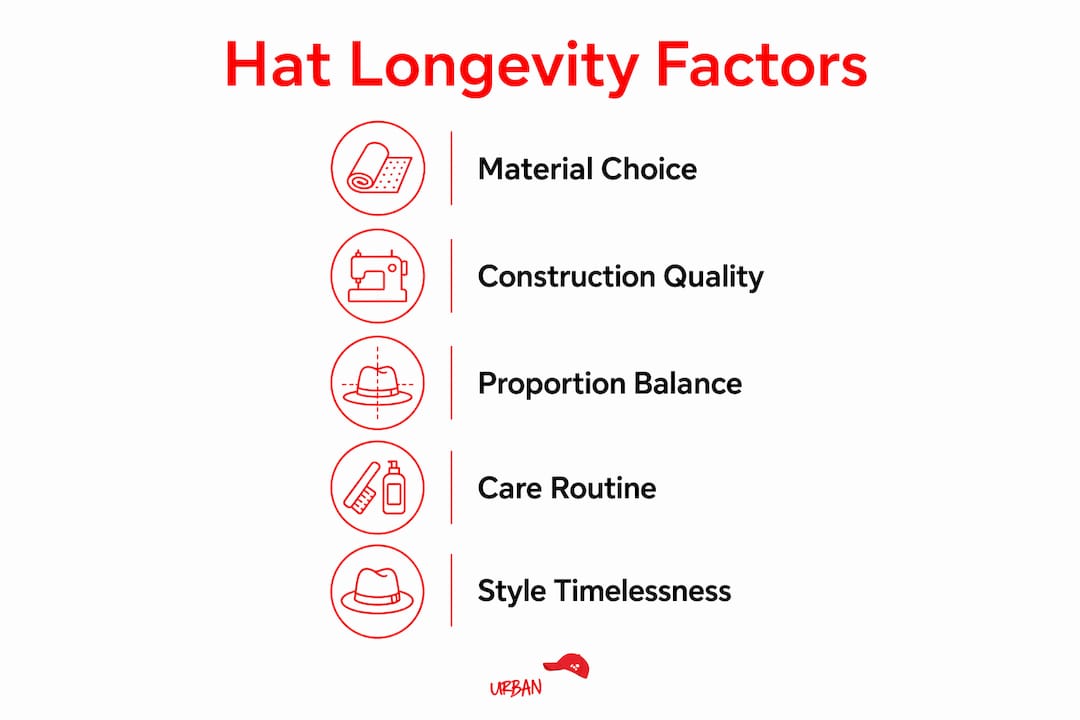
Construction features matter as much as the fibre. Look for internal taping at stress points, reinforced seams, a quality sweatband, and trims that can be replaced rather than glued. Design-for-longevity requires strong seams, replaceable elements and finishes that hold colour and shape across years of wear.
Pro Tip: Ask the seller whether the hat uses grosgrain meridian taping inside the crown. This internal reinforcement runs from the apex to the base and prevents seasonal distortion — it is the single best indicator of a hat built to last.
How does crown-to-face proportion affect the way a hat looks and wears?
Proportion is where most hat purchases go wrong. A hat that fits the head but not the face will always look slightly off, and no amount of styling corrects it.
The core rule from headwear engineering: brim width should not exceed the wearer’s shoulder breadth. Beyond that, crown height relative to face length is the key variable.
- Round faces: A taller, pinched crown adds vertical length. A medium-to-wide brim balances the face width. Avoid low, wide crowns — they emphasise roundness.
- Oval or oblong faces: Most crown heights work. A moderate brim (5–7 cm) keeps the silhouette balanced without adding length.
- Square faces: Softer, rounded crowns reduce the angularity. A slightly asymmetric or curved brim softens the jawline.
- Heart-shaped faces: A medium crown with a wider brim balances a narrower chin against a broader forehead.
For cap brims specifically, a chord-to-arc ratio near 0.85:1 produces a stable, classic curve. Altering that geometry changes both the look and the structural behaviour of the brim over time. A good hat size guide will walk you through measuring your head circumference before you buy. Urbancaps also has a detailed guide on selecting a hat for your face shape if you want to go further.
Why timeless hat design matters for sustainability and long-term value
Buying a hat that lasts is a sustainability decision, even if it does not feel like one at the point of purchase. Timeless design is increasingly framed as a circular economy strategy: longer-lived items reduce per-person textile consumption and waste.
The lifecycle argument is straightforward. A hat worn regularly for multiple years generates a fraction of the environmental cost of replacing a cheaper hat more frequently. The per-wear environmental cost drops with every additional season of use.
Symmetry and simplicity act as a sustainability lever. Academic research shows that symmetric aesthetics raise consumers’ willingness to keep products longer, directly reducing disposal rates for fashion items.
Practical sustainability checklist for your next hat purchase:
- Can the hat be reblocked or reshaped if it loses form?
- Are the materials clearly labelled so you know how to clean and store it?
- Can trims (bands, linings, sweatbands) be replaced rather than requiring full replacement?
- Does the seller provide care instructions, or are they available online?
- Is the construction stitched rather than primarily glued?
Heritage headwear built on these principles also tends to hold resale value, which extends its useful life beyond a single owner. See benefits of heritage headwear for more on the sustainability case for classic styles.
How to choose a timeless hat: a practical buying checklist
A good hat purchase takes about ten minutes of deliberate evaluation. Most regrettable ones take thirty seconds.
- Measure your head circumference before you shop. Use a soft tape measure around the widest point, just above the ears. A hat that fits without adjustment is always more comfortable than one that relies on a tightened closure.
- Test proportions against your face and shoulders. Crown height, brim width and shoulder breadth should all feel balanced when you look straight ahead.
- Inspect the internal construction. Turn the hat inside out or look inside the crown. Check for clean seaming, a quality sweatband, and any internal taping or reinforcement.
- Try it with the outfits you actually wear. A hat that only works with one specific look has a limited useful life.
- Check repair and care options. Ask whether the hat can be reblocked, whether replacement bands are available, and whether the seller provides care guidance.
Red flags to avoid: glued-only construction with no stitching, unlabelled or vague material content, a sweatband that feels thin or poorly attached, and brims that flex unevenly.
On budget: a well-constructed classic in wool felt or leather costs more upfront but typically outlasts two or three cheaper alternatives. For everyday casual wear, a quality cotton twill flat cap is a reasonable entry point. For occasion wear or a long-term wardrobe investment, wool felt or leather is worth the premium. Urbancaps has a practical guide on how to choose the right hat if you want a step-by-step walkthrough.
Care and maintenance routines that keep a hat looking its best
A hat that is cleaned and stored correctly will outlast one that is not by years. The routines are simple.
- After each wear: Brush felt and straw hats with a soft-bristle brush to remove dust. Wipe leather with a dry cloth. Let the hat air out before storing — never put it away damp.
- Monthly: Spot-clean sweatbands with a damp cloth and mild soap. For leather, apply a light conditioner. For wool felt, use a lint roller or soft brush to lift surface fibres.
- Seasonally: Store hats in a cool, dry location. For straw hats, aim for around 50% relative humidity and avoid sealed plastic containers, which trap moisture and cause embrittlement. Wool felt benefits from a breathable hat box. NZ coastal homes with higher salt-air humidity should store hats in a wardrobe rather than on open shelving.
- Annually: Have a well-loved felt hat reblocked by a milliner if the crown has lost its shape. Reblocking typically costs $30–$80 NZD depending on the style and the degree of reshaping needed. Leather hats benefit from a full conditioning treatment once a year.
For straw Panamas, fibre choice affects how the hat responds to humidity. Toquilla straw is hygroscopic and handles moisture well, but it needs careful drying if it gets wet. Milan weave styles are more wind-stable but less forgiving in high humidity. See durable hat materials explained for material-specific care detail.
How Urbancaps puts timeless design into practice for New Zealand customers
Urbancaps selects heritage silhouettes and durable materials specifically suited to Kiwi conditions — wool felt for cooler months, leather for year-round coastal and outdoor use, and breathable weaves for summer. Every product in the range is chosen with fit, construction quality and long-term wearability in mind.
- Material selection: Urbancaps stocks Australian wool felt Hombourgs, leather bucket hats and vintage-style fedoras — each chosen for construction quality and material durability rather than seasonal trend alignment.
- Fit and care support: The Urbancaps blog includes fitting guides, face-shape advice and material care instructions so customers can get the most from their purchase.
- Local service: Urbancaps is proudly NZ owned and operated, with fast NZ shipping and local customer support. Returns and product queries are handled locally.
- Heritage collections: The Australian heritage range reflects a focus on classic silhouettes with proven longevity — styles that have been in regular use for decades and show no sign of dating.
Key takeaways
Timeless hat design delivers lasting style, better per-wear value and lower environmental impact through three non-negotiable factors: balanced proportion, durable construction and restrained detailing.
| Point | Details |
|---|---|
| Proportion is the foundation | Brim width should not exceed shoulder breadth; crown height should balance face length for a flattering, enduring silhouette. |
| Construction determines lifespan | Look for grosgrain meridian taping, reinforced seams and replaceable trims — these are the markers of a hat built to last. |
| Timeless design reduces waste | Longer-lived hats lower per-wear environmental cost and reduce the frequency of replacement purchases. |
| Care extends value significantly | Monthly brushing, seasonal storage at around 50% humidity and annual reblocking keep a quality hat in rotation for years. |
| Urbancaps stocks timeless options for NZ | The Urbancaps range includes wool felt Hombourgs, leather bucket hats and heritage fedoras chosen for durability and classic proportion. |
Why timeless design is worth defending
The fashion industry has a habit of reframing “classic” as “boring” whenever it needs to sell something new. That framing is worth pushing back on.
A hat with a balanced silhouette, clean construction and quality materials does not need to be replaced every season. It does not need to be justified against whatever is currently trending. It simply works — across outfits, occasions and years. That consistency is not a lack of ambition. It is the result of getting the fundamentals right.
What gets underestimated is how much of a hat’s longevity comes from emotional attachment rather than physical durability alone. A hat worn at a meaningful occasion, or one that fits so well it becomes a daily habit, rarely ends up discarded. The design choices that create that attachment — proportion, comfort, clarity — are the same ones that make a hat look good in the first place. They are not separate considerations.
The practical implication for anyone buying a hat in New Zealand: prioritise construction and proportion over novelty. A well-made wool felt Homburg or a quality leather bucket hat will still be in your wardrobe in five years. Most trend-driven alternatives will not.
Urbancaps timeless hats: three styles worth considering
If you want a hat that will still look right in five years, these three Urbancaps options are worth a close look.
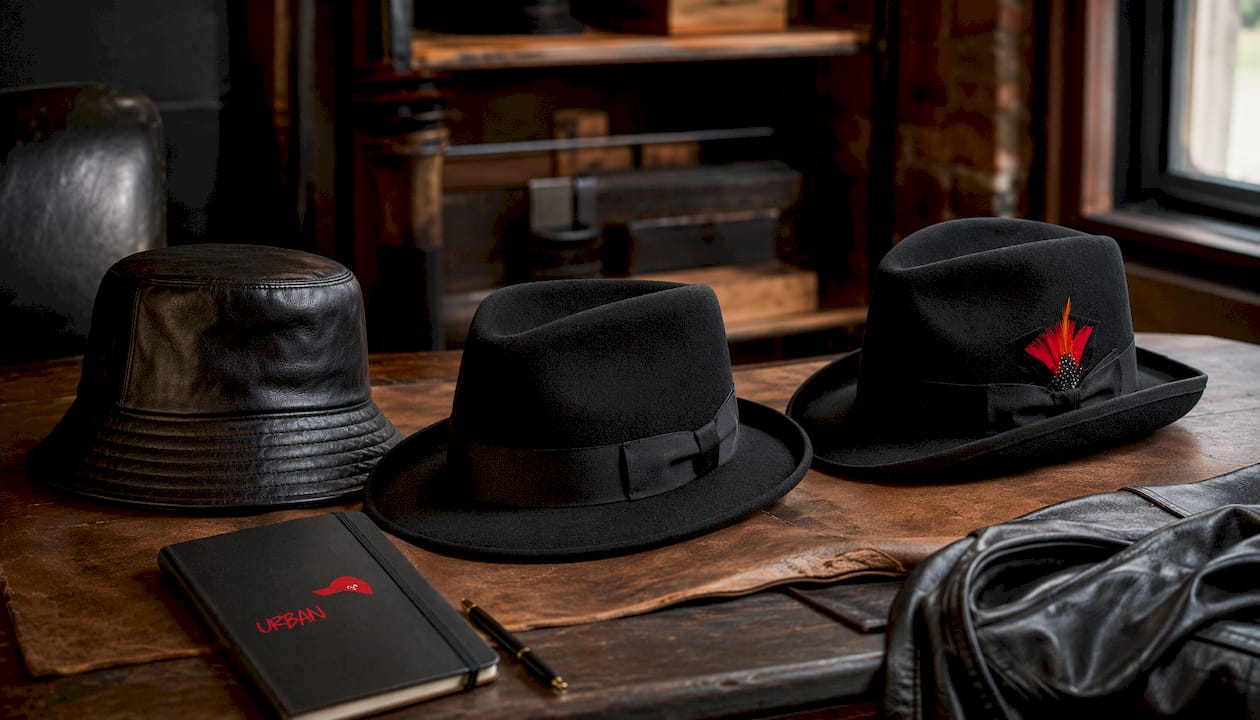
The Leather Bucket Hat is built for everyday NZ wear. The leather construction handles coastal conditions and light rain, develops patina with age, and the relaxed silhouette works across casual and outdoor occasions. It is the kind of hat you reach for without thinking.
The Churchill Heritage Homburg is made from premium Australian wool felt with a structured crown and rolled brim. It is a formal-leaning style that has been in continuous use for over a century — the construction quality means it can be reblocked and worn for decades.
The Luxury Homburg Fedora combines vintage wool felt construction with a satin lining and presentation-quality packaging. It suits occasion wear and city dressing equally well, and the firm felt holds its shape across seasons.
All three ship fast within NZ. Browse the full range and check your size at urbancaps.co.nz.
Useful sources and further reading
These are the most useful references behind this article, organised by what they cover best.
- Design principles and proportion: The engineering of elegance: a functional framework for high-end summer headwear — technical detail on crown-to-face ratios, brim geometry and straw fibre behaviour.
- Internal hat structure: Key elements in hat structure design: what makes a perfect hat — covers grosgrain taping, chord-to-arc ratios and crown support architecture.
- Timeless design and sustainability: How can timeless design contribute to a more sustainable fashion wardrobe? — circular economy framing for design longevity.
- Symmetry and consumer behaviour: Timeless aesthetics: how symmetry enhances sustainable consumption in luxury fashion — academic research on how aesthetics affect how long people keep fashion items.
- Emotional durability: What makes a design timeless in fashion — industry commentary on emotional attachment and product longevity.
- Longevity and responsible fashion: Why longevity matters more than trends in responsible fashion — Copenhagen Fashion Summit perspective on buying for durability over trend.
- Construction for longevity: Timeless design — practical guidance on construction features that extend a hat’s active life.
- Urbancaps fitting and style guides: Classic hat design: timeless style and functionality — NZ-focused explainer on classic design choices and why they endure.
FAQ
What makes a hat design timeless?
Timeless hat design relies on balanced proportions, restrained detailing and quality construction rather than trend signals. A hat with a consistent silhouette, durable materials and clean internal finishing stays relevant across seasons and occasions.
What is the most popular timeless hat style?
The fedora is consistently cited as the most recognised classic hat style globally, valued for its structured crown, medium brim and versatility across formal and casual occasions. In New Zealand, leather bucket hats and wool felt Hombourgs are strong everyday alternatives.
Why does hat proportion matter so much?
Brim width should not exceed the wearer’s shoulder breadth, and crown height should balance face length — these proportional rules from headwear engineering determine whether a hat flatters or overwhelms. Getting proportion right is what separates a hat that looks considered from one that looks awkward.
Does buying a timeless hat actually reduce environmental impact?
Yes. Longer-lived items reduce per-person textile consumption and waste by lowering the frequency of replacement purchases. A hat worn for five or more years generates a fraction of the environmental cost of replacing a cheaper hat annually.
Where can I find timeless hats in New Zealand?
Urbancaps stocks a range of heritage-style hats including the Churchill Heritage Homburg and Leather Bucket Hat, with fast NZ shipping and local customer support.