

Why hat shape matters for your face and style
The shape of a hat does more than sit on your head. It acts as an optical tool that balances or enhances your facial geometry, and getting it right makes a visible difference. Tall crowns add vertical presence for shorter faces. Wide brims create horizontal balance for longer ones. Position the hat 1–1.5 inches above your eyebrows and your eyes stay the focal point. Push it too low and you lose your features. Too high and it floats. The hat shape you choose shapes how people see you.
Key reasons hat shape matters:
- Face balance: Crown height and brim width work together to balance your natural proportions.
- Style signal: Structured shapes read as formal; softer shapes read as relaxed.
- Fit comfort: Crown depth and brim alignment affect how securely a hat sits.
- Hair compatibility: Hair volume and texture change how a hat sits and looks.
- Confidence: A well-chosen shape lets you wear the hat rather than the hat wearing you.
How your face shape determines the most flattering hat
Your face shape guides hat choice more than any trend. The logic is simple: you want the hat’s structure to create balance where your face naturally lacks it.
- Oval: The most versatile shape. Almost any style works. Avoid excessively tall crowns that stretch the face further.
- Round: Go for angular hats with higher crowns and structured brims. Fedoras and trilbys add height and contrast against soft cheeks.
- Square: Curved brims soften strong angles. Telescope crowns work well here.
- Rectangular/oblong: Wider brims add visual width and reduce perceived length. Avoid tall crowns.
- Heart: Medium brims balance a wider forehead against a narrower chin. A brim that is too wide broadens the forehead further.
- Diamond: Medium-width brims balance prominent cheekbones. Open crowns avoid adding definition that competes with the face’s natural structure.
- Triangle/pear: Wider brims with structured crowns draw the eye upward, balancing a broader jaw.
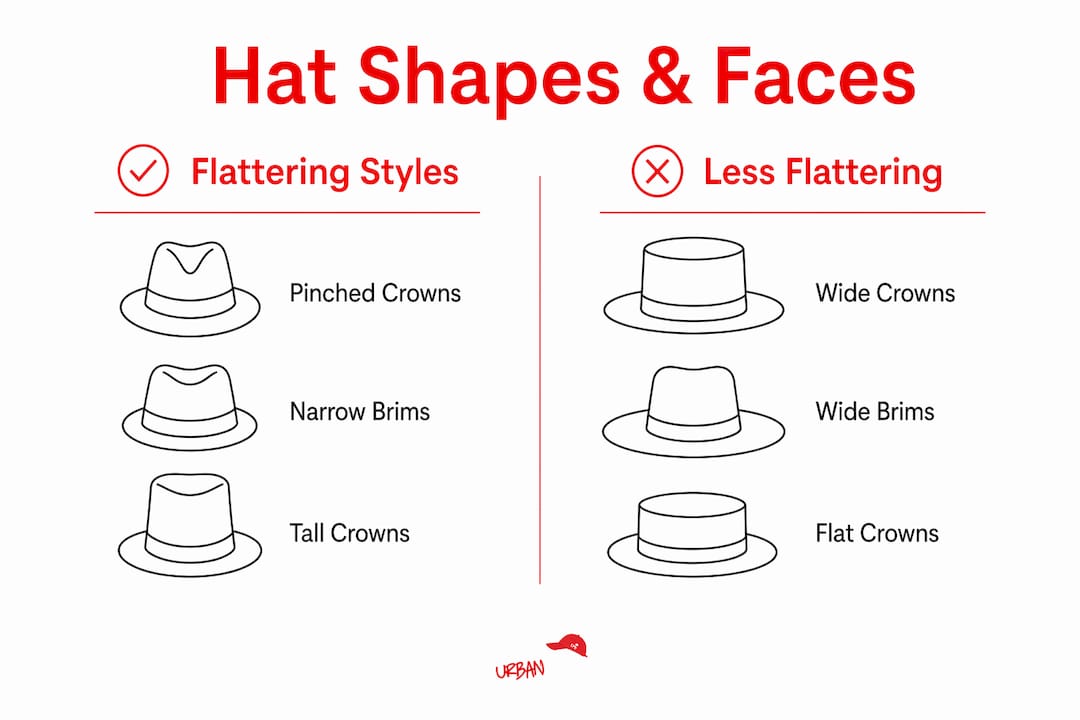
Crown shapes matter too. Pinched crowns add height and angular definition, great for round faces. Centre-dent crowns suit most shapes. Open crowns work well for diamond and triangle faces by keeping the silhouette clean.
Pro Tip: Brim width is your sharpest tool. Narrow brims sharpen angles and elongate; wider brims soften and shorten. Adjust intentionally rather than defaulting to whatever is on the shelf.
How hat shape shapes your style and personal expression
Hat shape changes the mood of an entire outfit. A structured felt fedora reads as polished and intentional. A soft linen bucket hat reads as relaxed and off-duty. The difference is not just the material; it is the silhouette the shape creates against your shoulders and face.
- Structured vs. soft materials: Felt and structured straw hold strong shapes that frame round or oval faces with definition. Softer fabrics like cotton or crushable felt introduce ease, which suits angular faces by adding softness.
- Colour contrast: Dark hair with a pale hat creates a sharp outline. Similar tones between hat and hair soften the overall look. Neither is wrong; it depends on the effect you want.
- Positioning and tilt: A hat worn straight conveys order and professionalism. A slight tilt adds charm and breaks rigid symmetry in a way that reads as more visually interesting. A tilt-back opens the face and signals a casual, approachable vibe.
- Scale and proportion: A hat that is too small for your shoulder width looks perched. One that is too large overwhelms. The hat, your hairstyle, and your features need to feel balanced as a whole.
- Confidence over rules: Style guidelines are a starting point. If you love a shape that does not technically match your face type, wear it with conviction and adjust the positioning or pairing to compensate.
For outdoor occasions, fishing hat styling follows the same principles: brim width, crown height, and material all affect how the hat reads against your face and outfit.

How fit and hair type affect which hat shape works for you
Fit is not just about head circumference. A hat that is the right size can still sit wrong if the crown shape does not suit your hair volume or texture.
- Thick or curly hair: Lifts the crown higher, so you need a hat with a deeper crown to avoid the perching effect. A shallow crown on thick hair sits too high and looks unbalanced.
- Fine or straight hair: Lets a hat sink lower, which can swallow your features. Softer, flexible hats work better here because they do not add unnecessary bulk.
- Voluminous hairstyles: Pair better with structured hat materials that hold their shape against the extra volume.
- Flat or sleek styles: Work well with soft or flexible hats that do not compete with the clean lines of the hair.
- Fit comfort: A hat that is too tight causes headaches and red marks. Too loose and it slips, affecting both appearance and wearability. The hat should sit securely just above the ears and 1–1.5 inches above the eyebrows.
Pro Tip: Revisit your hat fit when your hairstyle changes significantly. A new cut or added volume can shift how every hat in your collection sits. A brim shaper helps maintain the brim angle you want as the hat settles over time.
Expert advice from Urbancaps on hat shapes for New Zealand style
Urbancaps is NZ-owned and operated, and the focus on local fit is deliberate. NZ face shapes, hairstyles, and climate all influence which hat shapes work best day to day.
- Craftsmanship and fabric: Urbancaps prioritises durable fabrics and timeless construction suited to NZ conditions, from coastal sun to cooler southern winters.
- Seasonal choices: Summer calls for breathable brims with widths matched to your face shape. Wider for longer faces, moderate for rounder ones. Winter shifts toward structured felt or wool styles that hold their shape in wind and rain.
- Outfit formality: Match hat shape to outfit formality. A retro fedora suits business casual and evening occasions. A bowler hat brings a distinctive formal edge with its rounded crown and curled brim.
- Grooming alignment: Facial hair changes hat proportions. Fuller beards may need slight adjustments in hat size and positioning to keep the overall look balanced.
- Build a collection: Urbancaps recommends 3–5 hat styles to cover different occasions: a fedora for formal settings, a Panama or wide-brim for warm weather, a flat cap for everyday casual, and a seasonal option for winter protection.
Shop the full Urbancaps range at urbancaps.co.nz for premium headwear with fast NZ delivery. Every style is chosen with Kiwi wearers in mind.
Key takeaways
Hat shape is the single biggest factor in whether a hat flatters your face or fights it, and matching crown height and brim width to your face shape is the most reliable way to get it right.
| Point | Details |
|---|---|
| Crown height changes face length | Tall crowns add vertical presence; wide brims shorten longer faces visually. |
| Brim width is adjustable | Narrow brims elongate and sharpen; wider brims soften and frame. |
| Fit includes hair type | Thick or curly hair needs deeper crowns; fine hair suits softer, flexible hats. |
| Position at 1–1.5 inches above eyebrows | This keeps eyes visible and maintains natural facial balance. |
| Build 3–5 styles | Cover formal, casual, warm-weather, and seasonal needs with a small, versatile collection. |
FAQ
What does hat shape actually do for your appearance?
Hat shape acts as an optical tool, using crown height and brim width to balance or enhance your facial proportions. A well-chosen shape draws the eye where you want it and creates a harmonious silhouette.
Why do some people look better in hats than others?
Positioning and proportion are usually the reason. A hat placed 1–1.5 inches above the eyebrows keeps the eyes visible and the face balanced. When the hat sits too low or too high, the whole look feels off regardless of the style.
Which hat shape suits your face best?
Oval faces suit almost any style. Round faces benefit from angular hats with higher crowns. Square faces need curved brims. Rectangular faces suit wider brims. Heart and diamond shapes respond well to medium brims for balance.
What is the unspoken cowboy hat rule?
The crown crease and brim roll you choose signal your discipline and region. Changing someone else’s crease without permission is considered disrespectful in western culture, as the shape is personal and often carries meaning beyond aesthetics.